California has quietly become the epicenter of a national conversation about psilocybin therapy, and if you’ve been watching from the sidelines, you’re not alone. The legal picture is complicated: some cities have decriminalized possession, state legislators have introduced bold reform bills, and university research programs are actively enrolling participants. For anyone curious about the legal status of psilocybin therapy in California and the options currently available, the path forward is more accessible than you might think, even if it’s not yet straightforward. Whether you’re exploring this for personal growth, mental health support, or simple curiosity, this guide will help you understand exactly where things stand in 2026 and what realistic avenues exist right now.
The Evolving Landscape of Psilocybin Legality in California
California’s relationship with psilocybin has shifted dramatically over the past several years. The state hasn’t fully legalized therapeutic psilocybin the way Oregon did with its Measure 109 framework, but a patchwork of local and state-level actions has created real momentum. Understanding this patchwork is essential if you’re trying to figure out what’s actually permitted and where.
Decriminalization Efforts in San Francisco, Oakland, and Santa Cruz
Oakland led the charge in 2019, becoming one of the first U.S. cities to decriminalize entheogenic plants and fungi, including psilocybin mushrooms. Santa Cruz followed shortly after with a similar resolution. San Francisco’s Board of Supervisors passed its own decriminalization measure in 2022, urging law enforcement to make psilocybin-related offenses the lowest priority.
What does this mean for you practically? In these cities, you’re unlikely to face arrest for personal possession of psilocybin, but it’s still not “legal” in the way cannabis is. There are no licensed dispensaries, no regulated supply chains, and no consumer protections. Decriminalization removes the threat of prosecution: it doesn’t create a regulated market. The current legal status remains nuanced, and it’s worth understanding the distinction between decriminalization and legalization before making any decisions.
State-Level Legislation and SB 58 Status
Senate Bill 58, introduced by Senator Scott Wiener, was the most ambitious attempt to decriminalize psilocybin statewide. The bill would have removed criminal penalties for possession and personal use of psilocybin, DMT, and mescaline for adults 21 and older. Governor Newsom vetoed the bill in late 2023, citing the need for a regulated therapeutic framework rather than broad decriminalization.
Since then, revised legislative efforts have focused more narrowly on therapeutic access and research facilitation. The political appetite for reform remains strong: 72% of U.S. voters support legalizing therapeutic access to psychedelics, and 81% support making it easier for scientists to study these substances. California legislators are watching Oregon’s regulated model closely, and new proposals continue to surface. The trajectory is clear, even if the timeline remains uncertain.
Therapeutic Frameworks for Psilocybin Use
Even without full state legalization, psilocybin-assisted therapy is happening in California through several legitimate channels. The frameworks vary, but they share a common structure: careful screening, guided sessions, and post-session integration.
Clinical Trials and FDA Breakthrough Therapy Designations
The FDA granted psilocybin “Breakthrough Therapy” designation for treatment-resistant depression in 2018 and for major depressive disorder in 2019. This designation doesn’t mean psilocybin is approved: it means the FDA is fast-tracking its review because early evidence showed substantial improvement over existing options.
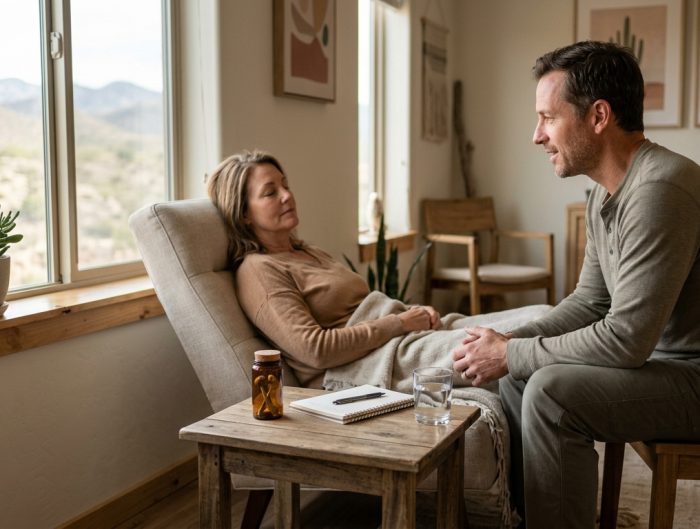
This matters for Californians because it has opened the door to federally sanctioned clinical trials. Participating in a trial gives you access to pharmaceutical-grade psilocybin under medical supervision, all within a fully legal framework. The sessions typically involve preparatory meetings with a therapist, a guided psilocybin session lasting four to six hours, and follow-up integration appointments. At Healing Dose, we emphasize that this kind of structured support, especially the integration work afterward, is what separates a meaningful experience from a confusing one.
The Role of Facilitators in Psilocybin-Assisted Therapy
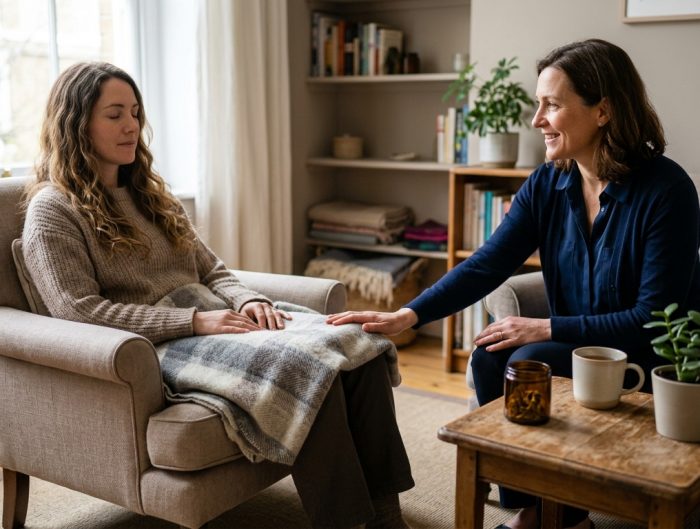
A growing number of practitioners in California describe themselves as “psychedelic facilitators” or “guides.” These individuals often have backgrounds in psychotherapy, somatic work, or contemplative practice, and they support people through psilocybin experiences in various settings.
The challenge is that California doesn’t yet have a licensing framework for psilocybin facilitators. This means the quality of care varies enormously. Some facilitators are highly trained, trauma-informed professionals. Others have minimal credentials. If you’re considering working with a facilitator, ask about their training, their approach to screening, and how they handle difficult experiences during sessions. A good facilitator will also prioritize what happens after the session: journaling, reflection, and making sense of the experience over days and weeks.
Current Access Options for Californians
So what can you actually do right now? The options are more varied than most people realize, though each comes with its own set of trade-offs.
Participating in University-Led Research Studies
Several California universities are running active psilocybin research programs. UCSF’s Translational Psychedelic Research Program is one of the most prominent, studying psilocybin’s effects on conditions ranging from depression to alcohol use disorder. UCLA, Stanford, and UC San Diego also have psychedelic research initiatives in various stages.
To participate, you’ll typically need to meet specific diagnostic criteria, pass medical and psychological screening, and commit to multiple appointments over several weeks or months. The upside is significant: you receive psilocybin in a controlled, safe environment with experienced clinicians, and you’re contributing to research that will shape future access for everyone. You can check UCSF’s clinical trials page for current enrollment opportunities.
Ketamine Clinics and Transitional Psychedelic Care
Ketamine is the one psychedelic-adjacent substance that’s fully legal and available through licensed clinics in California right now. While it’s a different compound with different mechanisms, many people use ketamine-assisted therapy as a stepping stone while waiting for psilocybin to become more widely accessible.
Dozens of ketamine clinics operate throughout the state, offering both IV infusions and sublingual (lozenge) protocols. Costs can be substantial, often running $400 to $800 per session, with most insurance plans not yet covering the approach. Some clinics are beginning to incorporate psychedelic-informed therapy models that will translate directly to psilocybin work once regulations allow it.
Religious and Entheogenic Churches
A smaller but notable access point exists through entheogenic churches and spiritual communities. Some organizations in California operate under religious freedom protections, offering psilocybin ceremonies as part of their spiritual practice. The legal standing of these groups is complex and largely untested in court.
If you’re considering this route, approach it with care. Legitimate entheogenic communities typically have established practices, experienced leaders, and a genuine spiritual framework: not just a legal workaround. Ask questions, attend introductory gatherings, and trust your instincts about whether the community feels safe and authentic.
Safety, Ethics, and Harm Reduction Standards
Regardless of how you access psilocybin, safety should be your first priority. This isn’t about fear: it’s about giving yourself the best possible conditions for a meaningful experience.
Screening for Contraindications and Mental Health History
Not everyone is a good candidate for psilocybin. People with a personal or family history of psychotic disorders, including schizophrenia and bipolar I disorder, face elevated risks with psilocybin use. Certain medications, particularly SSRIs and lithium, can interact unpredictably with psilocybin.
Any responsible provider, whether a clinical researcher, facilitator, or community leader, should conduct thorough screening before a session. If someone skips this step, that’s a red flag. At Healing Dose, we consistently encourage people to be honest about their mental health history and current medications, even if it means being told “not right now.” Your safety matters more than any single experience.
Integration and Post-Session Support
The session itself is only one piece of the puzzle. Integration, the process of reflecting on and making sense of what you experienced, is where lasting personal growth actually happens. Without it, even a profound experience can fade into a vague memory within weeks.
Good integration practices include journaling within 24 hours of a session, talking with a therapist or trusted friend, and paying attention to subtle shifts in your mood, habits, and thought patterns over the following weeks. These quiet changes are often more significant than any dramatic moment during the session itself. Think of integration like tending a garden: the seeds get planted during the experience, but they need consistent attention to grow.
Future Outlook: The Path to Regulated Therapeutic Markets
California is almost certainly going to establish some form of regulated psilocybin access in the coming years. The question isn’t whether, but when and how. Oregon’s program, which began serving clients in 2023, has provided valuable data on what works and what needs refinement, and California legislators are studying those lessons carefully.
The most likely near-term scenario involves a state-regulated therapeutic model: licensed facilitators, approved service centers, and mandatory screening and integration protocols. This won’t happen overnight, but the groundwork is being laid right now through continued research, legislative refinement, and growing public support.
If you’re feeling drawn to explore psilocybin but aren’t sure where to begin, starting with education and self-awareness is always a good first step. Understanding your own goals, sensitivities, and comfort level will serve you well no matter what the legal framework looks like when you’re ready. If microdosing interests you as a gentler entry point, you might find it helpful to take the dose quiz to identify a starting range that matches your experience level and intentions. There’s no rush: the best approach is always the one that feels right for you.

You might also like