Getting the right magic mushroom dosage is one of the most personal decisions you’ll make on this path, and it’s also one of the most consequential. Too little, and you might wonder if anything happened at all. Too much, and you could find yourself in an experience you weren’t prepared for. The sweet spot depends on a surprising number of variables: your body, your mindset, the specific fungi you’re working with, and even what you ate for lunch. If you’ve been searching for a simple answer, you’ve probably noticed that one doesn’t exist. That’s not because the information is hidden; it’s because your ideal dose is genuinely unique to you. What works beautifully for a friend might feel like nothing, or like way too much, for you. This guide is here to help you understand the full picture so you can make an informed, confident choice about where to begin and how to adjust over time. We’ll walk through the spectrum of experiences, the biological factors that make your body different from everyone else’s, the wild variability between mushroom species and preparations, and the practical safety strategies that keep this process grounded. Whether you’re exploring microdosing for the first time or considering a deeper experience, you deserve clear, honest information rather than hype or guesswork.
The Spectrum of Psilocybin Experiences
Psilocybin experiences exist on a wide continuum, and the amount you consume determines where you land on that continuum. Think of it less like an on/off switch and more like a dimmer dial: small adjustments create meaningfully different experiences. Understanding these ranges gives you a framework for choosing your starting point with intention rather than impulse.
Most people categorize psilocybin doses into four or five general tiers, from sub-perceptual microdoses all the way up to what some call “heroic” doses. Each tier has distinct characteristics, different purposes, and different levels of preparation required. None of them is inherently better or worse than the others; they serve different goals.
The ranges below refer to dried Psilocybe cubensis, which is the most commonly available species. If you’re working with a different species or a fresh preparation, those numbers shift significantly, and we’ll cover that in a later section.
Microdosing for Sub-Perceptual Benefits
A microdose typically falls between 0.05 and 0.25 grams of dried cubensis. The defining characteristic is that it’s sub-perceptual, meaning you shouldn’t feel “different” in any obvious way. There are no visual changes, no altered sense of time, no feeling of being in an unusual state. If you’re noticing pronounced shifts in perception, you’ve taken more than a microdose.
So what’s the point if you can’t feel it? The idea is that small, consistent amounts may support subtle shifts in mood, focus, and creative thinking over weeks and months. Many people describe it as a quiet background hum: not a dramatic event, but a gentle nudge toward feeling slightly more present or slightly less stuck. Some days, honestly, nothing seems to happen at all, and that’s normal.
At Healing Dose, we encourage people to approach microdosing as a practice rather than a quick fix. Journaling before and after each dose helps you notice patterns that would otherwise slip by undetected. Did you respond to a stressful email differently today? Were you a bit more patient with your kids? These are the kinds of subtle, cumulative changes that build over time, and you’ll miss them if you’re not paying attention.
A common starting point for someone brand new is 0.1 grams, taken in the morning, on a protocol like one day on, two days off. From there, you adjust based on what you observe in your journal over two to three weeks.
The Threshold and Museum Dose Experience
Between roughly 0.25 and 1.0 grams, you enter what’s often called the threshold range. At the lower end, you might notice a subtle physical buzz, a slight shift in how colors look, or a mild sense of emotional openness. At the higher end, around 0.75 to 1.0 grams, many people describe a “museum dose”: enough to gently enhance sensory experiences without making it difficult to function in public.
This range is popular among people who want to dip a toe into perceptual territory without committing to a full psychedelic experience. You might feel a warm body sensation, find music more emotionally resonant, or notice that your thoughts flow a bit more freely. Most people can still hold a conversation, walk around a park, or enjoy an art exhibit comfortably at this level.
The museum dose can be a good stepping stone if you’ve been microdosing and want to explore what a slightly larger amount feels like. It gives you a taste of the perceptual shifts without the intensity that higher doses bring. That said, even at this range, set and setting matter. A quiet afternoon at home is a very different container than a crowded concert.
Moderate to Heroic Doses for Deep Introspection
Between 1.5 and 3.5 grams, you’re in moderate territory. This is where most people begin to have what they’d describe as a full psychedelic experience: visual distortions, significant shifts in thought patterns, emotional waves, altered sense of time, and sometimes profound personal insights. At the lower end of this range, you still have some ability to ground yourself and interact with your environment. At the higher end, the experience becomes more immersive and less controllable.
Above 3.5 grams, and especially at 5 grams or more, you’re in what Terence McKenna famously called the “heroic dose” range. These experiences can be intensely meaningful, but they can also be overwhelming, disorienting, and psychologically challenging. Ego dissolution, the feeling that your sense of self is dissolving or merging with something larger, becomes more likely at these levels.
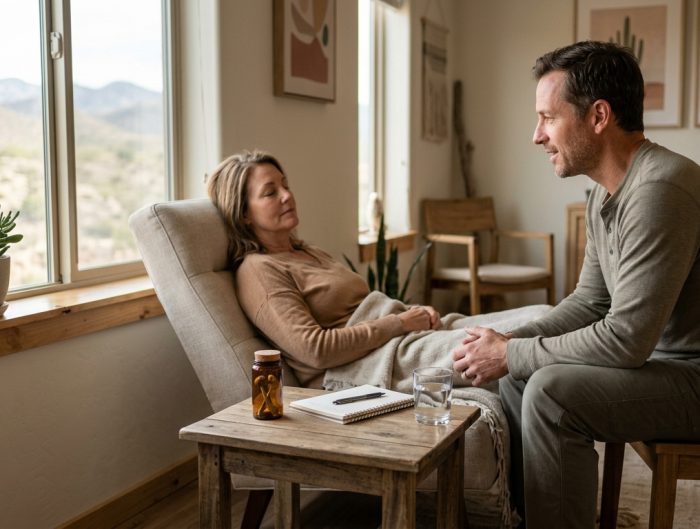
This is not a range for beginners. If you’re considering a moderate or high dose, having a trusted, sober companion present is not optional; it’s essential. Preparation matters enormously here: your mental state going in, the physical environment, your relationship with the person sitting with you, and your intentions all shape the experience in ways that a few extra tenths of a gram cannot.
One thing we see frequently at Healing Dose is people jumping to higher doses before they’ve developed the self-awareness and integration skills that make those experiences genuinely useful. A 3.5-gram experience without reflection afterward is just an intense afternoon. Paired with journaling, conversation, and honest self-examination in the days and weeks that follow, it can become something that genuinely supports long-term personal growth.
Biological Factors Influencing Individual Sensitivity
Your body is not the same as anyone else’s, and that fact has enormous implications for how you respond to psilocybin. Two people can take the exact same dose from the exact same batch and have wildly different experiences. This isn’t random: it’s driven by specific biological variables that you can learn to account for.
Body Weight and Metabolic Rates
Body weight plays a role, but it’s not as straightforward as “heavier person needs more.” The relationship is real but loose. A 200-pound person will generally need a somewhat larger dose than a 120-pound person to reach the same subjective intensity, but the difference isn’t perfectly linear.
A more significant factor is your metabolic rate and, specifically, how your liver processes psilocybin. Psilocybin is actually a prodrug: your body converts it into psilocin, which is the compound that actually interacts with your serotonin receptors. The speed and efficiency of that conversion varies from person to person based on liver enzyme activity, particularly the CYP2D6 enzyme family.
Think of it like caffeine sensitivity. You probably know people who can drink espresso at 9 PM and sleep fine, and others who get jittery from a single cup of green tea in the morning. Psilocybin sensitivity works similarly: some people are naturally more responsive, and others need more to reach the same place. You won’t know where you fall on this spectrum until you start with a conservative dose and observe your own response.
The Impact of Stomach Contents and Digestion
What’s in your stomach when you consume psilocybin has a meaningful effect on both the onset time and the intensity of the experience. An empty stomach leads to faster absorption, quicker onset (sometimes as fast as 15 to 20 minutes), and often a more intense peak. A full stomach slows everything down: onset might take 45 to 60 minutes, the peak may feel less sharp, and the overall duration can stretch.
This matters more than most people realize, especially for microdosing. If you take 0.1 grams on an empty stomach one day and with a full breakfast the next, you’re not comparing apples to apples. Consistency in timing relative to meals helps you isolate the actual variable you’re trying to adjust, which is the dose itself.
Many experienced practitioners recommend a light stomach: not completely empty, but not full either. A small piece of fruit or a few crackers about 30 minutes before can help reduce the nausea that some people experience, especially at higher doses, without dramatically altering absorption. Ginger tea is another popular companion for this reason.
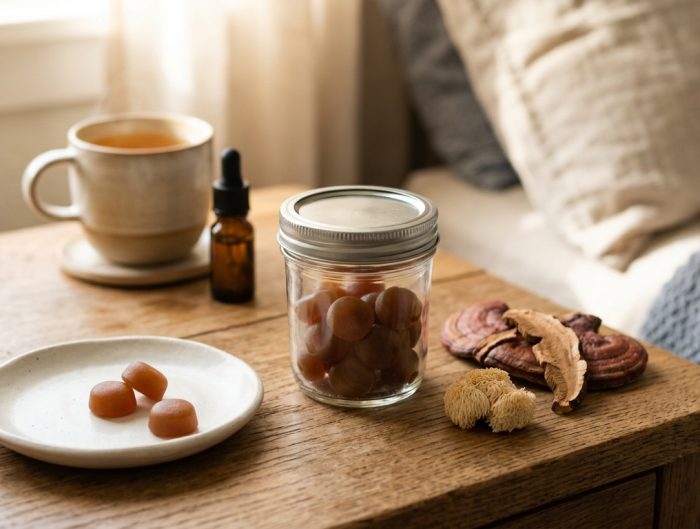
Some people also find that the form of consumption matters. Whole dried mushrooms require more digestive work than a finely ground powder in capsules or a tea preparation where the psilocybin has already been extracted into water. Tea tends to hit faster and sometimes feels more intense per milligram, while whole mushrooms release their contents more gradually.
Interactions with SSRIs and Other Medications
This is a critical topic that doesn’t get enough honest attention. If you’re currently taking SSRIs (selective serotonin reuptake inhibitors) like sertraline, fluoxetine, or escitalopram, or SNRIs like venlafaxine, your response to psilocybin will likely be significantly blunted. Many people on these medications report feeling little to nothing from doses that would be quite active for someone not on SSRIs.
The reason is pharmacological: both SSRIs and psilocin act on serotonin receptors, and the chronic receptor changes caused by SSRIs can reduce psilocin’s ability to bind effectively. Some people respond to this by taking larger doses to “push through,” which is a genuinely dangerous approach. Serotonin syndrome, while rare, is a medical emergency, and the risk increases when you combine serotonergic substances.
If you’re on any psychiatric medication, please talk to your prescribing physician before experimenting with psilocybin. We know that conversation can feel awkward or even impossible depending on your doctor’s attitudes, but your safety has to come first. Never abruptly stop an SSRI to try psilocybin: SSRI discontinuation syndrome is real and can be severe.
MAOIs (monoamine oxidase inhibitors) present a different concern. They can dramatically potentiate psilocybin, making a normal dose feel much stronger than expected. Lithium is another medication that has been associated with seizure risk when combined with psychedelics. The bottom line: if you take any medication that affects serotonin, dopamine, or norepinephrine, do your homework and consult a professional before proceeding.
Accounting for Potency Variations in Fungi
Here’s something that catches a lot of people off guard: not all psilocybin mushrooms are created equal. The potency difference between species, and even between individual mushrooms within the same species, can be enormous. A “gram” of one variety might contain two or three times the psilocybin of a “gram” of another.
Species Differences: Cubensis vs. Semilanceata
Psilocybe cubensis is the most widely cultivated and commonly available species. It’s the default reference point for most dosing guides, including this one. A typical dried cubensis mushroom contains roughly 0.5 to 0.9 percent psilocybin by weight, though this varies by strain and growing conditions.
Psilocybe semilanceata, commonly known as the liberty cap, is a wild species found across temperate grasslands in Europe and North America. Despite being much smaller physically, liberty caps are significantly more potent per gram than cubensis: typically 1.0 to 1.5 percent psilocybin by dry weight. That means 1 gram of dried liberty caps could deliver roughly twice the psilocybin of 1 gram of dried cubensis. If you’re used to cubensis dosing and switch to liberty caps without adjusting, you could be in for a much more intense experience than you planned.
Other species push the potency even higher. Psilocybe azurescens, found in the Pacific Northwest, can contain up to 1.8 percent psilocybin by dry weight, making it one of the most potent known species. Psilocybe cyanescens falls somewhere between cubensis and azurescens.
Within cubensis itself, different cultivated strains also vary. “Penis Envy” and its variants are widely reported to be 1.5 to 2 times more potent than standard cubensis strains like Golden Teacher or B+. These aren’t minor differences: they can be the gap between a gentle experience and an overwhelming one.
The practical takeaway is simple: always know what species and strain you’re working with, and if you’re trying something new, reduce your dose significantly until you know how it compares to what you’ve used before.
Weight Discrepancies Between Fresh and Dried Mushrooms
Fresh mushrooms are roughly 90 percent water by weight. That means 10 grams of fresh mushrooms is approximately equivalent to 1 gram dried. If someone hands you fresh mushrooms and you’re used to thinking in dried-weight terms, you need to multiply your usual dose by about ten.
This sounds straightforward, but the actual water content varies depending on the species, how recently they were harvested, and the humidity of their growing environment. Some fresh mushrooms might be 88 percent water; others might be 92 percent. That variance means the 10:1 ratio is a rough guideline, not a precise conversion.
Drying method also matters for potency. Psilocybin is relatively heat-stable, but psilocin (the active metabolite that’s also present in fresh mushrooms) degrades more readily with heat and oxidation. Mushrooms dried quickly at low temperatures tend to retain more of their original potency than those left to air-dry slowly in warm conditions. If you’re preparing your own material, a food dehydrator set below 70 degrees Celsius (158 Fahrenheit) is the standard recommendation.
Storage conditions affect potency over time as well. Dried mushrooms kept in an airtight container with a desiccant packet, stored in a cool and dark place, can retain their potency for a year or more. Those left in a plastic bag in a warm drawer will degrade noticeably within a few months. If you’re working with older material, be aware that your usual dose might feel weaker than expected.
The Role of Set and Setting in Dose Selection
“Set and setting” is a phrase coined by Timothy Leary in the 1960s, and despite its age, it remains the single most useful framework for thinking about psilocybin experiences. “Set” refers to your mindset: your emotional state, your expectations, your intentions, and any unresolved psychological material you’re carrying. “Setting” refers to your physical environment: where you are, who you’re with, and what sensory inputs surround you.
These two factors don’t just influence how a given dose feels; they should actively inform what dose you choose in the first place. The same 2-gram dose can feel manageable and insightful in a quiet, comfortable room with a trusted friend nearby, and feel chaotic and frightening at a loud gathering surrounded by strangers. The mushrooms didn’t change: the context did.
If you’re going through a difficult period emotionally, or if you’re feeling anxious about the experience itself, that’s useful information. It doesn’t necessarily mean you shouldn’t proceed, but it might mean choosing a lower dose than you otherwise would. Anxiety tends to amplify during psilocybin experiences, especially at moderate and higher doses. Starting lower gives you room to build confidence and develop trust in the process.
Your physical environment deserves just as much thought. A space that feels safe, private, and comfortable is worth more than any specific dose number. Soft lighting, access to nature or a window, comfortable places to sit and lie down, a curated playlist, water, and blankets: these aren’t luxuries. They’re practical tools that support a positive experience.
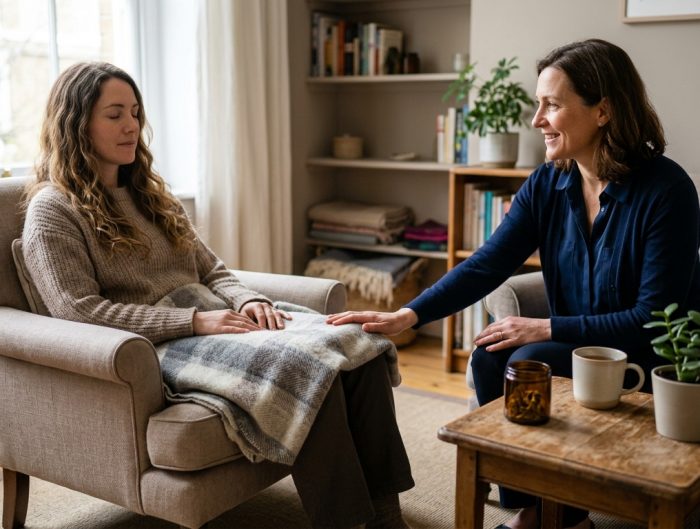
The people around you matter enormously. A sober, trusted companion who understands what you’re doing and won’t panic if you become emotional or confused is one of the most important safety measures available. This person doesn’t need to be a professional guide, though that’s certainly valuable if accessible. They need to be calm, patient, and genuinely caring.
For microdosing, set and setting still matter, just at a lower intensity. Taking your microdose on a morning when you have a stressful presentation might feel different than taking it on a relaxed Saturday. Paying attention to these patterns, ideally through journaling, helps you refine not just your dose but your entire approach over time.
One pattern we’ve noticed through the Healing Dose community is that people who invest time in preparing their set and setting consistently report more positive and useful experiences, regardless of dose. The dose gets you to a certain altitude; the set and setting determine whether the view from there is beautiful or terrifying.
Safety Protocols and Titration Strategies
Safety isn’t the most exciting topic, but it’s the one that makes everything else possible. Psilocybin has a remarkably high physiological safety profile: the lethal dose is estimated to be hundreds of times higher than a typical active dose, and there are no documented cases of fatal overdose from psilocybin mushrooms alone in healthy adults. The real risks are psychological, not physical, and they’re manageable with the right approach.
The ‘Start Low, Go Slow’ Philosophy
This phrase gets repeated so often it might sound like a cliché, but it’s genuinely the most important piece of practical advice for anyone exploring psilocybin dosing. Starting with less than you think you need, and increasing gradually over multiple separate sessions, is the safest and most informative approach.
Here’s why: you can always take more next time, but you can never take less once it’s in your system. Psilocybin takes 30 to 60 minutes to reach full effect, and the experience lasts four to six hours. If you take too much, you’re committed for that entire duration. There’s no off switch.
For microdosing, a practical titration strategy looks like this:
- Start at 0.05 to 0.1 grams of dried cubensis
- Maintain that dose for one to two weeks, journaling daily
- If you notice nothing after two weeks, increase by 0.025 to 0.05 grams
- If you notice perceptual changes (visual shimmer, feeling “different”), you’ve gone past the sub-perceptual threshold and should reduce slightly
- Your target is the highest dose that produces no obvious perceptual shift
For those exploring larger doses, the same principle applies on a different scale. If you’ve never taken a full dose before, start at 1.0 to 1.5 grams rather than jumping to 3.5. Give yourself at least two weeks between experiences to integrate what happened and decide whether you want to go further. Increasing by 0.5 grams at a time gives you a controlled way to find your personal sweet spot.
Keep a record of every session: the dose, the species and strain, whether you ate beforehand, your emotional state going in, and what you experienced. This data becomes incredibly valuable over time. Patterns emerge that help you make better decisions. Maybe you consistently have stronger responses on an empty stomach. Maybe a particular strain feels more potent to you than the numbers suggest. Your personal log is more useful than any generic dosing chart.
Managing Adverse Reactions and Over-Consumption
Even with careful preparation, difficult moments can happen. Nausea is the most common physical complaint, especially during the come-up phase. Ginger, whether as tea, capsules, or candied, can help significantly. Eating lightly beforehand and choosing tea or powdered preparations over whole mushrooms also tends to reduce stomach discomfort.
Anxiety and panic are the most common psychological challenges. If you or someone you’re sitting with begins to feel overwhelmed, these strategies can help:
- Change the environment: move to a different room, step outside, adjust the lighting or music
- Grounding techniques: feel your feet on the floor, hold something with texture, focus on slow breathing
- Verbal reassurance: simple, calm reminders like “you’re safe,” “this is temporary,” and “you took a substance and it will wear off” can be remarkably effective
- Physical comfort: a blanket, a hand to hold, a glass of water
The single most important thing to remember during a difficult moment is that it will end. Psilocybin experiences have a defined duration. No matter how intense or uncomfortable things feel, the substance will be metabolized and the experience will resolve within several hours.
If someone has consumed significantly more than intended, the priority is keeping them physically safe. Make sure they’re in a secure environment where they can’t injure themselves. Stay with them. Speak calmly. Don’t try to talk them out of their experience or tell them they’re being irrational: just be present and reassuring.
In extremely rare cases, particularly if someone has an underlying psychotic disorder or has combined psilocybin with other substances, professional medical help may be necessary. Don’t hesitate to call emergency services if someone is genuinely in crisis. You won’t get in trouble for seeking help, and a person’s safety always comes first.
One final note on re-dosing during a session: it’s generally not recommended, especially for less experienced people. Psilocybin tolerance builds almost immediately, so taking more partway through doesn’t simply “add” to the experience in a predictable way. It often just extends the duration without meaningfully increasing the peak, and it makes it harder to learn from the experience because you’ve introduced a second variable. Make your dosing decision before you begin, commit to it, and save any adjustments for next time.
Finding Your Own Path Forward
The right psilocybin dose for you is not a number you’ll find in an article, including this one. It’s something you discover through careful, patient self-observation. The ranges and guidelines here give you a map, but you’re the one walking the terrain. Your body, your mind, your history, and your intentions all shape the experience in ways that no chart can fully predict.
What we can tell you with confidence is that the people who have the most positive, useful experiences are the ones who take preparation seriously, start conservatively, keep honest records, and treat integration as just as important as the experience itself. Rushing toward higher doses rarely serves anyone well. The quiet, cumulative shifts that come from thoughtful, consistent practice tend to be far more meaningful than any single dramatic session.
If you’re just beginning to explore microdosing and want a personalized starting point, we built a short quiz that factors in your goals, experience level, and sensitivity to help you find a gentle range that fits. You can take the quiz here whenever you’re ready.
Whatever dose you choose, approach it with curiosity rather than expectation. Be patient with yourself. Write things down. And remember: the most important part of this process isn’t what happens during the experience. It’s what you do with it afterward.

You might also like