You’re exhausted. Not the kind of tired that a long weekend fixes, but a bone-deep weariness that follows you from the office to the couch and back again. If that sounds familiar, you’re far from alone: burnout has reached staggering levels across industries, and the conventional advice to “practice self-care” often feels hollow when the structural pressures haven’t changed. Against this backdrop, a growing number of professionals are quietly exploring microdosing as one tool for managing the emotional and cognitive toll of chronic workplace stress. The idea is simple but provocative: could sub-perceptual doses of psychedelic substances help restore the mental flexibility, emotional stability, and sense of purpose that burnout strips away? This question doesn’t have a neat, tidy answer yet, and anyone telling you otherwise is selling something. But the conversation is worth having honestly, with nuance, without hype, and with a clear-eyed look at what the evidence actually shows. That’s what we’re here to do.
Understanding Occupational Burnout and the Microdosing Trend
Burnout isn’t just feeling stressed. The World Health Organization classified it as an “occupational phenomenon” back in 2019, and since then the research community has worked to distinguish it from general anxiety or depression. What makes burnout unique is its origin: it stems specifically from chronic, unmanaged workplace stress. That distinction matters because the root cause shapes the approach you might take to address it.
The numbers in 2026 paint a grim picture. Work-related stress costs U.S. employers an estimated $300 billion annually through absenteeism, diminished productivity, and healthcare expenses. A recent analysis found that over 40% of employees report experiencing burnout at some point during their careers, with rates climbing sharply in healthcare, education, and tech. These aren’t abstract statistics. They represent real people dragging themselves through workdays, questioning their competence, and losing connection to work they once found meaningful.
The Three Pillars of Burnout: Exhaustion, Cynicism, and Reduced Efficacy
Psychologist Christina Maslach’s framework remains the gold standard for understanding burnout, and it breaks the experience into three interconnected dimensions. The first is emotional exhaustion: that drained, depleted feeling where you simply have nothing left to give. It’s the sense that your internal battery never fully recharges, no matter how much sleep you get.
The second pillar is cynicism, sometimes called depersonalization. This shows up as detachment from your work and colleagues. You might notice yourself becoming sarcastic about projects you once cared about, or feeling indifferent toward coworkers who need your support. It’s a protective mechanism, but it erodes relationships and job satisfaction over time.
The third dimension is reduced personal efficacy: a creeping belief that nothing you do matters or that you’re simply not good enough. This is particularly insidious because it creates a feedback loop. You feel ineffective, so you disengage, which makes you less effective, which deepens the sense of failure. Recognizing which of these three pillars is most dominant in your experience can help you think more clearly about what kind of support you actually need.
Defining Microdosing in a Professional Context
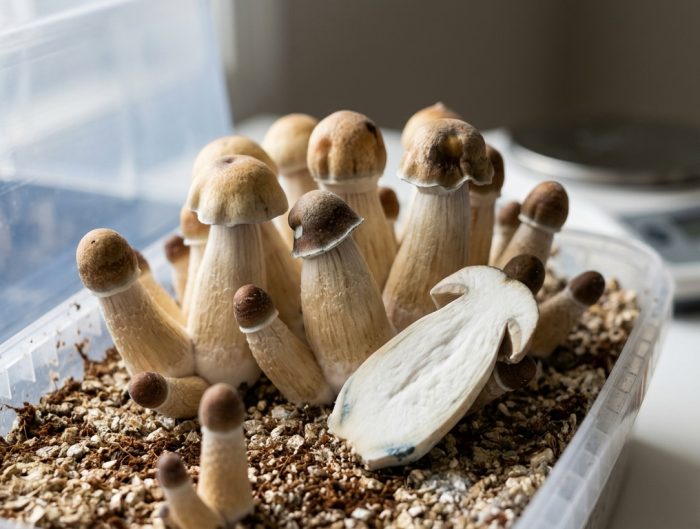
Microdosing refers to taking roughly one-tenth to one-twentieth of a standard psychoactive dose of a substance like psilocybin (the active compound in certain mushrooms) or LSD. The goal is to stay well below the “sub-perceptual threshold,” meaning you shouldn’t experience any visual distortions, altered states of consciousness, or impaired function. Think of it less like a dramatic experience and more like a subtle shift in background tone: a gentle hum of mental clarity or a slight softening of emotional reactivity.
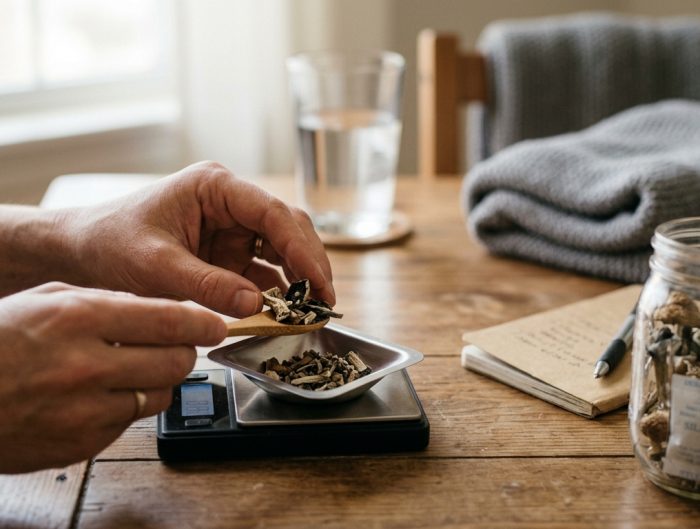
In practical terms, a microdose of psilocybin typically falls between 0.05g and 0.2g of dried mushroom material, taken on a structured schedule (often one day on, two days off). For professionals exploring this, the intent isn’t escapism. It’s about showing up to work with a bit more cognitive flexibility, a bit less emotional rigidity, and perhaps a renewed sense of engagement with tasks that had started to feel meaningless.
The practice has gained increasing mainstream attention as professionals from Silicon Valley to Wall Street have spoken openly about their experiences. But mainstream attention doesn’t equal mainstream evidence, and that distinction is crucial to keep in mind as you evaluate whether this approach might be relevant to your situation.
The Neurological Link Between Psychedelics and Stress Resilience
Understanding why microdosing might affect burnout requires a brief look at what chronic stress does to the brain. Prolonged workplace pressure doesn’t just make you feel bad: it physically changes neural pathways. The prefrontal cortex, responsible for decision-making and emotional regulation, shrinks under chronic stress. Meanwhile, the amygdala, your brain’s threat-detection center, becomes hyperactive. The result is a brain that’s simultaneously less capable of flexible thinking and more prone to reactive, fear-based responses.
This is where psychedelic compounds enter the conversation. Psilocybin and LSD interact with brain systems that are directly implicated in the stress response, and early research suggests they may help counteract some of the neural rigidity that chronic stress creates. The science is still young, but the mechanisms being studied are genuinely interesting.
Neuroplasticity and Breaking Negative Thought Loops
One of the most compelling areas of research involves neuroplasticity: the brain’s ability to form new neural connections and reorganize existing ones. Chronic burnout tends to entrench rigid thought patterns. You get stuck in loops of self-criticism, catastrophizing, or emotional numbness. These patterns become literal neural highways that your brain defaults to because they’re the most well-worn paths.
Psilocybin appears to promote neuroplasticity even at low doses. Research from 2024 and 2025 showed that psilocybin can increase the density of dendritic spines (the small protrusions on neurons that facilitate communication between brain cells) in the prefrontal cortex. The implication is that the substance may help the brain build new pathways, making it easier to step out of entrenched negative thought loops.
For someone stuck in burnout’s characteristic cycle of cynicism and reduced efficacy, this is a meaningful possibility. It doesn’t mean microdosing will magically erase negative thinking. But it might create a window of increased mental flexibility where new perspectives and behavioral patterns become easier to establish, especially when paired with intentional practices like journaling and reflection. At Healing Dose, we emphasize that this kind of integration work is not optional: it’s what turns a temporary shift into lasting change.
The Role of Serotonin Receptors in Emotional Regulation
Both psilocybin and LSD exert their primary effects through the serotonin system, specifically the 5-HT2A receptor. This receptor plays a central role in mood regulation, emotional processing, and cognitive flexibility. When chronically stressed, serotonin signaling can become dysregulated, contributing to the emotional flatness and irritability that characterize burnout.
Microdoses of psilocybin appear to gently modulate 5-HT2A receptor activity without producing the intense subjective experiences associated with full doses. Think of it as adjusting a dimmer switch rather than flipping the lights on full blast. This subtle modulation may help restore some emotional range: the ability to feel genuine enthusiasm, empathy, or curiosity that burnout has dampened.
It’s worth being honest about the limits of this research. Most studies on serotonin receptor modulation and psychedelics have been conducted with full doses, not microdoses. Extrapolating from full-dose findings to microdose contexts involves assumptions that haven’t been fully validated. The handful of microdosing-specific studies published through 2026 show promising but mixed findings, and sample sizes remain small. Enthusiasm is understandable, but caution is equally warranted.
Potential Benefits for Workplace Performance and Well-being
If the neurological mechanisms hold up under continued scrutiny, what might the practical benefits look like for someone dealing with occupational burnout? The anecdotal reports are extensive, and while anecdotes aren’t evidence, they do point toward patterns worth examining.
Many professionals who have tried microdosing for burnout-related struggles describe a cluster of changes: improved focus during deep work sessions, greater patience in meetings, more creative approaches to problems they’d been stuck on, and a renewed sense of meaning in their daily tasks. These reports align with what you’d expect from increased neuroplasticity and improved serotonin function, though the placebo effect (which we’ll address shortly) can’t be ruled out.
Enhancing Cognitive Flexibility and Creative Problem Solving
Burnout narrows your thinking. When you’re exhausted and cynical, you default to the most familiar, least effortful cognitive strategies. Complex problems start to feel unsolvable, and you lose the ability to see situations from multiple angles. This cognitive rigidity isn’t a character flaw: it’s a predictable consequence of a brain under chronic stress.
Microdosing may help restore some of that lost flexibility. Users frequently report that on dosing days, they find it easier to approach problems from fresh angles, make unexpected connections between ideas, and tolerate the ambiguity that creative work requires. A product designer might notice that brainstorming sessions feel less forced. A teacher might find new ways to explain a concept they’ve taught dozens of times.
These experiences are consistent with the neuroplasticity research described earlier, and they address one of burnout’s most frustrating dimensions: the feeling that you’ve lost the spark that once made your work engaging. Whether the mechanism is pharmacological, psychological, or some combination of both, the reported improvements in cognitive flexibility are among the most consistent themes in microdosing self-reports.
Reducing Social Anxiety and Improving Team Collaboration
Burnout doesn’t just affect your relationship with your work: it affects your relationships with the people you work alongside. The cynicism pillar of burnout often manifests as social withdrawal, impatience with colleagues, and a general sense that interpersonal interactions are draining rather than energizing.
Some microdosing practitioners report a subtle but meaningful shift in their social experiences at work. Conversations feel less effortful. There’s a slight increase in empathy and patience, a willingness to listen rather than react. One way to think about it is that the emotional buffer you’ve lost to burnout gets partially restored: you have a little more capacity to engage with others without feeling depleted.
This social dimension matters because workplace relationships are both a major contributor to burnout and a major protective factor against it. Feeling disconnected from your team accelerates the burnout cycle, while feeling supported and connected slows it down. If microdosing can even modestly improve interpersonal warmth and reduce social anxiety in professional settings, that’s a meaningful contribution to burnout recovery, even if it’s not the whole solution.
Risks, Side Effects, and the Placebo Debate
Here’s where intellectual honesty becomes essential. The potential benefits of microdosing are real enough to warrant serious investigation, but so are the risks and uncertainties. Anyone considering this approach deserves a complete picture, not just the appealing parts.
The costs of burnout to organizations and individuals are staggering enough that people are understandably eager for solutions. That eagerness can make it tempting to overlook legitimate concerns. Don’t skip this section.
The Challenges of Self-Medicating Without Clinical Oversight
The vast majority of people who microdose are doing so outside of any clinical framework. They’re sourcing their own substances, determining their own doses, and monitoring their own responses without professional guidance. This creates several concrete risks.
- Dosage inconsistency is a real problem. Natural psilocybin mushrooms vary significantly in potency from specimen to specimen. What feels like a subtle microdose one day might be noticeably psychoactive the next, which is the last thing you want before a 9 a.m. client presentation.
- Drug interactions are poorly understood at microdose levels. If you’re taking SSRIs, SNRIs, lithium, or other psychiatric medications, combining them with psilocybin carries risks that range from diminished effectiveness to potentially dangerous serotonin syndrome.
- Individual sensitivity varies enormously. Just as some people get jittery from half a cup of coffee while others drink four cups without blinking, psychedelic sensitivity is highly individual. A dose that’s sub-perceptual for one person might produce uncomfortable anxiety or overstimulation in another.
- Some days, nothing happens. This is worth stating plainly. Not every microdose day will feel different from a non-dose day, and that’s actually expected with sub-perceptual dosing. But it can be discouraging if you’re hoping for consistent, noticeable shifts.
The absence of clinical oversight also means there’s no one helping you distinguish between a useful experience and a problematic one. A therapist or trained guide can help you contextualize what you’re noticing and adjust your approach accordingly. Without that support, you’re essentially running an uncontrolled experiment on yourself.
Distinguishing Pharmacological Impact from Expectancy Bias
The placebo question looms large over microdosing research, and it should. If you believe that a substance will improve your mood and focus, there’s a meaningful chance that your mood and focus will improve regardless of what the substance actually does pharmacologically. This is expectancy bias, and it’s powerful.
The most rigorous microdosing study to date, published in 2021 by researchers at Imperial College London, used an innovative self-blinding protocol. Participants prepared their own microdoses and placebos, then took them without knowing which was which. The findings showed improvements in well-being and cognition across the study period, but those improvements were similar in both the microdose and placebo groups.
This doesn’t necessarily mean microdosing “doesn’t work.” It might mean that the ritual of intentional self-care, the act of committing to a protocol, journaling about your experiences, and paying closer attention to your mental state, carries its own genuine benefits. And honestly? If the practice of microdosing (even partly through placebo mechanisms) helps someone break out of a burnout cycle, the philosophical question of “why it worked” may matter less than the practical reality that it did.
Still, if you’re going to invest time, money, and legal risk in a practice, you deserve to know what the evidence actually supports versus what might be attributable to your own expectations. Intellectual honesty here isn’t pessimism: it’s respect for your intelligence.
Legal, Ethical, and Professional Considerations
Even if microdosing shows genuine promise for burnout, the legal and professional realities create significant complications that can’t be hand-waved away. Your career, your livelihood, and in some cases your freedom are all potentially at stake.
Navigating Workplace Drug Policies and Disclosure
In most U.S. states and many countries worldwide, psilocybin and LSD remain Schedule I controlled substances. Possession is a criminal offense, and use can trigger serious professional consequences even in jurisdictions where enforcement is relaxed. If your employer conducts drug testing, psilocybin can be detected, though standard five-panel drug screens don’t typically test for it. More comprehensive panels might.
The question of disclosure is thorny. Should you tell your manager or HR department that you’re microdosing? In almost all current professional contexts, the answer is no: not because honesty isn’t valuable, but because the legal and career risks are too significant. This creates an uncomfortable tension for people who value transparency in their professional relationships.
Some practical considerations if you’re weighing this decision:
- Review your company’s drug policy carefully, including any “fitness for duty” clauses
- Understand that even in states or cities that have decriminalized psilocybin, your employer may still prohibit its use
- Federal employees and contractors face particularly strict regulations regardless of state or local laws
- Professional licenses in fields like medicine, law, and aviation can be jeopardized by any controlled substance use
The gap between the cultural conversation around psychedelics (increasingly open and curious) and the legal reality (still largely prohibitive) is one of the most challenging aspects of this topic. Being aware of that gap is essential for making informed decisions.
The Evolving Global Regulatory Landscape
The legal picture is shifting, though unevenly. Oregon’s regulated psilocybin services program, which launched in 2023, continues to operate and has provided data on supervised psilocybin use in therapeutic settings. Colorado followed with its own framework. Australia approved psilocybin for therapeutic use under medical supervision in 2023, and several Canadian cities have effectively decriminalized possession.
But these regulatory changes primarily apply to supervised, full-dose therapeutic sessions, not to unsupervised microdosing for workplace performance. The distinction is important. Regulatory bodies are generally more comfortable with controlled clinical settings than with individuals self-administering psychedelics at their kitchen counter before heading to the office.
Some researchers and advocates are pushing for microdosing-specific regulatory frameworks, arguing that the risk profile of sub-perceptual doses is fundamentally different from full psychedelic experiences. This argument has merit, but regulatory change moves slowly, and the current patchwork of laws means that what’s tolerated in one jurisdiction could result in criminal charges in another. Keep yourself informed about the specific laws where you live and work. The landscape is genuinely changing, but it hasn’t changed enough yet to assume safety in most places.
There’s also an emerging conversation about alternative approaches like CBD microdosing, which operates in a much clearer legal space. While CBD and psilocybin work through entirely different mechanisms, some people find that starting with legal, lower-risk options helps them build the habits of intentional self-care and reflection that make any approach more effective.
Integrating Holistic Recovery Beyond Microdosing
If there’s one thing we consistently emphasize at Healing Dose, it’s that microdosing is not a standalone solution for anything, and certainly not for something as complex as occupational burnout. Even in the most optimistic reading of the evidence, microdosing is best understood as one element within a broader recovery strategy.
Burnout has structural causes: unreasonable workloads, lack of autonomy, insufficient recognition, unclear expectations, and toxic workplace dynamics. No substance, at any dose, addresses those root causes. If your job requires 60-hour weeks with no support, microdosing won’t make that sustainable. It might help you cope in the short term, but coping isn’t the same as recovering.
A more complete approach to burnout recovery typically involves several interconnected practices:
- Boundary-setting at work: learning to say no, negotiating workload, and protecting non-work time
- Physical movement: even moderate exercise has strong evidence for improving mood and cognitive function
- Sleep hygiene: burnout and sleep disruption feed each other in a vicious cycle
- Social connection: rebuilding relationships that burnout has eroded, both at work and outside of it
- Professional support: therapy, coaching, or counseling with someone who understands occupational stress
- Reflective practices: journaling, meditation, or structured self-reflection that helps you track patterns over time
If you do choose to explore microdosing as part of this broader approach, the integration piece is what makes the difference between a fleeting experience and a meaningful shift. Keeping a simple journal where you note your dose, the day’s context, and what you noticed (or didn’t notice) creates a feedback loop that helps you understand your own responses over weeks and months. The quiet changes that microdosing may support: a slightly softer emotional baseline, a bit more creative flexibility, a renewed curiosity about your work: tend to emerge gradually and cumulatively rather than as a single dramatic moment.
This patience is hard, especially when you’re burned out and desperate for relief. But the most sustainable changes in how you feel and function tend to build slowly. Treating microdosing as one thread in a larger tapestry of self-care, rather than as a silver bullet, sets more realistic expectations and leads to better outcomes regardless of whether the pharmacological effects prove significant.
Your burnout didn’t develop overnight, and recovering from it won’t happen overnight either. But the fact that you’re reading this, thinking critically about your options, and looking for evidence-based information rather than quick fixes: that tells me you’re already approaching this with the kind of thoughtfulness that makes a real difference.
If you’re curious about where to begin, finding the right starting point matters more than most people realize. Individual sensitivity to psychedelic compounds varies widely, and what works for a colleague or an internet stranger may not be appropriate for you. Take the dose quiz to find a gentle starting range based on your goals, experience, and sensitivity: it’s designed to help you approach this at your own pace, with care rather than guesswork.
Whatever path you choose, be kind to yourself along the way. Burnout is not a personal failure. It’s a signal that something in the system needs to change, and honoring that signal, in whatever form your response takes, is a genuinely courageous act.

You might also like