Two substances sit at the center of a growing conversation about psychedelic science, personal growth, and mental health support: psilocybin and LSD. Both interact with serotonin receptors, both can produce profound shifts in perception and emotion, and both are being studied with increasing seriousness by researchers around the world. Yet despite their surface similarities, these two compounds differ in meaningful ways, from their chemical origins and duration to the quality of the experiences they produce. If you’ve been curious about how psilocybin compares to LSD, whether for personal exploration or simply to understand the science, you’re in the right place. This guide walks through the key distinctions honestly and clearly, without hype or exaggeration. Everyone’s body and mind respond differently, so think of this as a starting point for your own research rather than a definitive prescription.
Chemical Origins and Biological Mechanisms
Understanding where these substances come from and how they work in the body gives you a much stronger foundation for making informed decisions. Psilocybin and LSD share a surprising amount of pharmacological overlap, but their origins could not be more different. One grows in the wild, produced by fungi that have existed for millions of years. The other was synthesized in a laboratory less than a century ago. These different origins influence everything from how each compound is produced and distributed to how your body processes it.
Both substances belong to the broader class of serotonergic psychedelics, meaning they primarily exert their influence through the serotonin system. But the specifics of that interaction, and the downstream consequences for your subjective experience, vary in ways that matter. Let’s break each one down.
Psilocybin: The Fungal Alkaloid
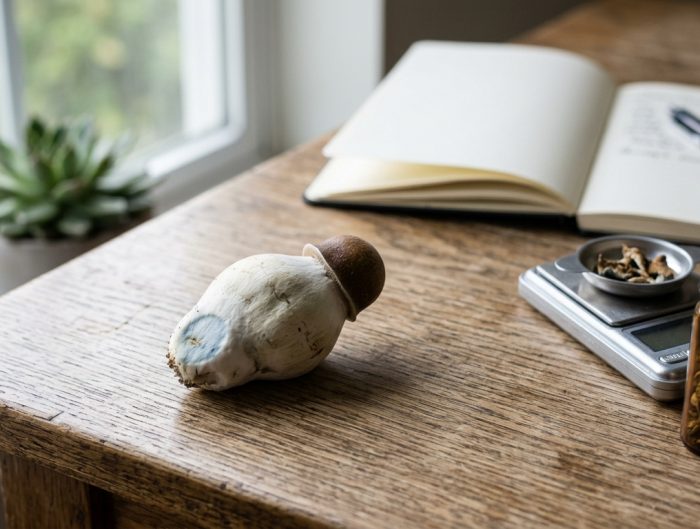
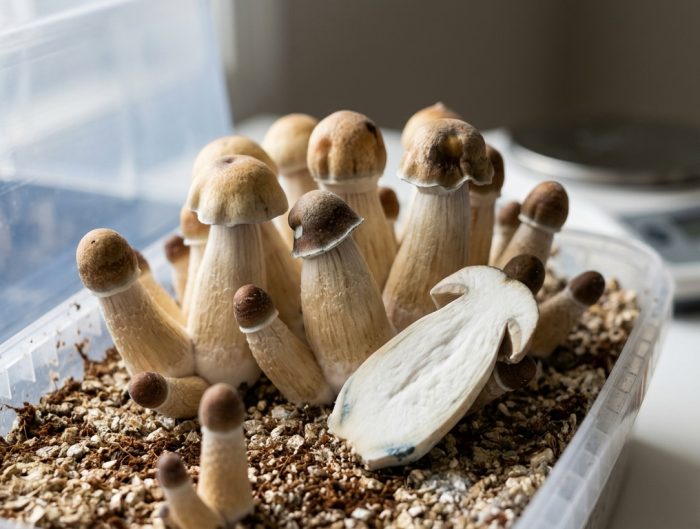
Psilocybin is a naturally occurring compound found in over 200 species of mushrooms, most commonly those in the Psilocybe genus. When you ingest psilocybin, your body doesn’t actually use it in that form. Instead, your liver converts psilocybin into psilocin through a process called dephosphorylation. Psilocin is the pharmacologically active molecule, the one that actually crosses the blood-brain barrier and interacts with your neural chemistry.
This conversion step matters because it introduces variability. How quickly your body metabolizes psilocybin depends on factors like your liver enzyme activity, whether you’ve eaten recently, and your individual metabolism. This is one reason why two people can eat the same mushroom and have noticeably different onset times and intensity levels.
Psilocybin mushrooms have been used in indigenous ceremonial contexts for thousands of years, particularly in Mesoamerican cultures. The compound was first isolated and identified by Swiss chemist Albert Hofmann in 1958, the same scientist who discovered LSD. The natural origin of psilocybin means its production doesn’t require specialized chemistry equipment, though the potency of mushrooms varies significantly depending on species, growing conditions, and storage methods.
One practical consideration: because psilocybin comes from a biological source, dosing can be inconsistent unless you’re working with lab-tested material. A single Psilocybe cubensis mushroom might contain anywhere from 0.2% to 1.2% psilocybin by dry weight. This variability is something we emphasize at Healing Dose when discussing safe, thoughtful approaches to microdosing.
LSD: The Synthetic Ergot Derivative
LSD, or lysergic acid diethylamide, was first synthesized by Albert Hofmann in 1938 while he was researching ergot alkaloids at Sandoz Laboratories in Basel, Switzerland. Ergot is a fungus that grows on rye and other grains, so LSD does have an indirect connection to the natural world, but the compound itself doesn’t exist in nature. It requires deliberate chemical synthesis.
Hofmann famously discovered LSD’s psychoactive properties accidentally in 1943 when he absorbed a small amount through his skin. What followed was the first recorded LSD experience, and it opened a door that researchers, therapists, and curious individuals have been walking through ever since.
Because LSD is synthetic, its potency is remarkably consistent when produced in a controlled setting. A single dose is measured in micrograms, not milligrams, making it one of the most potent psychoactive substances known. This extreme potency means that even tiny variations in dosage can produce noticeably different experiences, which is why precision matters enormously.
LSD is typically distributed on blotter paper, as liquid drops, or in gel tabs. Unlike psilocybin mushrooms, there’s no natural variability in the compound itself, though street-level doses can vary depending on how carefully they were prepared. The synthetic nature of LSD also means it’s chemically stable when stored properly, retaining potency for years if kept away from light, heat, and moisture.
Serotonin Receptor Interaction
Both psilocybin (via its active metabolite psilocin) and LSD primarily work by binding to the 5-HT2A serotonin receptor. This receptor plays a central role in cognition, perception, and mood regulation. When either compound activates 5-HT2A receptors, it disrupts the brain’s default mode network, a system of interconnected brain regions that maintains your ordinary sense of self and habitual thought patterns.
This disruption is what produces the characteristic shifts in perception, emotion, and self-awareness that people report. The acute effects of both LSD and psilocybin show substantial overlap in brain imaging studies, with both compounds increasing connectivity between brain regions that don’t normally communicate.
Here’s where the differences emerge. LSD binds to a broader range of receptors beyond 5-HT2A. It also interacts with dopamine D2 receptors and several other serotonin receptor subtypes, which may help explain its longer duration and somewhat different subjective quality. Psilocin’s receptor binding profile is narrower, which some researchers believe contributes to its more emotionally focused, less stimulating character.
LSD also has a unique physical interaction with the 5-HT2A receptor. Research has shown that once LSD binds to this receptor, a molecular “lid” closes over it, trapping the molecule in place for an extended period. This structural quirk helps explain why LSD’s influence lasts so much longer than psilocybin’s, even though both compounds target the same primary receptor.
Duration and Temporal Experience
One of the most practical differences between psilocybin and LSD is simply how long each experience lasts. This isn’t a minor detail. Duration affects everything from how you plan your day to how emotionally and physically prepared you need to be. It also influences which substance researchers choose for clinical studies, since session length has real implications for therapist availability, patient comfort, and treatment costs.
The 4-6 Hour Psilocybin Window
A typical psilocybin experience lasts between four and six hours, with the onset usually beginning 20 to 45 minutes after ingestion. The peak tends to arrive around 60 to 90 minutes in and lasts for roughly one to two hours before gradually tapering off. Most people feel essentially back to baseline within six hours, though a gentle afterglow of reflective calm or emotional openness can linger into the following day.
This relatively compact timeline is one reason psilocybin has become the preferred compound for many clinical research protocols. A therapist can guide a patient through an entire session within a standard workday, which makes the logistics of supervised psychedelic-assisted therapy far more manageable.
For personal exploration, the shorter duration also means less commitment and less potential for fatigue. If you’re someone who feels anxious about the idea of an extended altered state, knowing that the experience will be largely complete in four to six hours can provide genuine reassurance. Many people find this window feels more natural and manageable, like a contained chapter rather than a full novel.
The onset can sometimes be accompanied by mild nausea, particularly when consuming whole dried mushrooms. This is related to the chitin in the mushroom cell walls rather than the psilocybin itself, and it typically passes within the first 30 to 45 minutes. Preparing mushrooms as a tea or using a lemon tek method can reduce this discomfort for many people.
The Extended 12-Hour LSD Journey
LSD operates on a fundamentally different timeline. A typical experience lasts 8 to 12 hours, with some people reporting residual shifts in perception for up to 14 hours after ingestion. The onset is usually faster than psilocybin, often beginning within 20 to 30 minutes, but the peak is broader, sometimes stretching across three to four hours before a very gradual descent.
This extended duration is directly related to the molecular lid effect mentioned earlier: LSD physically lodges itself into the 5-HT2A receptor and stays there. Your body isn’t metabolizing it and clearing it the way it does with psilocin. The compound is literally stuck in place, continuing to activate the receptor long after it would otherwise have been released.
For some people, this longer timeline is a feature rather than a bug. It allows for a more expansive, unfolding experience with time to explore different mental territories. For others, especially those new to psychedelic experiences, 12 hours can feel exhausting and overwhelming. The inability to simply “turn it off” when you’re ready to be done is a real consideration.
From a practical standpoint, an LSD experience requires clearing an entire day and often the following morning as well. Sleep is typically impossible until the compound has substantially worn off, which means late-afternoon or evening dosing can lead to a sleepless night. Planning matters here, and this is one area where the differences between LSD and psilocybin become very tangible in everyday terms.
Subjective Effects and Sensory Shifts
Beyond chemistry and duration, what actually distinguishes these two experiences from the inside? People who have tried both substances often describe them as having distinctly different “flavors” or qualities, even though they share a common pharmacological foundation. These differences are subjective and individual, but certain patterns show up consistently enough to be worth discussing.
Visual and Auditory Distortions
Both psilocybin and LSD can produce visual changes, but the character of those changes tends to differ. Psilocybin experiences are often described as more organic and flowing: colors may appear richer, textures might seem to breathe or pulse, and closed-eye visuals frequently involve fractal patterns, natural imagery, or dreamlike scenes. The visual quality often feels warm, earthy, and somewhat soft around the edges.
LSD visuals tend to be described as sharper, more geometric, and more electrically vivid. People commonly report intricate tessellating patterns, enhanced edge detection, and a sense that visual information is being processed with unusual precision. Colors may seem almost neon-bright, and surfaces can appear to ripple or morph with a crisp, high-definition quality.
Auditory changes occur with both substances but are generally more pronounced with psilocybin. Music can take on extraordinary depth and emotional resonance, and some people report hearing sounds with a spatial quality they don’t normally perceive. LSD also enhances music appreciation, but the enhancement tends to feel more analytical, as if you can hear individual instruments and production layers with unusual clarity.
These are generalizations, and your personal experience may not match these descriptions at all. Set, setting, dosage, and your individual neurobiology all play enormous roles in shaping what you actually perceive.
Emotional Depth vs. Analytical Clarity
This is perhaps the most frequently cited distinction between the two substances, and it’s one that holds up across a wide range of personal reports. Psilocybin experiences tend to be more emotionally intense and inwardly focused. People often describe feeling a profound connection to their emotions, memories, and relationships. Tears, laughter, and deep feelings of love or grief are common. The experience can feel very personal, almost intimate, like a conversation with yourself.
LSD, by contrast, often produces a more outward-facing, cognitively stimulating experience. People frequently describe enhanced pattern recognition, rapid conceptual thinking, and a sense of seeing connections between ideas that they normally wouldn’t notice. There’s often a feeling of mental energy and alertness that can be quite different from the dreamy, introspective quality of psilocybin.
Neither quality is inherently better. Some people find psilocybin’s emotional depth more meaningful for personal growth and self-reflection. Others prefer LSD’s cognitive clarity for creative work or philosophical exploration. At Healing Dose, we often hear from people who’ve tried both and developed a clear preference based on what they’re looking for in a given experience. Your own preference, if you develop one, is entirely valid.
One thing worth considering: the emotional intensity of psilocybin can sometimes feel challenging, particularly for people who are carrying unprocessed grief or trauma. The experience doesn’t always go where you want it to go. LSD’s more analytical quality can sometimes feel easier to manage in this regard, though it carries its own challenges, particularly the sheer length of time you’re in an altered state.
Dosage, Potency, and Administration
Getting dosage right is one of the most important practical considerations with any psychedelic substance. Too little and you may not reach the threshold for a meaningful experience. Too much and you risk an overwhelming or frightening one. The dosing scales for psilocybin and LSD are dramatically different, which can be confusing if you’re accustomed to thinking about one but not the other.
Micrograms vs. Milligrams
LSD is active at extraordinarily small doses. A standard full-strength dose ranges from about 75 to 200 micrograms, with 100 micrograms being a common reference point. For microdosing, people typically work with 5 to 20 micrograms. To put this in perspective, a microgram is one-millionth of a gram. You cannot see, taste, or feel a dose of LSD in your hand.
Psilocybin, by contrast, is measured in milligrams, which are a thousand times larger than micrograms. A moderate dose of dried psilocybin mushrooms is roughly 2 to 3.5 grams, which contains approximately 6 to 25 milligrams of actual psilocybin depending on the species and batch. Microdoses of psilocybin mushrooms typically fall in the 50 to 300 milligram range of dried material.
This difference in scale has practical implications:
- LSD requires precise measurement tools or pre-dosed preparations, since the margin between a mild dose and a strong one can be just 50 micrograms
- Psilocybin mushrooms can be weighed on a standard kitchen scale with milligram precision, though a jeweler’s scale is more reliable
- Volumetric dosing (dissolving LSD in a measured amount of distilled water) is the most reliable method for achieving consistent microdoses
- Psilocybin content varies between mushroom species, individual specimens, and even different parts of the same mushroom (caps tend to contain more psilocybin than stems)
For microdosing specifically, this variability issue is significant. If you’re working with psilocybin mushrooms, grinding your entire supply into a fine powder and mixing thoroughly before measuring individual doses helps ensure consistency. This is a practice we discuss frequently at Healing Dose, because inconsistent dosing is one of the most common sources of frustration for people starting out.
Administration methods also differ. Psilocybin mushrooms can be eaten directly, brewed into tea, mixed into food, or taken in capsule form. LSD is typically taken sublingually (placed under the tongue) on blotter paper or as a liquid drop. Both substances are absorbed through the gastrointestinal tract, but LSD’s sublingual route can produce a slightly faster onset.
One more practical note: both substances produce cross-tolerance with each other. If you take psilocybin on Monday, your sensitivity to LSD (and vice versa) will be significantly reduced for roughly 10 to 14 days. This is because both compounds act on the same receptor, and that receptor downregulates after activation. Spacing experiences at least two weeks apart is a common recommendation for maintaining sensitivity.
Therapeutic Potential and Modern Research
The scientific study of psilocybin and LSD has experienced a dramatic resurgence over the past decade, and 2026 finds us in a period of rapid expansion in both clinical trials and regulatory discussions. Both substances show genuine promise for several mental health conditions, though psilocybin has received considerably more research attention in recent years.
Applications for Treatment-Resistant Depression
Treatment-resistant depression, defined as depression that hasn’t responded adequately to at least two standard antidepressant medications, affects roughly 30% of people diagnosed with major depressive disorder. For these individuals, the standard pharmacological toolkit has failed, and the need for new approaches is urgent.
Psilocybin has emerged as one of the most studied psychedelic compounds for this condition. Multiple clinical trials have demonstrated significant and sustained reductions in depressive experiences following just one or two supervised psilocybin sessions, with some participants maintaining improvements for six months or longer. The FDA granted psilocybin “Breakthrough Therapy” designation for treatment-resistant depression, a status that accelerates the review process for particularly promising compounds.
LSD research for depression exists but is less advanced. Smaller studies have shown promising preliminary data, and several trials are currently underway. The longer session duration required for LSD-assisted therapy presents logistical challenges for clinical settings, which partially explains why psilocybin has attracted more research funding and attention.
One critical point: neither substance works like a traditional antidepressant. You don’t take psilocybin or LSD daily the way you would an SSRI. Instead, the therapeutic model involves one to three supervised sessions spaced weeks apart, combined with extensive preparation and integration therapy. The psychedelic experience itself appears to create a window of neuroplasticity, a period during which the brain is more receptive to forming new patterns, but the lasting benefit depends on what you do with that window. Integration work, including journaling, reflection, and sometimes ongoing therapy, is what helps temporary insights become lasting changes.
Addressing Anxiety and Substance Use Disorders
Beyond depression, both substances are being studied for anxiety, particularly end-of-life anxiety in people with terminal diagnoses. Some of the most emotionally powerful research in this field has involved psilocybin sessions for cancer patients experiencing existential distress. Participants frequently describe a reduced fear of death, a greater sense of meaning, and improved quality of life in their remaining time.
Substance use disorders represent another active area of investigation. Psilocybin has shown notable promise in supporting people through addiction to alcohol and tobacco, with some pilot studies reporting abstinence rates significantly higher than those achieved with conventional approaches. The mechanism appears to involve both the neuroplasticity window and the subjective experience itself, which often produces insights about the emotional roots of addictive behavior.
LSD-assisted therapy for alcohol use disorder actually has historical precedent. Research conducted in the 1950s and 1960s, before psychedelics were broadly prohibited, showed promising data for LSD in treating alcoholism. Modern researchers are now revisiting this work with contemporary methodologies and more rigorous study designs.
The psychedelic wellness sector continues to grow rapidly, with increasing attention to how these substances might be integrated into broader mental health care systems. However, significant questions remain about access, cost, and equity. Supervised psychedelic therapy sessions can be expensive, with some programs costing upward of $12,000 for a complete course of treatment, raising important questions about who can actually benefit from these approaches.
Safety Profiles and Risk Mitigation
Neither psilocybin nor LSD carries significant risk of physical toxicity at typical doses. Both substances have very high therapeutic indices, meaning the dose required to produce a psychoactive experience is far below the dose that would cause physical harm. There are no confirmed cases of fatal overdose from either substance alone in healthy adults.
That said, “physically safe” doesn’t mean “risk-free.” The primary risks associated with both compounds are psychological, and they deserve honest acknowledgment.
Challenging psychological experiences can occur with either substance. These may involve intense anxiety, confusion, paranoia, or disturbing visual and emotional content. With psilocybin, such experiences typically resolve within the four-to-six-hour window. With LSD, the longer duration means a difficult experience can persist for many hours, which is why having a trusted, sober companion present is particularly important.
Both substances can precipitate or exacerbate psychotic episodes in individuals with a personal or family history of psychotic disorders such as schizophrenia or bipolar disorder with psychotic features. This is a genuine contraindication, not a theoretical concern. If you have a personal or family history of these conditions, these substances carry real risk for you.
Practical risk reduction strategies include:
- Starting with lower doses, especially if you have no prior experience
- Choosing a safe, comfortable, and familiar environment
- Having a trusted person present who is not under the influence of any substance
- Avoiding mixing with other substances, particularly cannabis, stimulants, or alcohol
- Not using either compound if you’re taking lithium, which can interact dangerously with serotonergic psychedelics
- Allowing adequate time between experiences (at least two weeks) to prevent tolerance buildup and allow for integration
For people interested in microdosing rather than full-dose experiences, the risk profile is considerably different. Microdoses are, by definition, sub-perceptual: you shouldn’t feel noticeably altered. The risks at these doses are much lower, though individual sensitivity varies widely. What constitutes a microdose for one person might produce noticeable shifts for another, which is why starting at the low end of suggested ranges and adjusting gradually is so important.
The billing and insurance landscape for psychedelic therapy is also evolving as more jurisdictions explore regulated access. Understanding the legal status in your specific location is essential, as regulations vary dramatically between countries, states, and even cities.
One honest note about both substances: not every experience is positive, and not every positive experience produces lasting change. Some days, particularly with microdosing, you might notice nothing at all. Other times, you might feel slightly off, jittery, or emotionally raw. These less-than-ideal experiences are normal and don’t mean something is wrong. They’re part of the process of learning how your individual body and mind respond.
Finding Your Own Path Forward
The comparison between psilocybin and LSD isn’t about declaring a winner. These are two distinct compounds with different timelines, different subjective qualities, and different practical considerations. Psilocybin tends to offer a shorter, more emotionally immersive experience rooted in a natural source with thousands of years of human use. LSD provides a longer, often more cognitively stimulating experience born from modern chemistry. Both show genuine therapeutic promise, and both deserve respect for their potency and the depth of experience they can produce.
What matters most is approaching either substance with honesty, preparation, and a willingness to sit with whatever comes up, including the possibility that the experience isn’t what you expected. Integration, the work you do afterward to reflect on and apply what you’ve noticed, is where the real value accumulates over time.
If you’re considering microdosing and want to find a gentle starting range based on your goals, experience, and sensitivity, you might find it helpful to take the dose quiz. It’s designed to help you approach this process thoughtfully and at your own pace, because there’s no rush, and getting it right matters more than getting it fast.

You might also like