Denver has become one of the most important cities in the country for people curious about psilocybin therapy. Since Colorado voters approved Proposition 122 in 2022, the state has been building a legal framework that allows adults to access psilocybin in supervised settings, and Denver sits at the center of that movement. If you’ve been wondering where to find psilocybin therapy in Denver, what it costs, how to choose a qualified facilitator, and what the experience actually looks like, you’re in the right place. This guide is designed to walk you through each of those questions with honesty, clarity, and zero hype. Whether you’re exploring psilocybin for mental health support, personal growth, or simply because you’re curious, you deserve straightforward information that helps you make a thoughtful decision. We’ll cover the legal landscape, the types of services available, how to vet practitioners, and what a session actually feels like from start to finish.
Understanding Psilocybin Laws and Regulations in Denver
Colorado’s legal approach to psilocybin is unlike anything else in the United States, and understanding the rules is essential before you start looking for a facilitator. The state didn’t simply decriminalize possession: it created an entirely new regulatory system that allows licensed centers to administer psilocybin under professional supervision. But the path from ballot measure to functioning clinics has been gradual, and the rules are still evolving.
Denver was actually ahead of the state on this issue. Back in 2019, Denver voters passed a local measure making psilocybin mushrooms the city’s lowest law enforcement priority. That was a decriminalization step, not a legalization step, but it signaled that Denver residents were ready for a different approach to psychedelics. The statewide ballot measure that followed in 2022 took things much further.
The regulatory framework is managed by the Colorado Department of Regulatory Agencies (DORA), which oversees licensing for both facilitators and the centers where sessions take place. If you’re seeking psilocybin therapy in Denver, knowing the difference between what’s legal, what’s decriminalized, and what’s still a gray area will protect you from making a costly or risky mistake.
The Impact of Proposition 122
Proposition 122, formally known as the Natural Medicine Health Act, passed in November 2022 with about 53% of the vote. It established a regulated system for the supervised use of natural psychedelic substances including psilocybin and psilocin. The measure didn’t just address mushrooms: it also included provisions for DMT, ibogaine, and mescaline (excluding peyote), though psilocybin has been the first substance to move through the regulatory pipeline.
The law created a two-phase rollout. The first phase focused on psilocybin and psilocin, with licensed centers expected to begin operations in 2025. The second phase, covering other substances, was set to follow in later years depending on regulatory readiness. Colorado finalized its psilocybin rules allowing licensed centers to begin administering sessions after a lengthy rulemaking process that involved public comment periods, safety reviews, and coordination with health agencies.
One thing that surprises many people is that Proposition 122 did not create a retail market. You can’t walk into a store and buy psilocybin mushrooms the way you might buy cannabis. The law is specifically structured around supervised use in licensed settings, with a trained facilitator present throughout the experience. This is a deliberate choice meant to prioritize safety over convenience.
The proposition also included provisions for personal use by adults 21 and older, including growing psilocybin mushrooms at home for personal consumption. But that personal-use framework is separate from the licensed therapeutic model, and the two shouldn’t be confused. If you’re looking for a structured, supported experience with professional guidance, the licensed center model is where your attention should be.
Decriminalization vs. Legal Therapeutic Use
This distinction trips up a lot of people, so let’s be clear about it. Decriminalization means that law enforcement treats something as a low priority: you’re unlikely to be arrested or prosecuted for possessing small amounts. Legalization for therapeutic use means the state has created a formal system with licenses, training requirements, safety standards, and oversight.
Denver’s 2019 measure was decriminalization. Proposition 122 went further by creating a legal pathway for supervised therapeutic use. These are two different things operating simultaneously, and the practical difference matters. Under decriminalization, you might possess psilocybin without legal consequences, but no one is required to follow any safety protocols, and there’s no oversight of who’s guiding your experience.
Under the licensed therapeutic model, facilitators must complete approved training programs, centers must meet physical safety standards, and there are rules about dosing, screening, and follow-up care. If you’re choosing between an underground guide operating under the decriminalization umbrella and a licensed facilitator operating within the regulated system, the latter offers significantly more accountability.
That said, the licensed system is still young. Not every facilitator you’ll find in Denver has gone through the state licensing process yet, and some operate in a gray area between decriminalization and full licensure. Asking direct questions about a practitioner’s legal status and credentials is not rude: it’s responsible.
Types of Psilocybin Services Available in the Mile High City
Denver’s psilocybin scene isn’t one-size-fits-all. The types of services available range from fully licensed clinical settings to private facilitation to therapy that doesn’t involve psilocybin directly but focuses on integrating psychedelic experiences into your daily life. Understanding the differences will help you find the right fit for your needs, comfort level, and budget.
The cost of these services varies widely. Estimates suggest that a single supervised psilocybin session in Colorado could cost anywhere from $500 to over $3,000 depending on the provider, the length of the session, and what’s included in the preparation and integration phases. Insurance coverage remains essentially nonexistent for psilocybin services in 2026, so you’ll want to budget carefully and understand exactly what you’re paying for before committing.
Licensed Healing Centers
Licensed centers represent the most regulated option available. These are physical locations that have gone through Colorado’s licensing process, meeting requirements for safety, staffing, and operational standards. Denver’s first licensed psilocybin center opened after months of preparation and regulatory review, marking a significant milestone for the state’s psychedelic therapy model.
At a licensed center, you’ll typically go through a multi-step process. It starts with an intake consultation where a facilitator reviews your medical history, current medications, mental health background, and intentions for the experience. This isn’t a formality: certain medications, particularly SSRIs and lithium, can interact dangerously with psilocybin, and a responsible center will screen for these thoroughly.
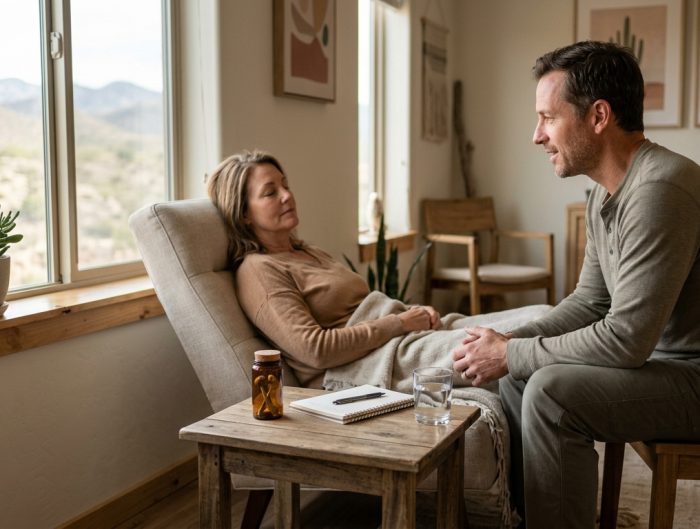
The session itself takes place in a controlled environment designed for comfort and safety. Think comfortable seating or reclining areas, soft lighting, and minimal distractions. A facilitator stays with you throughout the experience, which can last anywhere from four to six hours depending on the dose and your individual response. After the session, most centers offer or require at least one integration appointment to help you process what came up.
Licensed centers are the gold standard for safety and accountability, but they also tend to be the most expensive option. If budget is a concern, ask about sliding-scale pricing or payment plans: some centers are beginning to offer these as the market matures.
Facilitated Journeys and Private Guides
Outside the licensed center model, you’ll find individual facilitators who offer private or small-group psilocybin sessions. Some of these practitioners have completed training programs and are working toward or have obtained state licensure. Others operate more informally under Denver’s decriminalization framework.
Private facilitation can feel more personal and intimate than a center-based experience. You might work with a facilitator in their own space or in a rented location, and the setting can be customized more to your preferences. Some people find this format less clinical and more comfortable, which can be meaningful since your environment during a psilocybin experience significantly affects the quality of that experience.
The trade-off is less institutional oversight. When you work with a private guide, you’re relying more heavily on that individual’s training, ethics, and judgment. This makes the vetting process (which we’ll cover in detail below) even more important. A great private facilitator can offer an exceptional experience. A poorly trained or unethical one can cause real harm.
Some facilitators in Denver also offer group ceremonies or retreats, which can reduce per-person costs while creating a shared experience. If you’re considering a group format, ask about the facilitator-to-participant ratio, how medical emergencies would be handled, and whether individual screening is conducted for each participant.
Integration Therapy and Harm Reduction
Not all psilocybin-related services in Denver involve actually taking psilocybin. Integration therapy is a growing field that focuses on helping people process and make sense of psychedelic experiences, whether those experiences happened in a licensed center, a private setting, or even years ago.
Integration therapists are typically licensed mental health professionals – psychologists, counselors, or social workers – who have additional training in psychedelic-assisted approaches. They help you connect insights from a psilocybin session to concrete changes in your daily life. Without integration, even a profound experience can fade into a pleasant memory without producing lasting shifts in how you think, feel, or behave.
At Healing Dose, we emphasize that integration is where the real work happens. Journaling, reflection, and honest self-assessment in the days and weeks following a session are what turn a single experience into a catalyst for genuine personal growth. A psilocybin session might open a door, but you’re the one who has to walk through it.
Harm reduction services also exist in Denver for people who choose to use psilocybin outside of supervised settings. Organizations like the Zendo Project and local harm reduction groups provide resources for safer use, including information about dosing, drug interactions, and what to do if an experience becomes overwhelming. These services fill an important gap, especially given that personal use is now decriminalized in Colorado.
Top-Rated Psilocybin Facilitators and Clinics in Denver
Finding a specific, highly rated psilocybin facilitator in Denver requires some research, and the landscape is changing quickly as new centers open and facilitators complete their licensing. Rather than providing a list that might be outdated by the time you read this, here’s how to find current, reliable options.
The Colorado DORA website maintains a registry of licensed facilitators and approved centers. This is your most authoritative starting point. Any facilitator who claims to be licensed should appear in this registry, and if they don’t, that’s a red flag worth investigating. The registry is updated regularly and includes information about the type of license held and any disciplinary actions.
Community directories and review platforms specific to psychedelic services are also emerging. Websites like Psychedelic Beacon maintain directories of Colorado psilocybin providers that include information about services offered, pricing, and practitioner backgrounds. These can be helpful for comparing options, though you should always verify claims independently.
Word of mouth remains one of the most reliable ways to find a good facilitator. If you know someone who has had a supervised psilocybin experience in Denver and felt safe, supported, and well-cared-for, that personal recommendation carries real weight. Online communities, including Reddit’s psychedelic therapy forums and local Denver groups, can also surface recommendations, though anonymous online reviews should be taken with appropriate skepticism.
Several of the first centers to begin administering psilocybin in Colorado have been covered by local media, which provides another avenue for research. News coverage often includes details about a center’s approach, its founders’ backgrounds, and how it handles safety protocols. Reading these profiles can give you a sense of whether a particular center’s philosophy aligns with your own values and expectations.
When evaluating any provider, pay attention to how they communicate. A good facilitator will be transparent about their training, their approach, their pricing, and their limitations. They won’t promise specific outcomes, and they won’t pressure you to book a session before you’re ready. If someone guarantees that psilocybin will solve a particular problem or uses high-pressure sales tactics, move on.
The global market for psilocybin-assisted therapy is projected to grow significantly over the coming years, which means Denver’s options will likely expand. But more options don’t automatically mean better options. Taking the time to vet your provider carefully is one of the most important steps you can take.
How to Choose a Qualified Psilocybin Practitioner
Choosing the right practitioner is arguably more important than any other decision you’ll make in this process. The quality of your facilitator directly affects your safety, your comfort, and the depth of your experience. Here’s what to look for and what to watch out for.
Vetting Credentials and Training
Start with the basics. Is this person licensed by the state of Colorado? If they claim to be, verify it through DORA’s public registry. If they’re not licensed, ask why, and ask what training they have completed. Several organizations offer facilitator training programs, and the quality varies considerably.
Look for facilitators who have completed programs that include supervised practicum hours, not just classroom instruction. Reading about psilocybin and sitting with someone during a psilocybin experience are very different skills. A facilitator should be able to tell you specifically how many hours of supervised practice they’ve completed and with whom they trained.
Mental health credentials are a plus but not strictly required under Colorado’s licensing framework. Some facilitators are licensed therapists who have added psychedelic training to their practice. Others come from backgrounds in counseling, social work, nursing, or even traditional indigenous practices. What matters most is that they have both the knowledge to keep you safe and the interpersonal skills to support you through a potentially intense experience.
Ask about continuing education. The field of psychedelic-assisted therapy is evolving rapidly, with new research emerging regularly. A practitioner who completed their training two years ago and hasn’t engaged with new developments since then may not be offering the most informed care.
Red flags to watch for include practitioners who claim expertise in “all” psychedelic substances, those who are dismissive of conventional mental health care, and anyone who discourages you from telling your primary care physician about your interest in psilocybin. A responsible facilitator works within the broader healthcare ecosystem, not against it.
Safety Protocols and Medical Screening
This is non-negotiable. Any facilitator worth working with will conduct a thorough medical screening before agreeing to facilitate a session. This screening should cover your current medications, your mental health history (including any history of psychosis, bipolar disorder, or schizophrenia), cardiovascular health, and any family history of serious mental illness.
Psilocybin is contraindicated for people with certain conditions, and a responsible facilitator will be honest about this even if it means turning away a paying client. If someone skips the screening or dismisses your medical concerns, that tells you everything you need to know about their priorities.
The screening should also include a conversation about your current emotional state and life circumstances. Psilocybin experiences are profoundly affected by what’s happening in your life. Going into a session during a period of acute crisis, unresolved trauma, or extreme stress requires additional preparation and may not be advisable at all.
During the session itself, safety protocols should include monitoring your physical state (heart rate, breathing, general responsiveness), having emergency supplies on hand, and having a clear plan for what happens if you experience severe distress. Ask your facilitator to walk you through their emergency protocols before you agree to work together. This is a reasonable request, and any pushback should be treated as a warning sign.
It’s also worth noting that cases of psilocybin exposure have been rising in the Denver area, which underscores the importance of working with someone who takes safety seriously. Increased access means increased responsibility, both for facilitators and for the people seeking their services.
What to Expect During a Denver Psilocybin Session
If you’ve never had a supervised psilocybin experience, the uncertainty about what actually happens can be the biggest barrier to moving forward. Here’s a realistic, honest overview of the process from preparation through the experience itself.
Preparation and Set-Setting Foundations
The concept of “set and setting” has been central to psychedelic research since the 1960s. “Set” refers to your mindset going into the experience: your intentions, your emotional state, your expectations. “Setting” refers to the physical and social environment where the experience takes place. Both matter enormously.
Good preparation starts days or even weeks before the session. Your facilitator should guide you through this process, which typically includes clarifying your intentions (what are you hoping to explore or understand?), making dietary adjustments (many facilitators recommend avoiding alcohol, caffeine, and processed foods for several days beforehand), and beginning a reflective practice like journaling.
At Healing Dose, we encourage people to start journaling well before a psilocybin session, even if they’ve never journaled before. Writing down your thoughts, fears, and hopes creates a baseline that you can refer back to during integration. It doesn’t need to be eloquent: even a few sentences each day about how you’re feeling can be remarkably useful.
The setting for your session should feel safe, comfortable, and private. Licensed centers in Denver are designed with this in mind, typically offering private rooms with comfortable furniture, soft lighting, and curated music playlists. If you’re working with a private facilitator, discuss the setting in advance and make sure it meets your needs. You’ll be in a vulnerable state during the experience, and feeling physically safe in your environment is essential.
Most facilitators will also ask you to arrange transportation home after the session. You won’t be in a condition to drive for several hours, and you’ll likely want to spend the rest of the day resting and reflecting rather than jumping back into your normal routine.
The Role of the Facilitator During the Experience
During the session itself, the facilitator’s role is primarily one of presence and support. They’re not there to guide you through a scripted process or tell you what to think about. They’re there to hold space, ensure your physical safety, and offer gentle reassurance if you become frightened or confused.
A typical session begins with a brief check-in where the facilitator reviews your intentions, answers any last-minute questions, and helps you settle into the space. You’ll then consume the psilocybin, usually in the form of dried mushrooms or a mushroom-based preparation. Dosing varies based on the facilitator’s approach and your experience level, but supervised sessions typically use what’s considered a moderate to full dose, generally in the range of 2 to 5 grams of dried psilocybin mushrooms.
The onset of the experience usually begins within 30 to 60 minutes. During the initial phase, you might notice subtle shifts in perception: colors appearing more vivid, sounds becoming more textured, a gentle physical buzz that some people describe as a warm tingling. These early shifts can be surprising if you’re not expecting them, but they’re a normal part of the process.
As the experience deepens over the next one to three hours, you may encounter more significant perceptual and emotional changes. Some people experience visual patterns, a sense of interconnection, or intense emotional release. Others describe periods of introspection that feel profoundly meaningful. The experience is highly individual, and your facilitator should have prepared you for this variability.
Throughout all of this, your facilitator is present but not intrusive. They might offer water, adjust the music, or provide a reassuring touch on the shoulder if you seem distressed. They should check in periodically but allow you the space to have your own experience. A skilled facilitator knows when to speak and when to simply be present.
The come-down phase, typically three to five hours after ingestion, is often described as a gentle return to ordinary awareness. Many people feel emotionally tender during this period, and some experience a sense of openness or gratitude. Your facilitator will stay with you until you feel grounded and ready to leave, and they should provide guidance about what to expect in the hours and days that follow.
You can get a sense of what a supervised session looks like through video documentation of Colorado’s early psilocybin sessions, which provides a window into the atmosphere and approach of licensed centers.
Future Outlook for Psychedelic Wellness in Colorado
Colorado’s psilocybin program is still in its early stages, and the next few years will determine whether the model succeeds, struggles, or evolves into something different than what was originally envisioned. Several trends are worth watching.
The cost question is the biggest barrier to widespread access. At current price points, supervised psilocybin sessions are accessible primarily to people with significant disposable income. The question of whether insurance will ever cover psilocybin-assisted therapy remains open, and most experts don’t expect major insurance coverage in the near term. Some advocates are pushing for sliding-scale models, community-funded programs, and scholarship funds to address this gap.
The second phase of Proposition 122, which could bring other substances like DMT and mescaline into the regulated framework, is still being developed. How smoothly the psilocybin rollout goes will likely influence the timeline and approach for these additional substances.
Research is also accelerating. Colorado universities and research institutions are conducting studies on psilocybin’s potential applications for depression, PTSD, end-of-life anxiety, and substance use disorders. While we at Healing Dose are careful not to make medical claims, the growing body of peer-reviewed research is encouraging and will likely shape both public perception and policy in the coming years.
Denver’s position as an early mover in psychedelic policy gives it a unique opportunity to set standards for the rest of the country. Several other states are watching Colorado’s model closely, and the successes and failures of Denver’s psilocybin programs will inform legislation elsewhere. If you’re participating in this system as a client, you’re not just seeking personal growth: you’re also part of a broader social experiment that could affect millions of people.
The facilitator workforce is growing, with new training programs graduating practitioners regularly. As the supply of qualified facilitators increases, competition may help bring costs down and quality up. But growing pains are inevitable, and maintaining high standards while scaling access will be one of the biggest challenges facing Colorado’s psychedelic wellness community.
For those of you who are curious but not quite ready to commit to a full supervised session, microdosing offers a gentler entry point. Working with very small, sub-perceptual amounts of psilocybin, typically one-tenth to one-twentieth of a standard dose, allows you to explore the substance’s subtle effects without the intensity of a full session. The changes from microdosing tend to emerge slowly over weeks rather than in a single afternoon: a quiet shift in baseline mood, slightly more creative thinking, a gentle softening of rigid thought patterns. If you’re interested in finding a starting point that matches your goals and comfort level, you might take the dose quiz to get a personalized recommendation based on your experience and sensitivity.
Whatever path you choose, approach it with patience, honesty, and a willingness to sit with uncertainty. Psilocybin isn’t a quick fix for anything, and the people who benefit most from it tend to be those who bring genuine curiosity and a commitment to doing the reflective work that follows. Denver has built something remarkable in its psilocybin therapy infrastructure, and you have the opportunity to engage with it thoughtfully, safely, and on your own terms.

You might also like