The first time I microdosed, I expected something dramatic. Maybe colors would seem brighter, or I’d suddenly feel like a more productive, creative version of myself. What actually happened was far more subtle, and honestly, a bit confusing at first. I spent the morning wondering if the dose had even worked, only to realize hours later that I’d been unusually focused, patient, and oddly content without noticing the shift happening.
That’s the tricky thing about describing what microdosing feels like: the experience often defies the expectations we bring to it. Unlike a full psychedelic experience, there’s no clear “before and after” moment. The changes are quiet, woven into the fabric of an ordinary day. You might notice them only in retrospect, when you realize you handled a stressful conversation with unusual calm or found yourself absorbed in creative work without your typical resistance.
This review draws from my own ongoing practice, conversations with others in the microdosing community, and the research that’s slowly emerging around this practice. I want to give you an honest picture of what to expect, including the parts that aren’t always discussed: the jitters, the occasional overstimulation, and the days when nothing seems to happen at all. Because understanding the realistic range of experiences is essential before you begin your own exploration.
The Anatomy of a Microdose: Setting Expectations
Before discussing the felt experience, we need to establish what a microdose actually is and why the parameters matter so much. The goal isn’t to feel high or altered in any obvious way. Instead, you’re aiming for something called the sub-perceptual threshold, a dose small enough that you could go about your normal activities without anyone noticing anything different about you.
Defining the Sub-Perceptual Threshold
The term “sub-perceptual” gets tossed around frequently in microdosing discussions, but it deserves careful attention. This threshold represents the dose at which you experience potential benefits without any overt psychedelic effects. You shouldn’t see visual distortions, feel disconnected from reality, or experience the kind of altered consciousness associated with larger doses.
Finding your personal threshold takes experimentation. What feels sub-perceptual for one person might be noticeably perceptual for another. Body weight, individual sensitivity, metabolism, and even recent food intake all play roles. Some people feel distinct effects at doses that others barely register.
The sweet spot exists just below where you’d start to notice obvious changes in perception. Think of it like caffeine sensitivity: some people can drink espresso at midnight and sleep fine, while others get jittery from green tea. Your optimal microdose depends on your unique physiology, which is why starting low and adjusting gradually matters so much.
I recommend beginning at the lowest suggested dose for your chosen substance and increasing slowly over several sessions. This approach helps you find your threshold without accidentally overshooting into territory that feels uncomfortable or interferes with daily functioning.
Common Substances and Dosage Protocols
Psilocybin mushrooms and LSD represent the two most common substances people microdose, though each offers a distinct experience profile. Psilocybin tends to feel warmer and more body-centered, while LSD often feels more energetic and cognitively stimulating. Neither characterization is universal, but these general tendencies help explain why some people prefer one over the other.
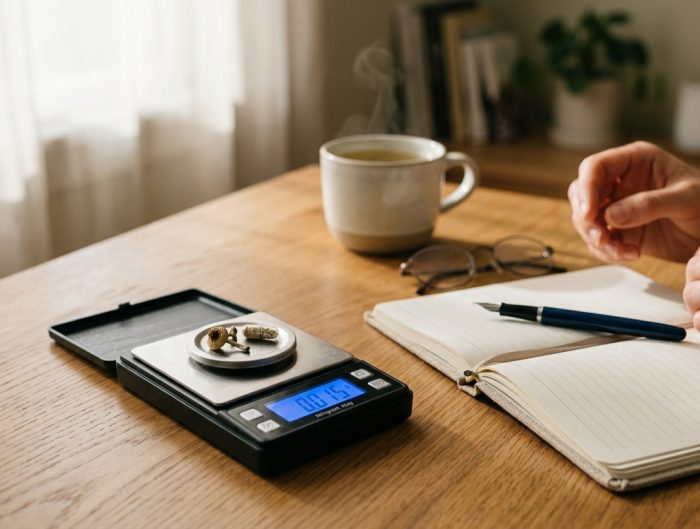
For psilocybin, typical microdoses range from 0.05 to 0.3 grams of dried mushrooms, depending on potency and individual sensitivity. LSD microdoses usually fall between 5 and 20 micrograms. These ranges are starting points, not prescriptions. Your ideal dose might fall anywhere within or even slightly outside these parameters.
Several dosing protocols have gained popularity:
- The Fadiman Protocol involves dosing once every three days, allowing two full days between doses for integration and to avoid tolerance buildup
- The Stamets Protocol suggests four consecutive days of microdosing followed by three days off, often combined with lion’s mane mushroom and niacin
- Intuitive dosing means listening to your body and dosing only when it feels right, without a fixed schedule
Each protocol has its advocates, and there’s no definitive research proving one superior to another. Many people experiment with different approaches before settling on what works for their lifestyle and goals. The consistency of your practice matters more than which specific protocol you follow.
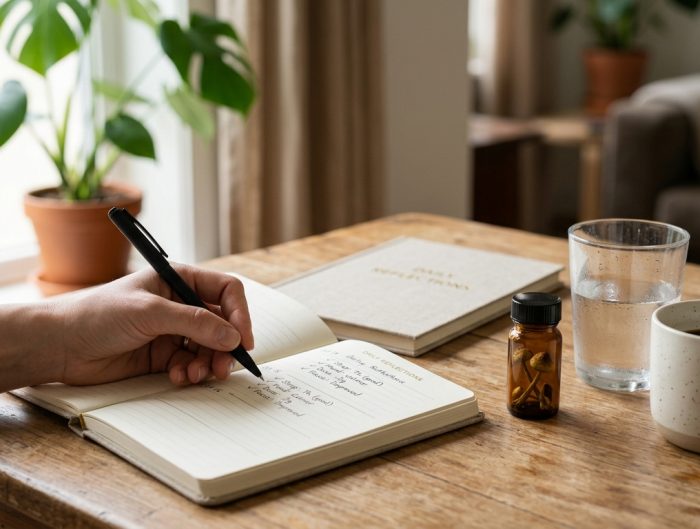
At Healing Dose, we encourage people to track their experiences carefully during this exploration phase. Journaling helps you notice patterns you might otherwise miss and makes it easier to adjust your approach based on actual data rather than vague impressions.
The Immediate Experience: Hour-by-Hour Sensations
Understanding the timeline of a microdose helps you know what to expect and when. Unlike full doses, where the onset and peak are unmistakable, microdosing produces effects that unfold gradually and blend into your normal experience.
The Subtle Onset and Physical Buzz
The first hour after taking a microdose often feels like nothing at all. You might catch yourself checking in repeatedly, wondering if something should be happening. This waiting and wondering is normal, especially when you’re new to the practice. The effects typically begin around 30 to 60 minutes after ingestion, though this varies based on whether you’ve eaten, your metabolism, and the specific substance.
When the onset does arrive, it often manifests first in the body rather than the mind. Many people describe a subtle physical buzz or a slight sense of lightness. For me, it feels like a gentle hum of energy, similar to the pleasant alertness after a good night’s sleep or a morning walk in fresh air. Some describe it as feeling “slightly sparkly” or “more present in their body.”
This physical component can include mild sensations in the chest or stomach, a subtle tingling in the extremities, or simply feeling more aware of physical sensations you normally ignore. None of these should be intense or uncomfortable. If you’re experiencing significant physical effects, your dose is likely too high for true microdosing.
The physical sensations usually peak around two to three hours after dosing and fade gradually over the following hours. By the four or five hour mark, most people notice the physical component has largely dissolved, though subtle cognitive and emotional effects may persist longer.
Heightened Sensory Awareness and Flow States
As the physical onset settles, many people notice a shift in how they perceive their environment. Colors might seem slightly more vivid, though not in the dramatic way associated with larger doses. Music often sounds richer, with more texture and emotional resonance. Food tastes more complex. These changes are subtle enough that you might not notice them unless you pay attention.
The sensory enhancement connects to something practitioners frequently report: an easier time entering flow states. Flow, that absorbed state where you lose track of time while engaged in meaningful work, becomes more accessible for many people during a microdose. The usual mental friction that prevents deep focus seems reduced.
I’ve noticed this particularly during creative work. The inner critic that normally interrupts with doubts and second-guessing quiets down, allowing ideas to flow more freely. Writing, drawing, problem-solving, even household tasks can take on a quality of engaged presence that feels different from ordinary effort.
This isn’t universal or guaranteed. Some days the flow state arrives easily; other days it doesn’t. Variables like sleep quality, stress levels, and what you’re working on all influence the experience. The microdose doesn’t force flow to happen. Rather, it seems to lower the barriers that normally prevent it.
The peak effects typically occur between hours two and four, gradually tapering afterward. By evening, most people feel essentially back to baseline, though some report a pleasant afterglow that extends into the next day.
Cognitive and Emotional Shifts
Beyond the physical and sensory dimensions, microdosing affects how you think and feel. These cognitive and emotional changes often represent the most meaningful aspects of the experience, though they’re also the most difficult to describe objectively.
Mental Clarity vs. The Over-Stimulation Trap
Many people describe enhanced mental clarity during a microdose. Thoughts feel organized, problems seem more approachable, and the mental fog that sometimes clouds thinking lifts. This clarity can make complex tasks feel more manageable and creative thinking more fluid.
However, there’s an important caveat here: more isn’t better. Taking a dose that’s too high for your sensitivity doesn’t produce more clarity. Instead, it often creates the opposite effect. Overstimulation can manifest as racing thoughts, difficulty concentrating, or a scattered feeling that makes focused work harder rather than easier.
I learned this lesson early in my practice when I increased my dose too quickly. Instead of enhanced focus, I experienced a buzzy, restless energy that made sitting still uncomfortable. My thoughts jumped from topic to topic without settling anywhere useful. The experience wasn’t unpleasant exactly, but it certainly wasn’t productive.
Finding the right dose means finding the balance point where your thinking feels enhanced without becoming hyperactive. This requires patience and honest self-assessment. If you’re feeling overstimulated, scattered, or anxious, these are signals to reduce your dose rather than push through.
The cognitive effects also interact with what you’re doing. Microdosing during a day filled with tedious administrative tasks feels different from microdosing during creative work or meaningful conversation. The substance amplifies your engagement with whatever you’re experiencing, which means it amplifies both the interesting and the boring.
Emotional Resilience and Social Connectivity
The emotional dimension of microdosing often surprises people who expect primarily cognitive benefits. Many practitioners report increased emotional resilience, a greater capacity to handle frustrations, disappointments, and stressors without becoming overwhelmed or reactive.
This doesn’t mean emotions disappear or become muted. If anything, emotions can feel more accessible and clear. The difference lies in how you relate to them. Difficult feelings arise, but there’s often more space around them, more capacity to observe and respond rather than react automatically.
Social interactions frequently feel different during a microdose. Conversations flow more naturally, with less of the self-consciousness or social anxiety that can make connection feel effortful. Many people report feeling more empathetic, more genuinely interested in others, and more present during exchanges.
I’ve noticed this particularly in difficult conversations. The defensiveness that normally arises when I feel criticized or misunderstood seems reduced. I can hear feedback without immediately constructing counterarguments in my head. This creates space for actual understanding rather than just waiting for my turn to speak.
These emotional effects extend beyond the microdose day itself. Over time, many practitioners notice shifts in their baseline emotional patterns. Old reactive habits start to feel less automatic. There’s more choice in how to respond to challenging situations. Whether this represents lasting change or requires ongoing practice remains an open question, but the potential for growth feels real.
The Afterglow and Long-Term Observations
The experience of microdosing doesn’t end when the acute effects wear off. Many people notice an afterglow period, and over time, cumulative effects that extend beyond individual dosing days.
Sleep Quality and Next-Day Reflections
Sleep on microdose days varies considerably between individuals. Some people report deeper, more restful sleep with vivid dreams. Others find that dosing too late in the day interferes with falling asleep, similar to drinking coffee in the afternoon. The stimulating quality of some substances, particularly LSD, makes morning dosing generally preferable.
I typically dose in the early morning, which allows the more active effects to coincide with my workday and fade before evening. On this schedule, my sleep feels unaffected or slightly improved. When I’ve occasionally dosed later, I’ve noticed more difficulty winding down at night.
The morning after a microdose often carries a pleasant quality that practitioners call the afterglow. It’s not that you still feel the substance, but rather that something feels slightly different in a positive way. There’s often a sense of freshness, as if you’re seeing your life with slightly new eyes.
This afterglow period can be valuable for reflection. Insights or perspectives that emerged during the microdose day often become clearer with some distance. Journaling on the day after can capture observations that might otherwise fade. At Healing Dose, we emphasize this integration practice as essential to getting value from microdosing rather than just having interesting experiences.
The afterglow typically fades by the second day off, which is part of why protocols include rest days. These days allow you to process and integrate before the next dose, preventing the practice from becoming just another thing you do without reflection.
Breaking Old Habits and Perspective Shifts
Over weeks and months of practice, many people notice changes that go beyond the immediate effects of individual doses. Old patterns of thought and behavior that felt fixed begin to feel more flexible. The ruts we get stuck in, whether in relationships, work, or self-perception, become more visible and more changeable.
This might be the most significant aspect of what microdosing feels like over time: a growing sense that you have more choice than you realized. The stories you tell yourself about who you are and what you’re capable of start to feel less like facts and more like habits you can examine and potentially revise.
I’ve noticed this particularly around creative blocks and self-doubt. Patterns of thinking that used to feel automatic now feel more like options. When the familiar voice of “you can’t do this” or “this isn’t good enough” arises, there’s more space to notice it as a pattern rather than truth.
These shifts happen gradually and aren’t always easy to attribute directly to microdosing. Other factors in your life contribute too. But many practitioners report that the practice seems to accelerate or enable changes they’d been wanting to make for years. Something about regularly experiencing a slightly different perspective seems to loosen the grip of habitual patterns.
Whether these changes persist if you stop microdosing is an important question without a clear answer yet. Some people report lasting shifts; others find old patterns gradually returning. The practice may work best as part of broader efforts toward growth rather than as a standalone intervention.
Potential Pitfalls and Side Effects
Any honest review of what microdosing feels like must include the less pleasant possibilities. While many experiences are positive, challenges and side effects occur, and being prepared for them helps you respond skillfully.
Managing Anxiety and Jitters
Anxiety represents one of the most common difficulties people encounter with microdosing. This might seem paradoxical given that many people microdose specifically to reduce anxiety, but the relationship is more complex than it initially appears.
At appropriate doses, many people do experience reduced anxiety. However, doses that are too high, or dosing on days when you’re already anxious, can amplify uncomfortable feelings rather than soothe them. The same quality that enhances positive experiences can also enhance negative ones.
Physical jitteriness often accompanies anxiety when it occurs. This can feel like too much caffeine: restless energy, difficulty sitting still, a buzzy uncomfortable sensation in the body. If you experience this regularly, your dose is almost certainly too high.
Strategies for managing anxiety include:
- Reducing your dose, sometimes significantly
- Ensuring you’ve eaten something before dosing
- Avoiding caffeine on microdose days, or at least reducing your usual intake
- Choosing lower-stakes days for dosing rather than days with stressful obligations
- Having grounding practices available, like going for a walk or doing breathwork
If anxiety persists despite these adjustments, microdosing may not be right for you, at least not at this time. Some people find they need to address underlying anxiety through other means before microdosing becomes beneficial rather than challenging.
The Importance of Set and Setting
The concepts of set and setting, borrowed from research on larger psychedelic doses, apply to microdosing as well, though in modified form. “Set” refers to your mindset going in: your expectations, intentions, and current emotional state. “Setting” refers to your physical and social environment.
Because microdoses are sub-perceptual, set and setting matter less dramatically than with full doses. You’re not going to have a difficult experience just because you’re in an unfamiliar place. However, these factors still influence the quality of your experience.
Microdosing on a day when you’re already stressed, sleep-deprived, or emotionally fragile tends to produce less positive experiences than dosing when you’re well-rested and relatively balanced. The substance doesn’t override your baseline state; it interacts with it.
Similarly, your environment shapes the experience. Microdosing on a day spent in nature or doing meaningful creative work feels different from microdosing during a tedious commute and frustrating meetings. The substance tends to amplify whatever you’re experiencing, so choosing your microdose days thoughtfully makes sense.
Intention also matters. Having a clear sense of why you’re microdosing and what you hope to explore creates a container for the experience. This doesn’t mean you need elaborate rituals or ceremonies. Simple reflection on your intentions before dosing can be enough to orient the experience productively.
Final Verdict: Is the Reality Worth the Hype?
After years of practice and countless conversations with others who microdose, I can say that the reality differs significantly from both the hype and the skepticism. Microdosing isn’t a miracle practice that will transform your life overnight. It’s also not placebo or wishful thinking. The truth lies somewhere between these extremes.
What microdosing actually feels like is subtle, variable, and deeply personal. Some days bring enhanced clarity, creativity, and emotional resilience. Other days feel unremarkable. The benefits accumulate gradually rather than arriving in dramatic breakthroughs. Progress often looks like slightly better days, slightly more flexibility in old patterns, slightly more presence in ordinary moments.
The practice works best when approached with patience, curiosity, and realistic expectations. It’s a tool for exploration rather than a solution to problems. The insights and shifts it enables still require your active participation to translate into lasting change. Journaling, reflection, and intentional integration make the difference between interesting experiences and genuine growth.
For those considering whether to begin, I’d encourage honest self-assessment. Are you in a stable enough place mentally and emotionally to explore? Do you have the patience for gradual, subtle effects? Are you willing to do the reflection work that makes microdosing meaningful rather than just recreational?
If you’re ready to explore thoughtfully, finding your starting point matters. The Microdose Quiz can help you identify a gentle beginning range based on your goals, experience level, and sensitivity. Starting carefully and adjusting based on your actual experience will serve you far better than chasing dramatic effects.
The reality of microdosing may be quieter than the hype suggests, but that quietness is part of its value. In a world that constantly promises quick fixes and dramatic transformations, there’s something refreshing about a practice that works slowly, subtly, and in partnership with your own effort. The changes feel earned rather than given, which may be why they often feel more real.