The quiet hum of anxiety can feel relentless. It’s there when you wake up, threading through your morning coffee, sitting beside you during meetings, and whispering worst-case scenarios as you try to fall asleep. If you’ve tried meditation apps, breathing exercises, and maybe even therapy or medication with mixed results, you might be curious about something you’ve seen mentioned in podcasts, Reddit threads, and wellness circles: microdosing for anxiety relief.
The practice involves taking tiny amounts of psychedelic substances, typically psilocybin mushrooms or LSD, far below the threshold that would cause perceptual changes. Proponents describe subtle shifts in mood, reduced anxious thoughts, and a gentler relationship with their own minds. Critics point to limited research, legal barriers, and the potential for things to go wrong.
Here’s what you need to know: microdosing isn’t a magic solution, and approaching it requires honest self-assessment, careful preparation, and realistic expectations. Some people find it genuinely helpful for managing anxiety. Others experience no benefit or even increased discomfort. The truth lives somewhere in the nuance, and that’s exactly where we’ll spend our time together.
This isn’t about convincing you to try anything. It’s about giving you the information to make a thoughtful decision that’s right for your specific situation, your mental health history, and your comfort level with both the known and unknown.
The Science and Mechanism of Microdosing for Mental Health
Understanding how microdosing might affect anxiety requires a brief tour through your brain’s chemistry and structure. Psychedelic substances like psilocybin and LSD interact primarily with serotonin receptors, particularly the 5-HT2A receptor. Serotonin plays a crucial role in mood regulation, and many conventional anxiety medications work by modulating this same system.
What makes psychedelics different is their effect on neural connectivity. Rather than simply increasing serotonin availability like an SSRI might, these substances appear to temporarily change how different brain regions communicate with each other. Think of it like this: your brain develops well-worn pathways over time, like hiking trails that get deeper with each use. Anxiety often involves getting stuck on certain trails, replaying the same worried thoughts over and over.
Psychedelics seem to allow the brain to forge new connections, at least temporarily, potentially offering fresh perspectives on old patterns. At microdose levels, these effects are subtle rather than dramatic. You’re not having visions or losing touch with reality. Instead, many people report a gentle loosening of rigid thought patterns and a slightly expanded sense of possibility.
The research is still catching up to the anecdotal reports. We have promising early studies but not the kind of large-scale, long-term data that would let us make definitive claims. What we do know suggests that something interesting is happening neurologically, even at these tiny doses.
Defining Microdosing Protocols and Dosages
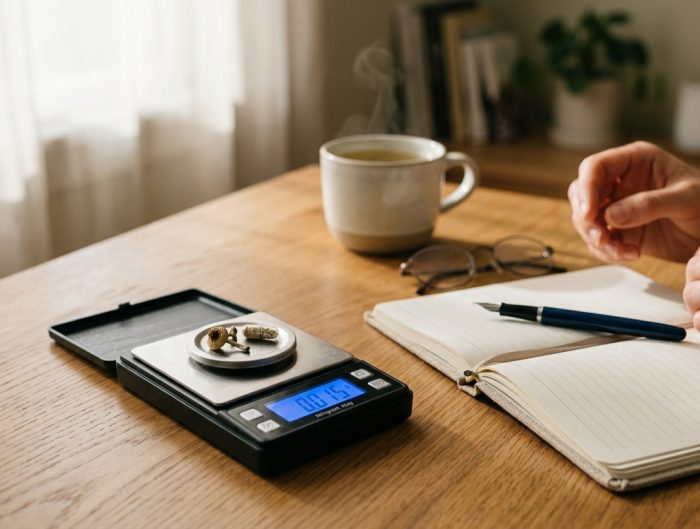
A microdose is typically defined as roughly one-tenth to one-twentieth of a recreational dose. For psilocybin mushrooms, this usually means between 0.1 and 0.3 grams of dried material. For LSD, we’re talking about 5 to 20 micrograms. These amounts shouldn’t produce any obvious psychedelic effects. If you’re seeing patterns or feeling significantly altered, you’ve taken too much for a microdose.
Most protocols involve taking a microdose every few days rather than daily. The Fadiman Protocol, named after psychedelic researcher James Fadiman, suggests dosing on day one, taking two days off, then dosing again on day four. This pattern continues indefinitely. The Stamets Protocol, developed by mycologist Paul Stamets, recommends four days on followed by three days off, often combined with lion’s mane mushroom and niacin.
Why not dose every day? There are a few reasons. Tolerance builds quickly with psychedelics, so daily use would likely diminish effects within a week or two. The off days also allow for integration, giving you time to notice any changes and let your brain return to baseline before the next dose. Some practitioners believe the off days are when the real work happens, as your brain consolidates whatever shifts occurred.
Finding your personal threshold requires patience. Start lower than you think you need, perhaps 0.05 grams of psilocybin, and gradually increase over several weeks until you notice subtle effects without impairment. Everyone’s sensitivity differs based on body weight, metabolism, and individual brain chemistry.
Neurological Impact on the Default Mode Network
The default mode network, or DMN, has become a central focus in psychedelic research. This collection of brain regions activates when you’re not focused on external tasks: when you’re daydreaming, thinking about yourself, remembering the past, or imagining the future. It’s essentially your brain’s autopilot for self-referential thinking.
For people with anxiety, the DMN can become overactive and rigid. It generates endless “what if” scenarios, rehashes past embarrassments, and constructs elaborate worst-case futures. You know the feeling: lying in bed unable to sleep because your brain won’t stop narrating everything that could go wrong tomorrow, next week, or five years from now.
Psychedelics, even at microdose levels, appear to quiet the DMN while increasing communication between brain regions that don’t normally talk to each other. Researchers describe this as increased “entropy” or flexibility in brain function. The usual patterns loosen their grip, potentially allowing new perspectives to emerge.
At full psychedelic doses, this DMN suppression can be dramatic, sometimes described as “ego dissolution.” At microdose levels, the effect is much gentler. People often describe it as simply having a bit more mental space, finding it easier to step back from anxious thoughts rather than being completely consumed by them. The worried voice doesn’t disappear, but it might feel less urgent, less like absolute truth and more like one perspective among many.
Potential Therapeutic Benefits for Anxiety Disorders
The potential benefits of using microdosing for anxiety management extend beyond simple symptom reduction. Many practitioners describe a shift in their relationship with anxiety itself, moving from adversarial combat to something more like curious observation. This reframe can be surprisingly powerful.
Anxiety often involves a kind of fusion with worried thoughts. When you’re anxious, the thought “something terrible will happen” doesn’t feel like a thought. It feels like reality, like certain knowledge of impending doom. Creating even a small gap between yourself and these thoughts can fundamentally change your experience.
Some people report that microdosing helps them access states similar to those achieved through years of meditation practice: a gentle witnessing awareness that can observe thoughts without being swept away by them. This isn’t universal, and it’s not guaranteed, but it’s a commonly reported experience worth understanding.
The benefits also seem to extend beyond the days when someone actually takes a microdose. Many people describe lasting shifts in perspective and emotional patterns that persist during off days and even after stopping the practice entirely. This suggests that microdosing might help establish new neural patterns rather than simply masking experiences while the substance is active.
Reduction in Rumination and Negative Thought Patterns
Rumination is anxiety’s favorite pastime. It’s the mental habit of chewing on the same worried thoughts over and over, examining them from every angle without ever reaching resolution. You know you’re ruminating when you’ve thought about the same problem fifty times and feel worse than when you started.
People who microdose for anxiety frequently report a reduction in this ruminative tendency. The same triggers that would normally send them into a spiral of worried thinking seem to have less stickiness. A critical comment from a coworker might register as unpleasant without spawning three hours of mental replay and catastrophizing.
This doesn’t mean becoming emotionally numb or indifferent. The goal isn’t to stop caring about things that matter. Instead, it’s about responding proportionally rather than getting hijacked by every potential threat. You can acknowledge that something is concerning without your entire nervous system treating it as a life-or-death emergency.
Some practitioners describe this as gaining access to a “pause button” they didn’t have before. Between a triggering event and their emotional response, there’s now a moment of choice. They can still choose to worry if that seems useful, but they’re no longer compelled to worry by default.
The mechanism likely involves those changes to the default mode network we discussed earlier. When the DMN’s grip loosens, the automatic thought patterns it generates become less compelling. You might still have the thought “everyone will judge me,” but it doesn’t carry the same weight of absolute truth.
Enhanced Emotional Regulation and Resilience
Emotional regulation refers to your ability to manage and respond to emotional experiences in healthy ways. For people with anxiety, emotional regulation often feels like trying to steer a car with a broken steering wheel. You know where you want to go, but the vehicle keeps veering toward panic, avoidance, or shutdown.
Microdosing may support emotional regulation through several pathways. The increased neural flexibility we discussed could make it easier to shift out of anxious states rather than getting stuck. The serotonin system modulation might provide a more stable baseline mood. And the psychological effects, that sense of expanded perspective, could help you see emotional experiences as temporary weather rather than permanent climate.
Resilience is closely related. It’s not about never experiencing difficulty but about recovering more quickly and completely when difficulty arrives. Resilient people feel stress and anxiety, but they bounce back. They don’t accumulate emotional debt from every challenging experience.
Some people find that microdosing helps them build this resilience over time. Challenges that would have flattened them for days now resolve more quickly. They’re able to face anxiety-provoking situations with more equanimity, not because they’ve become fearless but because they trust their ability to handle whatever emotions arise.
At Healing Dose, we emphasize that these benefits typically emerge gradually and require active participation. Microdosing isn’t a passive treatment you receive. It’s a practice you engage with, ideally combined with reflection, journaling, and intentional attention to your inner experience.
Critical Risks and Safety Considerations
No honest discussion of microdosing for anxiety would be complete without a thorough examination of the risks involved. This practice isn’t appropriate for everyone, and approaching it without understanding the potential downsides would be irresponsible.
The risks fall into several categories: psychological vulnerability, physiological effects, substance quality concerns, and the practical challenges of navigating an unregulated space. Each deserves careful consideration before you decide whether this path makes sense for you.
It’s also worth acknowledging that our understanding of these risks is incomplete. Most microdosing research involves self-selected participants who were already interested in the practice, which introduces bias. We don’t have good data on long-term effects from regular microdosing over years or decades. You’re essentially participating in an uncontrolled experiment with your own brain chemistry.
This uncertainty isn’t a reason to avoid the practice entirely, but it is a reason to proceed thoughtfully, start conservatively, and pay close attention to your own responses. Your experience is data, and negative experiences are just as informative as positive ones.
Psychological Vulnerability and Increased Agitation
Here’s something that might surprise you: for some people, microdosing actually increases anxiety rather than reducing it. This is particularly true during the first few sessions, as your system adjusts to the substance, but it can also persist longer-term for certain individuals.
The same neural flexibility that can help loosen anxious thought patterns can also, in some cases, amplify difficult emotions. If you’re carrying unprocessed trauma or suppressed emotional material, microdosing might bring it closer to the surface. This can be therapeutic in the right context with proper support, but it can also be destabilizing if you’re not prepared for it.
People with a personal or family history of psychotic disorders should approach microdosing with extreme caution or avoid it entirely. While microdoses are far less likely to trigger psychotic episodes than full doses, the risk isn’t zero. If you have a first-degree relative with schizophrenia or bipolar disorder with psychotic features, this is a significant red flag worth discussing with a mental health professional.
Some people experience increased agitation, irritability, or emotional volatility while microdosing. This might manifest as feeling “on edge,” having a shorter temper, or experiencing mood swings that feel out of character. If this happens, it’s important information. Not everyone responds the same way, and a negative response doesn’t mean you did something wrong.
Physiological Side Effects and Substance Purity
Beyond psychological effects, microdosing can produce physical experiences that some people find uncomfortable. Common reports include mild nausea, especially with psilocybin mushrooms, slight changes in body temperature, increased heart rate, jaw tension, and headaches. These effects are usually mild at microdose levels but can be bothersome.
Substance purity presents a more serious concern. In most places, psychedelics remain illegal, which means there’s no quality control or standardization. What you think is LSD might be a different compound entirely. Mushrooms might be contaminated with mold or incorrectly identified. Without laboratory testing, you’re trusting your source completely.
If you’re obtaining substances through unregulated channels, harm reduction becomes essential. Test kits can identify some adulterants and confirm basic substance identity, though they can’t verify purity or dosage. Starting with very small amounts and increasing gradually provides some protection against unexpectedly potent material.
There are also potential interactions with other substances, including prescription medications. Combining psychedelics with lithium, for example, can be dangerous. SSRIs and SNRIs may reduce psychedelic effects but could also create unpredictable interactions. If you’re taking any psychiatric medications, researching potential interactions thoroughly is non-negotiable.
Long-term physiological effects of regular microdosing remain largely unknown. Some researchers have raised theoretical concerns about cardiac effects from repeated 5-HT2B receptor activation, though this hasn’t been demonstrated in humans at microdose levels. It’s another area where we simply don’t have enough data yet.
Navigating the Legal Landscape and Ethical Concerns
The legal status of psychedelic substances varies dramatically depending on where you live. In most countries and U.S. states, psilocybin and LSD remain Schedule I controlled substances, meaning possession carries significant legal risk. This is true even for tiny amounts intended for personal microdosing.
Some jurisdictions have begun to shift. Oregon has legalized psilocybin for supervised therapeutic use. Several cities have decriminalized possession of psychedelics, though this doesn’t make them legal. A handful of countries, including the Netherlands and Jamaica, have more permissive frameworks that have created legal or semi-legal access points.
Understanding your local laws isn’t optional. The consequences of a drug charge can be severe and long-lasting, affecting employment, housing, education, and travel. Even in decriminalized areas, there may be limits on quantities or contexts that could still result in legal trouble.
Beyond legality, there are ethical considerations worth examining. The current psychedelic renaissance has created sustainability concerns around psilocybin mushroom harvesting and raised questions about cultural appropriation of indigenous practices. If you choose to engage with these substances, doing so thoughtfully and respectfully matters.
There’s also the question of how we talk about these practices. Overhyping microdosing as a cure-all does a disservice to everyone. It sets unrealistic expectations, attracts people who might not be good candidates, and potentially undermines the serious research happening in this field. Honest, balanced conversation serves everyone better than evangelical enthusiasm.
Current Research Findings vs. Anecdotal Evidence
The gap between what people report about microdosing and what rigorous research has confirmed remains substantial. This doesn’t mean the reports are wrong, but it does mean we need to hold our conclusions loosely.
Survey studies consistently find that people who microdose report improvements in mood, anxiety, focus, and creativity. These self-reports are valuable data, but they come with significant limitations. People who choose to microdose are already predisposed to believe it might help them. They’re aware of what they’re taking and when, which introduces expectation effects. And they’re often making other lifestyle changes simultaneously, making it hard to isolate what’s actually causing any improvements.
Controlled laboratory studies have produced more mixed results. Some have found that microdoses produce measurable effects on mood, cognition, or brain function. Others have found that participants couldn’t reliably distinguish microdoses from placebos, or that any effects were no greater than placebo effects.
A notable 2021 study published in eLife used a clever “self-blinding” methodology where participants created their own placebos and couldn’t tell which capsules contained psilocybin. Both groups improved on measures of psychological wellbeing, with no significant difference between active microdoses and placebos. This doesn’t prove microdosing doesn’t work, but it suggests that expectation and ritual might play larger roles than many enthusiasts assume.
The Role of the Placebo Effect in Microdosing Studies
Let’s talk honestly about placebos, because dismissing something as “just placebo” misunderstands how powerful these effects actually are. Placebo responses involve real physiological changes. Your brain releases actual neurotransmitters. Your body mounts actual healing responses. The improvement is genuine, even if it wasn’t caused by the active substance.
For anxiety specifically, placebo effects tend to be substantial. Belief that you’re receiving an effective treatment can genuinely reduce anxious experiences through multiple pathways: reduced uncertainty, increased sense of control, activation of expectation-related brain circuits, and the simple comfort of doing something proactive about your suffering.
If microdosing works partly or even primarily through placebo mechanisms, does that make it worthless? Not necessarily. If the ritual of preparing a microdose, the intention-setting, and the belief in the practice combine to produce real anxiety relief, that’s still real relief. The philosophical question of whether it “really” worked becomes somewhat academic when you’re actually feeling better.
That said, understanding the potential role of placebo effects matters for several reasons. It suggests that the ritual and intention surrounding microdosing might be as important as the substance itself. It implies that similar benefits might be achievable through other means. And it cautions against assuming that any improvement you experience definitely came from the pharmacological action of the microdose.
At Healing Dose, we encourage people to embrace the full practice rather than focusing solely on the substance. Journaling, reflection, intention-setting, and integration work may be doing as much heavy lifting as the microdose itself. This isn’t a criticism. It’s an invitation to engage more fully with every element of the practice.
Integrating Microdosing with Traditional Therapy
Microdosing works best not as a standalone intervention but as one element within a broader approach to mental health. The most promising results, both in research and in anecdotal reports, tend to come from people who combine microdosing with other therapeutic practices.
Traditional talk therapy offers an obvious complement. A skilled therapist can help you process whatever material emerges during microdosing, provide frameworks for understanding your experience, and offer accountability for the integration work. Some therapists are now specifically trained in psychedelic integration, though finding one may require some searching depending on your location.
Cognitive-behavioral approaches pair particularly well with microdosing. If the substance helps loosen rigid thought patterns, CBT techniques can help establish new, healthier patterns in their place. You might find that cognitive restructuring exercises, which felt impossible when you were deeply stuck, become more accessible with the mental flexibility microdosing can provide.
Mindfulness practices also synergize naturally. Meditation cultivates exactly the kind of witnessing awareness that many people report accessing more easily while microdosing. Building a regular meditation practice alongside microdosing can help you maintain access to these states even on off days or after you stop microdosing entirely.
Body-based approaches deserve mention too. Anxiety lives in the body as much as the mind, manifesting as muscle tension, shallow breathing, and nervous system dysregulation. Practices like yoga, somatic experiencing, or even simple regular exercise can address these physical dimensions that microdosing alone might not touch.
The integration piece is crucial. Taking a microdose and then going about your day exactly as usual, never reflecting on the experience, probably won’t produce much benefit. The practice asks something of you: attention, intention, and willingness to engage with whatever arises. Keeping a journal, even brief notes about your mood, thoughts, and experiences, creates a record that helps you notice patterns and track changes over time.
Some people find that microdosing helps them get more from therapy sessions. They arrive with greater access to their emotions, more ability to discuss difficult topics, and increased insight into their patterns. If you’re working with a therapist, discussing your interest in microdosing openly, where legally and professionally appropriate, allows them to support you more effectively.
The goal isn’t to microdose forever. Most people who find the practice helpful use it for a period of months, establish new patterns and perspectives, and then taper off. The changes, ideally, outlast the practice. You’re not trying to become dependent on a substance for emotional regulation. You’re using it as a tool to help establish new ways of relating to your own mind.
Finding Your Path Forward
Deciding whether to explore microdosing for anxiety is deeply personal. There’s no universal right answer, and anyone who tells you otherwise is oversimplifying. What works beautifully for one person might be wrong for another, and the only way to know for certain is through your own careful experimentation.
If you’re considering this path, start with honest self-assessment. How severe is your anxiety? Have you tried other approaches? Do you have any contraindications like personal or family history of psychotic disorders? Are you in a stable enough life situation to handle potential difficult experiences? Are you willing to do the integration work, or are you looking for a quick fix?
Research thoroughly before making any decisions. Understand the legal landscape where you live. Learn about harm reduction practices. Connect with communities of people who have experience with these practices. The more informed you are, the better positioned you’ll be to make choices that serve your wellbeing.
If you do decide to proceed, start conservatively. Lower doses, less frequently, with careful attention to your responses. Keep detailed notes. Have support systems in place. And maintain realistic expectations: subtle shifts over time rather than dramatic transformation overnight.
Remember that anxiety, while painful, is also trying to protect you. It’s an overactive alarm system, not an enemy to be destroyed. The goal isn’t to eliminate anxiety entirely but to develop a healthier relationship with it, to feel fear when fear is appropriate and calm when calm is appropriate. Microdosing might support that goal, or it might not be the right tool for you.
If you’re curious about finding a gentle starting point based on your personal goals, experience, and sensitivity, our microdose quiz can help you approach this practice thoughtfully and at your own pace.
Whatever you decide, approach yourself with compassion. Living with anxiety is hard. Seeking relief is natural and healthy. Whether microdosing becomes part of your journey or not, the fact that you’re researching carefully and thinking critically already puts you on a thoughtful path. Trust yourself to find what works for you, one careful step at a time.