If you’ve ever found yourself caught in a loop of the same thought playing over and over – replaying a conversation, second-guessing a decision, or mentally rehearsing a scenario that hasn’t even happened yet – you already know what overthinking feels like. It’s exhausting. And you’re far from alone. A growing number of people are quietly exploring whether microdosing psychedelics might offer some relief from this relentless mental chatter. The idea is simple: take a very small, sub-perceptual dose of a psychedelic substance, not enough to alter your perception, but potentially enough to shift how your mind processes repetitive thoughts. It’s not a magic fix, and it doesn’t work for everyone. But the early research and lived experiences are genuinely interesting, and they deserve a thoughtful, honest look. That’s exactly what we’re here for: to walk through what we know, what we don’t, and how you might begin thinking about this for yourself, safely and without hype.
Understanding the Relationship Between Microdosing and the Overactive Mind
Overthinking isn’t just a personality quirk or a sign that you care too much. For many people, it’s a deeply ingrained cognitive pattern that feels almost automatic, like a car stuck in gear. Your mind latches onto a thought, examines it from every angle, and then circles right back to the beginning. This kind of mental repetition can drain your energy, disrupt your sleep, and make even small decisions feel monumental.
What makes microdosing an interesting area of exploration here is that it appears to interact with some of the very brain systems involved in this kind of looping. We’re not talking about a full psychedelic experience – a microdose is typically one-tenth to one-twentieth of what someone might take for a perceptual experience. Think of it as a whisper rather than a shout. The goal isn’t to feel “something happening” but to create subtle conditions where your usual thought patterns might soften just enough for you to notice.
At Healing Dose, we often hear from people who describe their overthinking as a kind of mental prison. They know the thoughts aren’t productive, but they can’t seem to stop. That’s not a willpower problem – it’s a brain pattern problem. And that’s where understanding the neuroscience becomes genuinely useful.
The Science of Rumination and the Default Mode Network
Your brain has a network of regions that become most active when you’re not focused on the outside world. Neuroscientists call this the Default Mode Network, or DMN. It’s the part of your brain responsible for self-referential thinking: reflecting on who you are, what happened yesterday, what might happen tomorrow. The DMN is essential for things like autobiographical memory and social cognition, but it also has a dark side.
When the DMN becomes overactive or “sticky,” it can fuel rumination – that repetitive, self-focused thinking that characterizes overthinking. You replay the awkward thing you said at dinner. You worry about a work email you haven’t sent yet. You construct elaborate worst-case scenarios. Research has consistently linked elevated DMN activity to anxiety, depression, and obsessive thought patterns.
Here’s where psychedelics enter the picture. Brain imaging studies have shown that psilocybin, the active compound in certain mushrooms, temporarily reduces activity in the DMN. At full doses, this reduction can be dramatic, sometimes described as ego dissolution. At microdoses, the effect is far more subtle – more like loosening a knot than untying it completely. The hypothesis is that even this gentle reduction might give chronic overthinkers a window of cognitive relief, a brief period where the mental loop loses some of its grip.
A 2025 study published in the National Library of Medicine found that psilocybin microdosing showed associations with reduced rumination scores in participants who self-reported chronic overthinking patterns. The changes were modest but consistent, and they tended to accumulate over several weeks of regular practice rather than appearing after a single dose.
How Sub-Perceptual Doses Impact Cognitive Flexibility
Cognitive flexibility is your brain’s ability to shift between different concepts, perspectives, or strategies. If overthinking is like being stuck on one channel, cognitive flexibility is what lets you change the channel. People who score high on measures of cognitive flexibility tend to be better at problem-solving, adapting to new situations, and letting go of unproductive thought patterns.
Microdosing appears to gently nudge cognitive flexibility in a positive direction for some people. The mechanism likely involves serotonin 2A receptors, which psychedelics bind to with high affinity. These receptors are concentrated in the prefrontal cortex, a brain region heavily involved in executive function and flexible thinking. When stimulated at very low levels, they may promote a state where your brain is slightly more willing to entertain alternative perspectives rather than defaulting to the same well-worn neural pathways.
What does this feel like in practice? Many people describe it as a subtle shift – not a dramatic change, but more like noticing that a thought which would normally spiral for an hour only lasts a few minutes. Or finding that you can consider a problem from a new angle without getting stuck. It’s quiet. It’s easy to miss if you’re not paying attention, which is exactly why journaling and reflection are such important companions to any microdosing practice.
Potential Benefits of Microdosing for Chronic Overthinkers
The potential benefits of microdosing for people who overthink aren’t about silencing your mind or numbing your thoughts. They’re about creating a slightly different relationship with your own thinking. You still think – you just might find that you hold those thoughts a little more lightly.
This section isn’t about promises. Individual responses vary enormously, and what works for one person may not work for another. But the patterns that emerge from both research and personal reports are worth understanding, especially if you’re someone who has tried other approaches and still feels stuck.
Breaking Repetitive Negative Thought Patterns
One of the most commonly reported experiences among people who microdose for overthinking is a reduction in the “stickiness” of negative thoughts. The thought still arrives – maybe it’s self-criticism, maybe it’s worry about the future – but it doesn’t grab hold the way it usually does. It passes through more easily.
This isn’t the same as suppressing thoughts or pretending they don’t exist. It’s more like the difference between getting caught in a riptide and watching waves from the shore. The thoughts are still there, but your relationship to them shifts. Some researchers believe this relates to the way psychedelics promote neuroplasticity, essentially making your brain slightly more malleable and less likely to default to rigid patterns.
A piece exploring whether microdosing can support mental health highlighted accounts from individuals who noticed their repetitive thought loops becoming less intense after several weeks of consistent microdosing. The key word there is “weeks” – this isn’t an overnight shift. It’s a gradual softening that builds over time, much like the slow benefits of a meditation practice.
If you’re someone who has tried telling yourself to “just stop worrying” and found that advice spectacularly unhelpful, you understand why this subtle neurological nudge is appealing. It’s not about willpower. It’s about creating conditions where your brain can more easily release patterns that no longer serve you.
Enhancing Present-Moment Awareness and Mindfulness
Overthinking almost always involves time travel – your mind is either replaying the past or rehearsing the future. Rarely is it fully present. One of the more interesting reported experiences of microdosing is an increased sense of being “here,” noticing your surroundings, feeling more connected to the present moment.
This doesn’t mean you suddenly become a meditation master. It’s subtler than that – maybe you notice the texture of your morning coffee, or you find yourself actually listening during a conversation instead of mentally scripting your response. These small moments of presence can accumulate into something meaningful over time.
There’s an interesting overlap here with mindfulness practices. Both microdosing and mindfulness meditation appear to reduce DMN activity, and many people find that microdosing makes their existing meditation practice feel more accessible. If you’ve struggled to sit still and focus on your breath because your mind won’t stop racing, a microdose day might be a day where that practice feels just a little bit easier.
We want to be honest here: this isn’t everyone’s experience. Some people don’t notice any change in present-moment awareness. Others find the effect inconsistent. The point isn’t that microdosing will make you mindful – it’s that it might create a slightly more fertile ground for mindfulness to take root.
Reducing the Emotional Intensity of Intrusive Thoughts
Intrusive thoughts aren’t just annoying – they often carry an emotional charge that makes them hard to dismiss. A thought about something embarrassing you did doesn’t just pass through your mind; it brings a wave of shame with it. A worry about the future doesn’t just appear; it arrives with a knot in your stomach.
Some people who microdose report that while the thoughts still occur, the emotional intensity attached to them decreases. The embarrassing memory might surface, but without the full-body cringe. The worry might appear, but without the accompanying dread. This reduction in emotional reactivity can make it much easier to observe your thoughts without getting swept up in them.
This is consistent with what researchers are finding about psilocybin’s effect on the amygdala, the brain’s threat-detection center. Even at sub-perceptual doses, there may be a gentle dampening of amygdala reactivity, which could explain why some people feel less emotionally hijacked by their thoughts on microdose days.
It’s worth being clear: this is not emotional numbness. People consistently describe still feeling their full range of emotions. The difference is more like turning the volume down from 10 to 7 – everything is still there, but it’s more manageable.
Common Substances and Protocols for Mental Clarity
If you’re considering exploring microdosing to address overthinking, you’ll quickly encounter two main substances and several different dosing schedules. Understanding the differences can help you make a more informed choice about what might suit your particular needs and sensitivities.
Comparing Psilocybin and LSD for Cognitive Management
The two most commonly microdosed substances are psilocybin (from certain mushroom species) and LSD (lysergic acid diethylamide). Both interact with serotonin receptors, but they have distinct profiles that matter when you’re choosing between them.
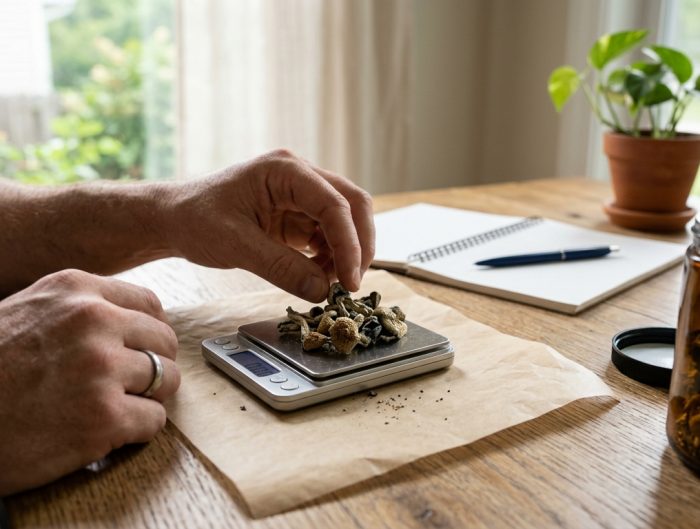
Psilocybin microdoses typically range from 0.05 to 0.15 grams of dried mushroom material. The experience tends to be described as warm, grounding, and slightly introspective. Many people find psilocybin microdoses feel more “organic” and body-centered, with a gentle quality that suits people who are already anxious or prone to overstimulation. The duration is relatively short – usually four to six hours of subtle effect.
LSD microdoses are measured in micrograms, typically between 5 and 15 micrograms. The experience tends to be described as more energizing and cognitively stimulating, with increased focus and a sense of mental clarity. The duration is longer, often eight to twelve hours, which means timing matters more. Taking an LSD microdose in the afternoon could interfere with sleep.
For chronic overthinkers, psilocybin is often the more popular starting point. Its gentler, more grounding quality seems to pair better with the goal of quieting mental noise rather than amplifying mental activity. But this is highly individual – some people find LSD’s clarity-enhancing properties more helpful for their particular flavor of overthinking.
The U.S. psychedelic mushroom products market has been growing significantly as consumer interest expands, reflecting a broader cultural shift toward exploring these substances for mental wellness rather than recreation.
Popular Dosing Schedules: Fadiman vs. Stamets Stack
Two protocols dominate the microdosing conversation, and they’re quite different in their approach.
The Fadiman Protocol, developed by psychedelic researcher James Fadiman, follows a simple pattern: one day on, two days off. You take a microdose on Day 1, then take Days 2 and 3 off before dosing again on Day 4. This schedule allows time for the acute effects to fade and for you to observe any lingering shifts on your off days. Many people find that the “afterglow” on Day 2 is actually when they notice the most benefit.
The Stamets Stack, proposed by mycologist Paul Stamets, combines psilocybin with lion’s mane mushroom and niacin (vitamin B3). The protocol typically involves four days on followed by three days off. The theory is that lion’s mane supports neurogenesis (the growth of new neural connections) while niacin helps distribute the compounds more broadly through the body. This protocol is more complex and less studied, but it has a dedicated following.
For someone new to this, the Fadiman Protocol is generally the easier starting point. It’s simpler, gives you more off days to observe changes, and has a longer track record of anecdotal reporting. Whichever protocol you choose, starting at the lowest possible dose and adjusting gradually is always the wisest approach. At Healing Dose, we consistently emphasize that less is more – especially in the beginning.
Risks and Considerations for Anxiety-Prone Individuals
Here’s where we need to get real. If you’re someone who overthinks, there’s a good chance you also experience anxiety. And while microdosing may help some anxious people, it can also make things worse for others. Being honest about these risks isn’t pessimistic – it’s responsible.
The Paradox of Increased Sensitivity and Over-Stimulation
One of the trickiest aspects of microdosing for anxious overthinkers is that the same increased sensitivity that can enhance present-moment awareness can also amplify anxiety. On a microdose day, you might notice more – and “more” isn’t always pleasant.
Some people report feeling jittery, overstimulated, or more aware of physical sensations that trigger anxiety. A subtle body buzz that one person finds pleasant might feel alarming to someone with health anxiety. Increased emotional sensitivity might mean you feel joy more deeply, but it might also mean you feel worry more acutely.
This is why dose calibration matters so much. If you’re anxiety-prone, starting at the absolute lowest end of the dosing range is critical. For psilocybin, that might mean beginning at 0.025 grams rather than 0.1 grams. You can always increase gradually, but you can’t un-take a dose that’s too high.
There are also days when microdosing simply isn’t a good idea. If you’re already feeling anxious, stressed, or emotionally fragile, adding a psychoactive substance to the mix – even at sub-perceptual levels – may not be wise. This is where self-awareness and honest self-assessment become essential tools.
A Canadian study specifically examining whether psilocybin microdosing could help people with anxiety is underway, and its findings will be important for understanding how anxiety-prone individuals specifically respond to this practice. Until we have more data, caution is your best friend.
Legal Status and Safety Precautions
The legal landscape around psychedelic substances is changing rapidly, but it’s still complicated. In most U.S. states, psilocybin and LSD remain Schedule I controlled substances, meaning possession and use carry legal risks. Oregon and Colorado have established regulated access frameworks for psilocybin, and several cities have deprioritized enforcement, but “deprioritized” is not the same as “legal.”
Outside the U.S., the picture varies widely. Canada has granted individual exemptions for psilocybin use, and some countries have more permissive frameworks. Wherever you are, understanding your local laws is a necessary first step.
Beyond legality, there are practical safety considerations:
- If you’re taking SSRIs, SNRIs, or other serotonergic medications, combining them with psychedelics carries real risks, including serotonin syndrome. Talk to a healthcare provider before making any changes to your medication regimen.
- People with a personal or family history of psychotic disorders (schizophrenia, bipolar I) should generally avoid psychedelics entirely, even at microdoses.
- Source reliability matters. Without regulated markets, there’s no guarantee that what you’re getting is what you think it is. Testing kits exist and are worth using.
- Never microdose for the first time on a day when you have important obligations. Give yourself space to observe how you respond.
These aren’t scare tactics – they’re the kind of practical, safety-first guidance that RAND has emphasized in its analysis of psychedelic policy and mental health considerations.
Integrating Microdosing with Therapeutic Practices
Microdosing on its own is not a complete approach to managing overthinking. Think of it more like a catalyst – something that might make other practices more effective. The real work happens in how you integrate the experience into your daily life, your self-reflection, and, ideally, your work with a therapist or counselor.
Combining Microdosing with Cognitive Behavioral Therapy (CBT)
Cognitive Behavioral Therapy is one of the most well-studied approaches for addressing rumination and overthinking. CBT works by helping you identify distorted thought patterns, challenge them, and gradually replace them with more balanced perspectives. It’s practical, structured, and effective for many people.
Here’s what’s interesting: some therapists and researchers are beginning to explore whether microdosing might enhance the effectiveness of CBT. The theory is straightforward. If microdosing increases cognitive flexibility and reduces the emotional charge of negative thoughts, it might create a mental state where CBT techniques are easier to apply.
Imagine you’re working on a CBT exercise where you challenge a catastrophic thought like “If I make a mistake at work, everyone will think I’m incompetent.” Normally, the emotional weight of that thought makes it hard to examine rationally. But if microdosing has gently reduced the amygdala’s threat response, you might find it easier to step back, evaluate the evidence, and arrive at a more balanced perspective.
This combination is still largely theoretical and based on individual reports rather than controlled trials. But the logic is sound, and several clinical research groups are designing studies to test it formally. If you’re already in therapy, discussing this possibility with your therapist – assuming they’re open-minded and informed about psychedelics – could be a productive conversation.
An opinion piece in a major publication noted that psilocybin’s potential for supporting mental health deserves serious scientific attention rather than dismissal, a sentiment that’s increasingly shared by mental health professionals.
The Importance of Intention Setting and Journaling
If there’s one piece of advice we consistently share at Healing Dose, it’s this: microdosing without reflection is like planting seeds without watering them. The substance might create conditions for change, but you need to actively participate in that change for it to stick.
Intention setting means taking a few minutes before each microdose day to ask yourself what you’re hoping to notice or work on. This doesn’t need to be elaborate. It might be as simple as “Today I want to notice when I start spiraling and see if I can pause.” Or “I want to pay attention to how my body feels when I start overthinking.” The intention creates a frame for your attention.
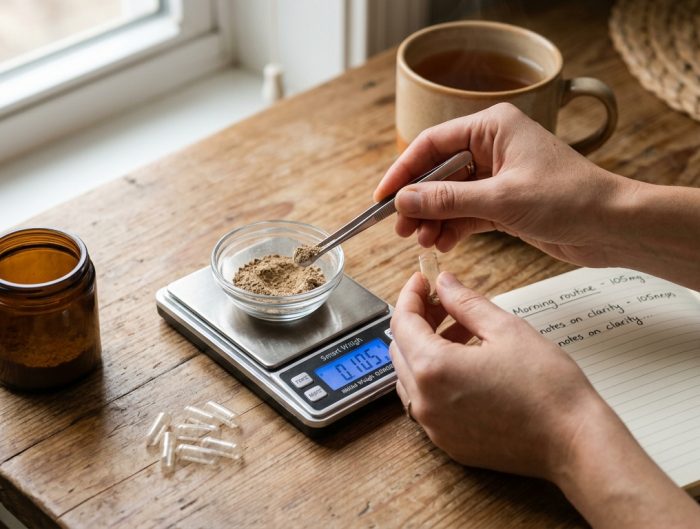
Journaling is the other half of this equation. At the end of a microdose day, spend five to ten minutes writing about what you noticed. Not what you think you should have noticed – what actually happened. Did your thought patterns shift? Were there moments of unusual clarity or calm? Did anything feel uncomfortable? Over weeks, these journal entries become an invaluable map of your experience, helping you identify patterns and calibrate your approach.
Here’s a simple journaling framework that works well:
- What was my intention today?
- What did I notice about my thinking patterns?
- Were there moments when I felt more present than usual?
- Was there anything uncomfortable or unexpected?
- What do I want to carry forward into tomorrow?
This kind of active integration is what separates people who have a meaningful microdosing practice from those who take a substance and hope for the best. The substance is just one ingredient. Your attention and reflection are the others.
The Future of Psychedelic Research in Anxiety Management
The research landscape around psychedelics and mental health is moving faster than many people realize. Between 2020 and 2026, the number of clinical trials involving psilocybin has more than tripled, and microdosing-specific studies are finally catching up to the full-dose research that dominated earlier years.
Several developments are particularly relevant for people interested in microdosing and overthinking. Researchers at multiple universities are conducting randomized, placebo-controlled trials specifically examining whether psilocybin microdoses affect rumination, cognitive flexibility, and anxiety. These studies are critical because most of what we currently know comes from self-report surveys and observational data, which are valuable but can’t establish causation.
Neuroscientist Andrew Huberman has discussed how psychedelics interact with neural circuits involved in mood and cognition, helping bring mainstream scientific attention to mechanisms that were previously dismissed or ignored. This kind of public scientific discourse is helping shift the conversation from “Are psychedelics dangerous?” to “How can we study them responsibly?”
The regulatory environment is also evolving. The FDA has granted “breakthrough therapy” designation to psilocybin for treatment-resistant depression, and several states are developing frameworks for supervised psychedelic use. While these developments primarily concern full-dose therapeutic sessions, they create a regulatory and cultural environment that’s more hospitable to microdosing research as well.
What does this mean for you right now? It means we’re in a transitional period. The evidence is promising but incomplete. The legal landscape is shifting but still restrictive in many places. The wisest approach is to stay informed, be cautious, and treat any personal exploration as exactly that – an exploration, not a prescription.
One thing we can say with confidence: the days of dismissing psychedelic research as fringe science are over. Serious institutions, serious researchers, and serious funding are behind this work. The next few years will likely bring much clearer answers about whether and how microdosing can specifically help with overthinking, anxiety, and related patterns.
For now, if you’re considering this path, go slowly. Start with education. Talk to people who have experience. And above all, approach the process with the same patience and self-compassion you’d bring to any other form of personal growth. Your overthinking didn’t develop overnight, and addressing it won’t happen overnight either – with or without microdosing.
If you’re curious about where to begin and want a personalized starting point, you might find it helpful to take the dose quiz. It’s designed to help you find a gentle starting range based on your goals, experience level, and individual sensitivity, so you can approach this thoughtfully and at your own pace.
The most important thing to remember is that you’re not broken for overthinking. Your brain is doing what it learned to do – and with the right tools, the right support, and enough patience, you can build a different relationship with your own mind.

You might also like