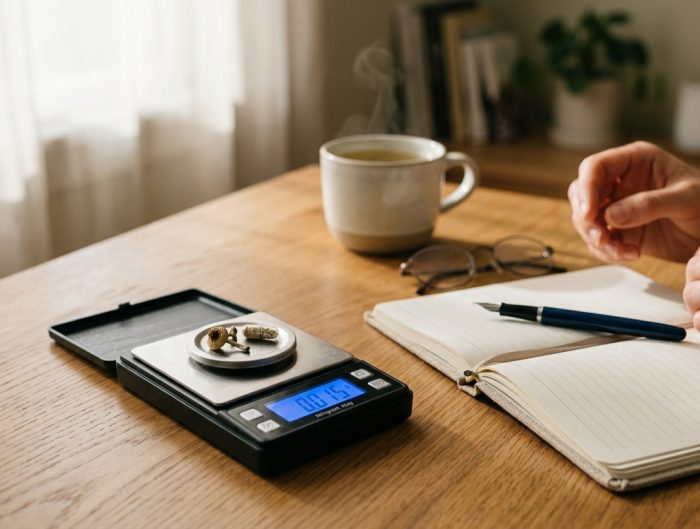
You woke up this morning and something felt slightly off. Maybe it was a low-grade fog behind your eyes, a vague heaviness in your chest, or an emotional flatness that you can’t quite name. If you’re microdosing, your first instinct might be to blame the dose. But here’s the thing: life itself is full of days that just feel strange, and figuring out whether that “off” feeling connects to your microdose or to the thousand other variables in your daily existence is one of the most common puzzles people face on this path. The good news? You don’t need to figure it all out overnight. With a little patience and some practical tools, you can start separating signal from noise and respond to what your body and mind are actually telling you. This guide is here to help you do exactly that, one honest step at a time.
The Gray Area Between Side Effects and Daily Stress
One of the trickiest parts of microdosing is that the experiences you’re working with are, by design, subtle. We’re talking about sub-perceptual doses: amounts small enough that you shouldn’t feel a dramatic shift in consciousness. For context, a common psilocybin microdose falls somewhere between 0.05 and 0.2 grams of dried mushroom, depending on individual sensitivity. At these levels, the changes are meant to be quiet. A gentle hum of energy. A slightly brighter emotional palette. Maybe a touch more patience with your coworker who chews too loudly.
But “subtle” is exactly what makes it hard to distinguish microdose-related experiences from the normal ups and downs of being a human being. You had a bad night of sleep, you skipped breakfast, your partner said something that stuck with you, and you also took your microdose this morning. Which variable is responsible for that uneasy feeling at 2 p.m.? The honest answer is: it could be any of them, or all of them combined.
This gray area is where most people get stuck. They either over-attribute everything to the dose (leading to unnecessary anxiety about their protocol) or under-attribute genuine dose-related signals (missing important feedback from their body). Neither extreme serves you well. The goal is to develop a more nuanced awareness, and that starts with understanding where these experiences overlap.
Recognizing Common Overlap Symptoms
Think about the most frequent complaints people have on an off day: fatigue, irritability, brain fog, mild anxiety, difficulty concentrating, a general sense of being emotionally flat. Now consider the most commonly reported experiences when a microdose isn’t quite right: fatigue, irritability, brain fog, mild anxiety, difficulty concentrating, a general sense of being emotionally flat. See the problem?
The overlap is almost complete. That’s not a coincidence. Your nervous system has a limited vocabulary for expressing discomfort, and whether the source is external stress or an internal biochemical mismatch, the language it uses tends to sound the same.
Here are some of the most commonly shared signals between “life stuff” and dose-related discomfort:
- Low energy or feeling drained despite adequate rest
- A mild headache that lingers without obvious cause
- Emotional sensitivity that feels disproportionate to the situation
- A sense of restlessness or inability to settle into tasks
- Stomach discomfort or changes in appetite
None of these, on their own, point definitively to either the dose or your life circumstances. That’s why context matters so much, and why jumping to conclusions in either direction can lead you down the wrong path. The key is learning to hold the question gently rather than demanding an immediate answer.
The Impact of Lifestyle Factors on Medication Efficacy
Your microdose doesn’t operate in a vacuum. It enters a body that is already being shaped by dozens of inputs: what you ate, how you slept, your hydration level, your stress load, your hormonal cycle, even the weather. All of these factors influence how your body processes any substance, and microdoses are no exception.
Consider something as simple as food timing. Taking a microdose on an empty stomach versus after a meal can change how quickly it’s absorbed, how intensely you feel it, and how long the experience lasts. Someone who takes their dose with a hearty breakfast one day and on an empty stomach the next might have two completely different experiences and mistakenly think the dose itself is inconsistent.
Stress is another major variable. When your cortisol levels are elevated from a tough week at work, your baseline emotional state is already shifted. A microdose that felt perfectly calibrated during a calm weekend might feel edgy or uncomfortable during a high-pressure Monday. This doesn’t mean the dose is wrong; it means the context changed.
At Healing Dose, we consistently emphasize that microdosing is not a standalone practice. It works best as part of a broader ecosystem of self-care: sleep, nutrition, movement, and reflection all play supporting roles. If you’re trying to evaluate whether your dose is right, you first need to honestly assess whether the rest of your lifestyle is reasonably stable. Otherwise, you’re trying to tune a guitar in a windstorm.
Timing and Patterns: Tracking Your Symptoms
If the overlap between dose-related and life-related discomfort is so significant, how do you start telling them apart? The answer lives in patterns. A single off day tells you almost nothing. But a series of off days, tracked carefully against your dosing schedule and daily habits, can start to reveal meaningful connections.
Pattern recognition is your most reliable tool here. It requires patience, which can feel frustrating when you just want to feel better. But rushing to conclusions is exactly how people end up making unnecessary changes to their protocol or, worse, abandoning a practice that was actually working. Give yourself the gift of data before making decisions.
The Relationship Between Ingestion and Feeling Off
One of the first things to examine is timing. When exactly does the off feeling show up relative to your dose? This question alone can provide surprisingly useful information.
If you consistently feel off within one to three hours of taking your microdose, that’s a signal worth paying attention to. It could suggest that the dose is slightly too high for your current sensitivity, or that something about the timing or delivery method isn’t ideal. Some people find that morning dosing works beautifully, while others feel better taking their microdose after lunch. Individual variability here is enormous, much like how some people can drink espresso at 4 p.m. and sleep fine while others are wired from a single cup at noon.
On the other hand, if the off feeling doesn’t correlate with dose timing at all: if it shows up on both dosing and non-dosing days, or if it appears hours after the dose would have been metabolized, then you’re likely looking at a life factor rather than a dose factor.
Pay attention to your off days too. If you follow a protocol like one day on, two days off, what happens on those rest days? Do you feel better, worse, or about the same? If you feel equally off on rest days, the dose probably isn’t the culprit. If rest days consistently feel clearer, that’s useful information to bring to your next evaluation.
Using a Symptom Journal to Identify Trends
This is where journaling becomes not just a nice-to-have but a genuinely practical tool. And it doesn’t need to be elaborate. A simple daily log with a few key data points can reveal patterns that your memory alone will miss.
Here’s a minimal framework that works well:
- Date and whether it’s a dosing day or rest day
- Dose amount and time of ingestion
- Sleep quality the night before (rate 1-10)
- Meals: what you ate and when, especially relative to dosing
- Caffeine and alcohol intake
- Stress level (rate 1-10)
- Physical experiences: energy, headaches, stomach, tension
- Emotional experiences: mood, motivation, irritability, clarity
- Any notable life events: argument, deadline, good news, social plans
You don’t need to write paragraphs. A few words or numbers for each category is enough. The magic happens when you look back over two to four weeks and start connecting dots. Maybe you’ll notice that every time you feel foggy, you also slept fewer than six hours. Or that your irritability spikes on dosing days only when you’ve had more than two cups of coffee. These connections are invisible in the moment but obvious in retrospect.
At Healing Dose, we consider journaling an essential part of any microdosing practice because it transforms vague feelings into concrete data. And concrete data is what allows you to make informed adjustments rather than anxious guesses.
Signs Your Dosage May Need Adjustment
Sometimes, after careful tracking, the evidence does point toward the dose. That’s okay. Finding the right amount is a process, not a one-time decision, and your ideal dose can shift over time based on changes in your body, your stress levels, and even the potency of your source material.
The concept of a “sweet spot” in microdosing is real, but it’s more like a moving target than a fixed point. What felt right three months ago might need a small adjustment now. This is normal and expected, not a sign that something has gone wrong.
When the ‘Window of Efficacy’ Feels Too Narrow
Think of your effective dose range as a window. Below the window, you feel nothing and wonder if the microdose is doing anything at all. Above it, you start to notice unwanted experiences: a subtle physical buzz that feels more jittery than pleasant, mild visual disturbances, emotional intensity that feels unearned, or difficulty focusing because your mind keeps drifting.
The ideal spot is somewhere in that window, where you feel a quiet shift: maybe a little more present, a little more creative, a little more emotionally available, but nothing that disrupts your ability to function normally. If you find yourself repeatedly bouncing between “I don’t feel anything” and “that was too much,” the window might be narrower than average for you, and you may need to dial in your dose with more precision.
This is especially common for people who are sensitive to substances in general. If you’re someone who feels one glass of wine, who gets jittery from half a cup of coffee, or who reacts strongly to over-the-counter medications, your microdose window is probably narrower than what you’ll see recommended in general guides. That’s not a flaw; it’s just your biology. Working with smaller increments, like adjusting by 0.025 grams at a time rather than 0.05, can make a real difference.
Physical Red Flags vs. Emotional Fluctuations
Not all off feelings carry the same weight. It helps to distinguish between physical signals and emotional ones, because they often point to different causes and call for different responses.
Physical red flags that may suggest a dose issue include:
- Persistent headaches on dosing days that resolve on rest days
- Noticeable stomach discomfort or nausea within an hour of dosing
- Jaw clenching or muscle tension that correlates with your protocol
- A “wired but tired” feeling, similar to drinking too much coffee
- Heart rate changes that you can feel without checking your pulse
Emotional fluctuations, on the other hand, are trickier to attribute. Feeling more emotionally open or sensitive during a microdosing protocol is common and isn’t necessarily a problem. Some people describe it as having the volume turned up on their feelings: not louder in a distressing way, but more noticeable. This can feel unsettling if you’re used to keeping emotions at arm’s length.
The question to ask is whether the emotional shift feels productive or disruptive. If you’re noticing feelings that you’d normally suppress and finding space to process them, that might actually be the practice working as intended. If you’re feeling emotionally destabilized, unable to regulate, or persistently anxious without clear cause, that’s a different story and worth discussing with someone you trust.
External Variables That Mimic Medication Issues
Before adjusting your dose, it’s worth ruling out the most common external culprits that can make you feel off regardless of what you’re taking. These variables are so influential that ignoring them makes any dose evaluation unreliable.
Think of it this way: if you’re trying to figure out whether a new pair of running shoes is causing your knee pain, but you’ve also been running on concrete instead of trails, sleeping four hours a night, and skipping your warm-up, the shoes might not be the problem. The same logic applies here.
Sleep Hygiene and Nutritional Deficiencies
Sleep is the single biggest confounder in microdosing self-assessment. One night of poor sleep can produce brain fog, irritability, emotional reactivity, low motivation, and physical fatigue: every single experience that people commonly attribute to their dose. If you’re not sleeping well, you genuinely cannot evaluate your microdosing protocol with any accuracy.
This doesn’t mean you need perfect sleep every night. That’s unrealistic. But if you’re consistently getting fewer than six hours, waking up multiple times, or feeling unrested despite adequate time in bed, addressing sleep should be your first priority before making any changes to your dose.
Nutritional gaps are another silent disruptor. Magnesium deficiency alone can cause anxiety, muscle tension, headaches, and mood instability. Low B12 produces fatigue and brain fog. Insufficient iron leads to exhaustion and difficulty concentrating. These deficiencies are incredibly common, especially among people who are stressed, not eating regularly, or following restrictive diets.
A simple blood panel from your doctor can rule out the most common nutritional gaps. It’s not glamorous advice, but sometimes the answer to “why do I feel off?” is as straightforward as “you need more magnesium and a consistent bedtime.”
The Role of Dehydration and Caffeine Intake
These two factors deserve their own spotlight because they’re both extremely common and extremely easy to overlook.
Dehydration is sneaky. By the time you feel thirsty, you’re already mildly dehydrated, and even mild dehydration can cause headaches, difficulty concentrating, fatigue, and mood changes. If you’re someone who drinks coffee in the morning but doesn’t reach for water until lunch, you might be starting every day in a mild deficit. On dosing days, this can amplify any subtle discomfort from the microdose and make it feel like the dose is the problem.
A practical rule: drink a full glass of water before or alongside your microdose. It’s a small habit that can meaningfully change your experience.
Caffeine is the other major variable that people underestimate. Caffeine and psilocybin (or LSD, if that’s your protocol) both affect serotonin pathways, and combining them can produce an overstimulated feeling that neither substance would cause on its own. If you’re someone who drinks two or three cups of coffee and also microdoses in the morning, try reducing your caffeine by half on dosing days and see if that changes anything. Many people report that this single adjustment eliminates the jittery, anxious edge they were blaming on their dose.
The interaction between caffeine and microdosing is something we hear about frequently in the Healing Dose community, and it’s one of the easiest experiments to run. You don’t need to give up coffee entirely. Just see what happens when you pull back a little on the days you dose.
Navigating the Conversation With Your Provider
If you’ve tracked your experiences, ruled out the obvious external factors, and still feel like something is off, it’s time to bring someone else into the conversation. This might be a therapist, a doctor, an integration coach, or a trusted mentor with experience in this space. The point is to move beyond solo troubleshooting and get a perspective that isn’t colored by your own anxiety about the process.
This can feel vulnerable, especially if your provider isn’t familiar with microdosing or if you’re unsure how they’ll respond. But having an honest conversation is almost always better than making changes in isolation, particularly when your own judgment might be clouded by the very discomfort you’re trying to resolve.
Preparing Data for Your Next Appointment
Walking into an appointment with vague statements like “I just don’t feel right” is understandable, but it doesn’t give your provider much to work with. The more specific you can be, the more useful the conversation becomes.
This is where your symptom journal pays off. Before your appointment, review your log and pull out the most relevant patterns. You might organize your notes around a few key questions:
- What specific experiences are you having? Name them concretely: “headaches on dosing days,” “increased anxiety in the afternoons,” “trouble falling asleep on dose nights.”
- When did these experiences start? Did they coincide with starting your protocol, changing your dose, or some other life event?
- What’s the pattern relative to your dosing schedule? Do these experiences happen on dose days, rest days, or both?
- What else has changed recently? New job stress, dietary changes, sleep disruptions, seasonal shifts, relationship tension?
- What have you already tried? Adjusting timing, reducing caffeine, improving sleep, changing your dose amount?
Presenting this information clearly doesn’t just help your provider: it helps you. The act of organizing your experiences often reveals connections you hadn’t consciously noticed. And it signals to your provider that you’re approaching this thoughtfully, which tends to produce a more collaborative and productive conversation.
If you’re working with someone who isn’t familiar with microdosing, you might need to provide some basic context. Keep it simple and factual: the substance, the amount, the frequency, and the intention behind your practice. You don’t need to justify or defend your choices. You’re there to get support, not to convince anyone.
Why You Should Never Self-Adjust Your Dose
This is the part where we get direct. The temptation to self-adjust is strong, especially when you feel off and want immediate relief. “Maybe I just need a little more.” “Maybe I should skip a few days.” “Maybe I should double up to push through this plateau.” These impulses are natural, but acting on them without a clear framework is how people end up in confusing spirals where they can’t tell what’s causing what.
Here’s why self-adjusting is risky:
- You lose your baseline. If you change your dose every time you feel off, you never have a stable reference point to evaluate against. You end up chasing a moving target with no way to know what’s actually working.
- Emotional states are unreliable guides for dosing decisions. When you feel anxious, your brain wants to do something, anything, to fix it. That urgency is a terrible advisor for decisions that require patience and observation.
- Small changes compound. Increasing by “just a little” several times over a few weeks can move you well outside the sub-perceptual range without you realizing it, especially if you’re not measuring precisely.
- You might be treating the wrong problem. If the off feeling is actually caused by poor sleep or dehydration, adjusting your dose won’t help and might create a new problem on top of the original one.
The better approach is to hold steady, keep tracking, and bring your observations to someone who can help you interpret them. If a dose adjustment is genuinely needed, make it deliberately, one variable at a time, with enough time between changes (at least two weeks) to see the actual effect.
This kind of patience isn’t easy. We get that. But microdosing is a practice that rewards slow, careful attention over impulsive reactions. The people who get the most out of it are typically the ones who resist the urge to constantly tinker and instead commit to observing, reflecting, and adjusting only when the data supports it.
Finding Your Way Forward
Figuring out whether you’re feeling off because of your dose or because of life is rarely a quick or simple process. It asks you to slow down, pay attention, and sit with uncertainty for longer than feels comfortable. But that process of careful self-observation is itself a form of personal growth, and it builds a kind of self-awareness that serves you well beyond your microdosing practice.
Remember the basics: track your experiences consistently, stabilize the variables you can control (sleep, food, water, caffeine), resist the urge to self-adjust impulsively, and bring your data to someone who can help you see what you might be missing. Most of the time, the answer isn’t dramatic. It’s a small tweak, a lifestyle adjustment, or simply the reassurance that what you’re feeling is normal.
If you’re still finding your footing with dosing and want a personalized starting point, our short quiz can help you find your range based on your goals, experience level, and individual sensitivity. It’s a gentle place to begin, and there’s no pressure to rush.
You’re doing something that takes courage and care. Trust the process, trust your body’s feedback, and give yourself permission to figure this out at your own pace.