The Synergistic Relationship Between Caffeine and Microdosing
You’ve probably noticed that your morning coffee hits differently on days when you’re also microdosing. Maybe the focus feels sharper, or perhaps you’ve experienced an uncomfortable edge that left you wondering if you’d made a mistake. You’re not alone in this observation, and understanding how these two substances interact is essential for anyone exploring both practices.
Caffeine and psychedelic microdoses occupy different corners of the substance spectrum, yet they share a surprising amount of neurological real estate. When combined, their effects don’t simply add together: they create a more complex experience that deserves careful attention. A 2024 survey found that 67% of American adults reported drinking coffee in the past day, which means most people exploring microdosing are already regular caffeine consumers. This overlap makes understanding their interaction not just helpful but necessary.
The question isn’t whether you should combine caffeine with microdosing. That’s a personal choice that depends on your goals, your body, and your comfort level. The real question is how to approach this combination thoughtfully so you can make informed decisions about what works for you. Throughout this guide, we’ll explore the mechanisms at play, the potential pitfalls, and practical strategies for finding your personal balance.
Mechanisms of Action: Stimulants vs. Psychedelics
Caffeine and psychedelics work through fundamentally different pathways in your brain, which explains why their combination can feel so unpredictable. Caffeine primarily blocks adenosine receptors: those are the sites where your brain’s natural drowsiness signals usually land. By blocking these receptors, caffeine prevents the tired feeling that accumulates throughout your day and increases the release of dopamine and norepinephrine, creating that familiar alert, focused state.
Psychedelics at microdose levels operate through serotonin receptors, particularly the 5-HT2A receptor. At sub-perceptual doses, the effects are subtle: slight shifts in mood, perception, or cognitive flexibility that many people describe as feeling more “present” or “open.” Unlike caffeine’s blocking action, psychedelics appear to increase neural connectivity and may temporarily reduce activity in the default mode network, the brain region associated with self-referential thinking and mind-wandering.
Here’s where things get interesting. Both substances influence dopamine, though through different mechanisms. Caffeine increases dopamine signaling indirectly by blocking adenosine, while some psychedelics may modulate dopamine pathways as part of their broader serotonergic effects. This overlap means that combining them can amplify certain experiences: enhanced focus, heightened motivation, or increased mental energy.
The challenge is that this amplification isn’t always comfortable. Your nervous system receives stimulating signals from multiple directions simultaneously. For some people, this creates a productive, creative state. For others, it tips the balance toward overstimulation. As dietitian Melissa Meier notes, “Caffeine is a stimulant drug and in the right dose it can make you feel alert, but overdoing it can leave you feeling anxious, cranky, and tired.” When you add another substance that affects your brain chemistry, finding that right dose becomes more complicated.
The Entourage Effect on Focus and Creativity
The term “entourage effect” originally described how different compounds in cannabis work together, but the concept applies broadly to any combination of psychoactive substances. When caffeine and microdoses interact, they don’t simply produce two separate effects: they create a third, emergent experience that’s distinct from either substance alone.
Many people report that this combination enhances certain cognitive states. The alertness from caffeine can help direct the subtle openness of a microdose toward specific tasks. Instead of floating through the day with a gentle sense of possibility, you might find yourself channeling that openness into focused creative work or problem-solving. The caffeine provides momentum while the microdose may offer a different perspective on the work itself.
This synergy can be particularly noticeable during creative tasks. The mild reduction in rigid thinking patterns that some people experience with microdosing, combined with caffeine’s enhancement of working memory and attention, can create conditions favorable for making novel connections. You might find yourself approaching familiar problems from unexpected angles while maintaining the focus to actually develop those ideas.
However, the entourage effect cuts both ways. If caffeine tends to make you anxious, adding a microdose might intensify that anxiety rather than balance it. If microdosing already makes you feel mentally stimulated, caffeine could push that stimulation into uncomfortable territory. The combined effect depends heavily on your individual neurochemistry, your current state, and the specific doses involved.
At Healing Dose, we consistently emphasize that individual responses vary dramatically. What feels like productive synergy for one person might feel like overstimulation for another. The only way to know how this combination affects you is through careful, gradual experimentation with close attention to your body’s signals.
Managing Over-Stimulation and Physiological Stress
The most common challenge people face when combining caffeine with microdosing is overstimulation. Both substances activate your system in different ways, and together they can push your nervous system into a heightened state that feels less like productive energy and more like being stuck in overdrive. Learning to recognize and manage this response is crucial for anyone exploring this combination.
Recognizing the Signs of Jitteriness and Anxiety
Overstimulation rarely announces itself with a single dramatic symptom. Instead, it tends to creep up through a constellation of smaller signals that are easy to dismiss individually but significant when viewed together. Physical jitteriness is often the first sign: a trembling in your hands, a bouncing leg, or a general sense of restlessness that makes sitting still feel impossible.
Anxiety follows a similar pattern. You might notice your thoughts racing faster than usual, cycling through worries or to-do lists without settling on anything productive. Small problems might feel larger than they should. You might find yourself checking your phone repeatedly or struggling to commit to a single task. These mental patterns often accompany physical tension: tight shoulders, a clenched jaw, shallow breathing.
Some people experience what might be called “productive anxiety”: a state where you’re getting things done but feeling increasingly uncomfortable while doing so. This can be deceptive because the productivity masks the underlying stress. You might power through a morning of work only to crash hard in the afternoon, depleted by the sustained activation of your stress response.
Pay attention to your baseline. If you’ve been microdosing for a while, you probably have a sense of how those days typically feel. Similarly, you know your usual response to caffeine. When combining them, notice whether your experience exceeds what you’d expect from either substance alone. If your normal two cups of coffee suddenly feel like four, or if your usual microdose feels more intense than expected, that’s valuable information.
The Food and Drug Administration recommends a maximum intake of 400 mg of caffeine a day for healthy adults, but this guideline doesn’t account for interactions with other substances. On microdosing days, your effective tolerance for caffeine may be lower than usual.
Impact on Heart Rate and Blood Pressure
Beyond the subjective experience of overstimulation, there are genuine physiological considerations when combining stimulating substances. Caffeine increases heart rate and blood pressure through its effects on the cardiovascular system. While these increases are typically modest and well-tolerated in healthy adults, they represent real stress on your body.
The cardiovascular effects of psychedelic microdoses are less well-studied, partly because the doses involved are so small. However, some research suggests that even sub-perceptual doses may have mild cardiovascular effects, potentially through serotonin’s role in regulating blood vessel tone. When combined with caffeine’s known cardiovascular stimulation, there’s theoretical reason for caution.
If you have any history of heart conditions, high blood pressure, or cardiovascular concerns, this combination deserves extra care. Consider discussing your practices with a healthcare provider who can offer personalized guidance based on your medical history. This isn’t about fear-mongering: it’s about making informed decisions with full awareness of the variables involved.
For healthy individuals, monitoring your heart rate can provide useful feedback. Many smartwatches and fitness trackers record resting heart rate throughout the day. Comparing your heart rate patterns on days when you combine caffeine with microdosing versus days when you use only one or neither can reveal whether the combination is placing additional stress on your cardiovascular system. Sustained elevated heart rate, even if you feel fine subjectively, suggests your body is working harder than necessary.
Interestingly, a clinical trial found that consuming caffeinated coffee around one cup a day was associated with less recurrence of atrial fibrillation compared to abstaining from coffee. This suggests that moderate caffeine consumption isn’t inherently problematic for heart health. The key word is moderate, and what counts as moderate may shift when other substances are involved.
Optimizing Your Protocol: Timing and Dosage
Once you understand the potential interactions between caffeine and microdosing, the next step is developing a practical approach that works for your life. This isn’t about finding a perfect formula that works for everyone: it’s about creating a framework for your own experimentation.
The Importance of Staggered Consumption
Timing matters more than many people realize. When you consume caffeine and a microdose simultaneously, their effects overlap during peak absorption, potentially amplifying the combined stimulation. By staggering your consumption, you can spread out this overlap and create a smoother experience.
Consider the pharmacokinetics involved. Caffeine typically reaches peak blood levels about 30 to 60 minutes after consumption, with effects lasting 3 to 5 hours depending on your metabolism. Psilocybin microdoses, for example, tend to reach peak effects around 60 to 90 minutes after consumption, with the overall experience lasting 4 to 6 hours. If you take both at the same time, you’re maximizing the overlap of their peak effects.
One approach is to take your microdose first thing in the morning and delay your first caffeine until an hour or two later. This allows the microdose to settle into your system before adding the additional stimulation of caffeine. By the time the caffeine peaks, the microdose effects may have plateaued or begun their gradual decline.
Alternatively, some people prefer to have their morning coffee first, wait until the initial caffeine rush has settled, and then take their microdose. This approach means the microdose peaks after the most intense caffeine stimulation has passed. The right sequence depends on your personal response to each substance and your goals for the day.
Experimentation is essential here. Try different timing strategies on different days and keep notes about how each approach feels. You might discover that a specific sequence works consistently well for you, or you might find that the best approach varies depending on other factors like sleep quality, stress levels, or what kind of work you have planned.
Adjusting Caffeine Intake on ‘On-Days’
Many experienced microdosers find that reducing their caffeine intake on microdosing days creates a better overall experience. This doesn’t necessarily mean eliminating caffeine entirely, though some people do choose that path. Even modest reductions can make a noticeable difference.
If you normally drink three cups of coffee, try two on microdosing days. If you typically have two cups, try one, or switch to tea for your second serving. The goal isn’t deprivation: it’s finding the combination that produces the effects you’re actually seeking without the downsides of overstimulation.
Searches related to “caffeine microdosing” have grown by over 150% in the past three years, suggesting that many people are becoming more intentional about their caffeine consumption generally. This trend reflects a broader awareness that more isn’t always better when it comes to stimulants. The same principle applies when combining caffeine with psychedelic microdoses.
Here’s a practical framework for adjusting your caffeine:
- Start by reducing your typical caffeine intake by 25 to 50 percent on microdosing days
- Pay attention to whether you miss the caffeine or feel better with less
- Gradually adjust based on your observations over several microdosing cycles
- Consider the source of your caffeine: coffee, tea, and energy drinks all have different absorption profiles
- Account for hidden caffeine in chocolate, certain medications, and soft drinks
The global sales of caffeine-infused gummies have shown a 200% increase in the past year, indicating that people are seeking more controlled ways to consume caffeine. These products offer precise dosing that can be helpful when you’re trying to find your optimal caffeine level on microdosing days. Instead of guessing how much caffeine is in your coffee, you know exactly what you’re consuming.
Mitigating Common Side Effects
Even with careful attention to timing and dosage, you may encounter side effects when combining caffeine with microdosing. The two most common complaints are sleep disruption and digestive issues. Both are manageable with the right strategies.
Addressing Sleep Disruptions and Insomnia
Sleep problems are perhaps the most frequently reported issue when people combine caffeine with microdosing. This makes sense when you consider that both substances can affect sleep architecture, and their combined stimulation may linger longer than either would alone.
Caffeine has a half-life of about 5 to 6 hours in most adults, meaning that half the caffeine from your afternoon coffee is still in your system at bedtime. For some people, this residual caffeine is enough to delay sleep onset or reduce sleep quality. When combined with a microdose taken earlier in the day, even small amounts of lingering stimulation can compound the problem.
The most straightforward solution is a caffeine cutoff time. Many sleep experts recommend stopping caffeine consumption by early afternoon, around 1 or 2 PM for most people. On microdosing days, you might need an even earlier cutoff. Experiment with stopping caffeine by noon or even limiting yourself to a single morning serving.
Your microdose timing also matters for sleep. Taking a microdose too late in the day can interfere with your ability to wind down in the evening. Most protocols recommend morning dosing for this reason. If you’re experiencing sleep issues, make sure you’re taking your microdose early enough that its effects have fully subsided by bedtime.
Evening practices can help counteract any residual stimulation:
- Dim lights in your home at least an hour before bed to support natural melatonin production
- Avoid screens or use blue light filters in the evening
- Consider a brief meditation or relaxation practice to signal to your body that the active part of the day is over
- Keep your bedroom cool and dark
- Maintain consistent sleep and wake times, even on weekends
If sleep problems persist despite these adjustments, that’s important feedback. Your body may be telling you that the combination of caffeine and microdosing is too stimulating for your particular neurochemistry. Reducing one or both substances, or using them on different days, might be necessary.
Digestive Sensitivity and Gut Health
Both caffeine and psychedelic substances can affect your digestive system, and combining them may amplify these effects. Caffeine stimulates gastric acid production and increases gut motility, which is why many people find that coffee sends them to the bathroom. Some psychedelic compounds, particularly those derived from fungi, can also cause mild digestive upset in sensitive individuals.
If you’re experiencing nausea, stomach discomfort, or changes in bowel habits on days when you combine caffeine with microdosing, your gut is responding to the combined load. This doesn’t necessarily mean you need to abandon the combination, but it does suggest some adjustments might help.
Eating before you consume either substance can buffer their effects on your stomach. A small breakfast with some protein and healthy fat provides a protective layer that slows absorption and reduces direct irritation of your stomach lining. Avoid taking a microdose on a completely empty stomach, especially if you’re also planning to drink coffee.
The type of caffeine matters too. Coffee is more acidic than tea and may cause more digestive irritation. If coffee bothers your stomach on microdosing days, try switching to green tea or matcha, which provide caffeine with less acidity. Cold brew coffee is also less acidic than hot brewed coffee and might be gentler on your system.
Staying well-hydrated helps your digestive system process both substances. Caffeine is a mild diuretic, and adequate hydration supports healthy digestion generally. Aim for water throughout the day, not just coffee and tea.
Some people find that probiotics or digestive enzymes help them tolerate the combination better. If digestive issues are a consistent problem, supporting your gut health through diet and supplementation might be worth exploring. Fermented foods, fiber-rich vegetables, and probiotic supplements can all contribute to a more resilient digestive system.
Listening to the Body: Personal Variance and Tolerance
Everything we’ve discussed so far provides a framework, but the most important guidance comes from your own body. Individual responses to both caffeine and psychedelic microdoses vary enormously, influenced by genetics, lifestyle, stress levels, and countless other factors. What works beautifully for someone else might not work for you, and vice versa.
Genetic variations affect how quickly you metabolize caffeine. Some people are “fast metabolizers” who clear caffeine from their system efficiently and can drink coffee late in the day without sleep problems. Others are “slow metabolizers” who feel the effects of caffeine for much longer and are more prone to side effects. You probably already have a sense of which category you fall into based on your lifetime experience with coffee and tea.
Similar individual variation exists in responses to psychedelics. Some people are highly sensitive and notice significant effects from very small doses. Others seem to have a higher threshold and need larger doses to perceive any effect. This variation means that a combination that produces mild, pleasant synergy in one person might cause overwhelming stimulation in another.
Your current life circumstances also matter. Stress, sleep deprivation, hormonal fluctuations, and even seasonal changes can all affect how you respond to psychoactive substances. A combination that worked well for you last month might feel different this month if your baseline stress level has changed. This is why ongoing attention and flexibility are so important.
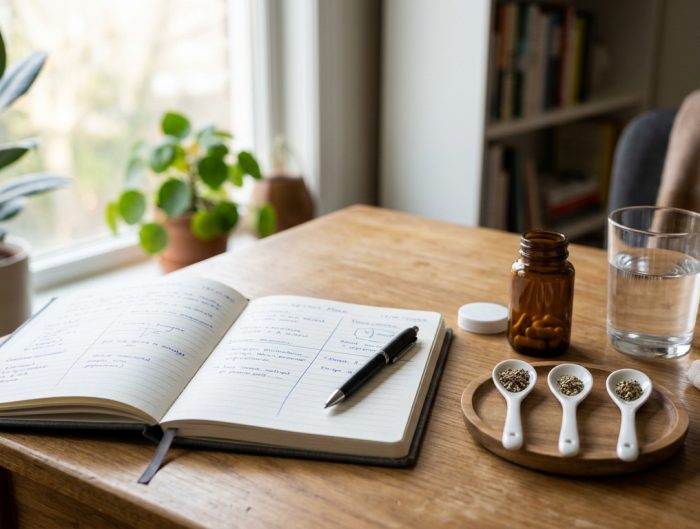
At Healing Dose, we encourage keeping a simple journal to track your experiences. Note the date, your microdose amount, your caffeine consumption including timing and quantity, and any notable effects: positive, negative, or neutral. Over time, patterns emerge that help you refine your approach. You might discover that you do better with less caffeine on microdosing days, or that a specific timing sequence consistently produces good results.
Tolerance is another factor that evolves over time. Regular caffeine consumption leads to tolerance, meaning you need more caffeine to achieve the same effects. If you’ve been drinking coffee daily for years, your baseline caffeine tolerance is likely quite high. This tolerance affects how caffeine interacts with microdosing: someone with high caffeine tolerance might handle the combination easily, while someone new to caffeine might find it overwhelming.
The same principle applies to microdosing protocols. Many people find that taking regular breaks from microdosing, often called “off days” or “integration days,” helps maintain sensitivity and prevents tolerance buildup. These breaks also provide an opportunity to notice how caffeine affects you without the added variable of a microdose.
Building self-awareness around these substances is a gradual process. Don’t expect to figure everything out in a week or even a month. Give yourself permission to experiment, make adjustments, and sometimes get things wrong. Each experience, whether pleasant or uncomfortable, provides information that helps you refine your approach.
Trust your body’s signals. If something feels off, it probably is. If you’re consistently experiencing negative effects from combining caffeine with microdosing, that’s valuable data suggesting you need to change something. Maybe you need less caffeine, a smaller microdose, different timing, or perhaps the combination simply doesn’t work well for your particular physiology.
The goal isn’t to push through discomfort in pursuit of some ideal experience. The goal is to find an approach that supports your wellbeing and helps you show up more fully in your life. Sometimes that means combining caffeine with microdosing in a carefully calibrated way. Sometimes it means choosing one or the other on a given day. And sometimes it means taking a break from both and letting your system reset.
Your relationship with these substances will likely evolve as you learn more about yourself and as your life circumstances change. What matters is maintaining curiosity and honesty about your experiences, adjusting your approach based on what you observe, and prioritizing your overall health and wellbeing over any particular protocol or practice.
Finding your personal balance takes patience, but the process itself is valuable. Each adjustment you make, each observation you record, each uncomfortable experience you learn from: all of it contributes to a deeper understanding of your own body and mind. That self-knowledge extends far beyond questions of caffeine and microdosing. It becomes a foundation for making thoughtful choices about all aspects of your health and wellbeing.
If you’re just beginning to explore microdosing or looking to refine your approach, finding a starting point that matches your individual sensitivity can make a real difference. Take the microdose quiz to identify a gentle range based on your goals and experience level. This kind of personalized starting point helps you approach the practice thoughtfully and at your own pace, setting the stage for sustainable exploration rather than trial-and-error guesswork.