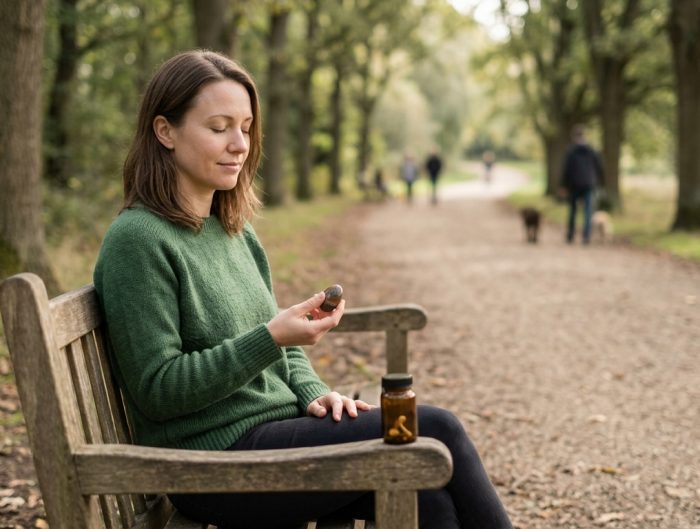
The morning you notice your hands aren’t shaking before a big meeting, you might not connect it to the tiny capsule you took three days ago. Or maybe you will. That’s the strange territory of microdosing for anxiety: a practice that millions are quietly exploring, yet one that science is still working to understand.
An estimated 10 million U.S. adults microdosed psilocybin, LSD, or MDMA in 2025, and anxiety relief ranks among the top reasons people cite for trying it. The appeal makes sense. Traditional anxiety medications often come with side effects that feel like trading one problem for another: emotional blunting, dependency concerns, or that foggy feeling that makes you wonder if you’ve just numbed yourself into functionality.
Microdosing promises something different. Proponents describe subtle shifts in perspective, a loosening of rigid thought patterns, and a gentler relationship with their own nervous systems. But here’s what we need to be honest about from the start: the research is young, the placebo effect is powerful, and individual responses vary dramatically. Some people experience profound relief. Others feel nothing. A smaller group actually feels worse, at least initially.
At Healing Dose, we believe in presenting this complexity honestly. If you’re exploring microdosing as a potential tool for anxiety, you deserve both the promising signals and the genuine cautions. What follows is a thorough look at what studies actually suggest, where the gaps in knowledge remain, and how to approach this practice thoughtfully if you choose to explore it.
The Mechanics of Microdosing for Mental Health
Understanding how microdosing might influence anxiety requires first understanding what we’re actually talking about. The term gets thrown around loosely, but the practice involves specific protocols, particular substances, and measurable effects on brain function.
Defining Microdosing Protocols and Substances
A microdose is typically defined as roughly one-tenth to one-twentieth of a recreational dose: small enough that you shouldn’t experience any perceptual changes like visual distortions or altered sense of time. For psilocybin mushrooms, this usually means somewhere between 0.05 and 0.3 grams of dried material. For LSD, we’re talking about 5 to 20 micrograms.
The goal is sub-perceptual. You shouldn’t feel “high” or impaired. Some people describe a subtle physical buzz, like the gentle hum of energy you might get from a single cup of green tea. Others notice nothing at all on dosing days and only recognize changes in retrospect, looking back over weeks or months.
Most protocols involve dosing every three to four days rather than daily. The Fadiman Protocol, one of the most commonly referenced, suggests dosing on day one, taking days two and three off, then dosing again on day four. This spacing matters because it appears to prevent tolerance buildup and allows time for integration and reflection between doses.
Psilocybin remains the most popular choice, with 69% of those who use psychedelics having microdosed psilocybin at least once in the past year. LSD follows as the second most common substance, with some users preferring its longer duration and what they describe as a more “energetic” quality. MDMA microdosing exists but remains less studied and carries different risk profiles.
The variability in dried mushroom potency creates real challenges for consistent dosing. Two identical-looking capsules from the same batch can contain meaningfully different amounts of psilocybin. This inconsistency frustrates both researchers trying to study the practice and individuals trying to find their optimal dose.
Neurological Impact on the Amygdala and Serotonin Receptors
The proposed mechanisms behind microdosing’s effects center primarily on serotonin receptors, particularly the 5-HT2A receptor. Classic psychedelics like psilocybin and LSD bind strongly to these receptors, which are densely concentrated in brain regions involved in mood, perception, and cognition.
At full doses, this binding triggers the profound alterations in consciousness that define a psychedelic experience. At microdoses, the theory suggests a gentler modulation: enough to shift neural activity patterns without overwhelming the system.
The amygdala, your brain’s alarm center, plays a central role in anxiety. When it becomes hyperactive, you experience that familiar cascade of worry, physical tension, and threat detection even in objectively safe situations. Preliminary research on full-dose psilocybin has shown reduced amygdala reactivity to fearful stimuli, suggesting the substance may help quiet this overactive alarm system.
Whether microdoses produce similar effects remains uncertain. The doses are small enough that measuring their direct impact on brain activity proves challenging. Some researchers hypothesize that repeated sub-perceptual exposure creates cumulative changes over time, gently shifting baseline neural patterns rather than producing immediate dramatic effects.
Serotonin itself regulates mood, sleep, appetite, and numerous other functions. Traditional SSRIs work by increasing serotonin availability in the brain. Psychedelics take a different approach: rather than flooding the system with more serotonin, they change how receptors respond to the serotonin already present. This distinction matters for understanding why microdosing might offer something different from conventional medications.
What Current Research Says About Anxiety Relief
The honest answer about research is that we’re still in early days. What exists is a mix of controlled trials, observational studies, and large-scale self-report surveys, each with their own strengths and limitations.
Clinical Trials vs. Observational Self-Reporting
Controlled clinical trials represent the gold standard for medical research, but conducting them with Schedule I substances involves enormous regulatory hurdles. The trials that do exist tend to focus on full-dose experiences rather than microdosing protocols.
One significant development: the FDA granted breakthrough designation to a form of LSD to treat generalized anxiety disorder, based on data from clinical trials. This designation doesn’t mean approval, but it signals that the agency sees enough promise to fast-track the review process. The specific trial involved low doses of LSD, though not necessarily at the microdose level.
Most of what we know about microdosing specifically comes from observational studies and self-report surveys. These have significant limitations. People who choose to microdose are self-selecting; they’re already inclined to believe it might help them. They’re also typically unable to be blinded to their own condition, meaning they know whether they’re taking a substance or not.
Survey data consistently shows that people report improvements in mood, anxiety, and focus. At least 8.4 million U.S. adults have microdosed psilocybin in their lifetime, and many describe positive experiences. But self-reports can’t distinguish between genuine pharmacological effects and expectancy effects.
The few controlled microdosing studies that have been conducted show mixed results. Some find improvements in mood and cognitive flexibility. Others find no significant difference between microdoses and placebo. The sample sizes remain small, and methodological differences make comparing studies difficult.
The Role of Neuroplasticity in Breaking Anxious Thought Patterns
One of the more compelling theoretical frameworks for understanding microdosing’s potential involves neuroplasticity: the brain’s ability to form new neural connections and reorganize existing ones.
Anxiety often involves rigid thought patterns. The same worries loop repeatedly. The same triggers produce the same responses. Your brain has essentially worn deep grooves in particular neural pathways, making it increasingly easy to slide into anxious states and increasingly difficult to find alternative responses.
Psychedelics, even at low doses, appear to increase neuroplasticity. They may help the brain form new connections and weaken old, unhelpful ones. This doesn’t happen automatically; it seems to require active engagement. The substance creates a window of increased flexibility, but you still need to practice new patterns of thinking and responding during that window.
This is why integration matters so much. Taking a microdose and then going about your day on autopilot probably won’t produce lasting change. Combining microdosing with intentional practices like journaling, meditation, or therapy may amplify the effects by taking advantage of that neuroplastic window.
I’ve noticed this in my own experience. Days when I microdosed and then immediately got absorbed in reactive email responses felt no different from baseline. Days when I used that subtle shift in state to practice noticing my anxiety without reacting to it, to sit with discomfort rather than immediately trying to fix it, those seemed to compound over time into something meaningful.
The Placebo Effect and the Expectancy Challenge
Here’s the uncomfortable truth that anyone serious about this topic needs to grapple with: one expert assessment states that “there is no good evidence beyond a placebo effect for microdosing”. This doesn’t mean microdosing definitely doesn’t work. It means the current evidence can’t clearly separate pharmacological effects from expectancy effects.
The placebo effect isn’t nothing. When people expect improvement and then experience improvement, that improvement is real, even if the mechanism isn’t what they assumed. Placebo responses can produce measurable changes in brain activity, hormone levels, and symptom severity. Dismissing placebo as “just in your head” misunderstands how interconnected mind and body actually are.
But the distinction matters for several reasons. First, if the benefits come primarily from expectancy rather than the substance itself, the risks of the substance become harder to justify. Why take something with potential side effects and legal consequences if the same benefits could come from a sugar pill and a convincing story?
Second, understanding the mechanism helps us optimize the approach. If pharmacological effects drive the benefits, then getting the dose right matters most. If expectancy and ritual drive the benefits, then the mindset, setting, and integration practices might matter more than the precise amount of substance.
The honest position is that we don’t yet know. Both mechanisms probably contribute. The substance likely does something neurologically, and the expectancy and ritual likely amplify whatever that something is. This is consistent with how many interventions work: the pill and the belief in the pill both matter.
For someone considering microdosing for anxiety, this uncertainty shouldn’t necessarily be discouraging. It should inform how you approach the practice. Pay attention to your expectations. Notice whether benefits persist on non-dosing days. Consider whether similar benefits might come from other practices you’re doing alongside microdosing. Stay curious rather than committed to a particular explanation.
Potential Risks and Adverse Reactions
The conversation around microdosing often emphasizes potential benefits while glossing over risks. This imbalance does a disservice to people trying to make informed decisions. The risks are real, even if they’re less dramatic than the risks of full-dose experiences.
The Paradox of Increased Physical Anxiety and Jitteriness
Here’s something that surprised me when I first started exploring this space: microdosing can actually increase anxiety, at least in some people and in some circumstances. The very practice people turn to for anxiety relief can, paradoxically, make things worse.
Psilocybin and LSD are stimulants. They increase heart rate, can cause muscle tension, and produce a physical activation that some people experience as anxiety itself. If you’re already someone whose anxiety manifests primarily as physical symptoms, adding a stimulant to your system might amplify exactly what you’re trying to reduce.
The dose matters enormously here. What feels like a gentle lift for one person might feel like uncomfortable overstimulation for another. Sensitivity varies widely, much like caffeine sensitivity. Some people can drink espresso at midnight and sleep fine. Others feel jittery from a single cup of green tea. The same variability applies to psychedelic substances.
Starting low and increasing gradually is essential. I’d rather someone feel nothing on their first few attempts than feel overwhelmed. You can always take more next time; you can’t take less after the fact. A common mistake is assuming that if you don’t feel anything, it’s not working. Sometimes the absence of perceptual effects is exactly right. The changes might be happening beneath conscious awareness.
Timing also matters. Taking a microdose on a day when you’re already stressed or sleep-deprived can amplify negative states rather than improving them. Many practitioners recommend dosing on relatively calm days, at least initially, to establish a baseline sense of how the substance affects you.
Contraindications with Existing Psychiatric Medications
This section requires particular attention because the interactions between psychedelics and psychiatric medications can be serious. If you’re currently taking any psychiatric medication, please consult with a healthcare provider before considering microdosing.
SSRIs and SNRIs, the most commonly prescribed antidepressants, interact significantly with psychedelics. These medications work on the same serotonin system that psychedelics target. The interaction can go both ways: SSRIs may blunt the effects of psychedelics, or the combination may increase risk of serotonin syndrome, a potentially dangerous condition.
MAOIs, an older class of antidepressants, present particular danger. The combination of MAOIs with psychedelics can be life-threatening. This isn’t an exaggeration or excessive caution; it’s a genuine medical risk.
Lithium, used for bipolar disorder, is another absolute contraindication. Reports exist of seizures and other serious adverse events when lithium is combined with psychedelics.
Antipsychotic medications present complex interactions. These drugs often work by blocking the same receptors that psychedelics activate, potentially creating unpredictable effects.
Beyond direct pharmacological interactions, there’s the question of underlying conditions. Psychedelics can potentially trigger or worsen psychotic episodes in people with predispositions to psychosis. Personal or family history of schizophrenia, bipolar disorder with psychotic features, or other psychotic disorders warrants extreme caution.
None of this means that people with mental health conditions can never explore microdosing. It means that doing so requires much more careful consideration, ideally with professional guidance from someone knowledgeable about both psychiatric medications and psychedelic substances.
Legal Landscape and Ethical Considerations
The legal status of psilocybin and LSD varies dramatically by location and is changing rapidly. What was uniformly illegal five years ago now exists in a patchwork of decriminalization, medical authorization, and continued prohibition.
In the United States, psilocybin remains a Schedule I substance federally, meaning it’s classified as having no accepted medical use and high potential for abuse. However, several cities and states have decriminalized possession or created frameworks for therapeutic use. Oregon has established a regulated psilocybin therapy program. Colorado has decriminalized and is developing similar therapeutic frameworks.
Decriminalization isn’t the same as legalization. It typically means that possession of small amounts won’t be prosecuted, but production and sale remain illegal. This creates an awkward situation where people can legally possess something they can’t legally obtain.
For many people exploring microdosing, this means operating in a legal gray zone. The risks of prosecution for personal possession of small amounts are generally low in decriminalized areas, but they’re not zero. Employment consequences, professional licensing issues, and other non-criminal legal considerations may also apply.
The ethical dimensions extend beyond personal legal risk. The current research environment depends on volunteers willing to participate in clinical trials. If widespread self-experimentation makes people less willing to participate in controlled research, it could slow the development of evidence that might eventually support broader access.
There’s also the question of cultural appropriation and indigenous rights. Psilocybin mushrooms have been used ceremonially by indigenous communities for centuries. The current Western interest in these substances raises questions about respect, attribution, and benefit-sharing that don’t have easy answers.
At Healing Dose, we believe in transparency about these complexities. We’re not here to tell you what to do. We are here to ensure you understand the full picture, including the parts that might make the decision more difficult.
Moving Forward: Harm Reduction and Professional Guidance
If after weighing the research, risks, and legal considerations you decide to explore microdosing, a harm reduction approach becomes essential. This means taking practical steps to minimize potential negative outcomes while remaining honest about the uncertainties involved.
Start with thorough research about your specific situation. What medications are you taking? What’s your mental health history? What’s the legal status where you live? These aren’t obstacles to brush past; they’re essential information for making an informed decision.
Source matters enormously. The unregulated nature of the current supply means you can’t be certain what you’re getting or how potent it is. If possible, testing substances for identity and purity reduces risk. Starting with very low doses and increasing gradually accounts for the variability in potency.
Keep detailed records. A journal tracking dose, timing, sleep, mood, anxiety levels, and any notable experiences provides data you can actually learn from. Without records, you’re relying on memory, which tends to be selective and unreliable. Over weeks and months, patterns emerge that wouldn’t be visible day to day.
Integration practices amplify whatever benefits microdosing might offer. This might mean journaling, meditation, therapy, or simply dedicated time for reflection. The substance alone isn’t a solution; it’s potentially a tool that works best when combined with intentional effort.
Consider working with a professional if possible. Psychedelic-informed therapists exist in growing numbers, even in places where the substances themselves remain illegal. They can provide guidance on integration, help you process difficult experiences, and offer perspective that’s hard to maintain when you’re inside your own experience.
Be honest with yourself about what’s working and what isn’t. The sunk cost fallacy can keep people committed to practices that aren’t helping them. If after several months you’re not noticing meaningful changes, that’s important information. Microdosing isn’t for everyone, and not responding doesn’t mean you’ve failed.
Pay attention to the quiet changes, not just the dramatic ones. You might not have a sudden revelation about your anxiety. You might instead notice, looking back over months, that you’ve been sleeping better, that certain triggers don’t hit as hard, that you’ve gradually developed more capacity to sit with discomfort. These subtle shifts can be more sustainable than dramatic transformations.
The path forward isn’t about finding a perfect solution. It’s about approaching your anxiety with curiosity, trying different tools, and paying attention to what actually helps you specifically. Microdosing might be part of that toolkit. It might not. Either outcome is valid.
If you’re curious about finding a starting point that accounts for your individual sensitivity and goals, our microdose quiz offers a gentle framework for thinking through the relevant factors. It’s not a prescription; it’s a starting point for your own exploration, designed to help you approach this thoughtfully and at your own pace.
What matters most is that you’re taking your anxiety seriously enough to explore options, while remaining grounded enough to do so safely. That combination of openness and caution is exactly the right approach for navigating uncertain territory.