A quiet shift is happening in offices, co-working spaces, and home studios around the world. Professionals from software engineers to graphic designers are experimenting with tiny amounts of psilocybin mushrooms, not to alter their perception, but to subtly sharpen it. The idea is simple: take a dose so small you barely feel it, then go about your workday with a little more clarity, a little less friction. But the practice sits at a complicated intersection of neuroscience, workplace policy, and personal ethics. If you’ve been curious about microdosing mushrooms and work, including the focus benefits, risks, and what to consider before trying it yourself, you’re not alone. This guide is designed to walk you through the real picture: what we know, what we don’t, and how to think about it honestly.
The Rise of Microdosing in Professional Environments
The conversation around psilocybin has shifted dramatically over the past decade. What was once associated almost exclusively with counterculture and recreation has found a new audience among professionals looking for cognitive and emotional support. A 2019 survey published in the journal Psychopharmacology found that the most commonly reported motivation for microdosing was improved focus and productivity, followed closely by mood regulation. This wasn’t a fringe group: respondents included accountants, therapists, engineers, and teachers.
Silicon Valley gets a lot of credit (or blame) for popularizing the idea, but the trend has spread well beyond tech. Creative professionals, entrepreneurs, and even healthcare workers have quietly adopted the practice. The reasons vary, but a common thread runs through most stories: conventional approaches to managing attention, stress, and creative output weren’t working well enough, and people started looking for alternatives.
What makes this moment different from past waves of psychedelic interest is the emphasis on subtlety. Nobody is trying to see fractals during a board meeting. The goal is a gentle nudge, not a dramatic experience. And that distinction matters enormously, both for understanding the practice and for evaluating its risks.
Defining the Microdose: Sub-perceptual vs. Recreational
The word “microdose” gets thrown around loosely, so let’s pin it down. A microdose of psilocybin mushrooms typically falls between 0.05 grams and 0.3 grams of dried material, depending on the species and individual sensitivity. The key concept is “sub-perceptual threshold,” which means the dose is low enough that you shouldn’t notice any obvious perceptual changes: no visual distortions, no altered sense of time, no feeling “off.”
Think of it like caffeine sensitivity. Your friend might drink a double espresso and feel nothing, while you get jittery from half a cup. Psilocybin works similarly. Body weight, metabolism, individual neurochemistry, and even what you ate that morning can all influence how a given dose lands. This is why finding your own threshold matters so much more than following someone else’s recipe.
A recreational dose of psilocybin mushrooms, by contrast, typically starts around 1.5 to 3.5 grams. The experiences at that level are unmistakable and would make any professional task essentially impossible. The entire point of microdosing is to stay well below that line, operating in a zone where you might notice a subtle physical buzz or a slightly easier time concentrating, but nothing that would interfere with your ability to function normally.
At Healing Dose, we talk about this distinction a lot because it’s where most confusion happens. People hear “mushrooms at work” and picture something dramatic. The reality, when done carefully, is far more mundane: a quiet shift in baseline, not a fireworks display.
Why Workers are Turning to Psilocybin for Performance
The honest answer is that many people feel stuck. They’ve tried meditation apps, nootropic supplements, productivity systems, and various prescription medications. Some of those things helped. Some didn’t. And for a growing number of professionals, microdosing represents one more tool to explore, not a silver bullet, but a different angle on persistent challenges.
Common reasons people cite include difficulty sustaining attention during deep work, creative blocks that don’t respond to conventional brainstorming, chronic low-grade anxiety that makes collaboration draining, and a general sense of being mentally “flat” despite adequate sleep and exercise. These aren’t clinical diagnoses. They’re the everyday friction points that accumulate over months and years of demanding work.
There’s also a generational component. Younger professionals who grew up watching the psychedelic research renaissance unfold at institutions like Johns Hopkins and Imperial College London tend to view psilocybin with less stigma than their predecessors. They’ve read the studies. They’ve listened to the podcasts. And they’re willing to experiment in ways that would have seemed unthinkable a generation ago.
None of this means the practice is risk-free or universally beneficial. But understanding why people are drawn to it helps us have a more honest conversation about what’s actually happening, rather than dismissing it or over-hyping it.
Potential Cognitive and Productivity Benefits
Let’s be upfront: the scientific evidence for microdosing is still in its early stages. Most of what we know comes from self-report surveys, small open-label studies, and a handful of placebo-controlled trials. The findings are promising but mixed, and separating genuine pharmacological effects from placebo and expectancy effects remains a real challenge. What follows is an honest look at the reported benefits, grounded in what research exists and what experienced microdosers consistently describe.
Enhancing Flow States and Deep Focus
One of the most frequently reported benefits is an easier time entering and sustaining flow states: those periods of deep, absorbed focus where work feels almost effortless. Psychologist Mihaly Csikszentmihalyi described flow as the optimal state of consciousness for performance, and many microdosers report that small amounts of psilocybin seem to lower the barrier to getting there.
What does this actually feel like? Most people describe it as a gentle reduction in mental chatter. The internal monologue that normally pulls you away from your task: what to make for dinner, that awkward thing you said yesterday, whether you remembered to reply to that email: seems to quiet down a bit. You’re not blissed out or zoned in to an unnatural degree. You just find it slightly easier to stay with what you’re doing.
A 2021 study from the Beckley Foundation found that microdosers reported improved sustained attention compared to non-microdosing controls, though the researchers noted that expectancy effects could partially explain the findings. A more recent placebo-controlled study from Maastricht University showed modest improvements in convergent thinking tasks but no significant change in sustained attention, illustrating how nuanced the evidence really is.
I’ve personally noticed that on microdosing days, the first hour of deep work in the morning tends to start faster. There’s less of that sluggish warm-up period where I’m staring at a blank document. But I’ve also had days where the dose felt like it did absolutely nothing, which is worth mentioning because it keeps expectations realistic.
Boosting Creative Problem-Solving and Divergent Thinking
Creativity is hard to measure in a lab, but it’s one of the areas where microdosing reports are most consistent. People describe seeing connections between ideas that they wouldn’t normally link, approaching familiar problems from unexpected angles, and feeling less attached to their first solution.
The scientific term for this is “divergent thinking,” the ability to generate multiple possible solutions to an open-ended problem. A 2018 study conducted at a microdosing event in the Netherlands found that participants performed significantly better on divergent thinking tasks after taking a microdose, while convergent thinking (arriving at a single correct answer) also showed improvement.
For creative professionals, this often shows up in practical ways. A designer might explore color combinations they’d normally dismiss. A writer might find an unusual structural approach for an article. A software developer might see an elegant solution to a problem they’d been brute-forcing for days. These aren’t guaranteed outcomes, and they don’t happen every time. But the pattern is consistent enough across thousands of self-reports to be worth taking seriously.
The key insight here is that microdosing doesn’t make you creative. It may reduce the self-censoring and rigid thinking patterns that prevent your existing creativity from surfacing. If you’re already engaged with creative work and have the skills to execute, a microdose might help you access ideas that were sitting just below the surface.
Managing Workplace Stress and Emotional Regulation
This might be the most personally meaningful benefit that microdosers report, even if it’s the hardest to quantify. Many people describe a subtle but noticeable improvement in their ability to handle workplace stress without becoming reactive. The difficult email from a client doesn’t ruin your afternoon. The unexpected change in project scope feels annoying rather than catastrophic. You still feel the stress, but it doesn’t hijack your emotional state the way it normally might.
Psilocybin interacts with serotonin receptors, particularly the 5-HT2A receptor, which plays a role in mood regulation and emotional processing. Even at sub-perceptual doses, there may be enough receptor activity to shift the baseline slightly: not eliminating negative emotions, but creating a small buffer between stimulus and response.
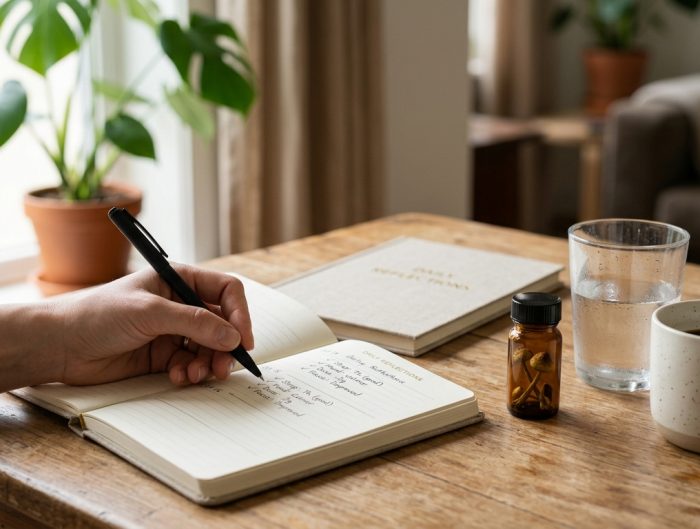
This is where integration practices become essential. At Healing Dose, we emphasize that a microdose alone isn’t enough. If you notice that you handled a stressful meeting more calmly than usual, that’s valuable information, but only if you pay attention to it. Journaling after your workday, even just a few sentences about what felt different, helps you identify patterns over weeks and months. Without that reflective layer, the subtle shifts can easily go unnoticed, and you miss the opportunity to build on them.
Some people also report that microdosing helps with the emotional flatness that comes from burnout. Not a dramatic mood lift, but more like the volume on positive emotions gets turned up slightly. Colors seem a little more vivid. A good conversation with a colleague feels a little more nourishing. These are quiet changes, and they accumulate over time rather than appearing overnight.
Workplace Risks and Professional Considerations
No honest conversation about microdosing mushrooms and work is complete without a thorough look at the risks. Some of these are legal, some are social, and some are pharmacological. Ignoring any of them would be irresponsible, so let’s walk through them clearly.
Legal Implications and Employment Contracts
This is the most straightforward risk, and it’s significant. Psilocybin remains a Schedule I controlled substance in the United States and is illegal in most countries worldwide. Possessing it, even in microdose quantities, can result in criminal charges. A few jurisdictions have moved toward decriminalization: Oregon, Colorado, and several cities have reduced or eliminated penalties for personal possession. But decriminalization is not the same as legalization, and workplace drug policies typically don’t distinguish between the two.
If your employer conducts drug testing, standard panels don’t typically screen for psilocybin. However, expanded panels can detect it, and the legal consequences of a positive test could include termination, loss of professional licenses, or worse. If you work in a regulated industry like healthcare, finance, transportation, or government, the stakes are even higher.
Read your employment contract carefully. Many contracts include clauses about illegal substance use that extend beyond working hours. Even in a state where psilocybin is decriminalized, your employer may still have grounds to terminate you if their policy prohibits it. This isn’t a scare tactic: it’s a practical reality that deserves serious consideration before you decide to experiment.
For people in countries or states where psilocybin is legal or decriminalized, the calculus is different but not risk-free. Social stigma still exists, and being open about your practice could affect professional relationships in unpredictable ways.
The Risk of ‘Macrodosing’ by Mistake
This risk doesn’t get enough attention. Dried psilocybin mushrooms are a natural product, and their potency varies significantly from batch to batch, even within the same species. A 0.1-gram dose from one batch might feel like nothing, while the same weight from another batch could produce noticeable perceptual changes. If that happens during a workday, you’re in trouble.
The signs of an accidental larger-than-intended dose include:
- Visual shimmer or slight distortion in peripheral vision
- Heightened emotional sensitivity that feels disproportionate to the situation
- Difficulty tracking conversations or following linear trains of thought
- A body sensation that’s hard to ignore: warmth, tingling, or a “wavy” feeling
- Time distortion, where minutes feel unusually long or short
If you recognize these signs at work, the best course of action is to simplify your environment immediately. Cancel meetings if you can. Switch to low-stakes tasks. Don’t drive. The experience will pass, usually within a few hours, but trying to push through high-demand work will only increase anxiety.
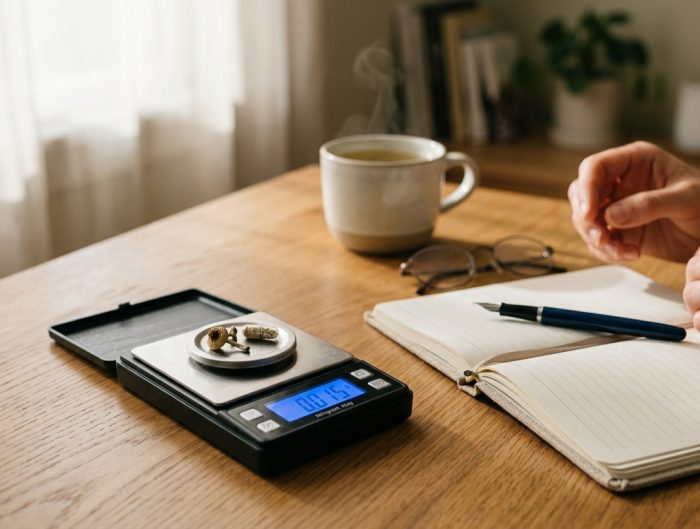
Prevention is better than damage control. Using a precise digital scale (accurate to 0.01 grams) is non-negotiable. Starting with a very low dose from any new batch and testing it on a day off gives you critical information about potency before you bring it anywhere near your professional life.
Social Anxiety and Impaired Communication
Here’s something that surprised me personally: microdosing can occasionally increase social anxiety rather than decrease it. This seems counterintuitive given the reports about emotional regulation, but it makes sense when you think about it. Psilocybin, even at low doses, can heighten emotional sensitivity. In a supportive, low-pressure environment, that heightened sensitivity feels pleasant. In a high-stakes meeting or a tense negotiation, it can feel overwhelming.
Some microdosers report that they become more aware of social dynamics, which isn’t always comfortable. You might pick up on a colleague’s frustration more acutely, or feel the tension in a room more intensely. If you’re someone who already tends toward social sensitivity, this amplification effect could make collaborative work harder rather than easier.
Communication can also be affected in subtle ways. A few people report that their thoughts move faster than their ability to articulate them, leading to disjointed speech or difficulty staying on topic in conversations. This is rare at true microdose levels, but it happens, especially when someone is still finding their ideal dose.
The practical takeaway is that microdosing and interpersonal work don’t always mix well, particularly in the early stages of experimentation. Solo deep work tends to be a much better fit than client calls or team meetings, at least until you have a clear understanding of how a given dose affects your social functioning.
Best Practices for Safe and Effective Implementation
If you’ve weighed the risks and decided to explore microdosing alongside your professional life, doing it thoughtfully makes all the difference. Rushing into it or treating it casually is where most problems arise. Here’s a structured approach that prioritizes safety and self-awareness.
The ‘Off-Day’ Test: Finding Your Baseline First
This is the single most important piece of advice we can offer, and it’s something we emphasize constantly at Healing Dose: never try a new dose for the first time on a workday. Always test it first on a day when you have no professional obligations, no driving requirements, and no social commitments you can’t easily cancel.
Here’s how to approach it:
- Choose a day off where you can be at home or in a comfortable, low-pressure environment.
- Take the dose you’re considering (start at the low end: 0.05 to 0.1 grams for dried psilocybin mushrooms).
- Set a timer and note how you feel at 30 minutes, 60 minutes, 90 minutes, and 3 hours.
- Pay attention to physical sensations (stomach, energy level, body temperature), emotional state, and cognitive function.
- Try doing some light cognitive tasks: reading, writing, simple problem-solving.
- Journal your observations honestly, including “I felt nothing,” which is useful data.
If you feel nothing notable, that’s a good sign for a potential work dose. If you notice any perceptual changes, mood swings, or difficulty concentrating, the dose is too high for professional use. Scale back by 0.025 to 0.05 grams and test again on another off day.
This process takes patience. You might need three or four test days before you find your sweet spot. That’s completely normal, and it’s far better than discovering your threshold during a quarterly review.
Dosing Protocols: Fadiman vs. Stamets Stacking
Two protocols dominate the microdosing conversation, and understanding the difference helps you choose an approach that fits your work schedule.
The Fadiman Protocol, developed by psychologist James Fadiman, follows a simple three-day cycle. Day one is a dosing day. Day two is a transition day where you take nothing but may still notice residual effects. Day three is a completely off day. Then the cycle repeats. This protocol is popular because it builds in rest days that help you maintain a clear baseline and avoid tolerance buildup. For professionals, it also means you’re only microdosing on roughly two workdays per week, which limits exposure.
The Stamets Stacking Protocol, proposed by mycologist Paul Stamets, involves four consecutive days of microdosing followed by three days off. Stamets also recommends “stacking” the psilocybin with lion’s mane mushroom and niacin (vitamin B3), theorizing that this combination may support neuroplasticity more effectively than psilocybin alone. The evidence for this specific stack is largely anecdotal, but many people report positive experiences with it.
Which one should you choose? If you’re new to microdosing, the Fadiman Protocol is generally the safer starting point. The built-in off days make it easier to distinguish between dosing days and baseline days, which is essential for understanding what the psilocybin is actually doing (if anything). The Stamets Protocol can be explored later once you have a solid understanding of your individual response.
Regardless of which protocol you follow, keep a simple log. Note the date, dose, protocol day, and a brief description of your workday experience. After four to six weeks, you’ll have enough data to see patterns and make informed adjustments. This kind of active participation is what separates thoughtful exploration from careless self-experimentation.
Morning dosing is strongly preferred for work-related microdosing. Taking psilocybin in the afternoon can interfere with sleep for some people, and the subtle cognitive effects are most useful during your peak working hours. Most people take their dose first thing in the morning, either on an empty stomach or with a light breakfast.
Evaluating Long-Term Sustainability and Ethics
The question that rarely gets asked in microdosing circles is whether this practice is sustainable over months and years, and whether it should be. It’s worth sitting with that question honestly rather than assuming that because something helps in the short term, it belongs in your routine permanently.
From a physiological standpoint, psilocybin doesn’t appear to carry the same dependency risks as many conventional substances. There’s no evidence of physical withdrawal, and tolerance develops quickly enough that daily use actually reduces the effects, which is part of why all protocols include off days. But psychological dependency is a different matter. If you reach a point where you feel unable to do good work without a microdose, that’s a signal worth examining, not ignoring.
The long-term data on microdosing simply doesn’t exist yet. We’re in the early innings of research, and the studies that do exist are mostly short-term. Nobody can tell you with certainty what microdosing twice a week for five years does to your serotonin system, your emotional baseline, or your cognitive function. That uncertainty deserves respect, not dismissal.
There’s also an ethical dimension that goes beyond personal health. Is it fair to use a cognitive enhancer that your colleagues don’t have access to or don’t know you’re using? This question doesn’t have a clean answer, and reasonable people disagree. Some compare it to drinking coffee or taking prescription stimulants. Others feel that the illegality and secrecy involved make it fundamentally different. Your own ethical framework matters here, and it’s worth reflecting on rather than avoiding.
Periodic breaks from microdosing, sometimes called “reset periods,” are worth building into any long-term approach. Taking two to four weeks off every few months gives you a chance to re-establish your unassisted baseline and honestly assess whether the practice is still serving you. If your work quality and emotional state are just as good during the break, that’s valuable information. If you notice a meaningful decline, that’s valuable too, but in a different way.
The most sustainable approach treats microdosing as one component of a larger system that includes sleep, exercise, nutrition, meaningful social connection, and reflective practices like journaling or meditation. Expecting a tenth of a gram of mushrooms to compensate for poor sleep, chronic overwork, and no exercise is setting yourself up for disappointment. The people who report the most positive long-term experiences with microdosing are almost always the ones who are also taking care of the basics.
When considering microdosing mushrooms for work, the focus benefits and risks deserve equal weight in your thinking. This isn’t a practice to approach impulsively or casually. But for people who take the time to educate themselves, start slowly, and maintain honest self-assessment, it can be a meaningful part of a thoughtful approach to professional and personal growth. The key is staying curious without becoming attached to a particular outcome, and being willing to stop if the practice isn’t serving you well.
If you’re thinking about getting started and want a grounded place to begin, our short quiz can help you find a gentle starting range based on your goals, experience, and sensitivity. Take the quiz here and approach this at whatever pace feels right for you.
The most important thing you can bring to this practice isn’t a perfect protocol or an ideal dose. It’s honesty with yourself about what you’re experiencing, what you’re hoping for, and whether the reality matches the expectation. That kind of self-awareness will serve you well whether you microdose for six weeks or six years, and it will serve you equally well if you decide it’s not for you at all.