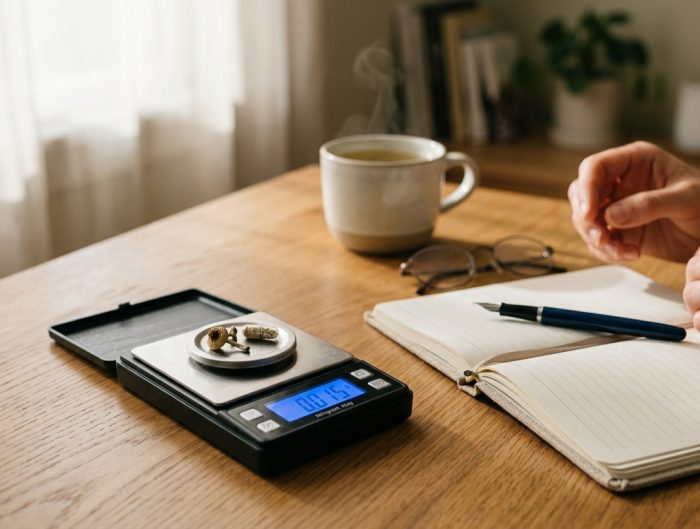
The first time you take a microdose, you might find yourself waiting for something to happen. An hour passes, then two, and you feel… normal. Maybe a little disappointed. You expected some kind of signal that the substance was working, some confirmation that you did it right. But here’s the thing: that feeling of normalcy? That’s often exactly what you’re aiming for.
Understanding what sub-perceptual actually means in microdosing is one of the most important concepts to grasp before you begin this practice. It’s also one of the most misunderstood. With approximately 10 million U.S. adults microdosing psilocybin, LSD, or MDMA in the past year, there’s clearly widespread interest in this approach to personal growth. Yet many people abandon their practice too early because they’re expecting the wrong kind of experience. They’re looking for fireworks when they should be noticing a gentle shift in the breeze.
The sub-perceptual threshold isn’t about feeling nothing. It’s about feeling like yourself, just perhaps a slightly better version. The changes operate beneath your conscious awareness while still influencing your thoughts, emotions, and behavior in meaningful ways. This guide will help you understand exactly what that means, how to find your personal sweet spot, and why this approach has become the gold standard for those seeking sustainable personal growth through microdosing.
Defining the Sub-Perceptual Threshold
The term “sub-perceptual” gets tossed around frequently in microdosing communities, but its meaning often gets muddled. At its core, sub-perceptual refers to an effect that occurs below the threshold of conscious perception. You’re not aware of the substance’s direct action on your mind in the way you would be with a larger dose. There’s no visual distortion, no altered sense of time, no obvious shift in consciousness.
Think of it like the difference between hearing a song playing loudly in the next room versus having background music so quiet you only notice it when someone points it out. Both are technically audible, but one demands your attention while the other operates beneath your awareness.
For psilocybin, a microdose typically falls around 0.2 to 0.5 grams of dried mushrooms, while LSD microdoses range from about 5 to 20 micrograms. These amounts represent roughly 1/10 to 1/20 of what would be considered a recreational dose. At these levels, the substance interacts with your neurochemistry without producing the characteristic psychedelic experience.
The goal isn’t absence of effect. It’s effect without obvious alteration. Your day proceeds normally. You can work, have conversations, drive a car, and handle responsibilities without anyone knowing you’ve taken anything. The changes, if they occur, reveal themselves in subtle ways: a problem that seemed insurmountable yesterday now has an obvious solution, a difficult conversation flows more easily than expected, or you simply find yourself more present and engaged with whatever you’re doing.
The Difference Between Sub-Perceptual and Sub-Threshold
These terms sometimes get used interchangeably, which creates confusion. They’re related but not identical concepts.
Sub-threshold technically refers to a dose below the point where any pharmacological effect occurs. If you took a truly sub-threshold dose, the substance wouldn’t interact meaningfully with your receptors at all. You might as well have taken nothing.
Sub-perceptual, on the other hand, describes a dose that produces real neurological effects while remaining below the threshold of conscious awareness. The substance is active in your brain, engaging with serotonin receptors and influencing neural activity, but these changes don’t rise to the level where you perceive them as altered consciousness.
This distinction matters because it explains why microdosing can produce benefits even when you don’t “feel” anything. Your brain is responding to the substance. The effects simply manifest in ways too subtle for your conscious mind to flag as unusual.
Consider caffeine as an analogy. A single cup of coffee produces measurable effects on your nervous system: increased heart rate, elevated alertness, enhanced dopamine activity. But unless you’re particularly sensitive, you probably don’t perceive yourself as “on caffeine” after just one cup. You simply feel awake and focused. The effects are real but not consciously attributable to the substance.
A well-calibrated microdose works similarly. The neurological activity is genuine, but it integrates so smoothly into your baseline experience that you don’t perceive it as separate from your normal state.
Common Misconceptions About ‘Feeling Nothing’
The biggest mistake new microdosers make is assuming that feeling nothing means the practice isn’t working. This leads people to increase their dose prematurely, chasing a perceptible effect that actually indicates they’ve gone too high.
Feeling nothing in the obvious sense is the goal. You shouldn’t feel altered, impaired, or noticeably different. What you might notice, often only in retrospect, are subtle shifts in how you respond to situations throughout your day.
Another common misconception involves timing. Some people expect immediate effects, but research suggests that microdosing appears to improve mood and mental functioning on the days it’s practiced. The benefits tend to be day-of rather than cumulative in the traditional sense. You’re not building toward some breakthrough moment. You’re creating conditions for better days, one at a time.
It’s also worth addressing the expectation that microdosing should feel like a very mild version of a full psychedelic experience. This isn’t accurate. A proper microdose doesn’t produce a “mini-trip.” If you’re experiencing any visual changes, body sensations, or altered perception, you’ve taken too much. The sub-perceptual experience is qualitatively different from a psychedelic experience, not just quantitatively smaller.
At Healing Dose, we encourage people to approach this practice with patience and realistic expectations. The benefits often reveal themselves through reflection and journaling rather than immediate sensation. You might only recognize that a microdose day went well when you review your notes and realize you handled stress better than usual or felt more creative during a project.
The Science of Background vs. Foreground Effects
Understanding how psychedelics work at different doses helps explain why sub-perceptual dosing produces such different experiences than higher doses. The effects don’t simply scale linearly. At low doses, certain mechanisms activate while others remain dormant.
Psychedelics primarily work by binding to serotonin receptors, particularly the 5-HT2A receptor. At full doses, this binding triggers a cascade of effects including altered perception, emotional intensity, and the dissolution of normal patterns of thought. The experience moves to the foreground of your awareness because the neurological changes are dramatic enough to override your baseline state.
At sub-perceptual doses, the same receptors are engaged, but the activation is gentle enough that your normal cognitive processes continue to dominate. The effects operate in the background, subtly influencing the overall tone of your mental activity without demanding attention.
Think of your brain as an orchestra. A full psychedelic dose is like having the brass section suddenly play at maximum volume: impossible to ignore, completely changing the character of the music. A microdose is more like adjusting the acoustics of the concert hall slightly. The orchestra plays the same pieces, but everything sounds a bit clearer, a bit more resonant.
Neurological Activity Without Visual Alterations
Visual effects are among the most recognizable signs of psychedelic activity, but they require substantial receptor activation to occur. The visual cortex needs significant input from the thalamus, which acts as a gateway for sensory information, and this gateway only opens wide enough for visual distortions at higher doses.
At microdose levels, the thalamic gating remains largely intact. Visual processing continues normally because the neurological changes aren’t strong enough to disrupt the brain’s standard filtering mechanisms. This is why you can take a microdose and see the world exactly as you always do.
However, other brain regions may still show altered activity. Neuroimaging studies of psychedelics have revealed changes in connectivity between brain regions, particularly involving the default mode network, which governs self-referential thinking and mind-wandering. Even at lower doses, there may be subtle shifts in how different brain areas communicate.
These connectivity changes might explain some of the cognitive effects people report from microdosing: the sense that thoughts flow more freely, that creative connections come more easily, or that rumination decreases. The visual system stays quiet, but other networks may experience gentle modulation.
The Role of Serotonin Receptors at Low Dosages
Serotonin plays crucial roles in mood regulation, cognition, and perception. The 5-HT2A receptor, which psychedelics primarily target, is distributed throughout the brain but concentrated in areas involved in higher cognition and sensory processing.
At microdose levels, the binding to these receptors is partial and doesn’t trigger the full downstream cascade that produces classic psychedelic effects. Instead, you get a subtle modulation of serotonergic activity that may influence mood and cognition without altering perception.
This partial activation might actually offer advantages over full activation. Some researchers theorize that gentle, repeated stimulation of these receptors could promote neuroplasticity, the brain’s ability to form new connections, without the intensity of a full psychedelic experience. The evidence for this remains preliminary, but it offers a plausible mechanism for how sub-perceptual doses might support cognitive flexibility and emotional resilience over time.
The serotonin system also interacts with other neurotransmitter systems, including dopamine, which influences motivation and reward. These secondary effects might contribute to the increased engagement and flow states some microdosers report, even though the primary action remains on serotonin receptors.
Identifying the ‘Sweet Spot’ for Your Biology
Individual variation in microdosing is enormous. What counts as sub-perceptual for one person might be noticeably psychoactive for another. Body weight, metabolism, receptor sensitivity, and even recent diet can all influence how you respond to a given dose.
This variability means you can’t simply copy someone else’s protocol and expect identical results. Finding your personal sweet spot requires experimentation, patience, and honest self-assessment. The process might take several weeks, and that’s completely normal.
Start low. This advice gets repeated constantly in microdosing communities because it’s genuinely important. You can always increase your dose if you feel nothing, but taking too much too soon can create an uncomfortable experience and make you reluctant to continue. Beginning at the lower end of the typical range, around 0.1 grams of psilocybin mushrooms or 5 micrograms of LSD, gives you room to adjust upward as needed.
Pay attention to your baseline before you begin. How do you normally feel on a typical day? What’s your usual energy level, mood, and cognitive sharpness? Without this reference point, you won’t be able to accurately assess whether the microdose is producing any effect.
Signs Your Dose is Too High
Recognizing when you’ve exceeded the sub-perceptual threshold helps you calibrate more effectively. The signs aren’t always dramatic, but they’re usually identifiable if you’re paying attention.
Physical indicators often appear first. You might notice slight pupil dilation, a mild body buzz or tingling, or subtle changes in how colors appear. Some people report a barely perceptible “shimmer” to their vision or a sense that lights seem slightly brighter than usual.
Cognitive signs include difficulty focusing on routine tasks, a tendency toward distraction, or feeling slightly “off” in social situations. If you find yourself needing to concentrate harder than usual to follow a conversation or complete straightforward work, your dose is probably too high.
Emotional amplification is another indicator. While microdosing may gently support mood, taking too much can intensify emotions in ways that feel less manageable. If you find yourself unusually tearful, anxious, or emotionally reactive, consider reducing your next dose.
Upwards of 10% of microdosers self-report negative effects such as insomnia, anxiety, or worsening depression. While some of these experiences might stem from factors unrelated to dose, taking too much certainly increases the risk. The sub-perceptual approach minimizes these concerns by keeping the dose low enough to avoid obvious psychoactive effects.
The Importance of the Fadiman Protocol and Tracking
Dr. James Fadiman’s protocol, which involves microdosing every third day, remains one of the most widely used approaches. The schedule looks like this: dose on day one, observe without dosing on day two, rest completely on day three, then repeat.
This spacing serves several purposes. It prevents rapid tolerance development, which can occur with daily use of psychedelics. It provides comparison days, allowing you to assess whether microdose days feel different from non-dose days. And it builds in rest periods that may be important for integrating any subtle changes.
Tracking your experience is essential, especially during the calibration phase. Keep a simple journal noting your dose, the time you took it, and brief observations throughout the day. Rate your mood, energy, and focus on a simple scale. Note any physical sensations, positive or negative.
After a few weeks, patterns often emerge. You might discover that a certain dose consistently produces good days while a slightly higher amount causes subtle anxiety. You might find that timing matters: taking your dose first thing in the morning works better than mid-morning. These insights only become visible through consistent tracking.
At Healing Dose, we emphasize journaling as a core practice because microdosing effects are often too subtle to remember accurately without written records. What seemed like a normal day in the moment might reveal itself as notably productive or emotionally balanced when you review your notes.
Psychological Indicators of a Successful Microdose
Since you’re not looking for obvious perceptual changes, how do you know if your microdose is working? The indicators tend to be psychological rather than physical, and they often become apparent only through reflection.
Success in microdosing doesn’t mean euphoria or peak experiences. It means going about your day with perhaps a bit more ease, a bit more presence, or a bit more flexibility in how you respond to challenges. These shifts are real but subtle, and recognizing them requires attention.
The changes also tend to be contextual. You might not feel different sitting alone in a quiet room, but you notice something when you’re in a meeting that would normally stress you out, or when you’re working on a creative project that usually feels stuck. The microdose doesn’t create states so much as it supports your ability to access states that are already available to you.
Subtle Shifts in Mood and Flow States
One of the most commonly reported benefits of microdosing involves mood. Not dramatic happiness, but a gentle lifting of the background heaviness that many people carry. Colors might seem slightly more vivid, not in a perceptual-alteration sense, but in the way they do when you’re in a genuinely good mood.
Flow states, those periods of absorbed, effortless engagement with a task, may come more easily. You might find yourself losing track of time while working on something, or feeling more naturally drawn into activities rather than forcing yourself through them.
Research from UBCO found that microdosing appears to improve mood and mental functioning on the days it’s practiced. This aligns with what many practitioners report: the benefits are day-of rather than cumulative in a linear sense. Each microdose day offers an opportunity for a better day, but the effects don’t necessarily build toward some permanent change.
This might sound disappointing if you’re hoping for lasting transformation, but it’s actually a realistic and sustainable approach. Rather than promising permanent results from a single intervention, microdosing offers a practice that supports good days when you engage with it. Combined with other healthy habits, these good days can contribute to genuine long-term growth.
Interestingly, one study found that microdosing LSD led to participants sleeping 24 minutes longer and going to bed 25 minutes earlier. While this might seem unrelated to mood, sleep quality profoundly influences emotional wellbeing. Better sleep on microdose days could contribute to the mood improvements people report.
Increased Cognitive Flexibility and Resilience
Cognitive flexibility refers to your ability to shift between different concepts, adapt to new information, and see problems from multiple perspectives. Rigid thinking, where you get stuck in one way of viewing a situation, is the opposite.
Many microdosers report increased cognitive flexibility, though the experience is subtle. A problem that seemed to have only one unsatisfying solution might suddenly present alternatives you hadn’t considered. A conflict with someone might become easier to understand from their perspective. Creative work might flow more freely as associations between ideas come more readily.
Resilience, the ability to bounce back from setbacks and handle stress without becoming overwhelmed, may also improve. This doesn’t mean you won’t feel stressed or disappointed. It means you might recover more quickly, or the stress might not penetrate as deeply.
These cognitive benefits are difficult to measure objectively, which is one reason the scientific evidence for microdosing remains mixed. Self-reports consistently describe these improvements, but controlled studies have produced variable results. Some of the benefit may come from expectation effects, but this doesn’t necessarily make the benefits less real. If you approach your day expecting it to go well and it does, the improved day is still improved, regardless of the mechanism.
Why Sub-Perceptual Dosing is the Gold Standard
You might wonder why people don’t just take slightly higher doses to get more noticeable effects. If a little is good, wouldn’t a bit more be better? The sub-perceptual approach has become the gold standard for good reasons, and understanding them helps explain why chasing perceptible effects often backfires.
The core principle is sustainability. Microdosing is typically practiced as an ongoing protocol, not a one-time intervention. Any approach that disrupts your daily functioning, even mildly, becomes difficult to maintain. If your microdose makes you feel slightly off at work or less sharp in conversations, you’ll eventually stop doing it.
Sub-perceptual dosing integrates into your life rather than interrupting it. You can maintain your responsibilities, relationships, and routines while still receiving whatever benefits the practice offers. This integration is what makes long-term practice possible.
Maintaining Functionality in Daily Life
Functionality matters because most people can’t take time away from their responsibilities to explore altered states. They have jobs, families, and obligations that require their full presence and capability.
A properly calibrated microdose allows you to show up fully for your life. You can drive safely, make important decisions, have difficult conversations, and perform complex work. No one around you should be able to tell you’ve taken anything, and you shouldn’t feel impaired in any way.
This functionality also provides a kind of safety. If you’re not obviously altered, you’re not at risk of making poor decisions due to impaired judgment. You’re not going to say something strange in a meeting or have difficulty navigating a social situation. The practice remains private and personal, affecting only your inner experience in subtle ways.
The functionality requirement also serves as a built-in calibration tool. If you find yourself struggling with normal tasks, your dose is too high. The goal of maintaining normal functioning keeps you honest about finding the truly sub-perceptual range.
Avoiding Tolerance and Receptor Burnout
Psychedelics produce tolerance rapidly. If you take a full dose of psilocybin or LSD, taking the same dose the next day will produce significantly weaker effects. This tolerance develops because the 5-HT2A receptors downregulate in response to stimulation, becoming temporarily less sensitive.
While microdoses produce less dramatic tolerance effects, daily dosing can still lead to diminishing returns. The Fadiman protocol’s every-third-day schedule specifically addresses this concern, providing enough time between doses for receptor sensitivity to normalize.
Taking doses high enough to produce perceptible effects likely accelerates tolerance development. The more strongly you stimulate the receptors, the more they downregulate in response. Sub-perceptual dosing, by keeping stimulation gentle, may allow for more sustainable long-term practice.
Receptor burnout is a related concern. While the evidence for permanent receptor changes from moderate psychedelic use is limited, repeatedly pushing your neurochemistry in the same direction could theoretically reduce sensitivity over time. The conservative approach of sub-perceptual dosing minimizes this risk by keeping the intervention as gentle as possible while still producing effects.
There’s also a psychological dimension to tolerance. If you become accustomed to feeling a certain way on microdose days, you might start to feel that normal days are lacking something. Keeping the effects subtle prevents this kind of psychological dependence on the altered state.
Integrating the Sub-Perceptual Experience for Long-Term Growth
Microdosing works best as part of a broader approach to personal growth rather than as a standalone intervention. The subtle effects it produces create opportunities, but you still need to take advantage of those opportunities through intentional action.
Integration means taking what you notice during microdose days and applying those insights to your life more broadly. If you find yourself more patient with a difficult coworker on microdose days, that’s information. Can you cultivate that patience on other days too? If creative ideas flow more freely, can you create conditions that support creativity even without the microdose?
The practice becomes most valuable when you treat it as a teacher rather than a crutch. The microdose shows you what’s possible. It gives you glimpses of how you could relate to your work, your relationships, and yourself. Your job is to notice these glimpses and find ways to access those states more consistently.
Journaling supports this integration by creating a record you can review. Patterns emerge over time that you’d never notice otherwise. You might discover that microdose days go best when you also exercise, or when you spend time outdoors, or when you avoid certain foods. These insights help you optimize not just your microdosing practice but your overall approach to wellbeing.
Reflection practices like meditation can amplify the benefits of microdosing by training your attention on the subtle. The better you become at noticing your internal states, the more you’ll perceive the gentle shifts that microdosing produces. This creates a positive feedback loop where the practice becomes more valuable as you become more skilled at working with it.
If you’re new to this practice or still finding your footing, taking time to understand your unique starting point can make all the difference. Take our microdose quiz to find a gentle starting range based on your goals, experience, and sensitivity.
The sub-perceptual approach asks for patience and attention rather than dramatic experiences. It offers not transformation but support, not answers but better questions. For many people, this gentle, sustainable approach proves more valuable than any single powerful experience could be. The changes accumulate not through intensity but through consistency, one slightly better day at a time.