The Intersection of Mindfulness and Microdosing
The alarm rings, and instead of reaching immediately for your phone, you pause. You take a breath. You notice the quality of light filtering through your window, the weight of your body against the mattress, the subtle anticipation of the day ahead. This moment of awareness, multiplied and deepened, represents the foundation of meaningful microdosing rituals: the practice of bringing full presence to sub-perceptual experiences with psychedelic substances.
Microdosing without mindfulness is like planting seeds without tending the garden. You might see some growth, but you’ll miss the deeper transformation that becomes possible when you approach the practice with genuine intention. The substances themselves are tools, not solutions. What you bring to the experience, how you prepare for it, and the attention you pay throughout your day determines whether microdosing becomes a catalyst for lasting personal growth or simply another habit that fades into the background of your life.
This isn’t about following rigid rules or performing elaborate ceremonies that feel forced or uncomfortable. Creating rituals around microdosing means developing a personal practice that feels authentic to you, one that honors both the substance and your own inner landscape. Whether you’re completely new to this practice or looking to deepen an existing protocol, the principles remain the same: intention, attention, and reflection form the three pillars of meaningful work with sub-perceptual doses.
Defining the Microdosing Mindset
The microdosing mindset begins long before you take anything at all. It starts with understanding what you’re actually doing and why. A microdose, typically one-tenth to one-twentieth of a standard dose, shouldn’t produce noticeable psychedelic experiences. You won’t see visual distortions or feel dramatically altered. The changes are subtle: perhaps slightly enhanced pattern recognition, a gentle lift in mood, or increased openness to new perspectives.
This subtlety is precisely why mindset matters so much. Without cultivated awareness, you might miss the experiences entirely or dismiss them as placebo. With the right approach, you begin noticing nuances in your thinking, feeling, and perceiving that would otherwise slip past unobserved.
Think of it like learning to taste wine or appreciate music. The flavors and notes were always there, but developing sensitivity requires practice and attention. The microdosing mindset is one of curious observation rather than expectation. You’re not waiting for something to happen to you; you’re actively participating in a collaborative process between substance, intention, and awareness.
This mindset also includes honest self-assessment. Why are you interested in microdosing? What do you hope to explore or understand? There are no wrong answers here, but clarity helps. Some people come seeking relief from persistent low mood. Others want to enhance creativity or feel more connected to nature. Still others are simply curious about their own consciousness. All of these are valid starting points, and knowing yours helps you recognize relevant shifts when they occur.
Why Intentionality Enhances Sub-Perceptual Experiences
Intention acts as a compass for your microdosing practice. Without it, you’re wandering without direction, hoping to stumble upon something meaningful. With clear intention, you create a framework for noticing and interpreting the subtle changes that microdosing can facilitate.
Research on psychedelic experiences consistently shows that set and setting dramatically influence outcomes. Set refers to your mindset: your expectations, fears, hopes, and emotional state. Setting encompasses your physical environment and social context. While microdoses don’t produce the intense experiences of full doses, these factors still shape your relationship with the practice.
Intentionality transforms microdosing from passive consumption into active exploration. When you take a microdose with the intention of being more present with your children, you’re priming your attention to notice moments of connection. When your intention involves creative problem-solving, you become more attuned to novel associations and unexpected ideas. The substance doesn’t create these experiences from nothing; it may gently facilitate what you’re already reaching toward.
Setting intentions doesn’t mean forcing outcomes. The most useful intentions are open-ended rather than rigid. “I intend to notice moments of gratitude today” works better than “I will feel grateful all day.” The first creates space for discovery; the second sets up potential disappointment. Your intentions should feel like invitations rather than demands.
Preparing Your Space and Substance
Preparation deserves as much attention as the dosing day itself. The care you bring to creating your environment and ensuring the quality and safety of what you’re working with establishes the foundation for everything that follows. Rushing this stage often leads to experiences that feel scattered or incomplete.
Creating a Sacred Physical Environment
The word “sacred” might feel heavy or religious, but here it simply means set apart with care. Your microdosing space doesn’t need to look like a temple or meditation retreat. It needs to feel intentional, clean, and supportive of the inner work you’re undertaking.
Start with practical considerations. Choose a space where you won’t be interrupted during your morning ritual. This might be a corner of your bedroom, a comfortable chair by a window, or even your backyard if weather permits. The specific location matters less than your ability to be fully present there without distraction.
Remove clutter from this space. Visual chaos creates mental chaos. You don’t need to become a minimalist, but the area where you dose should feel calm and uncluttered. Some people find it helpful to have a few meaningful objects nearby: a plant, a photograph, a stone from a meaningful place. These serve as anchors, reminding you why this practice matters to you.
Consider the sensory environment as well. Soft natural light tends to support contemplative states better than harsh overhead lighting. Some people appreciate having a blanket nearby for warmth and comfort. Others prefer complete simplicity with nothing extra at all. Pay attention to what helps you settle into presence rather than following someone else’s aesthetic.
Temperature matters more than most people realize. Being too cold or too warm pulls attention to physical discomfort. Aim for comfortable warmth that allows you to forget about your body and focus inward.
The Ethics and Safety of Sourcing
This topic requires honest acknowledgment of complexity. Depending on where you live, the substances used for microdosing exist in various legal gray areas or are outright prohibited. At Healing Dose, we don’t encourage anyone to break laws, but we recognize that many people are already engaging with these practices and deserve accurate information about doing so as safely as possible.
Quality and purity represent the most significant safety considerations. Unlike regulated pharmaceuticals, substances obtained through informal channels have no quality control. What you receive might be significantly stronger or weaker than expected, or might contain adulterants. This variability makes consistent microdosing difficult and potentially risky.
If you’re working with psilocybin mushrooms, learning to identify species correctly is essential. Misidentification can have serious consequences. If you’re obtaining prepared substances, knowing and trusting your source matters enormously. Many people in the microdosing community recommend testing kits that can at least verify the presence of the expected substance, though they can’t confirm purity or precise dosage.
Start with doses significantly lower than you think necessary. You can always increase gradually, but you cannot undo taking too much. The goal with microdosing is sub-perceptual: if you’re noticing significant alterations in perception, you’ve taken too much for this particular practice.
Store your substances properly in a cool, dry, dark place away from children, pets, and anyone who shouldn’t have access. Label containers clearly so there’s no confusion. Treat these substances with the respect you’d give any powerful tool.
Designing Your Morning Dosing Ceremony
The word “ceremony” might conjure images of elaborate rituals, but your morning practice can be simple while still being meaningful. What matters is consistency and presence, not complexity. The microdosing rituals you develop should feel sustainable over time, something you genuinely look forward to rather than another obligation on your morning checklist.
Breathwork and Centering Techniques
Before taking your microdose, spend a few minutes arriving fully in the present moment. This transition from sleep or from the busyness of morning routines helps you approach the practice with appropriate attention rather than rushing through it mindlessly.
Simple breath awareness works well for most people. Sit comfortably and close your eyes. Notice your breath without trying to change it at first. Where do you feel it most clearly: at your nostrils, in your chest, in your belly? Spend a minute simply observing.
Then, if it feels natural, begin to deepen and slow your breathing. Inhale for a count of four, hold briefly, exhale for a count of six. The extended exhale activates your parasympathetic nervous system, shifting you from the activated state of morning into a calmer baseline. Five to ten breaths like this typically creates noticeable settling.
Some people prefer more structured breathwork practices. Box breathing, where you inhale, hold, exhale, and hold again for equal counts, creates a sense of balance and stability. Others find that simply placing one hand on their heart and one on their belly, breathing into both, creates the grounding they need.
The specific technique matters less than the consistency. Choose something simple enough that you’ll actually do it every dosing day. Elaborate practices that you skip because they take too long serve no one.
After your breathwork, take a moment to scan your body. Notice areas of tension or ease. Observe your emotional state without judging it. This baseline awareness helps you recognize shifts later in the day.
Setting Clear Affirmations and Intentions
With your body calm and your attention gathered, you’re ready to set your intention for this particular microdosing day. This isn’t the same as making wishes or demanding outcomes. Intention-setting creates a gentle orientation for your awareness.
Frame your intention as an inquiry or invitation rather than a demand. “What would it feel like to approach today’s challenges with curiosity instead of anxiety?” “I’m open to noticing moments of connection with others.” “Today I’m paying attention to creative impulses, however small.”
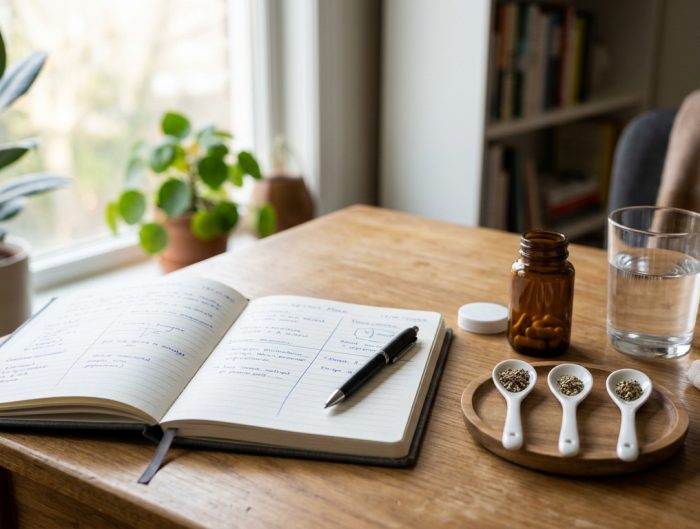
Some people find it helpful to write their intention down. The act of putting pen to paper creates additional commitment and gives you something to return to later when reflecting on your day. Keep a small journal near your dosing space for this purpose.
Speak your intention aloud if that resonates with you. There’s something about hearing your own voice that makes intentions feel more real. You don’t need to project or perform; a quiet statement to yourself is sufficient.
After setting your intention, take your microdose with full attention. Notice the substance: its appearance, its texture if applicable. As you take it, acknowledge what you’re doing. This isn’t swallowing a vitamin while checking email. This is the beginning of a day of heightened awareness and intentional exploration.
Sit quietly for another few minutes after dosing. You won’t feel anything yet, and that’s not the point. This pause creates a clear boundary between your morning ceremony and the rest of your day. It signals to your mind that something meaningful has begun.
Integrating Awareness Throughout the Day
The morning ritual sets the stage, but the real practice unfolds over the following hours. Microdosing rituals extend far beyond the moment of taking a substance. They encompass how you move through your entire day, the quality of attention you bring to ordinary activities, and your willingness to notice subtle shifts in perception and feeling.
Mindful Observation of Cognitive Shifts
After your morning ceremony, return to your normal activities with one difference: heightened curiosity about your inner experience. You’re not waiting for fireworks or dramatic revelations. You’re watching for whispers.
Notice your thoughts throughout the day. Are they following familiar patterns, or do you observe anything different? Some people report slightly increased mental flexibility on microdosing days: problems that seemed stuck suddenly have new angles, or habitual thought loops lose some of their grip. Others notice enhanced appreciation for sensory details: colors seem slightly more vivid, music more moving, food more flavorful.
Keep your expectations loose. Not every microdosing day will feel noticeably different from a regular day. This doesn’t mean the practice isn’t working. Sub-perceptual means exactly that: below the threshold of obvious perception. The changes might be so subtle that you only recognize them in retrospect, when reviewing your journal entries over weeks or months.
Pay particular attention to your emotional responses. Do you react to frustrations with your usual intensity, or is there slightly more space between stimulus and response? When something delightful happens, do you savor it more fully? These micro-shifts in emotional processing often represent the most meaningful changes people experience with microdosing.
Set gentle reminders throughout your day to check in with yourself. A phone alarm at midday, a sticky note on your computer monitor, or a simple practice of pausing before each meal can serve as mindfulness cues. During these check-ins, take three breaths and ask yourself: “What am I noticing right now?”
Using Nature as a Grounding Anchor
Time in natural settings amplifies and supports the subtle work of microdosing. If your schedule allows, incorporate outdoor time into your dosing days. This doesn’t require wilderness expeditions or hours of hiking. Ten minutes sitting in your backyard, a walk around your neighborhood noticing trees and birds, or even tending to houseplants can serve this purpose.
Nature provides a particularly rich environment for the kind of present-moment awareness that microdosing rituals cultivate. There’s always something to notice: the movement of leaves, the behavior of insects, the play of light and shadow. These observations anchor you in sensory experience rather than getting lost in abstract thought.
Many people report feeling increased connection to the natural world on microdosing days. This might manifest as heightened appreciation for beauty, a sense of being part of something larger, or simply more patience to sit and observe without needing entertainment or stimulation. These experiences, while not dramatic, can be profoundly meaningful over time.
If outdoor time isn’t possible, bring nature indoors. Sit near a window with a view of sky or trees. Spend time with plants, really looking at them rather than just glancing. Watch videos of natural environments with full attention rather than as background noise. The key is genuine engagement with the living world, however you can access it.
At Healing Dose, we often hear from community members that their relationship with nature deepened significantly through their microdosing practice. This wasn’t something they expected or specifically intended, but the combination of heightened awareness and regular outdoor time created lasting shifts in how they perceive and value the natural world.
Reflection and Tracking Progress
Without reflection, experiences fade into the general blur of memory. Without tracking, you cannot identify patterns or make informed adjustments to your practice. This stage of microdosing rituals transforms individual dosing days into a coherent practice with direction and purpose.
Journaling for Emotional Clarity
End each microdosing day with written reflection. This doesn’t need to take long: ten to fifteen minutes is sufficient. The act of translating experience into words creates understanding that purely mental reflection cannot achieve.
Start by returning to your morning intention. Did you notice anything related to it throughout the day? Be honest: sometimes the answer is no, and that’s valuable information too. If you did notice relevant experiences, describe them with as much specificity as possible. “I felt better” is less useful than “During the afternoon meeting, I noticed I wasn’t rehearsing what I wanted to say while others were talking. I actually listened.”
Record your physical state: energy levels, sleep quality the night before, any notable body sensations. Note your emotional baseline and any significant emotional events. Describe any cognitive observations: changes in focus, creativity, problem-solving, or mental flexibility.
Include contextual factors that might influence your experience. Did you eat well? Exercise? Have stressful interactions? Consume caffeine or alcohol? These variables affect your baseline state and can mask or enhance the subtle experiences of microdosing.
Over time, your journal becomes an invaluable resource. Patterns emerge that you couldn’t see in any single entry. You might discover that your most meaningful experiences happen on days when you slept well and spent time outdoors. Or you might notice that certain intentions consistently yield interesting observations while others feel flat. This information guides the evolution of your practice.
Adjusting Protocols Based on Feedback
Your journal provides the data for thoughtful protocol adjustments. Most people begin microdosing with a standard protocol: perhaps dosing every third day, or following a specific schedule like the Fadiman protocol. But optimal protocols vary significantly between individuals, and finding yours requires experimentation guided by careful observation.
If you’re not noticing any shifts at all after several weeks of consistent practice, consider whether your dose might be too low. Increase very gradually: perhaps by ten to fifteen percent. If you’re noticing effects that feel too strong, reduce accordingly. The goal remains sub-perceptual: you’re looking for subtle support, not obvious alteration.
Timing matters too. Some people find morning dosing ideal because it aligns with their natural energy peaks. Others discover that early afternoon works better for them. Experiment with timing while keeping other variables consistent, and track what you notice.
The frequency of dosing also deserves attention. The standard every-third-day protocol prevents tolerance buildup, but some people thrive with different schedules. Some prefer dosing only once or twice weekly. Others find that two days on, two days off works well for them. Let your journal guide these decisions rather than assuming one protocol fits everyone.
Take breaks periodically. A week or two away from microdosing every couple of months helps you assess what the practice is actually contributing. How do you feel during the break? Do you notice the absence of something, or do the benefits seem to persist? This information helps you understand the role microdosing plays in your overall wellbeing.
Sustaining Long-Term Benefits Through Ritual
The practices described throughout this guide work together to create something larger than any single element. Morning ceremonies establish intention. Daytime awareness translates intention into observation. Evening reflection consolidates learning. Tracking enables evolution. Together, these elements form sustainable microdosing rituals that can support your personal growth over months and years.
Sustainability requires finding the balance between structure and flexibility. Too rigid, and your practice becomes another obligation that you eventually abandon. Too loose, and the elements that make microdosing meaningful fade into casual, mindless consumption. The sweet spot involves consistent core practices with room for adaptation based on your changing needs and circumstances.
Build your rituals gradually rather than trying to implement everything at once. Start with the morning ceremony and basic journaling. Once those feel natural, add more detailed tracking. Incorporate nature time as your schedule allows. Let each element become established before adding the next.
Expect your practice to evolve. What serves you in the first months of microdosing might shift as you develop greater sensitivity and self-knowledge. The intention that felt crucial initially might give way to new areas of exploration. Your relationship with the substances themselves may deepen or change. All of this is natural and healthy.
Connect with others who share this practice when possible. While microdosing rituals are ultimately personal, community provides perspective, support, and accountability. Hearing how others approach their practice can inspire refinements to your own. Sharing your experiences helps consolidate your learning and might help someone else.
Remember that microdosing is a tool, not a destination. The rituals you develop serve to maximize the value of this tool, but the real work happens in your daily life: in your relationships, your creative endeavors, your relationship with yourself. The subtle support of sub-perceptual doses, approached with intention and awareness, can facilitate growth that extends far beyond dosing days themselves.
If you’re ready to begin or refine your practice, finding the right starting point matters. Consider taking our dose quiz to identify a gentle starting range based on your individual goals, experience level, and sensitivity. Approaching microdosing thoughtfully from the beginning sets the foundation for a meaningful long-term practice.
Your journey with microdosing rituals is uniquely yours. The frameworks and suggestions here provide starting points, not rigid prescriptions. Pay attention to what resonates, adapt what doesn’t, and trust your own growing wisdom about what serves your particular path of exploration and growth.