Two mushrooms, both with centuries of human use, both capable of profoundly altering consciousness, and yet they could hardly be more different in how they work inside your body. If you’ve been curious about the distinction between Amanita muscaria and psilocybin-containing mushrooms, you’re not alone. These two species get lumped together constantly, but the comparison is a bit like comparing coffee to chamomile tea: both are plant-based beverages, sure, but they pull you in entirely different directions. The chemistry is different. The subjective experiences are different. The safety profiles, the legal statuses, the cultural histories – all different. Whether you’re a cautious beginner just starting to research psychoactive fungi or someone with experience who wants to understand the science more deeply, getting clear on these distinctions matters. Misunderstanding one for the other can lead to uncomfortable surprises at best and genuine safety concerns at worst. So let’s get specific about what sets these two apart, starting from the molecular level and working outward.
The Biological and Chemical Foundations of Each Mushroom
Understanding how each mushroom affects your brain starts with understanding what’s actually inside it. Amanita muscaria and psilocybin mushrooms belong to entirely different genera and produce completely different classes of psychoactive compounds. This isn’t a subtle distinction – it’s the difference between two fundamentally separate pharmacological pathways that produce experiences with almost no overlap.
Amanita muscaria, the iconic red-and-white spotted toadstool, belongs to the Amanitaceae family. Its primary psychoactive compounds are muscimol and ibotenic acid, both of which interact with the GABAergic system in your brain. Psilocybin mushrooms, on the other hand, belong primarily to the genus Psilocybe (though psilocybin appears in several other genera too). Their active compounds – psilocybin and its metabolite psilocin – are tryptamines that act on serotonin receptors. These two mechanisms are about as different as two psychoactive pathways can get.
Your brain’s GABA system is its primary inhibitory network, responsible for calming neural activity, promoting sleep, and reducing anxiety. Your serotonin system, by contrast, is involved in mood regulation, perception, and cognition. When you understand that Amanita muscaria and psilocybin mushrooms target these two very different systems, the rest of the comparison starts to make intuitive sense.
Muscimol and Ibotenic Acid in Amanita Muscaria
The two key compounds in Amanita muscaria are ibotenic acid and muscimol, and the relationship between them is crucial to understand. Ibotenic acid is a potent neurotoxin and glutamate agonist. In its raw form, it can cause significant discomfort: nausea, confusion, and in higher doses, genuine neurological distress. Muscimol, by contrast, is a GABA-A receptor agonist with sedative, hypnotic, and dissociative properties.
Here’s the important part: ibotenic acid converts to muscimol through a process called decarboxylation, which happens when the mushroom is dried or heated. A fresh Amanita muscaria cap contains a much higher ratio of ibotenic acid to muscimol than a properly dried one. This is why preparation method matters so much with this species – and why eating a raw Amanita muscaria cap is widely considered a bad idea.
Muscimol’s action on the GABA-A receptor produces experiences that are distinct from what most people associate with “psychedelic” mushrooms. The experiences tend to be more sedative, dreamlike, and dissociative rather than visually stimulating. Some users describe a feeling of heaviness, altered body perception, and a dream-state that can blur the line between sleep and waking consciousness. The CDC has documented a notable increase in calls to poison control centers related to Amanita muscaria products, a trend that underscores the importance of understanding what you’re working with before you consume it.
Muscimol doses are typically measured in milligrams, not grams. The active dose range is roughly 5 to 15 mg of muscimol, but the concentration in any given mushroom cap varies enormously depending on growing conditions, geography, and preparation. This variability makes precise dosing with whole mushrooms genuinely difficult.
Psilocybin and Psilocin: The Classic Tryptamines
Psilocybin is a prodrug, meaning it’s not actually the compound that affects your brain directly. Once you ingest psilocybin, your body converts it into psilocin through a process called dephosphorylation. Psilocin is the molecule that crosses the blood-brain barrier and binds to serotonin 5-HT2A receptors, producing the characteristic perceptual, emotional, and cognitive shifts associated with psilocybin mushrooms.
This serotonergic mechanism is shared with other classic psychedelics like LSD and DMT, which is why these substances produce broadly similar categories of experience: visual distortions, emotional intensity, altered sense of time, and what researchers often describe as increased neural connectivity or “entropy” in brain activity. A 2024 study showed that psilocybin promotes neuroplasticity through mechanisms that may persist well beyond the acute experience, which has fueled enormous interest in its potential for mental health support.
The most commonly consumed psilocybin species is Psilocybe cubensis, though dozens of other species exist worldwide. Psilocybin content in dried Psilocybe cubensis typically ranges from about 0.5% to 1.0% by weight, making a common full dose roughly 2 to 3.5 grams of dried material. Microdoses, by contrast, usually fall in the 0.05 to 0.3 gram range – a sub-perceptual threshold where the goal is subtle shifts in mood, focus, or creativity rather than any overt perceptual changes.
One advantage psilocybin mushrooms have over Amanita muscaria is relative consistency. While potency still varies between species, strains, and growing conditions, the range of variation is narrower, and there’s a much larger body of dosing data available. This makes it easier to approach psilocybin with confidence in what you’re taking.
Contrasting the Psychoactive and Somatic Effects
This is where the comparison between Amanita muscaria and psilocybin becomes most vivid. The subjective experiences produced by these two mushrooms are so different that grouping them under the same “magic mushroom” umbrella is genuinely misleading. If you’ve only experienced one, you should not assume the other will feel similar.
The GABAergic Deliriant Experience vs. Serotonergic Hallucinations
Muscimol’s action on GABA-A receptors produces what’s best described as a deliriant or oneirogenic (dream-producing) state. At moderate doses, users commonly report a heavy, sedated feeling accompanied by vivid dream-like visions that can be difficult to distinguish from reality. The experience often involves a sense of size distortion – feeling very large or very small – along with looping thoughts, confusion about whether one is awake or asleep, and sometimes complete amnesia for portions of the experience.
This is fundamentally different from the psilocybin experience. Psilocybin, acting through serotonin receptors, tends to produce experiences characterized by visual enhancement and distortion (geometric patterns, color intensification, breathing or morphing surfaces), emotional amplification, a sense of interconnectedness, and often profound introspective insights. Importantly, most people on psilocybin maintain awareness that they’re under the influence of a substance – a quality called “insight preservation” that is often absent with deliriants like muscimol.
The distinction matters practically. With psilocybin, you’re more likely to be able to sit with difficult emotions, process them, and integrate the experience afterward. With muscimol, the dreamlike confusion can make it harder to extract coherent meaning from what happened. This is one reason psilocybin has attracted far more clinical research interest for mental health applications, while Amanita muscaria remains largely outside the therapeutic research conversation.
At Healing Dose, we often emphasize that the value of any psychoactive experience depends heavily on what you do with it afterward – the reflection, the journaling, the integration work. That principle applies regardless of the substance, but it’s worth noting that psilocybin’s clearer, more emotionally coherent experiences tend to lend themselves more naturally to this kind of post-experience processing.
Physical Sensations: Body Load and Motor Control
Both mushrooms produce notable physical experiences, but the character of those experiences differs significantly.
Amanita muscaria’s physical profile includes:
- Significant sedation and drowsiness, sometimes to the point of involuntary sleep
- Muscle twitching or fasciculations
- Loss of motor coordination and balance
- Nausea, particularly when ibotenic acid content is high
- Salivation and sweating
- A sense of physical heaviness or “sinking”
Psilocybin’s physical profile tends to include:
- Mild to moderate nausea during the onset (first 30 to 60 minutes)
- Yawning and watery eyes
- Changes in body temperature perception
- A “body buzz” or tingling sensation
- Jaw tension in some individuals
- Generally preserved motor function at common doses
The motor impairment from muscimol is a genuine safety concern. People under its influence may stumble, fall, or be unable to coordinate basic movements. This is why having a sober companion present is considered essential for anyone exploring Amanita muscaria at active doses. Psilocybin can certainly make you feel unsteady, but outright loss of motor control is uncommon at standard doses.
The nausea associated with psilocybin mushrooms is usually transient and can be reduced by making a tea (straining out the mushroom material) or taking the mushrooms on a mostly empty stomach. Amanita-related nausea tends to be more persistent and is closely linked to ibotenic acid content, which proper preparation can reduce but not always eliminate entirely.
Preparation Methods and Consumption Safety
How you prepare each mushroom matters enormously, and the stakes are higher with Amanita muscaria than with psilocybin species. Getting this right isn’t just about having a better experience – it’s about basic safety.
Decarboxylation: Converting Ibotenic Acid in Amanita
If you’re considering Amanita muscaria, understanding decarboxylation is non-negotiable. Raw or improperly prepared Amanita muscaria contains high levels of ibotenic acid, which acts as a neurotoxin and is responsible for most of the unpleasant side effects: severe nausea, confusion, agitation, and in rare cases, seizures.
The goal of preparation is to convert as much ibotenic acid as possible into muscimol. Research from Vilnius University demonstrated that simmering Amanita muscaria in acidified water at a pH of 2.5 to 3.0 for two to three hours can convert the majority of ibotenic acid to muscimol, producing a preparation with a significantly improved safety profile.
Traditional preparation methods include:
- Thorough drying at temperatures between 70 and 80 degrees Celsius (158 to 176°F)
- Simmering dried material in water with added citric acid or lemon juice
- Straining the liquid and discarding the mushroom material
- Some practitioners repeat the simmering process for additional conversion
The critical point is that this isn’t optional. Eating raw or casually dried Amanita muscaria is the primary reason people end up in emergency rooms after consuming this mushroom. Scientists have raised concerns about the growing popularity of commercial Amanita products that may not undergo adequate preparation, putting consumers at risk of ibotenic acid exposure.
Even with proper preparation, dosing Amanita muscaria remains challenging because muscimol concentration varies so widely between individual mushrooms. If you’re exploring this species, starting with extremely small amounts and increasing gradually over separate sessions is the safest approach.
Standard Dosing and Identification of Psilocybe Species
Psilocybin mushrooms are comparatively straightforward to prepare – most people simply eat them dried, brew them into tea, or grind them into capsules. There’s no toxic precursor that needs to be converted, which simplifies the safety picture considerably.
Common dosing ranges for dried Psilocybe cubensis:
- Microdose: 0.05 to 0.3 grams
- Low dose: 0.5 to 1.0 grams
- Moderate dose: 1.5 to 2.5 grams
- Full dose: 2.5 to 5.0 grams
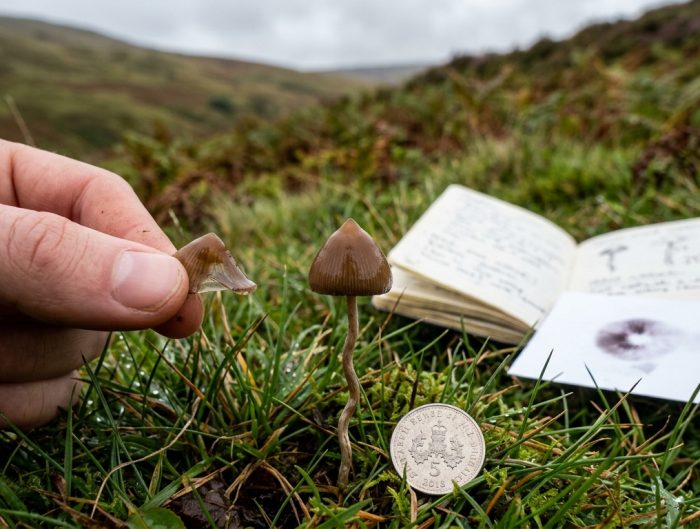
These numbers apply specifically to Psilocybe cubensis. Other species like Psilocybe azurescens or Psilocybe cyanescens can be significantly more potent, so species identification is critical. Misidentification is a real risk for foragers – several toxic species can resemble psilocybin-containing mushrooms to untrained eyes. If you’re foraging rather than growing, investing time in proper mycological education (or better yet, going out with experienced foragers) is essential.
For microdosing, many people find that grinding dried mushrooms and weighing individual doses with a precision scale (accurate to 0.01 grams) produces the most consistent results. At Healing Dose, we encourage people to start at the lower end of the microdose range and adjust slowly over weeks, paying attention to subtle shifts rather than expecting dramatic changes. A gentle hum of increased clarity or a slightly brighter emotional baseline is what you’re looking for – not anything you’d notice in a meeting.
Tea preparation can reduce nausea by allowing you to strain out the chitin-rich mushroom material, which is hard on the stomach. Steep ground mushrooms in hot (not boiling) water for 15 to 20 minutes, strain, and drink. Some people add ginger or honey, both for taste and for additional stomach-settling properties.
Legal Status and Cultural Significance
The legal and cultural contexts surrounding these two mushrooms couldn’t be more different, and understanding both is important for anyone considering personal exploration.
Siberian Shamanism vs. Mesoamerican Sacred Traditions
Amanita muscaria has one of the longest documented histories of human use of any psychoactive substance. Its use among Siberian indigenous peoples, particularly the Koryak, Kamchadal, and Chukchi peoples, dates back centuries and possibly millennia. In these traditions, the mushroom was consumed by shamans for divination, spiritual communication, and ceremonial purposes. The famous practice of drinking the urine of someone who had consumed the mushroom (which contains active muscimol but less ibotenic acid) speaks to both the cultural significance and the practical pharmacological knowledge these communities developed.
Some ethnobotanists have proposed that Amanita muscaria may be the Soma referenced in the ancient Vedic texts of India, though this theory remains debated. The mushroom also appears in European folklore – the iconic red-and-white spotted toadstool shows up in fairy tales, Christmas imagery, and folk art across Northern Europe.
Psilocybin mushrooms have their own deep cultural roots, most prominently in Mesoamerican indigenous traditions. The Aztecs called them teonanácatl, meaning “flesh of the gods,” and used them in religious ceremonies. The Mazatec people of Oaxaca, Mexico, maintained continuous use of psilocybin mushrooms for centuries, and it was through Mazatec curandera María Sabina that Western researchers first encountered these mushrooms in the 1950s.
Both traditions share a common thread: these mushrooms were used within structured ceremonial contexts with experienced guides, specific intentions, and community support. The modern Western tendency to consume psychoactive substances recreationally or in isolation strips away much of the framework that made traditional use relatively safe and meaningful. Whether you’re drawn to Amanita muscaria or psilocybin, honoring the principle of intentional, supported use is something worth carrying forward.
Global Regulatory Landscape and Decriminalization
Here’s where things get interesting, because the legal status of these two mushrooms is essentially inverted from what most people expect.
Amanita muscaria is legal in most countries, including the United States (with the exception of Louisiana). Because muscimol and ibotenic acid are not scheduled under the U.S. Controlled Substances Act, Amanita muscaria products can be legally sold in most U.S. states as long as they don’t make therapeutic claims. This has led to a growing market of Amanita muscaria gummies, tinctures, and extracts, some of which are well-made and some of which are poorly standardized.
Psilocybin, by contrast, remains a Schedule I controlled substance under U.S. federal law. However, the decriminalization and legalization landscape has shifted significantly in recent years. Oregon’s Measure 109 created a regulated psilocybin services program, and Colorado followed with its own framework. Several cities have decriminalized psilocybin possession, and a RAND Corporation analysis examined the policy implications of these decriminalization efforts, highlighting both the potential benefits and the regulatory challenges ahead.
A practical breakdown of the current legal picture:
- Amanita muscaria: Legal in 49 U.S. states (not Louisiana), legal in most countries, unregulated in most jurisdictions
- Psilocybin: Schedule I federally in the U.S., decriminalized in several cities, legal for supervised use in Oregon and Colorado, illegal in most countries with notable exceptions (Jamaica, the Netherlands for truffles, Brazil)
The legal accessibility of Amanita muscaria doesn’t mean it’s safer. It simply means it hasn’t attracted the same regulatory attention. If anything, the lack of regulation means consumers need to be more careful about product quality and preparation standards, not less. A comprehensive guide to legally available mushroom products can help you understand what’s permitted in your specific state.
Therapeutic Potential and Modern Research
The research landscape for psilocybin has expanded dramatically over the past decade, while Amanita muscaria research remains in its infancy. This disparity shapes much of the current conversation around these mushrooms.
Psilocybin has been studied in clinical trials at Johns Hopkins, NYU, Imperial College London, and numerous other institutions. Research has shown promising results for psilocybin-assisted approaches to treatment-resistant depression, end-of-life anxiety, tobacco and alcohol dependence, and obsessive-compulsive disorder. The FDA granted psilocybin “Breakthrough Therapy” designation for treatment-resistant depression, which accelerates the review process. As of 2026, multiple Phase II and Phase III trials are underway or completed, and the body of evidence continues to grow.
The mechanism behind psilocybin’s therapeutic potential appears to involve several factors working together. Psilocybin increases neural connectivity between brain regions that don’t normally communicate much, potentially disrupting rigid patterns of thought and behavior. It also appears to promote neuroplasticity, the brain’s ability to form new connections and reorganize existing ones. And the subjective experience itself, particularly experiences of emotional openness, perspective-shifting, and what researchers call “mystical-type experiences,” seems to play a role in lasting positive changes.
Amanita muscaria has attracted far less clinical attention. There are anecdotal reports of people using low doses of muscimol for sleep support, anxiety reduction, and mood improvement, and some of these reports are compelling. However, the clinical evidence base is essentially nonexistent compared to psilocybin. The pharmacological differences between Amanita muscaria and psilocybin mushrooms mean that findings from psilocybin research cannot be assumed to apply to muscimol, and vice versa.
A few areas where Amanita muscaria has attracted preliminary interest include sleep quality, GABAergic anxiety modulation, and pain management. But “preliminary interest” is a long way from clinical evidence, and anyone exploring Amanita muscaria for these purposes is essentially self-experimenting without the safety net of established dosing guidelines or documented risk profiles.
For those interested in microdosing specifically, psilocybin has a much larger community of practitioners, more established protocols (such as the Fadiman protocol of one day on, two days off), and more shared data on what to expect. Amanita muscaria microdosing is growing in popularity, particularly in Eastern European communities, but the practice is newer to Western audiences and less well-documented. If you’re just starting to explore microdosing, psilocybin offers a more well-trodden path with more resources to guide you, though Amanita muscaria’s legal accessibility makes it an appealing option for people in jurisdictions where psilocybin remains prohibited.
At Healing Dose, we approach both substances with the same core philosophy: start low, go slow, journal consistently, and prioritize integration over intensity. The most meaningful shifts from microdosing tend to emerge over weeks and months as cumulative, subtle changes in your baseline – the way you respond to stress, the quality of your sleep, the ease with which creative ideas flow. These quiet changes are easy to miss if you’re not paying attention, which is exactly why reflection and self-awareness practices matter so much.
Choosing the Right Path: Summary of Key Distinctions
The comparison between Amanita muscaria and psilocybin ultimately comes down to a handful of key differences that should inform your decision-making.
These mushrooms act on completely different neurotransmitter systems. Muscimol is a GABAergic compound producing sedative, dreamlike, and sometimes deliriant experiences. Psilocybin is a serotonergic compound producing perceptual, emotional, and cognitive shifts with generally preserved awareness. The physical profiles differ too: Amanita muscaria carries greater risks of motor impairment and neurotoxicity from ibotenic acid, while psilocybin’s main physical downside is transient nausea.
Preparation matters far more with Amanita muscaria. Proper decarboxylation is a safety requirement, not an optional enhancement. Psilocybin mushrooms require no special preparation beyond drying and accurate dosing. Legal accessibility currently favors Amanita muscaria in most jurisdictions, while psilocybin has a vastly larger body of clinical research supporting its therapeutic potential.
Neither mushroom is “better” in absolute terms. They’re different tools with different risk profiles, different experiential qualities, and different bodies of evidence behind them. Your choice should depend on your goals, your legal context, your comfort with uncertainty, and how much established guidance you want available to you.
Whatever direction you’re drawn to, approach it with patience and respect. These are powerful substances with long histories of human use, and they deserve more than casual experimentation. Build your knowledge base before you build your dose. Journal your experiences. Give yourself time between sessions to notice what’s shifting. The most profound changes are often the ones you almost don’t notice until you look back weeks later and realize something fundamental has quietly rearranged itself.
If you’re considering microdosing and want a structured starting point, finding the right dose for your body and goals is the single most important first step. Our short quiz can help you identify a gentle starting range based on your experience level and sensitivity – take the dose quiz and give yourself the gift of beginning thoughtfully rather than guessing.

You might also like