If you’ve been curious about participating in psilocybin research, you’re not alone. Interest in psychedelic-assisted therapy has surged over the past few years, and hundreds of clinical studies are actively recruiting participants across North America, Europe, and beyond. But finding psilocybin clinical trials near you can feel confusing, especially when you’re unsure where to look or what the process involves. The good news? It’s more accessible than you might think, and you don’t need a science degree or special connections to get started. Whether you’re exploring options for depression, anxiety, PTSD, or simply want to contribute to this growing body of research, this guide will walk you through every step: from locating active studies to understanding what happens once you’re accepted. Take a breath, and let’s go through this together.
Understanding Psilocybin Research and Participation
Psilocybin research has moved well beyond the fringes of academic curiosity. As of 2026, regulatory bodies in the United States, Canada, Australia, and several European countries have expanded pathways for studying psilocybin in controlled clinical settings. The FDA has granted “Breakthrough Therapy” designation to psilocybin-assisted therapy for treatment-resistant depression, and multiple Phase II and Phase III trials are underway. This means there are more opportunities than ever for everyday people to participate in rigorous, well-designed studies.
But why would someone want to join a clinical trial in the first place? For some, it’s about accessing a promising approach that isn’t yet widely available through standard care. For others, it’s a chance to contribute to science and help shape the future of mental health support. Whatever your reason, understanding the purpose and scope of these trials will help you make an informed decision about whether participation is right for you.
The Purpose of Clinical Trials for Psychedelics
Clinical trials exist to test whether a specific intervention is safe, effective, and worth pursuing on a larger scale. In the case of psilocybin, researchers are studying how this compound, found naturally in certain mushroom species, may support people dealing with a range of mental health challenges. Trials are structured in phases: Phase I studies focus primarily on safety and dosing in small groups, Phase II trials begin evaluating effectiveness, and Phase III trials involve larger populations and are often the final step before regulatory approval.
Each phase answers different questions. A Phase I trial might ask, “What dose produces a meaningful psychological experience without unacceptable side effects?” A Phase III trial might compare psilocybin-assisted therapy against an existing antidepressant over several months. These distinctions matter because they affect what you’ll experience as a participant: the number of sessions, the level of psychological support, and the likelihood of receiving a placebo versus the active compound.
It’s worth knowing that psychedelic trials are among the most carefully monitored studies in psychiatry. Participants are never left alone during dosing sessions, and extensive psychological support is built into the protocol. Researchers are not just handing out mushrooms and hoping for the best. Every session is guided, every response is tracked, and every participant’s well-being is prioritized.
Common Conditions Targeted in Research
The range of conditions being studied with psilocybin has expanded significantly. The most well-established research focuses on major depressive disorder and treatment-resistant depression, where multiple trials have shown promising early data. But the scope goes far beyond depression.
Here are some of the conditions currently being explored in active psilocybin studies:
- Major depressive disorder (MDD) and treatment-resistant depression (TRD)
- End-of-life anxiety and existential distress in terminal illness
- Post-traumatic stress disorder (PTSD)
- Generalized anxiety disorder
- Alcohol use disorder and tobacco dependence
- Obsessive-compulsive disorder (OCD)
- Anorexia nervosa and other eating disorders
- Cluster headaches and chronic migraine
Some of these areas have more robust evidence than others. Depression and end-of-life distress have the most published data, while studies on eating disorders and OCD are still in earlier stages. If you’re dealing with one of these conditions and have found conventional approaches insufficient, a clinical trial might be worth exploring. Just keep your expectations grounded: these are research studies, not guaranteed solutions, and individual responses vary widely.
Top Online Databases for Finding Active Studies
Once you’ve decided you’re interested in participating, the next question is practical: where do you actually find these studies? The internet is your best friend here, but only if you know where to look. Random Google searches can lead you to outdated listings, predatory websites, or underground offerings that have nothing to do with legitimate research. Stick to verified databases and reputable organizations, and you’ll save yourself a lot of frustration.
The two most reliable categories of resources are government-maintained trial registries and psychedelic-specific directories run by established research organizations. Between these two types of tools, you can locate virtually every legitimate psilocybin study recruiting participants worldwide.
Searching ClinicalTrials.gov by Location
ClinicalTrials.gov remains the gold standard for finding any type of clinical research, including psilocybin studies. Maintained by the U.S. National Library of Medicine, this database lists trials from around the world and is updated regularly as new studies open and close enrollment.
Here’s how to search effectively:
- Go to ClinicalTrials.gov and use the search bar at the top of the page.
- Type “psilocybin” as your search term. You can also try “psilocybin therapy” or “psilocybin-assisted” for slightly different results.
- Use the location filter to narrow results by country, state, or city. If you’re looking for psilocybin clinical trials near your area, this filter is essential.
- Under “Recruitment Status,” select “Recruiting” or “Not yet recruiting” to focus on studies that are still accepting participants.
- Review each listing carefully. Click into individual studies to read the full eligibility criteria, study description, and contact information.
A few tips to make your search more productive: don’t limit yourself to your exact city. Many trials cover travel costs or offer remote screening, so a study two hours away might still be accessible. Also, check back regularly. New trials open throughout the year, and enrollment windows can be short. Setting up an email alert on ClinicalTrials.gov for the term “psilocybin” means you’ll be notified automatically when new studies are posted.
The listings can feel dense and clinical, but don’t let the jargon intimidate you. Most entries include a plain-language summary alongside the technical details, and contact information for the research team is always provided. If something is unclear, reach out and ask. Study coordinators are accustomed to fielding questions from potential participants.
Using Psychedelic-Specific Trial Finders
Beyond ClinicalTrials.gov, several organizations have created directories specifically designed to help people find psychedelic research opportunities. These tend to be more user-friendly and often include additional context about each study.
The Multidisciplinary Association for Psychedelic Studies (MAPS) maintains a list of active trials on their website, with a focus on MDMA and psilocybin research. The Usona Institute, which is running one of the largest psilocybin trials for depression, also lists their study sites and recruitment status online. COMPASS Pathways, a company conducting Phase III trials for treatment-resistant depression, has a participant portal where you can check eligibility and find nearby sites.
Other useful resources include:
- The Johns Hopkins Center for Psychedelic and Consciousness Research, which regularly posts recruitment notices for their studies
- The Imperial College London Centre for Psychedelic Research, a major hub for European trials
- Psychedelic.Support, which maintains a directory of trials, therapists, and integration resources
- The Beckley Foundation, which partners with universities on psilocybin research globally
At Healing Dose, we also keep an eye on emerging trial opportunities and share updates through our educational content. While we don’t run trials ourselves, we believe that staying informed about legitimate research is a key part of approaching psychedelics thoughtfully and safely.
One word of caution: be wary of any website that asks you to pay to join a clinical trial. Legitimate research studies do not charge participants. If you encounter a site requesting payment for enrollment or “guaranteed access” to psilocybin therapy, that’s a red flag.
Locating University-Led Psychedelic Programs
University research programs are often the most rigorous and well-funded settings for psilocybin studies. These institutions have the infrastructure, ethical oversight, and experienced staff to conduct trials at the highest standard. If you can find a university-led program near you, it’s often the best possible entry point into psychedelic research.
Many of these programs also offer ancillary resources like integration support groups, educational seminars, and follow-up studies that extend your involvement beyond a single trial. Participating in a university program can connect you with a community of researchers and fellow participants who share your interest in this work.
Major Research Institutions in the US and Europe
The United States has the highest concentration of active psilocybin research programs. Johns Hopkins University in Baltimore has been a pioneer since the early 2000s and continues to run multiple studies on depression, addiction, and existential distress. NYU Langone Health in New York City has a well-established psychedelic research program with a focus on cancer-related psychological distress and alcohol use disorder. The University of California, San Francisco (UCSF) and Yale University both have growing psychedelic research divisions.
In 2024 and 2025, several newer programs launched at institutions including the University of Wisconsin-Madison, the University of Texas at Austin, and Emory University. These programs are actively recruiting, and because they’re newer, they may have shorter waitlists than more established centers.
Across Europe, Imperial College London remains a leading force, with studies on depression, anorexia, and the neuroscience of psychedelic experiences. The University of Zurich in Switzerland has a long history of psychedelic research and continues to run psilocybin trials. Charité University Hospital in Berlin and the University of Amsterdam are also active in this space. In Australia, the University of Melbourne and Monash University have both launched psilocybin studies following the 2023 regulatory changes that allowed prescribing psilocybin for treatment-resistant depression.
If none of these institutions are close to you, don’t lose hope. Many university programs partner with satellite clinical sites in other cities, expanding their geographic reach. A trial based at Johns Hopkins, for example, might have secondary sites in several states. Always check the full list of study locations on ClinicalTrials.gov rather than assuming a study only operates at its primary institution.
You can also contact a university’s research department directly. Even if they don’t have a current study that fits your profile, they may be able to point you toward upcoming opportunities or partner institutions that do.
Navigating the Screening and Eligibility Process
Finding a trial is only the first step. Getting accepted requires passing a screening process that can feel thorough, and sometimes a bit daunting. But understanding what researchers are looking for will help you prepare and increase your chances of being selected.
Screening exists to protect you. Psilocybin, while generally well-tolerated in controlled settings, isn’t appropriate for everyone. Researchers need to ensure that each participant can safely undergo the experience and that the study results won’t be confounded by factors outside the study’s scope.
Inclusion and Exclusion Criteria Explained
Every clinical trial publishes a set of inclusion criteria (what you need to qualify) and exclusion criteria (what would disqualify you). These vary by study, but some patterns are consistent across most psilocybin research.
Common inclusion criteria include:
- Being within a specified age range (typically 18-65, though some studies go up to 75 or higher)
- Having a confirmed diagnosis of the condition being studied (e.g., major depressive disorder)
- Being willing to undergo multiple in-person sessions, including preparation and follow-up visits
- Being able to provide informed consent and commit to the full study timeline
Common exclusion criteria include:
- A personal or family history of psychotic disorders (such as schizophrenia or bipolar I disorder)
- Current use of certain medications, particularly SSRIs, SNRIs, or lithium, which can interact with psilocybin
- Active substance use disorders (though some addiction-focused trials specifically recruit people with these conditions)
- Pregnancy or plans to become pregnant during the study period
- Certain cardiovascular conditions, particularly uncontrolled hypertension
The medication issue trips up a lot of people. If you’re currently taking an antidepressant, most studies will require you to taper off under medical supervision before you can participate. This process can take weeks or months and should never be done without your prescriber’s involvement. Some people find this requirement discouraging, and that’s completely understandable. If tapering isn’t feasible for you right now, it doesn’t mean you can never participate: it just means the timing might not be right yet.
The Importance of Medical and Psychiatric History
During screening, you’ll typically complete detailed questionnaires about your medical and psychiatric history. You may also undergo a physical exam, blood work, an EKG, and one or more structured psychiatric interviews. This isn’t meant to judge you. It’s meant to ensure your safety and to help researchers understand who benefits most from psilocybin-assisted therapy.
Be honest during this process. It can be tempting to minimize certain aspects of your history if you’re eager to participate, but withholding information could put you at risk. If you have a history of psychosis, for example, psilocybin could potentially worsen those experiences. Researchers aren’t gatekeeping for arbitrary reasons: they’re looking out for you.
Your psychiatric history also helps researchers interpret the study data. If a trial is studying psilocybin for treatment-resistant depression, they need to verify that participants have genuinely tried and not responded to standard approaches. This might mean documenting previous medication trials, therapy history, and the duration and severity of your depressive episodes.
The screening process can take anywhere from a few days to several weeks, depending on the study. Some trials conduct initial screening by phone or video call, which makes it easier if the study site isn’t in your immediate area. Be patient with the timeline. Research moves carefully, and that careful pace is exactly what makes these studies trustworthy.
What to Expect During a Psilocybin Trial
So you’ve found a study, passed screening, and been accepted. Congratulations: that’s a meaningful step. But what actually happens once you’re in? The experience of participating in a psilocybin trial is quite different from what most people imagine. It’s structured, supported, and deeply intentional.
Most psilocybin trials follow a three-phase model: preparation, dosing, and integration. Each phase plays a specific role, and skipping or rushing any of them would undermine both your experience and the study’s integrity.
Preparation, Dosing, and Integration Sessions
Preparation sessions typically happen in the days or weeks before your dosing session. During these meetings, you’ll work with trained therapists or facilitators to discuss your intentions, learn what to expect during the psilocybin experience, and build a trusting relationship with the people who will be present during your session. This rapport matters enormously. Feeling safe with your guides can significantly influence the quality of your experience.
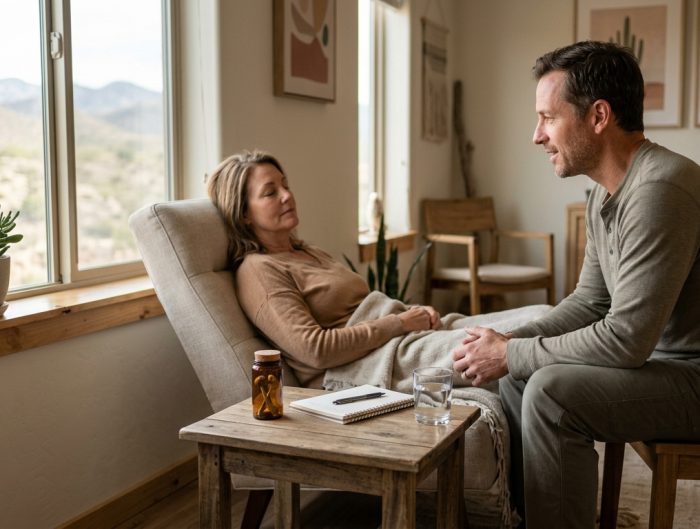
On dosing day, you’ll arrive at the study site and be settled into a comfortable room, often with a reclining chair or bed, eye shades, and a curated music playlist. You’ll take the psilocybin in capsule form (not as raw mushrooms), and the therapists will remain with you throughout the entire session, which typically lasts five to seven hours. They won’t direct your experience, but they’ll be there to offer reassurance, help you stay with difficult emotions, and ensure your physical safety.
The psilocybin dose in most clinical trials ranges from 10 mg to 25 mg of synthetic psilocybin, which is roughly equivalent to 1.5 to 3.5 grams of dried Psilocybe cubensis mushrooms. Some studies use a single high dose, while others use two or three sessions spaced weeks apart. The specific protocol depends on the study design.
Integration sessions happen after dosing, usually within a day or two and then at regular intervals over the following weeks. This is where you process what came up during the experience with your therapists. Integration is arguably the most important part of the entire process. At Healing Dose, we emphasize this constantly: a powerful experience without reflection and follow-through rarely leads to lasting change. Journaling, talking through insights, and identifying concrete ways to carry those insights into daily life are all part of what makes the difference between a single memorable day and genuine, sustained personal growth.
Safety Protocols and Ethical Considerations
Safety is woven into every aspect of a well-run psilocybin trial. Before, during, and after dosing, your vital signs are monitored. Blood pressure, heart rate, and psychological state are all tracked. If you experience distress during the session, trained facilitators use grounding techniques and verbal reassurance to help you through it. In the rare event of a medical concern, emergency protocols are in place.
Every psilocybin trial must be approved by an Institutional Review Board (IRB) or ethics committee, which reviews the study design to ensure participant safety and ethical conduct. This includes verifying that informed consent is truly informed: that you understand the risks, the time commitment, the possibility of receiving a placebo, and your right to withdraw at any time without penalty.
The placebo question is one that surprises some participants. Many psilocybin trials are randomized and controlled, meaning some participants receive the active compound while others receive a placebo or a very low dose. You may not know which group you’re in until the study concludes. This can be frustrating, but it’s essential for producing reliable data. Some studies use a “crossover” design, where all participants eventually receive the active dose, which can ease concerns about missing out.
Your data and identity are protected throughout the study. Results are anonymized, and your participation is confidential. Researchers are bound by strict privacy regulations, and your personal information won’t be shared outside the research team.
One ethical consideration worth mentioning: clinical trials are not therapy, even though they may feel therapeutic. The primary goal is to generate scientific knowledge, and your experience is one data point among many. That said, most participants report the experience as meaningful and positive, and many studies offer continued support or referrals after the trial ends.
Tips for Successful Trial Applications
Getting into a psilocybin trial can be competitive, especially at well-known institutions. Here are some practical suggestions to improve your chances and make the process smoother.
Start by casting a wide net. Don’t limit yourself to one study or one institution. Apply to multiple trials simultaneously, especially if you meet the criteria for more than one. Enrollment timelines vary, and having several applications in progress increases the likelihood that at least one will work out.
Respond quickly when a study team contacts you. Enrollment windows can close fast, and researchers often move through their waitlists in order of responsiveness. If you receive a call or email from a study coordinator, get back to them within 24 hours if possible.
Gather your medical records in advance. Having documentation of your diagnosis, medication history, and previous approaches readily available will speed up the screening process. Ask your current provider to prepare a summary letter if that’s something they’re willing to do.
Be flexible with your schedule. Most trials require multiple in-person visits over several weeks or months. If you can accommodate daytime appointments and occasional travel, you’ll be a stronger candidate. Some participants take time off work or arrange childcare to make participation feasible, so think through the logistics before you apply.
Here are a few more tips that can make a real difference:
- Join online communities focused on psychedelic research. Reddit’s r/PsychedelicStudies and various Facebook groups often share real-time updates about recruiting trials.
- Sign up for newsletters from organizations like MAPS, COMPASS Pathways, and Usona Institute. They announce new studies and recruitment drives through their mailing lists.
- If you’re currently on medications that would disqualify you, talk to your prescriber about whether a supervised taper might be appropriate. Don’t rush this: plan ahead so you’re ready when the right study opens.
- Be prepared for rejection. Not everyone who applies will be accepted, and that’s okay. Exclusion from one study doesn’t mean you won’t qualify for another. Keep trying.
Honesty throughout the application process cannot be overstated. Researchers appreciate transparency, and misrepresenting your history could compromise both your safety and the study’s validity. If you’re unsure whether a particular aspect of your background would disqualify you, ask the study coordinator directly before investing time in a full application.
Finally, approach the process with patience. From initial application to dosing day, the timeline can stretch from a few weeks to several months. Use that waiting period productively. Read about the research, practice mindfulness or journaling, and reflect on what you hope to gain from the experience. At Healing Dose, we often remind people that the preparation you do before a psychedelic experience is just as important as the experience itself. The waiting period isn’t wasted time: it’s part of the process.
Finding Your Path Forward
Searching for psilocybin clinical trials near you might feel like a big undertaking, but you now have the tools and knowledge to approach it with confidence. Start with ClinicalTrials.gov and psychedelic-specific directories, reach out to university programs, and prepare your medical documentation early. Be honest during screening, stay flexible with your schedule, and remember that patience is part of the process.
This is a moment of genuine expansion in mental health research, and your participation, whether as a study volunteer or simply as someone staying informed, matters. Every person who engages with this work thoughtfully helps move the field forward in a responsible direction.
If you’re also curious about microdosing as a gentler way to explore psilocybin on your own terms, our short quiz can help you find a starting range based on your goals, experience, and sensitivity. Take the quiz here to begin at your own pace.
Whatever path you choose, go slowly, stay curious, and trust yourself to make the right decision for where you are right now.

You might also like