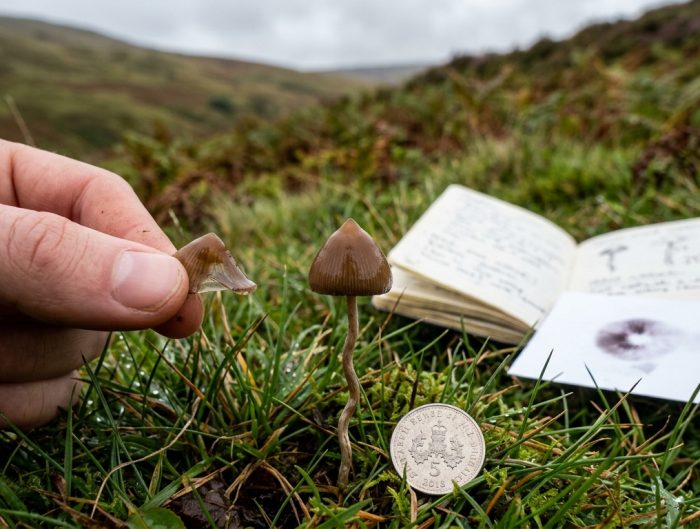
Few varieties of Psilocybe cubensis carry as much mystique, controversy, and genuine curiosity as the strain known as penis envy. Named for its unmistakable phallic shape, this mushroom has become one of the most discussed and sought-after psilocybin-containing fungi in both underground cultivation circles and emerging research contexts. Its reputation for unusual potency, its murky origin story involving legendary ethnobotanists, and its notoriously difficult cultivation have all contributed to a kind of folklore that surrounds it. Whether you’re a cautious beginner trying to understand what makes this variety different or someone with experience looking to deepen your knowledge, the history and science behind these mushrooms are genuinely fascinating. What follows is a thorough look at where they came from, what makes them unique, and what the current research suggests about their potential.
Origins and the Terence McKenna Connection
The story of penis envy mushrooms is tangled up with some of the most colorful figures in psychedelic history. Separating verified fact from community legend isn’t always easy, but the broad strokes are well documented enough to paint a compelling picture. What’s clear is that this strain didn’t appear out of nowhere: it emerged from a specific lineage of collection, cultivation, and deliberate genetic selection spanning decades.
The Amazonian Discovery
The most widely accepted origin story begins in the early 1970s in the Colombian Amazon. Terence McKenna, along with his brother Dennis, traveled to South America in search of psychoactive plants and fungi. During this period, Terence reportedly collected spore prints from exceptionally large Psilocybe cubensis specimens growing in the wild. These weren’t the penis envy strain as we know it today, but they were the genetic starting material from which the strain would eventually be developed.
Terence McKenna was, of course, far more than a mushroom collector. He was a writer, lecturer, and self-described psychonaut whose ideas about psilocybin, consciousness, and human evolution shaped an entire generation’s relationship with psychedelics. His “Stoned Ape” hypothesis, which proposed that psilocybin consumption played a role in the rapid expansion of early human cognition, remains controversial but undeniably influential. The spore prints he brought back from the Amazon were shared within a small network of mycologists and enthusiasts, and it was from this genetic pool that the penis envy variety would later be isolated.
It’s worth understanding that wild Psilocybe cubensis populations show enormous natural variation. Cap size, stem thickness, spore color, and potency can all differ significantly between individual specimens growing in the same pasture. What McKenna collected was raw genetic diversity. The specific morphological traits that define the penis envy strain today required years of selective cultivation to stabilize.
Steven Pollock and Genetic Refinement
The person most credited with developing the penis envy strain from McKenna’s original spore prints is Steven Pollock, a medical doctor and amateur mycologist based in Texas. Pollock received spore prints, likely from McKenna’s collection or through intermediaries in the mycological community, and began a systematic process of isolation and selective breeding during the mid-to-late 1970s.
Pollock’s approach was methodical. He would grow out cultures, identify individual mushrooms that displayed the thick, bulbous stems and underdeveloped caps that characterize the strain, and then clone those specimens to propagate the desired traits. Over multiple generations, this selective pressure produced a stable phenotype: the dense, stubby, phallic-shaped mushroom that would eventually earn its memorable name.
The story takes a dark turn. In 1981, Steven Pollock was found murdered in his home under circumstances that remain officially unsolved. His death has fueled decades of speculation within the psychedelic community, with theories ranging from a drug-related dispute to something more sinister connected to his research. Whatever the truth, Pollock’s work survived him. His cultures and spore prints had already been distributed to other growers, and the strain continued to circulate and evolve within underground networks.
After Pollock’s death, a cultivator known by the pseudonym “Rich Gee” is often credited with further refining and distributing the strain. From the 1980s onward, penis envy genetics spread through mail-order spore catalogs and word of mouth, gradually building the reputation they hold today. The strain’s journey from Amazonian pastures to Pollock’s lab to global cultivation is a reminder of how much psychedelic history depends on individual passion and informal knowledge networks rather than institutional science.
Botanical Characteristics and Identification
Understanding what makes this strain physically distinct from other Psilocybe cubensis varieties is important for anyone interested in mycology, harm reduction, or simply satisfying their curiosity. The morphological differences aren’t subtle: even a casual observer can usually tell a penis envy specimen apart from a standard cubensis.
Distinctive Physical Morphology
The most immediately obvious feature is the cap. Where most Psilocybe cubensis strains produce a broad, flat or slightly convex cap at maturity, penis envy mushrooms retain a small, tightly attached cap that often doesn’t fully open. The cap tends to be rounded, sometimes bulbous, and frequently remains connected to the stem at its edges rather than flaring outward. This gives the entire fruiting body its characteristic phallic silhouette.
The stems are thick, dense, and often gnarly or wrinkled. Compared to the relatively slender stems of a Golden Teacher or B+ cubensis, a penis envy stem can be remarkably stout, sometimes approaching the width of a thumb or even wider. The flesh is typically denser and more fibrous than other cubensis varieties, which contributes to the strain’s higher dry weight relative to its size.
Coloration varies, but fresh specimens often display a pale to medium tan cap with a whitish to off-white stem. Bruising is pronounced: handling or cutting the mushroom produces vivid blue-green discoloration, a reaction caused by the oxidation of psilocin. This bruising reaction is notably strong in penis envy specimens, which many cultivators interpret as a visual indicator of higher psilocin content, though this correlation isn’t perfectly reliable.
Spore production is another distinguishing characteristic, and it’s one that creates real practical challenges. Penis envy mushrooms produce significantly fewer spores than most cubensis strains. The caps often fail to open fully, which means the gills remain partially enclosed and don’t release spores as freely. This reduced sporulation is one of the primary reasons the strain is considered difficult to work with from a cultivation standpoint.
Variations: Albino and Uncut Strains
Over the decades since Pollock’s original work, cultivators have developed several notable sub-varieties within the penis envy lineage. These aren’t separate species: they’re genetic variants that have been isolated and stabilized through the same kind of selective breeding that produced the original strain.
Albino Penis Envy, often abbreviated APE, is perhaps the most well-known variant. These mushrooms lack the typical pigmentation, producing ghostly white to very pale blue fruiting bodies. The caps are often even smaller and more tightly closed than standard penis envy specimens. APE is widely regarded as one of the most potent cubensis varieties available, though controlled laboratory comparisons remain limited. The visual appearance is striking and unmistakable.
Penis Envy Uncut, or PEU, is another popular variant. The name refers to the cap’s tendency to remain completely attached to the stem, never separating or opening at all. This gives the mushroom an even more pronounced phallic shape. PEU specimens are typically dense and compact, and growers report that they share the high potency associated with the broader penis envy family.
Other variants include Trans Envy, a cross between penis envy and a South African Transkei strain that tends to produce somewhat thinner stems and more open caps, and Melmac, which some cultivators believe is closer to Pollock’s original genetic line than the modern penis envy strain. Each of these sub-varieties has its own community of dedicated growers, and the ongoing genetic experimentation within the penis envy family reflects a broader trend of increasing sophistication in amateur mycology.
Potency and Chemical Composition
The reputation of penis envy mushrooms rests heavily on their reported potency. This isn’t just community folklore: analytical chemistry has begun to confirm what cultivators have claimed for years, though the picture is more nuanced than a simple “these are the strongest mushrooms” statement.
Psilocybin and Psilocin Concentrations
Psilocybin and psilocin are the two primary psychoactive compounds in Psilocybe cubensis. Psilocybin is a prodrug, meaning it’s converted into psilocin by your body after ingestion. Psilocin is the compound that actually binds to serotonin receptors in the brain and produces psychoactive experiences. Both compounds are tryptamines, structurally similar to serotonin itself.
Standard Psilocybe cubensis strains typically contain between 0.5% and 0.9% psilocybin by dry weight, with psilocin concentrations usually much lower, often below 0.1%. Penis envy specimens, by contrast, have been analytically tested at significantly higher concentrations. Data from the Psilocybin Cup, a community-organized potency competition that has been running since 2022, has shown penis envy entries routinely testing above 1.0% total tryptamine content, with some individual specimens exceeding 1.5% or even 2.0%.
These numbers matter practically. If a standard cubensis mushroom contains roughly 0.6% psilocybin by dry weight, and a penis envy specimen contains 1.2%, then a gram of dried penis envy material contains approximately twice the active compound. For someone accustomed to a particular dose of standard cubensis, the same weight of penis envy could produce a significantly more intense experience. This is why harm reduction advocates consistently emphasize starting with lower amounts when working with high-potency strains.
At Healing Dose, we always encourage people to respect the variability between strains and even between individual mushrooms within the same batch. Potency can vary based on growing conditions, harvest timing, and drying methods. A “standard dose” is really a rough guideline, not a guarantee of a specific experience.
The Entourage Effect in Fungal Alkaloids
Psilocybin and psilocin aren’t the only bioactive compounds present in Psilocybe cubensis. Researchers have identified several other tryptamine alkaloids, including baeocystin, norbaeocystin, and aeruginascin, all of which may contribute to the overall experience in ways that aren’t fully understood yet.
The concept of an entourage effect, borrowed from cannabis science, suggests that these minor alkaloids may modulate the experience produced by psilocybin and psilocin alone. Some researchers hypothesize that aeruginascin, for example, may have anxiolytic properties that could influence whether an experience feels calm or anxious. If different strains produce different ratios of these minor alkaloids, that could help explain why subjective reports of various cubensis strains often describe qualitatively different experiences, not just differences in intensity.
Research on this topic is still in its early stages. A 2023 study published in the Journal of Natural Products confirmed the presence of multiple tryptamine alkaloids in Psilocybe cubensis and noted variation between strains, but the pharmacological significance of these differences hasn’t been established through controlled human studies. It’s an area where anecdotal reports are far ahead of the science, which is both exciting and a reason for caution.
What we can say with reasonable confidence is that penis envy mushrooms aren’t just “stronger” in a simple linear sense. The subjective quality of the experience, as described by thousands of individual reports across online communities, is often characterized as deeper, more introspective, and more visually intense than equivalent doses of other cubensis strains. Whether this reflects higher psilocybin content, a different alkaloid profile, or some combination of both remains an open question.
Psychological and Physiological Effects
Understanding what to expect from a psilocybin experience, particularly from a high-potency strain, is essential for anyone approaching this territory with care and intention. The experiences described here reflect general patterns reported across many individuals, but your own experience will always be shaped by your unique physiology, mental state, environment, and dose.
Visual and Auditory Hallucinations
Psilocybin’s interaction with serotonin 5-HT2A receptors produces a range of perceptual changes. At lower doses, these might include enhanced color saturation, subtle geometric patterns overlaying surfaces, and a sense that textures are “breathing” or undulating. At moderate to higher doses, full visual hallucinations can emerge: complex fractal patterns, morphing faces, synesthetic blending of senses, and closed-eye imagery that can feel as vivid as waking life.
Because penis envy mushrooms tend to contain higher concentrations of active compounds, the threshold between a mild perceptual shift and a full perceptual experience may be narrower than with other strains. Someone who takes what they consider a moderate dose based on experience with standard cubensis might find themselves in significantly deeper territory with this variety. This isn’t inherently dangerous, but it can be disorienting if you’re not prepared for it.
Auditory changes are less commonly discussed but are a real part of the experience for many people. Music may sound richer, more textured, or emotionally resonant. Some individuals report hearing sounds that aren’t present, though full auditory hallucinations are less common than visual ones. Environmental sounds, like wind, water, or ambient noise, can take on a quality that feels meaningful or alive.
Physical sensations accompany these perceptual shifts. Nausea is common during the onset period, typically the first 30 to 60 minutes after ingestion. Body temperature fluctuations, jaw tension, and a general sense of physical heaviness or lightness are frequently reported. These physiological responses are normal and usually pass as the experience develops.
Cognitive Shifts and Spiritual Dissolution
Beyond the sensory changes, psilocybin produces profound shifts in cognition and sense of self. These cognitive changes are often what people find most meaningful, and they’re also what can feel most challenging.
At moderate to high doses, the default mode network, a brain system associated with self-referential thinking and the sense of a stable “I,” shows reduced activity. This can manifest as a loosening of ego boundaries, a feeling that the distinction between “self” and “world” is less rigid than usual. At higher doses, this can progress to what’s sometimes called ego dissolution: a temporary loss of the sense of being a separate individual.
Ego dissolution can be profoundly meaningful or deeply frightening, and often both. People describe feelings of unity with nature, a sense of cosmic interconnection, encounters with what feels like a larger intelligence, or a confrontation with deeply held fears and emotional patterns. The intensity of these experiences is one reason why penis envy mushrooms, with their higher potency, demand particular respect and preparation.
Integration, the process of reflecting on and making sense of these experiences afterward, is where much of the lasting value lies. A powerful experience without integration is like having a vivid dream you never think about again. At Healing Dose, we emphasize journaling, quiet reflection, and honest self-examination as essential practices for anyone working with psilocybin. The experience itself is just the beginning: what you do with the insights it surfaces is what shapes long-term personal growth.
Emotional processing is another significant aspect. Psilocybin can bring suppressed emotions to the surface with startling clarity. Grief, joy, love, fear, and gratitude may all arise in rapid succession or blend together in ways that feel overwhelming. Having a trusted person present, or at minimum a safe and comfortable environment, is consistently recommended by harm reduction organizations and experienced practitioners alike.
Therapeutic Potential and Modern Research
The scientific study of psilocybin has accelerated dramatically since the early 2010s, and by 2026, multiple clinical trials have produced promising data across several conditions. While most clinical research uses synthetic psilocybin rather than whole mushroom material, the findings are directly relevant to understanding what compounds like those found in penis envy mushrooms may support.
Johns Hopkins University’s Center for Psychedelic and Consciousness Research has published studies showing significant reductions in depression and anxiety among participants who received psilocybin-assisted therapy, with some participants reporting sustained improvements at six-month and twelve-month follow-ups. Similar findings have emerged from Imperial College London, NYU, and UCSF. The FDA granted “Breakthrough Therapy” designation to psilocybin therapy for treatment-resistant depression, a signal of the agency’s recognition that existing data supports further investigation.
It’s critical to understand what these studies do and don’t tell us. They demonstrate that psilocybin, administered in controlled clinical settings with professional psychological support, can produce meaningful improvements for some people with specific conditions. They do not demonstrate that eating mushrooms at home will produce the same outcomes. The therapeutic context, including preparation sessions, guided experiences, and integration therapy, is considered an essential component of the positive findings, not an optional add-on.
Research specifically examining strain differences, including whether high-potency varieties like penis envy produce qualitatively different therapeutic outcomes, is essentially nonexistent in the formal literature as of 2026. This is partly because clinical trials use standardized synthetic psilocybin to control for dosing variability, and partly because strain-level analysis hasn’t been a priority for research institutions focused on establishing basic efficacy.
What we do know from community reports and emerging analytical data is that potency variation between strains is real and significant. For anyone exploring psilocybin for personal growth or well-being, this variability means that careful attention to dose, setting, and intention is non-negotiable. Starting with a low amount, especially with a high-potency strain, and adjusting gradually based on your own experience is the most responsible approach.
Some researchers are beginning to investigate whether whole mushroom material, with its full spectrum of tryptamine alkaloids, might produce different outcomes than isolated synthetic psilocybin. This line of inquiry connects directly to the entourage effect discussion above and could eventually help clarify whether strains like penis envy offer something qualitatively distinct beyond raw potency. For now, this remains a hypothesis rather than an established finding.
The therapeutic potential of psilocybin is real and supported by growing evidence, but it exists within a framework of careful dosing, professional support, and ongoing integration. Anyone interested in exploring this territory, whether with penis envy mushrooms or any other psilocybin-containing variety, benefits from approaching it slowly, with good information and realistic expectations.
Cultivation Challenges and Legal Status
Growing penis envy mushrooms presents a unique set of challenges that distinguish this strain from more beginner-friendly cubensis varieties. Understanding these difficulties, alongside the complex and evolving legal status of psilocybin, gives a more complete picture of why this strain occupies such a particular niche.
Difficulty of Spore Collection
The most immediate practical challenge is spore collection. As mentioned earlier, penis envy mushrooms produce far fewer spores than typical cubensis strains. The caps often remain partially or fully closed, preventing normal spore dispersal. Even when a cap does open slightly, the spore deposit is usually thin and sparse compared to a Golden Teacher or Ecuador strain, which can drop dense, dark purple-black spore prints overnight.
This reduced sporulation has several downstream consequences. Spore syringes and prints are more expensive and less widely available. The genetic diversity within commercially available penis envy spore stock may be narrower, since fewer successful spore collections mean fewer unique genetic lines in circulation. Many experienced cultivators prefer to work with agar cultures and liquid culture rather than spore syringes when growing this strain, since cloning a known good specimen is more reliable than working from sparse, potentially contaminated spore material.
Colonization times tend to be longer with penis envy genetics. Where a standard cubensis strain might fully colonize a grain jar in two to three weeks, penis envy mycelium often takes three to five weeks or longer. The mycelium can appear wispy or thin compared to the rhizomorphic growth patterns that cubensis growers typically look for, which can cause less experienced cultivators to mistake healthy growth for weak or contaminated cultures.
Fruiting is similarly slow and sometimes unpredictable. Flushes tend to produce fewer but larger individual mushrooms, and the time between flushes can be extended. Contamination risk increases with longer timelines, since every additional day a substrate sits in fruiting conditions is another day for competing molds and bacteria to gain a foothold. Successful penis envy cultivation generally requires cleaner technique, more patience, and more experience than growing standard cubensis varieties.
Global Legal Frameworks and Decriminalization
The legal status of psilocybin, and by extension psilocybin-containing mushrooms, varies enormously across jurisdictions and is changing rapidly. As of 2026, the global picture is a patchwork of prohibition, decriminalization, regulated medical access, and legal gray areas.
In the United States, psilocybin remains a Schedule I controlled substance at the federal level. However, Oregon’s Measure 109, which took effect in 2023, created a regulated framework for psilocybin-assisted therapy through licensed service centers. Colorado followed with its own regulatory framework under Proposition 122. Several cities, including Denver, Oakland, Santa Cruz, Seattle, and Washington D.C., have enacted local decriminalization measures that deprioritize enforcement of psilocybin possession laws.
The distinction between decriminalization and legalization matters. Decriminalization typically means that possession of small amounts for personal use is treated as a low-priority offense or a civil infraction rather than a criminal charge. It does not mean psilocybin is legal to sell, distribute, or cultivate commercially. The Oregon and Colorado models go further by creating legal frameworks for supervised use, but they don’t permit unsupervised retail sales.
Internationally, the picture is equally varied:
- The Netherlands permits the sale of psilocybin-containing truffles (sclerotia) through licensed smart shops, though dried mushrooms remain prohibited.
- Jamaica has no laws specifically prohibiting psilocybin, which has led to a growing psilocybin retreat industry.
- Brazil does not explicitly prohibit psilocybin mushrooms, though the legal status is ambiguous.
- Canada has granted individual exemptions for psilocybin use in end-of-life care and has a growing number of unlicensed dispensaries operating in a legal gray area.
- Australia approved psilocybin for therapeutic use under specialist psychiatrist prescription in 2023, becoming one of the first countries to create a formal medical pathway.
Spore possession occupies its own legal niche. In most U.S. states, psilocybin mushroom spores are legal to possess because the spores themselves do not contain psilocybin. California, Idaho, and Georgia are notable exceptions where spore possession is restricted. This legal distinction has enabled a legitimate spore trade for microscopy and taxonomy purposes, though the practical reality is that most spore purchases are made by people interested in cultivation.
If you’re considering any involvement with psilocybin-containing mushrooms, understanding your local laws is essential. The legal situation is evolving quickly, and what was true a year ago may not reflect current policy. Organizations like the Multidisciplinary Association for Psychedelic Studies (MAPS) and Students for Sensible Drug Policy maintain updated resources on psilocybin legislation across jurisdictions.
A Thoughtful Path Forward
The story of penis envy mushrooms spans decades of underground mycology, tragic personal histories, and a growing body of scientific interest. From McKenna’s Amazonian collections to Pollock’s meticulous genetic work to the analytical testing of modern potency competitions, this strain represents both the ingenuity of amateur scientists and the enduring human fascination with consciousness-altering fungi.
What stands out most is how much individual variability matters in every aspect of this subject: variability in mushroom potency, in personal sensitivity, in legal status, and in the quality of the experience itself. There are no universal doses, no guaranteed outcomes, and no shortcuts to the kind of self-knowledge that careful, intentional psilocybin use can support.
If you’re curious about finding a starting point that respects your own sensitivity and goals, Healing Dose offers a short quiz that can help you identify a gentle beginning range based on your experience level. You can take the quiz here and approach the process at whatever pace feels right for you.
Whatever path you choose, go slowly. Journal what you notice. Pay attention to the quiet changes as much as the dramatic ones. The most meaningful shifts tend to accumulate gradually, over weeks and months, not in a single afternoon.

You might also like