Something shifts after a powerful experience. Maybe it was a psilocybin ceremony, a breathwork session, or a solo journey with a carefully measured microdose that unexpectedly opened something up. You felt clarity, connection, or a deep sense of purpose – and then the next morning arrived, and ordinary life didn’t quite know what to do with all of it. That gap between insight and daily reality is where so many people get stuck. Integration circles offer a way to bridge that gap by gathering with others who understand what you’re going through. Finding community after a profound experience isn’t just comforting: it can be the difference between a fleeting moment of clarity and a genuine, lasting shift in how you show up in your life. With 57% of U.S. voters reporting personal or close secondhand experience with psychedelics, the need for supportive spaces to process these experiences has never been more pressing. You don’t have to figure this out alone.
The Role of Community in Processing Altered States
Altered states of consciousness – whether accessed through psychedelics, meditation, or intensive somatic work – can produce vivid insights that feel deeply meaningful in the moment. But without a container to hold those experiences, they tend to fade like dreams. Community provides that container. When you sit with others who have walked through similar territory, something happens that solo reflection simply can’t replicate: you hear your own experience reflected back to you in someone else’s words, and suddenly what felt confusing starts to make sense.
The human nervous system is wired for co-regulation. Processing intense emotional or perceptual experiences alongside others helps your body settle, which in turn helps your mind organize what happened. This isn’t just anecdotal; emerging clinical research shows that group-based approaches to psychedelic support yield meaningful improvements in emotional well-being, even when compared to individual sessions alone.
Defining the Integration Circle Model
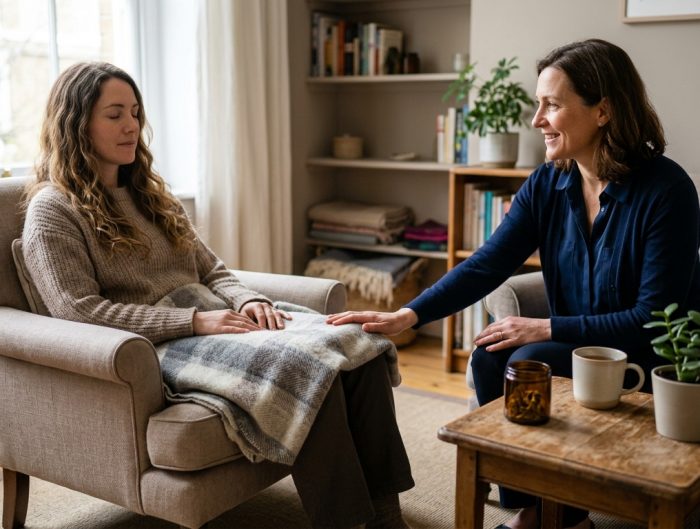
An integration circle is a structured group gathering – usually 4 to 15 people – where participants share and reflect on experiences with altered states. Unlike therapy, the circle doesn’t aim to diagnose or prescribe. Unlike casual conversation, it follows guidelines that keep the space safe and purposeful. A typical session might include a brief opening ritual, rounds of sharing with timed speaking, reflective listening from the group, and a closing check-in.
The facilitator (if there is one) acts more like a gardener than a teacher: tending the space, keeping time, and gently redirecting if things go off track. The model draws from group therapy traditions, indigenous talking circles, and peer support frameworks. What makes it distinct is its focus on integration – the active work of weaving insights from non-ordinary states into your everyday patterns, relationships, and choices.
Why Shared Experience Accelerates Personal Growth
There’s a particular kind of loneliness that comes from having an experience nobody around you understands. You might try explaining a moment of ego dissolution to a friend who has never sat with a psychedelic substance, and their well-meaning but blank expression can actually make you feel more isolated. Integration circles dissolve that isolation. When someone across the room nods because they’ve felt the same wordless grief or unexpected joy, your nervous system registers safety – and growth becomes possible.
Shared experience also introduces perspectives you wouldn’t reach on your own. One person’s interpretation of a recurring symbol might illuminate something you’d been circling for weeks. At Healing Dose, we emphasize that reflection and journaling are essential tools, but there are dimensions of integration that only emerge in dialogue. The circle becomes a mirror with many faces.
Core Pillars of a Safe Integration Space
Not every group gathering qualifies as a safe integration space. The difference between a helpful circle and a harmful one often comes down to a few foundational principles that protect participants and create the conditions for honest sharing.
Non-Judgmental Listening and Peer Support
The single most important element is non-judgmental listening. This means participants practice receiving each other’s stories without offering advice, correcting, or interpreting unless explicitly invited. It sounds simple, but it runs counter to how most of us communicate. We’re trained to fix, reassure, or relate everything back to our own experience.
In a well-run circle, you might hear guidelines like these:
- Speak from your own experience using “I” statements
- Listen without planning your response
- Avoid cross-talk (responding directly to another person’s share unless the format allows it)
- Honor silence: not every pause needs to be filled
This kind of listening creates a rare quality of attention. For someone processing a difficult or confusing experience, being truly heard – without judgment – can be more powerful than any interpretation.
Confidentiality and Ethical Boundaries
Confidentiality is non-negotiable. What’s shared in the circle stays in the circle. This isn’t just a nice idea: it’s the structural foundation that allows people to be honest about experiences that might carry legal, professional, or social risk. Given that psychedelic-assisted approaches are still navigating complex regulatory landscapes in 2026, participants need to trust that their vulnerability won’t follow them out the door.
Ethical boundaries also include clear agreements about physical contact, substance use during meetings, and the role of the facilitator. A good circle will state these boundaries upfront, usually in a written agreement or verbal contract at the start of each session.
Bridging the Gap Between Insight and Daily Life
This is where the real work happens. An experience might show you something beautiful or difficult, but the insight itself doesn’t change your life. What you do with it does. Integration circles exist specifically to help you cross the bridge from “I saw something important” to “I’m living differently because of it.”
Translating Symbols and Emotions into Action
Experiences in altered states often arrive as images, body sensations, or emotions rather than clear instructions. You might feel an overwhelming sense of forgiveness without knowing who or what you’re forgiving. You might see a recurring image of water and sense it means something, but what?
The circle helps you sit with these symbols long enough to let meaning emerge. Other participants might ask gentle questions: “What does water feel like in your body when you imagine it?” or “When you say forgiveness, where do you notice that?” These aren’t therapeutic interventions – they’re invitations to go deeper. Over time, patterns reveal themselves, and vague feelings become specific commitments. Maybe that sense of forgiveness becomes a phone call to a sibling. Maybe the water image connects to a need for more fluidity in your work routine.
At Healing Dose, we encourage journaling between circle meetings as a way to track these threads. Writing down your reflections within 24 hours of a session helps preserve details that would otherwise dissolve.
Accountability Partners within the Circle
One of the most underrated features of a good integration circle is gentle accountability. When you share an intention with the group – “I want to start a morning stillness practice” or “I’m going to have that conversation with my partner” – the circle remembers. Not in a punitive way, but in a caring one. Someone might ask at the next meeting, “How did that conversation go?”
This kind of accountability works because it’s relational rather than transactional. You’re not reporting to a boss or checking a box. You’re showing up for people who showed up for you. That reciprocity creates a feedback loop where personal growth becomes a shared project rather than a solitary grind.
Finding and Choosing the Right Circle for You
Not every circle will be the right fit, and that’s okay. The wrong group can feel draining or even unsafe, while the right one can become one of the most meaningful commitments in your life. Here’s how to sort through your options.
Facilitated vs. Peer-Led Environments
Facilitated circles are led by someone with training in group dynamics, somatic work, or psychedelic integration coaching. They tend to offer more structure and can handle difficult emotional material with greater skill. If you’re processing something particularly intense or you’re new to group sharing, a facilitated space is usually the better starting point.
Peer-led circles, on the other hand, distribute responsibility among all members. They’re often free or low-cost, and they can foster a stronger sense of equality. The trade-off is that without skilled facilitation, group dynamics can drift: dominant voices may take over, or difficult moments might go unaddressed. Look for peer-led groups that rotate a “holder” role and have clear written agreements.
Online Communities vs. Local In-Person Gatherings
Both formats have real value, and many people participate in both. In-person circles offer the full spectrum of nonverbal communication – body language, eye contact, the energy of a shared room. There’s a grounding quality to sitting in a physical circle that’s hard to replicate on a screen.
Online communities, though, solve the access problem. If you live in a rural area, or if your schedule makes weekly in-person attendance impossible, a video-based circle can be a genuine lifeline. Some platforms now host integration-focused groups with built-in confidentiality agreements and trained moderators. When evaluating an online option, check whether the group limits its size (smaller is usually better for depth) and whether there’s a consistent facilitator or rotating structure.
Sustaining Long-Term Benefits Through Connection
The most common mistake people make with integration circles is treating them as a short-term fix: attend a few sessions after a big experience, feel better, and move on. But the deepest benefits come from sustained participation over months or even years. The circle becomes a place where you track your own growth across time, noticing patterns that only become visible with repetition. You start to see how the same themes resurface, each time with a little more nuance and a little less charge.
Long-term connection also builds the kind of trust that allows for truly honest sharing. In a group you’ve been part of for six months, you can say “I don’t think that experience actually helped me” or “I’m scared to do this again” without worrying about judgment. That honesty is where the most meaningful personal growth happens – not in the peak moments, but in the quiet, sometimes uncomfortable conversations afterward.
If you’re exploring microdosing alongside your integration practice, finding the right starting point matters. Our short quiz can help you take the dose quiz to identify a gentle range based on your goals, sensitivity, and experience level. It’s a small step, but it pairs well with the kind of reflective, community-supported approach that makes integration circles so worthwhile.
You don’t need to have everything figured out before you walk into your first circle. You just need to be willing to show up, listen, and let others witness your process. That willingness, more than any single experience, is what carries you forward.

You might also like