Grief doesn’t follow a schedule. It doesn’t care about your to-do list, your work deadlines, or the well-meaning advice people offer about “moving on.” If you’ve lost someone close to you, you already know this. You know what it feels like to wake up and, for a split second, forget they’re gone, only to have the weight crash back down. You know how exhausting it is to carry that heaviness through ordinary days. And if you’ve been searching for something, anything, that might ease the pressure without numbing you entirely, you may have come across the idea of microdosing for grief. It’s a concept that’s gaining serious attention, not as a quick fix, but as a gentle, intentional practice that some people find supportive during one of life’s most painful passages. The question isn’t whether grief can be erased (it can’t), but whether there are tools that help you move through it with a little more presence and a little less suffering. That’s what we’re going to explore here: what the research says, what the risks are, and how to think about this option honestly.
Understanding Microdosing in the Context of Bereavement
Grief is one of the most universal human experiences, yet it remains one of the least understood from a clinical standpoint. The psychiatric community has only recently begun to distinguish between “normal” grief and prolonged grief disorder, a condition that was formally added to the DSM-5-TR in 2022. For many people, the conventional options for managing grief feel limited: talk therapy, support groups, and sometimes antidepressants that can blunt not just the pain but also the love and connection that underlie it.
This is the space where microdosing enters the conversation. Rather than offering escape from difficult emotions, microdosing aims to create subtle shifts in perception and emotional processing that may help a grieving person engage with their loss more fully. It’s not about feeling better in the way a painkiller makes a headache disappear. It’s about feeling differently, with slightly more flexibility and slightly less rigidity in the thought patterns that can keep you stuck.
The growing interest is real. Millions of Americans now report using sub-perceptual doses of psychedelics for a range of emotional and cognitive reasons, and grief is among the most commonly cited motivations. But interest doesn’t equal evidence, and it’s worth being honest about what we know and what we’re still learning.
The Science of Sub-Perceptual Dosing
A microdose is typically defined as roughly one-tenth to one-twentieth of a full psychoactive dose. The goal is to stay below what researchers call the “sub-perceptual threshold,” meaning you shouldn’t feel noticeably altered. Think of it less like drinking a glass of wine and more like drinking a cup of green tea: there’s something happening, but it’s quiet.
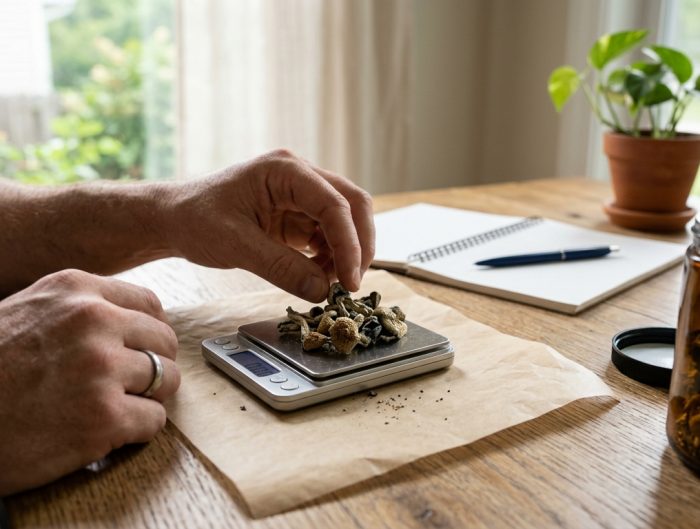
For psilocybin mushrooms, this usually means somewhere between 50 and 200 milligrams of dried material. For LSD, it’s typically between 5 and 15 micrograms. These amounts are small enough that most people can go about their day normally, but they may notice subtle internal shifts: a slightly wider emotional range, a gentle softening of mental tension, or a quiet sense of presence that wasn’t there before.
The scientific framework behind why this might matter for grief centers on serotonin receptor activity, specifically the 5-HT2A receptor. Psychedelics have a strong affinity for this receptor, and even at very low doses, they appear to influence how the brain processes emotional information. The theory is that microdoses gently nudge neural pathways without overwhelming the system, creating small windows of increased emotional flexibility.
It’s important to be honest here: the research on microdosing specifically is still in its early stages. Much of what we know comes from larger-dose psychedelic studies, anecdotal reports, and a growing body of observational data. The mechanism isn’t fully mapped. But the early signals are encouraging enough that serious institutions are paying attention.
Common Substances Used: Psilocybin and LSD
The two most commonly used substances for microdosing are psilocybin (the active compound in certain mushrooms) and LSD (lysergic acid diethylamide). Each has its own profile, and people often develop a preference based on their individual response.
Psilocybin tends to produce effects that people describe as warmer, more emotionally centered, and slightly more introspective. For grief specifically, many people gravitate toward psilocybin because it seems to facilitate a kind of gentle emotional opening. The duration of a microdose is typically four to six hours, with most of the subtle activity concentrated in the first two to three hours.
LSD microdoses tend to feel slightly more cognitive and energizing. Some people report clearer thinking and improved focus, while others find it too stimulating for the tender emotional state that grief often brings. LSD also lasts longer, with subtle effects potentially lingering for eight to twelve hours, which can be a consideration if you’re already dealing with disrupted sleep or emotional fatigue.
James Fadiman’s pioneering work on microdosing protocols established much of the foundational framework people still use today, including the popular one-day-on, two-days-off schedule. His research collected thousands of self-reports and helped establish the basic parameters that most microdosing guides reference.
At Healing Dose, we generally suggest that people new to this practice start with psilocybin, partly because of its shorter duration and partly because its emotional quality tends to align well with grief work. But there’s no single right answer. Your body, your nervous system, and your grief are unique to you.
How Microdosing Affects the Grieving Brain
Grief does something particular to the brain. Neuroimaging studies show that prolonged grief activates the brain’s reward centers in unusual ways, essentially keeping the brain searching for the lost person even when the conscious mind knows they’re gone. This creates a kind of neural tug-of-war: part of you is trying to accept the loss while another part keeps pulling you back toward what was.
This is why grief can feel so physically exhausting. It’s not just emotional. Your brain is burning through enormous amounts of energy trying to reconcile two incompatible realities. The default mode network, which governs self-referential thinking and mental time travel (replaying memories, imagining futures), often becomes hyperactive during grief. You get caught in loops.
The question that researchers are beginning to ask is whether microdosing might offer a way to gently interrupt these patterns without forcing the brain into an entirely different state. The answer, based on what we know so far, is cautiously promising.
Disrupting Negative Thought Loops and Rumination
If you’ve experienced grief, you know rumination intimately. It’s the relentless replaying of memories, the “what if” questions, the mental movies that run on repeat. Rumination isn’t the same as remembering. Remembering can be tender and even comforting. Rumination is compulsive, exhausting, and often painful.
Psychedelics, even at very low doses, appear to reduce activity in the default mode network. This is the brain region most associated with rumination and self-referential thought loops. When the default mode network quiets down even slightly, many people report that their thinking becomes less circular and more open. The memories don’t disappear, but they stop feeling like a trap.
One way to think about this: imagine your grief as a river. Normally, the current pulls you in one direction, over and over, through the same painful stretches. A microdose doesn’t dam the river or redirect it entirely. It’s more like the current slows just enough for you to notice the banks, the sky, the other things that exist alongside your pain.
People who microdose for grief often describe this as a shift from “being consumed by” their loss to “being present with” it. The distinction sounds small, but if you’ve been stuck in the consuming phase, you know how significant that shift can feel.
This doesn’t happen overnight. The changes tend to be cumulative, building over weeks of consistent practice. Some days, you might not notice anything at all. That’s normal and expected. The pattern tends to reveal itself when you look back over a longer period and realize that the loops have loosened, even if you can’t pinpoint exactly when.
Enhancing Neuroplasticity and Emotional Flexibility
Neuroplasticity is your brain’s ability to form new connections and reorganize existing ones. It’s highest during childhood and tends to decrease with age, but it never disappears entirely. Grief, paradoxically, can reduce neuroplasticity further by locking the brain into rigid patterns of thought and emotion.
Psychedelics are among the most potent known promoters of neuroplasticity. Even at microdose levels, compounds like psilocybin appear to encourage the growth of new dendritic connections, essentially helping neurons reach out and form new pathways. Research into psychedelic therapeutics has expanded dramatically, with the global market reflecting growing institutional confidence in these compounds’ potential.
For grief specifically, increased neuroplasticity may support what psychologists call “emotional flexibility,” the ability to hold multiple feelings at once without being overwhelmed by any single one. This is crucial during bereavement because grief is rarely just sadness. It’s anger, guilt, relief, love, confusion, and longing all tangled together. When the brain is rigid, it tends to get stuck on one emotion at a time, often the most painful one. When flexibility increases, you may find yourself able to hold the sadness alongside the gratitude, the anger alongside the love.
This is not the same as “getting over” someone. It’s more like expanding the container that holds your grief so that other parts of your life can exist alongside it. Many people who use microdosing as part of their grief process report that this expanded capacity is the most meaningful change they experience: not less grief, but more room around it.
The Potential Benefits for Mourning and Loss
The word “benefits” deserves some careful framing here. Microdosing isn’t a solution to grief, because grief isn’t a problem to be solved. It’s a natural, necessary response to loss. The potential benefits are better understood as supports: ways of helping the process unfold more naturally when it’s become stuck or overwhelming.
That said, the reports from people who have incorporated microdosing into their grief process are remarkably consistent in certain themes. They describe feeling more connected to their emotions without being drowned by them. They report improved sleep quality, greater patience with themselves, and a renewed ability to find meaning in daily life. These aren’t dramatic shifts. They’re quiet, gradual changes that accumulate over time.
The distinction between “normal” grief and clinical grief matters here, because the potential role of microdosing may differ depending on where you fall on that spectrum.
Managing Symptoms of Prolonged Grief Disorder
Prolonged grief disorder affects an estimated 7 to 10 percent of bereaved individuals. It’s characterized by persistent, intense longing for the deceased, difficulty accepting the death, emotional numbness, a sense that life is meaningless, and significant impairment in daily functioning that persists beyond twelve months.
Conventional approaches for prolonged grief disorder include cognitive behavioral therapy, complicated grief therapy, and sometimes antidepressant medication. These approaches help many people, but not everyone responds well to them. Some people find that antidepressants create a kind of emotional flatness that feels like a different kind of loss: you stop hurting as much, but you also stop feeling the love and connection that make the grief meaningful.
This is where the potential of microdosing becomes particularly interesting. Rather than suppressing emotional responses, microdosing may help modulate them, turning down the volume on the most overwhelming aspects of grief while preserving, or even enhancing, the capacity for connection and meaning-making.
A clinical trial at UVA Health is studying psilocybin specifically for prolonged grief, representing one of the first rigorous investigations into this application. The study uses larger therapeutic doses rather than microdoses, but the underlying mechanisms are related, and the fact that major medical institutions are taking this seriously signals a meaningful shift in how grief is being approached.
For those dealing with prolonged grief, microdosing might serve as a complementary practice alongside therapy rather than a standalone approach. The combination of professional support and gentle neurochemical nudging may create conditions where the grief process can resume its natural course after becoming frozen.
Facilitating Emotional Release Without Overwhelm
One of the cruelest aspects of intense grief is the way it can create emotional paralysis. You know you need to cry, to feel, to process, but the pain is so large that your nervous system shuts it down. You go numb. You dissociate. You go through the motions of daily life while feeling like you’re watching yourself from a distance.
Many people who microdose during bereavement describe a gentle thawing of this frozen state. The emotions become accessible again, but in manageable waves rather than a devastating flood. One common report is that tears come more easily, not in a destabilizing way, but in a releasing way. You cry, and afterward, you feel lighter rather than emptied.
This is consistent with what we know about how psychedelics interact with the amygdala, the brain’s emotional processing center. At sub-perceptual doses, the amygdala’s threat response appears to soften slightly, allowing emotions to surface without triggering the full fight-or-flight cascade that can make grief feel physically dangerous.
The practical experience of this often looks unremarkable from the outside. You might be washing dishes on a microdose day and suddenly feel a wave of tenderness for the person you’ve lost. Instead of the usual tightening in your chest and the urge to push the feeling away, you let it move through you. You might cry for a few minutes. Then you finish the dishes. It sounds simple, but for someone who’s been emotionally locked up for months, these small releases can be profoundly meaningful.
At Healing Dose, we emphasize that this kind of emotional processing works best when it’s paired with intentional reflection. Keeping a simple journal where you note what came up emotionally on microdose days, and on the days between, helps you track patterns and gives the experiences a context that makes them more useful over time.
Risks and Ethical Considerations
Honesty about risks isn’t pessimism. It’s respect for the seriousness of both grief and psychoactive substances. Anyone considering microdosing during bereavement deserves a clear-eyed assessment of what could go wrong, not just what might go right.
Grief makes you vulnerable. Your emotional defenses are down, your judgment may be impaired, and you’re more susceptible to grasping at anything that promises relief. This vulnerability means that the decision to microdose during grief should be made carefully, ideally with the support of a therapist or trusted guide, and never impulsively.
The risks fall into several categories: legal, physiological, psychological, and ethical. None of them are reasons to dismiss microdosing entirely, but all of them deserve serious consideration.
Legal Status and Safety Protocols
The legal landscape for psychedelics is shifting rapidly, but in most jurisdictions, psilocybin and LSD remain controlled substances. Oregon and Colorado have created regulated frameworks for psilocybin use, and several cities have deprioritized enforcement, but personal possession and use still carry legal risk in most of the United States and many other countries. RAND Corporation’s research on psychedelic policy provides a useful overview of how regulation is evolving and the complexities involved.
Beyond legality, there are important safety considerations:
- People taking SSRIs or other serotonergic medications should be extremely cautious, as interactions can be unpredictable and potentially dangerous.
- Individuals with a personal or family history of psychotic disorders (schizophrenia, bipolar disorder with psychotic features) should generally avoid psychedelics entirely, even at microdose levels.
- Grief itself can sometimes mask or trigger underlying mental health conditions, making professional screening valuable before starting any new practice.
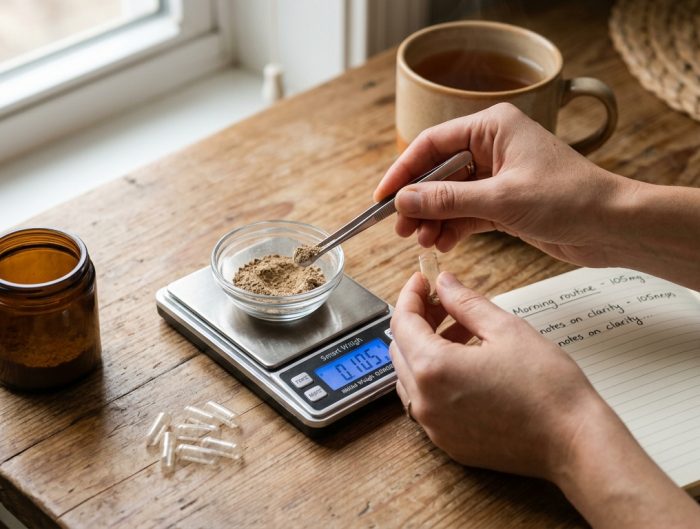
- Dosing accuracy matters enormously. The difference between a microdose and a perceptible dose can be small, and without precise measurement, you risk an experience you didn’t plan for during an already fragile time.
- Starting lower than you think you need to is always the safer approach. You can gradually adjust upward, but you can’t undo a dose that was too large.
The broader conversation about psychedelic safety and public health is ongoing, and staying informed about emerging research and policy changes is part of being a responsible participant in this space.
If you decide to move forward, treat dosing with the same precision you’d bring to any other substance that affects your brain chemistry. Use a reliable scale. Start at the lowest recommended range. Keep notes on timing, amount, and how you feel in the hours and days that follow.
The Importance of Integration and Therapy
This is where many people’s microdosing practice falls short, and it’s the piece we care most about at Healing Dose. Taking a microdose without any framework for processing what comes up is like opening a door and then walking away from it. The value isn’t in the opening itself. It’s in what you do with the space that becomes available.
Integration means actively working with the thoughts, emotions, and insights that arise during and after microdosing. For grief specifically, this might look like:
- Writing in a dedicated grief journal on microdose days and rest days, noting shifts in how you think about your loss
- Working with a grief counselor or therapist who is informed about psychedelic practices (or at minimum, open to discussing them)
- Creating small rituals around your microdose days: lighting a candle for the person you’ve lost, spending time with a meaningful object, or simply sitting quietly with your memories
- Talking honestly with a trusted friend or support group about what you’re experiencing
- Paying attention to your dreams, which often become more vivid and emotionally rich during microdosing protocols
The therapy component is especially important for prolonged grief. Microdosing may help soften the emotional rigidity that keeps you stuck, but a skilled therapist can help you make sense of what surfaces and guide you through the harder passages. The two practices, microdosing and therapy, tend to amplify each other in ways that neither achieves alone.
The Psychedelic Explorer’s Guide remains one of the most thorough resources for understanding both the practical and psychological dimensions of microdosing, and it’s a worthwhile read for anyone considering this path.
One thing we’ve observed repeatedly: the people who get the most from microdosing during grief are the ones who approach it as a practice rather than a product. It’s not something you consume and wait for results. It’s something you participate in actively, with curiosity, patience, and a willingness to sit with discomfort when it arises.
Moving Forward: Is Microdosing Right for Your Journey?
There’s no universal answer to this question, and anyone who tells you otherwise is selling something. Grief is deeply personal, and the tools that help one person may not help another. What we can say is that microdosing represents one option among many, and for some people, it has become a meaningful part of their process.
If you’re considering microdosing as a support during grief, here are some honest questions to sit with. Are you looking for a way to numb your pain, or are you willing to feel more, not less? Do you have a support system, whether a therapist, a trusted friend, or a community, that can help you process what comes up? Are you in a stable enough place emotionally to handle the possibility that microdosing might temporarily intensify certain feelings before they ease? Have you researched the legal status in your area and the potential interactions with any medications you’re taking?
If you answered those questions honestly and still feel drawn to this practice, that’s worth paying attention to. Grief has its own intelligence, and sometimes it points us toward the tools we need.
The path through loss is never straight. It doubles back, it stalls, it surprises you with moments of unexpected beauty alongside the pain. Microdosing won’t shorten that path or make it painless. But for some people, it offers a slightly wider view, a bit more room to breathe, and a gentle reminder that you are more than your grief, even when grief is all you can feel.
If you’re curious about where to begin and want a personalized starting point, you might find it helpful to take the dose quiz. It’s a simple way to identify a gentle starting range based on your goals, your experience level, and your individual sensitivity, so you can approach this thoughtfully and at whatever pace feels right for you.
You don’t have to have it all figured out. You just have to be willing to take the next small step.

You might also like