Choosing the right microdosing schedule can feel like standing at a crossroads with no signposts. You know you want to explore sub-perceptual doses of psilocybin or LSD, but how often should you take them? How many days on, how many days off? Should you follow a famous protocol or trust your own instincts? These are real questions, and the answers aren’t one-size-fits-all. Your body chemistry, your goals, and your daily life all play a role in determining which rhythm works best for you. The good news is that several well-tested frameworks exist, and once you understand the logic behind each one, picking a starting point becomes much less intimidating. Millions of adults in the United States are already microdosing psychedelics with some regularity, and the growing body of anecdotal and early research evidence is helping people make more informed choices than ever before. This guide will walk you through the most popular protocols, help you match a schedule to your personal goals, and give you the tools to track your progress and adjust as you go.
Core Principles of Microdosing Protocols
Before you pick a specific schedule, it helps to understand a few foundational ideas that all protocols share. Think of these as the ground rules that keep your experience safe, subtle, and sustainable over time.
Every credible microdosing protocol is built on the same core assumption: less is more. The goal is not to feel altered. The goal is to feel like yourself, maybe just a slightly better-functioning version. That means the dose should be sub-perceptual, meaning you shouldn’t notice any visual distortions, significant mood swings, or cognitive impairment. If you’re noticing those things, you’ve taken too much, and it’s time to dial back.
Another shared principle is periodicity. No respected protocol recommends daily use without breaks. Your body builds tolerance to psychedelics quickly, and without rest days, the substance loses its subtle supportive qualities. Rest days also serve a reflective purpose: they give you space to notice what, if anything, has shifted in your mood, focus, or general sense of well-being.
Finally, every good protocol assumes you’re paying attention. Microdosing is not a passive activity. It asks you to be an active participant in your own experience, which means journaling, reflecting, and honestly assessing how you feel on dose days, off days, and over the arc of weeks and months. At Healing Dose, we consider this integration piece just as important as the dosing itself.
Finding Your Sub-Perceptual Sweet Spot
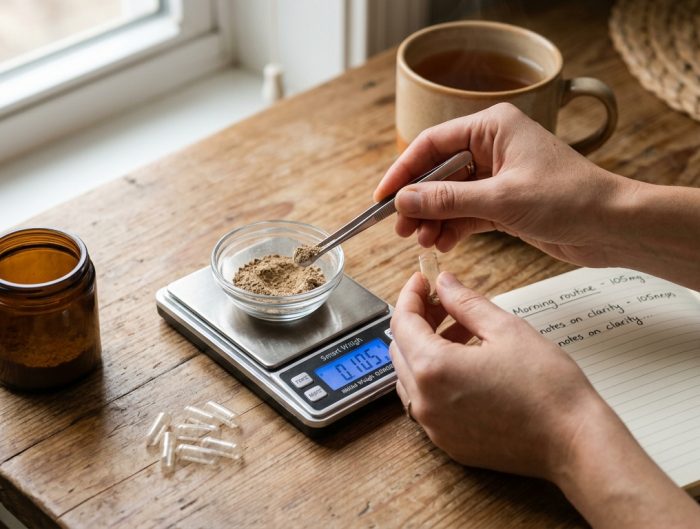
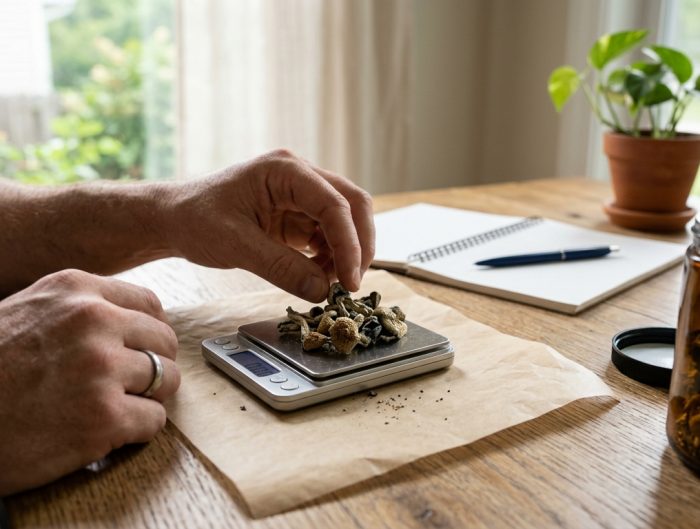
The term “sub-perceptual threshold” simply means the dose at which you don’t consciously perceive any psychedelic effects. For psilocybin mushrooms, this typically falls between 0.05g and 0.25g of dried material. For LSD, it’s usually between 5 and 15 micrograms. But here’s the thing: these ranges are wide because people vary enormously in sensitivity.
Think of it like caffeine. Some people drink a double espresso at 4 p.m. and sleep like babies. Others have half a cup of green tea after noon and lie awake until midnight. Your sensitivity to psilocybin or LSD is similarly individual, influenced by your body weight, metabolism, neurochemistry, and even your gut microbiome.
The smartest approach is to start at the very bottom of the range and work up slowly. If you’re using psilocybin, try 0.05g or 0.1g for your first few doses. Wait at least a full cycle of your chosen protocol before increasing. You’re looking for a gentle hum of energy, maybe a slightly brighter quality to your attention, or a quiet sense of ease. If you feel buzzy, overstimulated, or distracted, you’ve gone too far. Drop back down. There’s no prize for taking more.
It’s worth spending two or three full cycles just finding your dose before you start evaluating whether the protocol itself is working. Changing too many variables at once makes it impossible to know what’s actually helping.
The Importance of Tolerance Breaks
Tolerance to psychedelics develops rapidly, sometimes within just a few days of consecutive use. This is actually a built-in safety feature of these substances: your serotonin receptors downregulate quickly, meaning the same dose produces diminishing responses the more frequently you take it.
This is why every credible microdosing schedule includes off days. Without them, you’d need to keep increasing your dose to feel the same subtle effects, which defeats the entire purpose. Off days allow your receptors to reset so that each dose day starts from a similar baseline.
But tolerance breaks serve another purpose that’s just as important. Off days are when you get to observe the contrast. Did you sleep differently? Were you more patient with your kids? Did you notice a creative idea that wouldn’t have occurred to you otherwise? These quiet changes are often more visible on the days after dosing than on the dose day itself. Many people in the Healing Dose community report that their most meaningful insights come not during dose days but during the reflection periods between them.
Longer tolerance breaks matter too. Most protocols recommend taking a full week or two off after every six to eight weeks of microdosing. This extended pause lets you assess your baseline without the influence of any substance and helps you decide whether to continue, adjust, or take a longer break.
Popular Microdosing Schedules Compared
Now that you understand the principles, let’s look at the specific protocols people actually use. Each has a different rhythm, and each was designed with a slightly different philosophy in mind. None of them is objectively “the best.” The right one is the one that fits your life and your goals.
The Fadiman Protocol (1 Day On, 2 Days Off)
Dr. James Fadiman is often called the godfather of microdosing research, and his protocol is the most widely used starting point for beginners. The structure is simple: take your microdose on Day 1, then take two full days off before your next dose on Day 4. This creates a repeating three-day cycle.
The Fadiman microdosing protocol was designed specifically to help people observe the effects of microdosing with clarity. Day 1 is your dose day. Day 2 is what Fadiman calls the “afterglow” day, when residual effects may still be subtly present. Day 3 is your true baseline day, when you can compare how you feel without any influence from the substance.
This three-day rhythm is excellent for people who want a conservative, well-spaced approach. It’s also great for tracking purposes because the clear on-off-off pattern makes it easy to notice differences between dose days and non-dose days.
A typical Fadiman cycle runs for four to eight weeks, followed by a two-to-four-week break. During that break, you assess whether you want to continue, try a different protocol, or take a longer pause. If you’re brand new to microdosing, this is probably where you should start. It’s gentle, well-documented, and gives you plenty of rest days to observe what’s happening.
The Stamets Stack (4 Days On, 3 Days Off)
Paul Stamets, the mycologist and psilocybin advocate, developed a protocol with a very different rhythm. His approach calls for four consecutive days of microdosing followed by three days off. He also recommends “stacking” the psilocybin with lion’s mane mushroom and niacin (vitamin B3), a combination he believes may support neuroplasticity.
The Stamets protocol is more aggressive than Fadiman’s in terms of dosing frequency. Four days on means your body is exposed to the substance more consistently, which some people find produces a more noticeable cumulative effect over time. The three days off are still enough to prevent significant tolerance buildup, though some users report that the fourth consecutive dose day feels slightly less potent than the first.
The stacking element is what makes this protocol unique. Lion’s mane is a functional mushroom with its own body of research around cognitive support, and niacin causes a flushing response that Stamets theorizes helps distribute the active compounds more broadly through the body. Whether the stack truly enhances the psilocybin’s effects is still an open question, but many people enjoy the combination. Some users have detailed their personal experiences with the Stamets stack, noting improvements in focus and general mood stability over several weeks.
This protocol tends to appeal to people who feel that the Fadiman schedule is too infrequent, or who are specifically interested in cognitive and creative applications. If you try it, pay close attention to how you feel on Days 3 and 4: if you notice irritability, overstimulation, or a subtle physical buzz that feels more distracting than supportive, you may want to shorten the on-period to three days instead of four.
Every Other Day and Intuitive Dosing
Not everyone fits neatly into a named protocol, and that’s perfectly fine. Two other approaches deserve attention: the every-other-day method and intuitive dosing.
The every-other-day schedule is exactly what it sounds like. You microdose on Monday, skip Tuesday, dose on Wednesday, skip Thursday, and so on. This gives you a consistent rhythm with a single rest day between each dose. Some people find this more natural than the Fadiman three-day cycle because it’s easier to remember and creates a steady, predictable pattern. The downside is that you have less contrast between dose days and off days, which can make it harder to evaluate what the microdosing is actually doing for you.
Intuitive dosing is the least structured approach. Instead of following a fixed schedule, you dose only when you feel called to. Maybe that’s twice a week, maybe it’s once every ten days. The key requirement for intuitive dosing is honest self-awareness. You need to be able to distinguish between “I feel like this would genuinely support me today” and “I’m reaching for this because I’m anxious and want a quick fix.” If you can’t make that distinction reliably, a structured protocol is a safer choice.
Most experienced microdosers eventually land somewhere in the intuitive range after spending several months with a structured protocol. They’ve learned their dose, they know their patterns, and they can trust themselves to use the substance responsibly. But if you’re in your first few months, structure is your friend. It removes the guesswork and gives you clean data to work with.
Aligning Your Schedule with Specific Goals
Different goals may call for different rhythms. Someone microdosing to support creative work has different needs than someone exploring it for emotional resilience. Here’s how to think about matching your protocol to your intentions.
Protocols for Cognitive Performance and Focus
If your primary interest is sharper focus, better problem-solving, or enhanced creative output, you’ll want a schedule that gives you consistent dose days during your most demanding work periods. Many people in this category prefer the Stamets protocol or an every-other-day approach because both provide more frequent dose days than the Fadiman method.
Timing matters here too. Most people who microdose for cognitive reasons take their dose first thing in the morning, ideally before or alongside breakfast. Psilocybin can take 30 to 60 minutes to reach its subtle peak, so dosing at 7 or 8 a.m. means you’re likely feeling the gentle lift right as your workday begins. Some people describe this as a slightly sparkly quality to their attention, as if colors are a tiny bit brighter and ideas connect a little more fluidly.
One practical tip: align your dose days with your most cognitively demanding tasks. If you have a big presentation on Thursday and a creative brainstorming session on Monday, consider scheduling your doses for those days specifically (assuming your protocol allows it). There’s no rule that says your dose days have to fall on the same days every week, as long as you’re maintaining adequate rest days between them.
Be honest about whether the microdose is actually helping your focus or just making you feel slightly different. A subtle physical buzz is not the same as genuine cognitive clarity. If you find yourself more distractible on dose days, your dose may be too high, or this particular substance may not be the right fit for your cognitive goals.
Schedules for Emotional Balance and Wellness
If you’re exploring microdosing primarily for emotional steadiness, stress resilience, or a general sense of well-being, the Fadiman protocol is often the better starting point. The extra rest days give your nervous system more time to integrate each dose, and the slower rhythm tends to produce gentler, more gradual shifts in emotional baseline.
People in this category often report that the changes are so quiet they almost miss them. You might notice after three weeks that you didn’t snap at your partner during a stressful conversation, or that you felt a sense of calm during a situation that would normally spike your anxiety. These are the kinds of subtle, cumulative changes that emerge over weeks and months rather than appearing overnight.
Recent survey data suggests that a significant portion of U.S. adults who microdose report doing so for mental health-related reasons, including mood support and anxiety reduction. This tracks with what we hear from the Healing Dose community: emotional well-being is the most commonly cited reason people begin exploring microdosing.
If emotional balance is your goal, pay special attention to your off days. Are you feeling more emotionally reactive on Day 3 of a Fadiman cycle? That might indicate a mild rebound effect, and it’s worth noting in your journal. Are you feeling steadier overall, even on days you don’t dose? That’s a promising sign that the practice is supporting a shift in your baseline rather than just producing a temporary effect.
Tracking Progress and Adjusting the Routine
A microdosing schedule without tracking is like exercising without ever checking whether you’re getting stronger. You might be making progress, but you won’t know for sure, and you’ll have no way to make informed adjustments.
Key Metrics to Monitor in a Dosing Journal
Your journal doesn’t need to be elaborate. A simple notebook or phone app works fine. The key is consistency: record something every day, whether it’s a dose day or an off day. Here are the most useful things to track:
- Dose amount and time of day you took it
- Sleep quality the night before and the night after
- Energy level on a simple 1-to-5 scale
- Mood throughout the day, noting any significant shifts
- Focus and productivity, especially during work or creative tasks
- Physical sensations like a subtle body buzz, tension, or relaxation
- Social interactions and how present or patient you felt
- Any notable creative ideas, insights, or emotional responses
You don’t need to write paragraphs. A few bullet points per day is plenty. The value comes from looking back over two or three weeks and spotting patterns. Maybe you notice that your sleep is consistently better on the night after a dose day. Maybe you realize that your third consecutive dose day (on the Stamets protocol) always feels flat. These patterns tell you what’s working and what needs adjusting.
At Healing Dose, we encourage people to review their journals every two weeks. Sit down with a cup of tea, read through your entries, and ask yourself: am I noticing any consistent changes? Are there any red flags? Do I want to adjust my dose, my timing, or my protocol? This reflective practice is where the real value of microdosing lives. The substance opens a door, but you have to walk through it with awareness.
Recognizing Signs of Over-Scheduling
More is not better. This is one of the most important things to understand about choosing a dosing rhythm. If you’re microdosing too frequently, you’ll likely notice some telltale signs.
The most common indicator is that your dose days start feeling flat or unremarkable. This usually means tolerance has built up and your receptors aren’t responding the way they did initially. The fix is simple: take a longer break. Five to seven days off will usually reset your tolerance.
Another sign is increased irritability or emotional volatility on off days. Some people interpret this as evidence that they need to dose more frequently, but it’s usually the opposite: it suggests your nervous system needs more rest between doses, not less. If you’re feeling worse on your off days than you did before you started microdosing, something needs to change.
Physical signs matter too. Persistent jaw tension, headaches, digestive discomfort, or a jittery feeling that doesn’t resolve within a few hours of dosing are all signals to pause and reassess. These don’t mean microdosing isn’t for you: they mean your current dose or frequency needs adjustment.
The hardest sign to recognize is psychological dependence. If you find yourself anxious about missing a dose day, or if you’re reaching for a microdose every time you feel stressed, that’s a pattern worth examining honestly. A healthy microdosing practice should feel optional, not necessary. You should be able to take a two-week break without significant distress. If you can’t, it’s time to step back and possibly consult with a therapist or integration professional.
Lifestyle Integration and Best Practices
Picking a protocol is only half the equation. The other half is weaving it into your daily life in a way that’s sustainable and supportive. Here are some practical considerations that often get overlooked.
Morning dosing is the most common recommendation, and for good reason. Psilocybin and LSD can both have mildly stimulating qualities, and taking them later in the day may interfere with sleep. Most people find that dosing between 7 and 9 a.m. gives them the full arc of subtle effects during their waking hours without disrupting their nighttime rest.
Your diet on dose days can influence your experience. Taking a microdose on a completely empty stomach may produce a slightly stronger or faster onset, while taking it with food tends to smooth things out. Neither approach is wrong: experiment and see what feels best for your body. Some people find that a light breakfast with healthy fats (like avocado or nuts) creates the most comfortable experience.
Exercise pairs beautifully with microdosing for many people. A morning microdose followed by a run, yoga session, or even a brisk walk can amplify the subtle sense of embodiment and presence that many users describe. If you already have a movement practice, try scheduling your dose days to coincide with your workout days and see if you notice a difference.
Social context matters more than you might expect. Some people find that microdosing on days when they have intense social obligations (like a big family gathering or a high-stakes meeting) creates a sense of heightened sensitivity that feels uncomfortable rather than supportive. Others find that microdosing makes social interactions feel warmer and more connected. Pay attention to your own patterns and adjust accordingly.
The growing interest in psilocybin microdosing research is encouraging, but we’re still in the early stages of understanding how these substances interact with different lifestyles, medications, and health conditions. If you’re taking any prescription medications, especially SSRIs, MAOIs, or lithium, do your research and ideally consult with a healthcare provider before beginning a microdosing practice. Some combinations carry real risks.
One more thing: don’t underestimate the power of setting an intention before each dose. It doesn’t need to be grand or spiritual. Something as simple as “I’d like to be more patient today” or “I’m curious about what I’ll notice” can give your experience a gentle direction. Over time, these small intentions compound into a deeper relationship with your own awareness.
The psychedelic microdosing market continues to expand, and with that growth comes a flood of products, advice, and opinions. Stay grounded. The best protocol is the one you follow consistently, track honestly, and adjust based on your own experience rather than someone else’s enthusiasm. Your body and your life are unique, and your microdosing schedule should reflect that.
Finding Your Own Rhythm
The most important thing to take away from all of this is that your ideal dosing schedule is personal. The Fadiman protocol, the Stamets stack, every-other-day dosing, and intuitive approaches are all valid starting points, but none of them is a final answer. They’re frameworks to begin with, and your own experience will refine them over time.
Start conservative. Track everything. Take your rest days seriously. And be patient with the process: the most meaningful shifts tend to reveal themselves gradually, like noticing one morning that the background hum of anxiety you’ve carried for years has gotten just a little bit quieter.
If you’re unsure where to begin with dosing amounts, a personalized starting point can make the first few weeks feel much less overwhelming. You can take the dose quiz to find a gentle range based on your goals, experience level, and individual sensitivity. It’s a small step, but it’s a thoughtful one, and thoughtfulness is exactly what this practice asks of you.

You might also like