You started microdosing with the best intentions: a little more clarity, a little more presence, maybe a gentler way to move through your days. And then one morning, something felt off. Your heart rate picked up. Colors seemed a bit too vivid. Your thoughts raced instead of settling. That quiet, sub-perceptual nudge you were expecting turned into something distinctly perceptual, and now you’re wondering what went wrong. You’re not alone in this experience, and you’re not doing anything “bad.” Bodies are wonderfully, frustratingly variable, and what works perfectly for one person can feel like too much for another. The good news? This is fixable. This guide will walk you through how to recognize when your microdose has crossed a line, what to do in the moment, and how to adjust your protocol so you can get back to that sweet spot where microdosing actually feels good.
Recognizing the Signs of an Overdose
Before you can fix anything, you need to know what you’re looking for. “Overdose” in the microdosing context doesn’t mean an emergency room visit. It means you’ve taken more than what’s sub-perceptual for your body, and you’re now experiencing something you didn’t plan for. The line between “just right” and “a bit too much” is surprisingly thin, and it shifts depending on dozens of factors: your weight, your metabolism, what you ate that morning, how well you slept the night before.
Many people assume microdosing is foolproof because the doses are so small, typically between 50 and 200 milligrams of dried psilocybin mushrooms, or 5 to 20 micrograms of LSD. But individual sensitivity varies enormously. Think of it like caffeine: some people drink a double espresso at 9 PM and sleep like babies, while others feel jittery after half a cup of green tea. Your neurochemistry is unique, and respecting that is the first step toward a better experience.
A comprehensive guide on psilocybin microdosing notes that most practitioners recommend starting at the lowest possible dose and adjusting upward slowly. If you jumped in at a dose that someone else recommended without accounting for your own sensitivity, that could be exactly why things feel off.
Physical Indicators: Jitteriness and Nausea
Your body often sends the first signals that something isn’t quite right. A subtle physical buzz, the kind that feels like a gentle hum of energy, is within the normal range for many people. But when that hum becomes a vibration you can’t ignore, pay attention.
Common physical signs that your dose is too high include:
- A noticeable increase in heart rate or a “fluttery” feeling in your chest
- Mild to moderate nausea, especially in the first hour after dosing
- Jaw tension or clenching you didn’t notice until your teeth started aching
- Restless legs or an inability to sit still
- Dilated pupils (check a mirror if you’re unsure)
- Temperature fluctuations: feeling unusually warm or getting chills
Nausea is one of the most frequently reported signs, particularly with psilocybin mushrooms. The chitin in mushroom cell walls can be tough on the stomach, and higher doses amplify this. If you’re consistently feeling queasy after dosing, that’s your body telling you something concrete.
I remember one morning early in my own practice when I noticed my hands were trembling slightly as I typed. It wasn’t dramatic, but it was there, a fine motor tremor that felt like I’d had four cups of coffee on an empty stomach. That was my signal. The dose was too high for that particular day, given that I’d also skipped breakfast and slept poorly.
Cognitive Red Flags: Hyper-focus and Anxiety
The mental signs can be trickier to catch because they sometimes masquerade as “working really well.” Hyper-focus, for instance, might feel productive at first. You sit down to work and suddenly you’re deeply absorbed, unable to pull yourself away from a task, losing track of time not in a flow-state way but in a rigid, tunnel-vision way.
Other cognitive red flags include racing thoughts that feel hard to slow down, a heightened emotional sensitivity where small frustrations feel disproportionately large, and a buzzy, slightly anxious quality to your thinking. You might find yourself ruminating on a conversation from three days ago or feeling an inexplicable sense of urgency about nothing in particular.
Anxiety is one of the most common complaints when microdosing feels overwhelming. A 2025 microdosing report found that a significant portion of microdosers reported anxiety or overstimulation as unwanted side experiences, particularly during the adjustment phase. This doesn’t mean microdosing isn’t for you. It often just means your dose needs fine-tuning.
The key distinction is between “slightly sparkly” and “uncomfortably wired.” The first is a sign your microdose is working within the sub-perceptual range. The second is a sign you’ve crossed over.
The Threshold Effect: When Sub-perceptual Becomes Perceptual
The whole point of microdosing is to stay below the threshold of conscious perception. You’re not supposed to “feel” anything in the way you’d feel a full dose. The goal is quiet changes: a slightly better mood, a touch more creativity, a gentle shift in how you relate to your day. When you start noticing visual changes, even subtle ones like colors looking more saturated or patterns seeming more interesting, you’ve crossed into perceptual territory.
This threshold is different for everyone, and it can even change for the same person from week to week. Hormonal cycles, stress levels, recent meals, hydration status, and even seasonal light exposure can shift where your threshold sits. That’s why a dose that felt perfect last Tuesday might feel like too much this Thursday.
At Healing Dose, we talk a lot about this concept because it’s one of the most misunderstood aspects of microdosing. The “right” dose isn’t a fixed number you find once and never change. It’s a moving target that requires ongoing attention and honest self-assessment.
If you notice any perceptual shifts, visual, auditory, or tactile, that’s a clear sign to reduce your dose. You’re not microdosing anymore at that point; you’re taking a low dose, and those are meaningfully different experiences with different risk profiles.
Immediate Strategies to Manage Intensity
So you’ve taken your microdose, and it’s hitting harder than expected. Maybe you’re already at work, or you have responsibilities you can’t step away from. What do you do right now? The first thing to know is that this will pass. Psilocybin microdoses typically peak within 60 to 90 minutes and resolve within 4 to 6 hours. LSD microdoses last longer, sometimes 8 to 10 hours, but the intensity usually mellows after the first few hours.
You have more control over this experience than you think. The strategies below aren’t magic, but they’re practical tools that can meaningfully reduce discomfort and help you move through the rest of your day.
Grounding Techniques for Sensory Overload
Grounding is exactly what it sounds like: bringing your awareness back to your physical body and immediate surroundings. When a microdose feels too strong, your nervous system can shift into a mildly activated state, and grounding techniques help signal safety to your brain.
The simplest approach is the 5-4-3-2-1 technique. Name five things you can see, four you can touch, three you can hear, two you can smell, and one you can taste. This sounds almost too simple to work, but it forces your attention out of anxious thought loops and into sensory reality.
Cold water is another powerful grounding tool. Run your wrists under cold water for 30 seconds, or hold an ice cube in your palm. The sharp sensory input gives your nervous system something concrete to process, which can interrupt the feeling of being “untethered” that sometimes comes with a dose that’s too high.
Slow, deliberate breathing works well too. Try breathing in for four counts, holding for four, and exhaling for six. The extended exhale activates your parasympathetic nervous system, the “rest and digest” branch that counteracts the fight-or-flight response. Do this for two to three minutes, and you’ll likely feel a noticeable shift.
If you can step outside, do it. Bare feet on grass or soil, sunlight on your face, fresh air in your lungs: these aren’t just hippie platitudes. They’re genuine nervous system regulators that can bring you back to baseline faster.
Hydration and Nutrition to Stabilize Metabolism
An empty stomach amplifies the absorption of most substances, psilocybin included. If you dosed without eating, that could be a major reason the experience feels more intense than expected. Eating something can help moderate the experience, though it won’t eliminate it entirely.
Reach for foods that are easy to digest and contain some protein and fat. A banana with peanut butter, a handful of nuts, some toast with avocado: these are all good choices. Avoid anything too heavy or greasy, which could worsen nausea.
Hydration matters more than most people realize. Dehydration can amplify anxiety, increase heart rate, and make you feel generally worse, all of which compound the discomfort of a too-strong microdose. Sip water steadily throughout the day. Adding a pinch of sea salt or an electrolyte packet can help if you’ve been sweating or haven’t been drinking enough.
Some people find that herbal teas, particularly chamomile or lemon balm, help take the edge off. These herbs have mild calming properties and the ritual of making tea itself can be grounding. Avoid anything caffeinated, though, which brings us to a topic we’ll cover in more detail later.
Changing Your Environment and Stimuli
Your environment has a massive influence on how a microdose feels. A noisy, chaotic office with fluorescent lighting and back-to-back meetings is going to amplify any overstimulation. If you can change your setting, even slightly, do it.
Put on noise-canceling headphones with calm music or nature sounds. Step into a quieter room. Go for a short walk. If you’re at a desk, minimize the number of browser tabs you have open and reduce visual clutter. These might seem like small adjustments, but when your nervous system is already running hot, reducing sensory input can make a real difference.
Avoid doom-scrolling social media or consuming intense content like news or horror. Your emotional sensitivity is heightened right now, and negative or stressful content will hit harder than usual. Choose something neutral or gently positive instead.
If you have the option to work from home or take a personal hour, this is a good time to use it. There’s no shame in recognizing that today’s dose was a bit much and adjusting your plans accordingly. That’s not failure; that’s self-awareness in action.
Adjusting Your Microdosing Protocol
Once you’ve gotten through the immediate discomfort, the real work begins: figuring out how to prevent this from happening again. Protocol adjustment is where most people find their answer, and it usually involves changing either how much you’re taking, how often you’re taking it, or both.
Recalibrating Your Dosage Volume
The most straightforward fix is to lower your dose. If you’ve been taking 150 milligrams of dried psilocybin mushrooms, try dropping to 100 milligrams or even 75 milligrams. If you’re working with LSD, move from 10 micrograms down to 5 or 7. These might seem like tiny adjustments, but at microdose levels, small changes have outsized impacts.
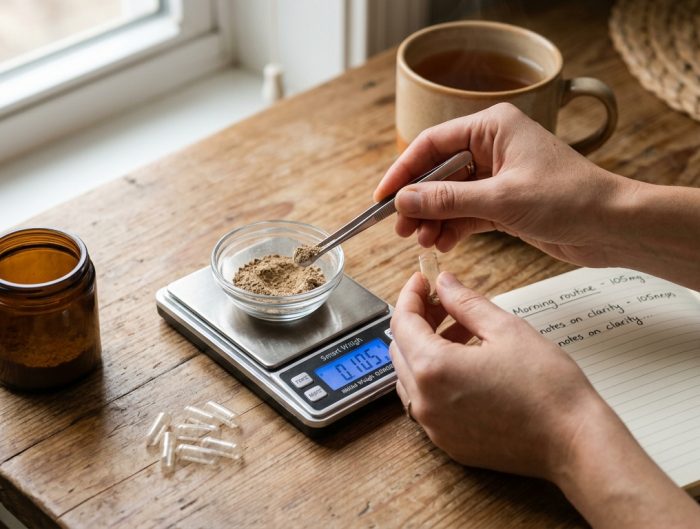
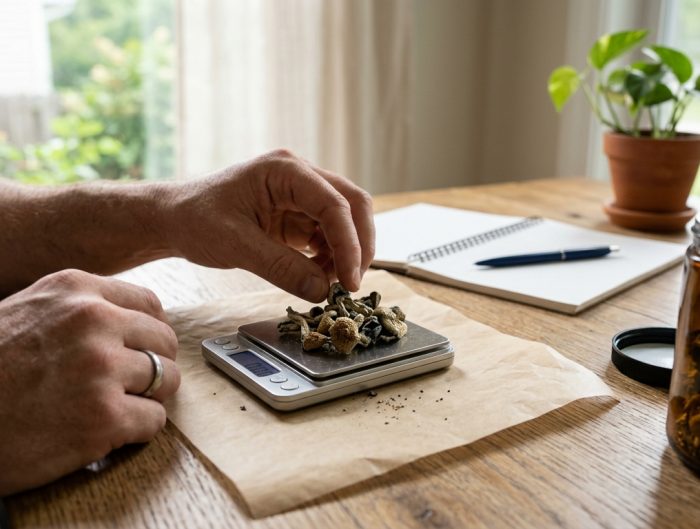
A kitchen scale that measures to 0.01 grams is essential here. Eyeballing doses or using the “pinch” method is a recipe for inconsistency. Invest in a decent scale; it’s one of the most important tools in your microdosing practice.
If you’re using whole dried mushrooms, potency can vary significantly even within the same batch. The cap, stem, and base of a single mushroom can contain different concentrations of psilocybin. Grinding your entire batch into a fine powder and mixing it thoroughly before measuring doses helps standardize potency across your supply. This is sometimes called “homogenizing” your material, and it’s one of the simplest ways to reduce dose-to-dose variability.
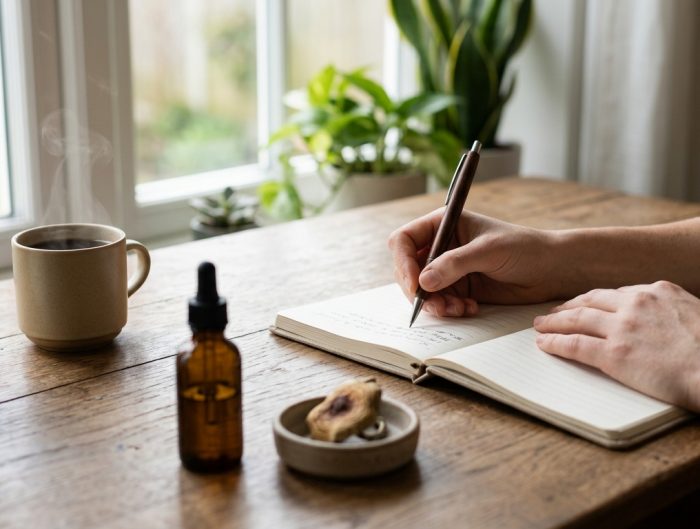
Keep a journal of your doses and how each one feels. Over two to three weeks, patterns will emerge. You might discover that 100 milligrams is your ceiling, or that 120 milligrams works fine on days when you’ve slept well and eaten breakfast but feels like too much on days when you haven’t. This kind of personalized data is invaluable, and it’s something no one else can give you.
Evaluating Frequency and Off-Days
Dose size isn’t the only variable. How often you dose matters just as much. The most common protocols include the Fadiman protocol (one day on, two days off), the Stamets Stack (four days on, three days off), and various custom schedules people develop based on their own experiences.
If you’re dosing too frequently, even small amounts can accumulate in your system and create a building sense of overstimulation. Psilocybin doesn’t stay in your body for long, but the neurological shifts it initiates can take time to fully integrate. Your off-days aren’t wasted days; they’re when your brain processes and consolidates the subtle shifts from your dose days.
Try adding an extra off-day between doses and see how that changes your experience. Some people find that dosing just once or twice a week gives them all the benefits without any of the overstimulation. There’s no universal “correct” frequency, only what works for your particular brain and body.
At Healing Dose, we emphasize that integration, the process of reflecting on and absorbing your experiences, happens primarily on off-days. Journaling for even five minutes on your non-dose days can help you track patterns and notice whether your current frequency is supporting you or pushing you past your comfort zone.
The Role of Set and Setting in Microdosing Success
“Set and setting” is a concept borrowed from full-dose psychedelic work, but it applies to microdosing more than most people realize. “Set” refers to your mindset: your emotional state, expectations, and mental health on the day you dose. “Setting” refers to your physical environment and social context.
A microdose taken on a calm Saturday morning before a walk in the park will feel very different from the same dose taken on a stressful Monday before a performance review. Your nervous system’s baseline state shapes how the substance interacts with your brain. If you’re already anxious, a microdose can amplify that anxiety rather than soothing it.
This is one of the most common reasons microdosing feels excessive: not because the dose itself is wrong, but because the context is wrong. Research on psychedelic use consistently highlights that psychological set and environmental setting significantly influence subjective experiences, even at very low doses.
Before dosing, take a moment to check in with yourself. How are you feeling emotionally? What does your day look like? Are you heading into situations that might be stressful or emotionally charged? If the answer is yes, consider whether today is really the right day to dose. Skipping a scheduled dose because the conditions aren’t right isn’t a failure of discipline; it’s a sign of mature, intentional practice.
Some people develop a brief morning ritual around their microdose: a few minutes of quiet breathing, a journal entry about their intention for the day, a moment of gratitude. This isn’t about being precious or overly ceremonial. It’s about creating a consistent, calm container that supports a positive experience. The few minutes you invest in this practice can make the difference between a day that feels subtly enhanced and a day that feels uncomfortably intense.
Your social setting matters too. If you’re around people who make you feel tense or self-conscious, those feelings will be amplified. If you’re in a supportive, relaxed environment, the microdose is more likely to feel easeful. Pay attention to these patterns and factor them into your scheduling decisions.
External Factors That Amplify Effects
Your microdose doesn’t exist in a vacuum. It interacts with everything else in your body and your day. Some of the most common reasons a microdose hits too hard have nothing to do with the dose itself and everything to do with what else is going on in your system.
Caffeine and Other Stimulant Interactions
This is the one that catches the most people off guard. If you’re a regular coffee drinker and you add a microdose on top of your usual morning caffeine, you’re combining two stimulating substances. Psilocybin, even at micro-levels, can increase sympathetic nervous system activity: slightly elevated heart rate, increased alertness, heightened sensory processing. Caffeine does all of those things too. Together, they can push you past your comfort threshold.
Try reducing your caffeine intake on dose days. If you normally drink two cups of coffee, try one, or switch to green tea, which provides a gentler, more sustained form of alertness. Some people find they need to eliminate caffeine entirely on dose days to avoid jitteriness.
Other stimulants to watch for include pre-workout supplements, certain nootropics, nicotine, and even high-sugar foods that cause a rapid blood sugar spike followed by a crash. If you’re taking any supplements or medications, research their interactions carefully. SSRI antidepressants, for example, can interact with psilocybin in complex ways that alter both the intensity and quality of the experience.
A RAND Corporation analysis of psychedelic substance use emphasizes the importance of understanding substance interactions, particularly for people who are also taking prescription medications. If you’re on any medication, consult with a healthcare provider who is knowledgeable about psychedelic interactions before beginning or continuing a microdosing practice.
Sleep Deprivation and Baseline Stress Levels
Sleep deprivation is one of the most potent amplifiers of microdose intensity, and it’s also one of the most overlooked. When you haven’t slept well, your nervous system is already in a compromised state. Your emotional regulation is diminished, your anxiety threshold is lower, and your body is running on stress hormones. Adding a microdose to this mix is like turning up the volume on a speaker that’s already distorting.
If you slept fewer than six hours, seriously consider skipping your dose that day. The benefits of microdosing are cumulative and build over weeks and months. Missing one dose to respect your body’s current state will not derail your progress. Forcing a dose on a depleted system, on the other hand, can create a negative association that makes you want to quit entirely.
Chronic stress operates similarly. If you’re going through a particularly difficult period, whether from work, relationships, health concerns, or grief, your baseline nervous system activation is already elevated. A microdose on top of chronic stress can feel destabilizing rather than supportive. This doesn’t mean you can’t microdose during hard times, but it does mean you might need to use a lower dose and be more selective about which days you choose.
Recent reporting has highlighted how people are increasingly combining microdosing with other wellness approaches, which underscores the importance of understanding how multiple interventions interact with your baseline state. More isn’t always better, and stacking practices without understanding their combined impact can lead to exactly the kind of overstimulation you’re trying to avoid.
Knowing When to Take a Tolerance Break
Sometimes the best thing you can do is stop for a while. A tolerance break, typically two to four weeks away from microdosing, allows your serotonin receptors to reset and gives you a clearer picture of your baseline state without any substance influence.
There are several signs that a break might be in order. If you’ve been microdosing for more than two or three months without a pause, if you’ve been gradually increasing your dose to get the same effect, if you’re feeling generally overstimulated or emotionally raw, or if microdosing has started to feel like an obligation rather than a choice, it’s probably time to step back.
A break isn’t a sign of failure. It’s actually a built-in feature of responsible microdosing practice. Most established protocols recommend periodic breaks, and many experienced practitioners find that the weeks after a break are when they experience the most noticeable benefits.
During your break, keep journaling. Notice how you feel on day one, day seven, day fourteen. Are you more anxious without the microdose, or about the same? Do you notice any withdrawal-like experiences, or do you feel fine? This information is gold. It tells you whether your microdosing practice is genuinely supporting you or whether it’s become something you’re doing out of habit.
Use your break to reflect on your protocol so far. What doses felt best? What days of the week worked well? Were there patterns in the days that felt like too much? When you return to microdosing after your break, you’ll have a clearer sense of what to adjust.
Some people discover during a break that they don’t actually want to go back, and that’s perfectly fine. Microdosing is a tool, not a lifestyle. If you’ve gotten what you needed from it, there’s no rule that says you have to continue. Others return from a break feeling refreshed and more attuned to their body’s signals, ready to re-engage with a refined protocol that works better than before.
The most important thing is to approach your practice with honesty and flexibility. Your body and circumstances will change over time, and your microdosing practice should change with them. What felt like too much today might feel perfect in a month with a few small adjustments, or it might be a sign that you need a different approach entirely. Either way, you’re learning something valuable about yourself, and that’s the whole point.
If you’re unsure where to start with adjusting your dose, or if you’re just beginning and want to avoid the trial-and-error phase as much as possible, a personalized starting point can help. Take the dose quiz to find a gentle starting range based on your goals, experience, and sensitivity, so you can approach your practice with a little more confidence and a lot less guesswork.

You might also like