Two ancient plant medicines, both capable of profoundly shifting your inner world, yet remarkably different in how they get you there. If you’ve been weighing ayahuasca vs psilocybin, you’re asking a question that thousands of people wrestle with every year, and it’s a deeply personal one. The right choice depends on your intentions, your circumstances, your psychological readiness, and what kind of container – ceremonial, clinical, or solo – feels most aligned with where you are right now. Neither substance is inherently “better.” They serve different purposes, unfold over different timescales, and ask different things of you. This guide is here to help you understand those differences clearly, so you can approach whichever path you choose with the respect and preparation it deserves. We’ll walk through the origins, the experiences themselves, the therapeutic applications, the practical safety considerations, and how to carry whatever you discover back into your daily life.
The Core Philosophy and Origins of Ayahuasca and Psilocybin
Understanding where these substances come from is more than a history lesson. The traditions surrounding each one shape how people use them today, what kind of preparation is expected, and what the experience tends to feel like. Both have roots stretching back thousands of years, but they emerged from very different cultural soils.
The Amazonian Traditions of the Ayahuasca Vine
Ayahuasca is not a single plant. It’s a brew made primarily from two ingredients: the Banisteriopsis caapi vine and the leaves of the Psychotria viridis shrub (sometimes called chacruna). The vine contains monoamine oxidase inhibitors (MAOIs), which allow the DMT in the chacruna leaves to become orally active. Without the vine, the DMT would be broken down in your gut before it ever reached your brain. This biochemical partnership is remarkable, and indigenous peoples of the Amazon basin discovered it centuries – possibly millennia – ago.
The brew has been central to spiritual and medicinal practices among dozens of indigenous groups across Peru, Brazil, Colombia, and Ecuador. Traditionally, it was consumed under the guidance of a curandero or shaman, often in nighttime ceremonies accompanied by icaros (sacred songs). The purpose was rarely recreational. People sought it for physical ailments, spiritual guidance, communication with ancestors, and community decision-making.
In the 20th century, syncretic religious movements like Santo Daime and the União do Vegetal brought ayahuasca into more structured church-like settings in Brazil. These organizations helped bridge the gap between indigenous use and modern Western interest. By the 2010s, ayahuasca retreat centers had proliferated across South America and beyond, drawing people from around the world seeking relief from depression, addiction, and existential distress.
The cultural context matters because ayahuasca was never designed to be taken alone. It evolved within a relational framework: a skilled guide, a community, a set of dietary and behavioral restrictions, and a cosmology that frames the experience as an encounter with intelligent plant spirits. Stripping away that context doesn’t necessarily make the experience dangerous, but it does change its character significantly.
The Ancient History and Modern Science of Magic Mushrooms
Psilocybin mushrooms have their own deep history, though the archaeological record is more fragmented. Stone sculptures and cave paintings in Central America suggest ritual use of mushrooms dating back at least 3,000 years. The Aztecs called them teonanácatl, meaning “flesh of the gods,” and used them in ceremonies overseen by priests and healers.
Spanish colonizers suppressed mushroom use in Mesoamerica, driving it underground for centuries. It resurfaced in Western consciousness in 1957 when R. Gordon Wasson published his account of a Mazatec mushroom ceremony led by María Sabina in Oaxaca, Mexico. That article, published in Life magazine, triggered a wave of scientific and countercultural interest that eventually led to psilocybin’s synthesis by Albert Hofmann and its inclusion in early psychiatric research.
After decades of prohibition following the Controlled Substances Act of 1970, psilocybin research experienced a dramatic revival starting around 2006, when Johns Hopkins University published its landmark study on mystical experiences induced by psilocybin. Since then, clinical trials have expanded rapidly. As of 2026, psilocybin-assisted therapy has received FDA breakthrough therapy designation for treatment-resistant depression and is being studied for PTSD, anorexia, OCD, and end-of-life anxiety.
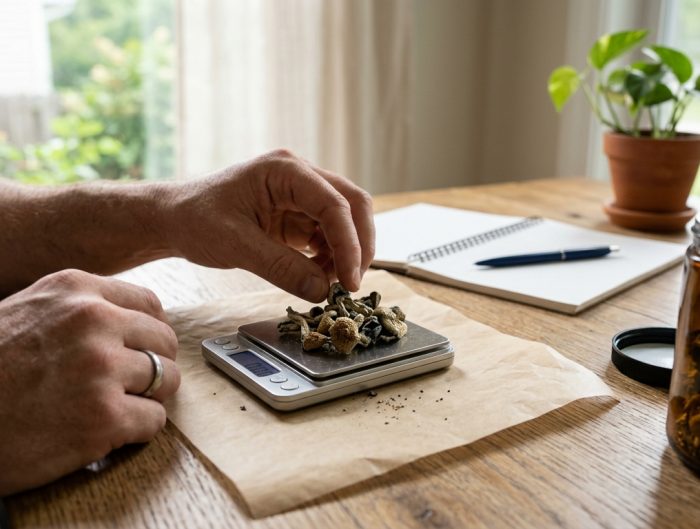
Unlike ayahuasca, psilocybin has been embraced by the Western medical establishment in a way that makes it more accessible through clinical channels. It’s also far more versatile in terms of dosing. People use it in full ceremonial doses (3-5 grams of dried mushrooms), moderate doses for guided therapy sessions, and sub-perceptual microdoses (typically 0.05-0.3 grams) for ongoing personal growth. This flexibility is one of psilocybin’s greatest strengths and one reason it has become the more commonly explored option for people new to psychedelic work.
Comparing the Psychedelic Experience
This is where the rubber meets the road for most people. You want to know what it actually feels like, how long it lasts, and what you should expect physically. The two substances produce meaningfully different experiences, even though they both fall under the “psychedelic” umbrella.
Duration, Intensity, and the Role of the Ego
A psilocybin experience typically lasts 4 to 6 hours, with the peak occurring roughly 90 minutes to 2 hours after ingestion. The onset is gradual: you might notice a subtle physical buzz, a shift in how colors look, or a sense that your thoughts are moving in unusual patterns. At moderate to high doses, ego dissolution can occur, meaning the boundary between “you” and “everything else” temporarily softens or disappears. This can be profoundly meaningful or deeply unsettling, depending on your preparation and mindset.
Ayahuasca ceremonies, by contrast, typically last 4 to 8 hours, though the active psychedelic phase is often concentrated in waves. The brew usually takes 20 to 60 minutes to take hold, and the experience tends to come in surges rather than a single arc. Many people describe distinct “chapters” within a single ceremony, with periods of intense visionary content alternating with quieter, more reflective stretches.
The ego dissolution that occurs with ayahuasca often feels different from psilocybin’s version. Where psilocybin can dissolve the ego into a kind of oceanic unity, ayahuasca frequently presents ego confrontation: you may encounter aspects of yourself you’ve been avoiding, relive difficult memories, or feel as though an external intelligence is showing you things you need to see. This is why many people describe ayahuasca as “the teacher” or “the grandmother.” It doesn’t just open a door; it often decides what’s behind it.
Visual and Auditory Hallucinations vs. Internal Narratives
Psilocybin is known for producing rich visual phenomena: geometric patterns, color enhancement, breathing or morphing surfaces, and at higher doses, fully immersive visual landscapes. Many people also report heightened emotional sensitivity, a sense of interconnectedness, and what researchers call “oceanic boundlessness.” The experience tends to be more inward-facing at higher doses and more perceptual at lower ones.
Ayahuasca’s visual character is often described as more narrative and symbolic. People frequently report seeing jaguars, serpents, geometric patterns reminiscent of indigenous art, and scenes that feel like they carry specific messages. The visionary content can feel less like “hallucination” and more like “being shown something.” Auditory phenomena are also common during ayahuasca ceremonies, partly because the icaros sung by the facilitator actively shape the experience.
The distinction isn’t absolute. Some people have deeply narrative psilocybin experiences, and some ayahuasca ceremonies are more abstract and sensory. But the general tendency holds: psilocybin leans toward emotional and perceptual openness, while ayahuasca leans toward confrontation, revelation, and what many describe as a dialogue with something larger than themselves.
The Physical Toll: Purging vs. Body Load
Here’s something nobody glamorizes but everyone should know about. Ayahuasca frequently induces vomiting, diarrhea, or both. In traditional contexts, this purging is considered an essential part of the process – a physical release of emotional or spiritual toxicity. It’s not a side effect; it’s the point, at least partly. Some people purge early and then settle into a clearer experience. Others purge repeatedly throughout the ceremony. If the idea of vomiting in a room full of strangers gives you pause, that’s a legitimate factor to weigh.
Psilocybin’s physical profile is generally milder but not nonexistent. Common experiences include nausea (especially during the come-up), jaw tension, a sense of heaviness or restlessness in the body, and sometimes stomach discomfort. These tend to fade as the experience deepens. Techniques like making tea instead of eating dried mushrooms can reduce nausea significantly.
Both substances elevate heart rate and blood pressure modestly, which is worth knowing if you have cardiovascular concerns. Neither is considered physically toxic at typical doses, but the physical demands of an ayahuasca ceremony – sitting upright for hours, purging, sometimes in tropical heat – are substantially greater than sitting quietly in a comfortable room with psilocybin.
Therapeutic Benefits and Spiritual Healing
Both substances have shown remarkable promise for supporting mental health, but they tend to be studied and used for somewhat different conditions. Understanding these differences can help you match your intentions to the right approach.
Treating Depression and Anxiety with Psilocybin
Psilocybin has become the most rigorously studied psychedelic compound in clinical settings. Multiple randomized controlled trials have demonstrated significant reductions in depression scores following one or two guided psilocybin sessions, with benefits lasting weeks to months. The 2022 and 2023 trials at Johns Hopkins, Imperial College London, and NYU have been followed by larger Phase III trials, and as of 2026, several countries are moving toward regulated access.
What makes psilocybin particularly interesting for depression is its apparent ability to disrupt the default mode network (DMN), the brain circuit associated with self-referential thinking, rumination, and the sense of a fixed self. In depression, the DMN tends to be hyperactive, trapping people in repetitive negative thought loops. Psilocybin appears to temporarily quiet this network, allowing new patterns of connectivity to emerge.
For anxiety, particularly the existential anxiety experienced by people facing terminal illness, psilocybin has shown profound and lasting benefits. Participants in these studies frequently describe a reduced fear of death and a renewed sense of meaning, even months after a single session. These aren’t vague self-reports; they’re measured using validated psychological scales.
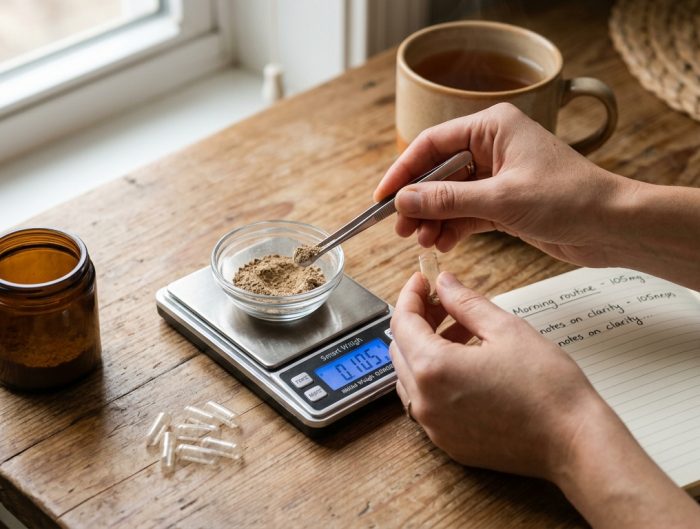
At Healing Dose, we often hear from people who started with microdosing psilocybin as a gentler entry point before considering larger doses. This stepwise approach makes sense. Microdosing – taking sub-perceptual amounts on a structured schedule – can help you build familiarity with how psilocybin interacts with your particular neurochemistry. Some people find that microdosing alone provides the subtle shifts they need: a quiet lift in mood, slightly more flexibility in their thinking, a gentle reduction in the volume of anxious thoughts.
Addressing Deep Trauma and Addiction through Ayahuasca
Ayahuasca’s therapeutic reputation centers on its capacity for deep psychological excavation. While it hasn’t received the same level of clinical trial attention as psilocybin (partly because standardizing a multi-plant brew is far more complex than standardizing a single molecule), observational studies and growing clinical interest paint a compelling picture.
Research from institutions like the University of São Paulo and ICEERS (International Center for Ethnobotanical Education, Research, and Service) has found significant reductions in depression, anxiety, and hopelessness following ayahuasca use. A 2024 meta-analysis of ayahuasca studies in addiction found that participants showed meaningful reductions in alcohol, tobacco, and cocaine use, often sustained at 6-month follow-ups.
The mechanism may differ from psilocybin’s. Ayahuasca’s combination of DMT and MAOIs produces a longer, more complex pharmacological interaction. The extended duration and the often confrontational nature of the experience may be particularly suited to processing deeply buried trauma. Many participants describe reliving difficult childhood experiences from a new perspective, feeling emotions they’d suppressed for decades, or gaining sudden clarity about patterns of self-destructive behavior.
This doesn’t mean ayahuasca is the only path for trauma work, or that it’s appropriate for everyone with a trauma history. In fact, people with severe PTSD or dissociative disorders should be especially cautious, as the intensity of the experience can sometimes retraumatize rather than resolve. The quality of the facilitation matters enormously here.
Ceremonial Context vs. Clinical and Solo Use
How you take a psychedelic substance shapes the experience just as much as what you take. The setting, the people around you, and the framework of meaning you bring to the experience all play critical roles.
The Importance of Shamanic Guidance in Ayahuasca Rituals
Ayahuasca is almost always consumed in a group ceremony led by a facilitator, whether that’s a traditional indigenous shaman, a trained Western facilitator, or a leader within a syncretic church. The ceremony typically follows a structure:
- Participants gather in a maloca (ceremonial space) or similar setting
- The facilitator blesses and distributes the brew
- Participants drink and lie down or sit in silence
- The facilitator sings icaros, plays instruments, or moves through the space attending to individuals
- The ceremony closes with sharing, food, or quiet rest
The facilitator’s role is not passive. A skilled guide reads the energy of the room, adjusts their singing to support or calm participants, and intervenes if someone is in distress. They also typically conduct screening interviews beforehand, enforce dietary restrictions (the “dieta”), and provide integration support afterward.
This structure provides enormous psychological safety, but it also means you’re placing significant trust in another person during one of the most vulnerable experiences of your life. The rise in ayahuasca tourism has brought legitimate concerns about undertrained or unethical facilitators. Doing thorough research before choosing a retreat center or ceremony is not optional – it’s essential.
The Versatility of Psilocybin: From Microdosing to Therapeutic Settings
Psilocybin offers a much wider range of contexts. You can work with it in:
- Clinical settings with trained therapists (increasingly available in 2026 in Oregon, Colorado, Australia, and parts of Canada and Europe)
- Guided ceremonial settings with experienced sitters
- Solo or small-group settings with a trusted friend as a sitter
- Microdosing protocols taken independently at home
This versatility is one reason comparing ayahuasca and psilocybin often comes down to practical considerations as much as pharmacological ones. If you don’t have access to a reputable ayahuasca ceremony or can’t travel to South America, psilocybin may simply be more accessible. If you prefer to start small and build gradually, microdosing offers an entry point that ayahuasca simply doesn’t have – you can’t meaningfully microdose ayahuasca due to its complex pharmacology.
Clinical psilocybin sessions typically involve preparation meetings, a guided 6-8 hour session with trained therapists present, and follow-up integration sessions. This model combines the safety of professional oversight with the depth of a full-dose experience. For people who want structure but aren’t drawn to the spiritual or ceremonial framework of ayahuasca, this can be an ideal fit.
At Healing Dose, we emphasize that even solo microdosing benefits from structure. Keeping a journal, following a consistent protocol (like the Fadiman protocol of one day on, two days off), and regularly reflecting on what you notice creates a container for the experience, even without a shaman or therapist present.
Safety, Legal Status, and Contraindications
Both substances carry real risks, and being honest about those risks is part of approaching them responsibly. The safety profiles differ in important ways.
Dietary Restrictions and Medication Interactions
Ayahuasca’s MAOI component creates the most significant safety concern. MAOIs interact dangerously with a wide range of substances, including:
- SSRIs and SNRIs (common antidepressants like sertraline, fluoxetine, venlafaxine): combining these with MAOIs can cause serotonin syndrome, a potentially fatal condition
- Tyramine-rich foods (aged cheese, cured meats, fermented foods, certain beans): can cause dangerous blood pressure spikes
- Stimulants, including MDMA, amphetamines, and some decongestants
- St. John’s Wort, 5-HTP, and certain other supplements
This is why reputable ayahuasca centers require participants to taper off SSRIs weeks before a ceremony and follow strict dietary guidelines. If a center doesn’t ask about your medications, that’s a serious red flag.
Psilocybin’s drug interaction profile is considerably simpler. It does not contain MAOIs, so the tyramine concern doesn’t apply. However, SSRIs can blunt psilocybin’s subjective effects, and there are theoretical concerns about combining psilocybin with lithium (reports of seizures exist, though data is limited). If you’re on any psychiatric medication, consulting with a knowledgeable healthcare provider before working with either substance is strongly recommended.
Legal status varies dramatically by location. As of 2026, psilocybin is legally accessible for therapeutic use in Oregon and Colorado (USA), with decriminalization in several other US cities. Australia approved psilocybin-assisted therapy in 2023. Canada allows access through Special Access Programs. Ayahuasca occupies a grayer legal space: it’s legal in Peru, Brazil, and several other South American countries, and religious exemptions exist in some jurisdictions. In most of the US and Europe, both substances remain controlled, though enforcement varies.
Psychological Readiness and Aftercare Support
Not everyone is in the right place psychologically for a full-dose psychedelic experience. This applies to both substances, but the stakes feel higher with ayahuasca due to the intensity and duration of the experience.
People with a personal or family history of psychotic disorders (schizophrenia, bipolar I with psychotic features) are generally advised against using either substance, as psychedelics can trigger or worsen psychotic episodes. This isn’t a judgment – it’s a safety boundary that responsible practitioners take seriously.
Beyond clinical contraindications, there’s the question of emotional readiness. Are you in a stable enough place to face difficult emotions? Do you have support systems in place for afterward? Have you done any preparatory work – therapy, journaling, meditation – to build the self-awareness that helps you make sense of what comes up?
Aftercare is where many people fall short. The experience itself, whether it’s a single ayahuasca ceremony or a psilocybin session, is only the beginning. The real work happens in the days, weeks, and months that follow, as you integrate whatever insights or emotions surfaced. Without integration, even the most profound experience can fade into a pleasant memory without producing lasting change.
Integration looks different for everyone, but common practices include journaling about the experience within 24-48 hours, discussing it with a therapist or trusted friend, making small behavioral changes aligned with insights gained, and maintaining mindfulness or meditation practices. At Healing Dose, we consider integration the most important part of any psychedelic work. An experience without integration is like having a conversation and forgetting everything that was said.
Integrating the Insights into Your Personal Journey
If you’ve read this far, you’re probably not looking for a quick answer. You’re looking for the right answer for you, and that’s exactly the mindset that serves this kind of exploration best.
The choice between ayahuasca and psilocybin isn’t really about which substance is “stronger” or “better.” It’s about alignment. Ayahuasca asks you to surrender to a container held by others, to trust a tradition and a guide, to endure physical discomfort as part of the process, and to sit with whatever the medicine decides to show you. It tends to suit people who are drawn to ceremony, who feel called to work with deep-seated patterns, and who are willing to travel – both literally and figuratively – for the experience.
Psilocybin offers more flexibility and more control over the parameters. You can start with microdoses and work your way up. You can choose a clinical setting, a ceremonial one, or a quiet afternoon with a trusted companion. It tends to suit people who prefer a gradual approach, who want the option of professional medical oversight, or who are working primarily with depression, anxiety, or a general sense of being stuck.
Many people eventually work with both, often starting with psilocybin and later feeling drawn to ayahuasca as their comfort with psychedelic states deepens. There’s no rush. The substances aren’t going anywhere, and your readiness matters more than your curiosity.
Whatever you choose, preparation and integration are non-negotiable. Set clear intentions. Arrange your environment thoughtfully. Have someone you trust available. And afterward, give yourself time and space to process what happened before jumping back into your normal routine.
If you’re considering starting with microdosing as a gentler first step, our short quiz can help you find a starting range based on your goals, experience level, and individual sensitivity. Take the quiz and approach your first steps at whatever pace feels right for you.
The most important thing isn’t which substance you choose. It’s that you approach it with honesty, patience, and a willingness to sit with whatever comes up – even the quiet, unglamorous parts. That’s where the real growth happens.

You might also like