Colorado became one of the first states in the U.S. to create a legal pathway for psilocybin-assisted experiences, and if you’re reading this, you’re probably curious about what that actually looks like in practice. Maybe you’ve been struggling with something for a long time: depression that won’t budge, anxiety that follows you through every room, or a general sense of being stuck. Maybe you’ve read about psilocybin therapy in Colorado and wondered whether it’s right for you, or whether it’s even real. It is real, and it’s more structured, more thoughtful, and more carefully designed than most people expect. The process involves far more than simply consuming a psychedelic substance in a clinical room. It’s a multi-phase experience built around preparation, guided support, and the kind of deep personal reflection that can shift how you relate to yourself over weeks and months. This guide walks you through every stage of the process: the legal framework that makes it possible, what happens before, during, and after a session, who’s guiding you, what the spaces look like, and what the research says about outcomes. Whether you’re seriously considering a session or just trying to understand what Colorado has built, you’ll leave here with a clear, honest picture. No hype. No miracle promises. Just the facts, the nuance, and a few things we wish someone had told us earlier.
The Legal Framework of Colorado’s Natural Medicine Health Act
Colorado’s approach to psilocybin didn’t happen overnight. It emerged from years of grassroots organizing, shifting public opinion, and a growing body of research suggesting that psychedelic substances could play a meaningful role in mental wellness. Understanding the legal structure is essential before you consider participating, because the rules shape everything: who can facilitate, where sessions happen, and what protections you have as a participant.
Prop 122 and the Decriminalization Landscape
In November 2022, Colorado voters passed Proposition 122, officially titled the Natural Medicine Health Act. This ballot measure did two significant things. First, it decriminalized the personal use, possession, and cultivation of certain natural psychedelic compounds for adults 21 and older. Second, it directed the state to create a regulated access program where adults could receive psilocybin (and eventually other natural medicines like DMT, ibogaine, and mescaline, excluding peyote) in supervised settings with trained facilitators.
The distinction between decriminalization and legalization matters here. Psilocybin is still a Schedule I substance under federal law. Colorado hasn’t “legalized” it the way cannabis was legalized for retail sale. Instead, the state removed criminal penalties for personal use and created a parallel system for supervised therapeutic access. You can’t walk into a dispensary and buy psilocybin mushrooms. You can, however, grow them for personal use or participate in a state-regulated session at a licensed facility.
The Colorado Department of Regulatory Agencies (DORA) was tasked with building the regulatory infrastructure. By mid-2024, the first facilitator licenses were being issued, and by 2025, licensed service centers began accepting clients. The rollout has been gradual and deliberate, which has frustrated some advocates but reassured others who wanted careful oversight.
One thing that catches people off guard: Prop 122 also established a Natural Medicine Advisory Board to guide implementation. This board includes researchers, mental health professionals, and community representatives. Their role is to ensure the program evolves based on evidence and participant safety, not commercial pressure.
Regulated Access vs. Personal Use
This is where things get nuanced, so let’s slow down. Under Prop 122, there are essentially two tracks for adults in Colorado.
The personal use track means you won’t face state criminal charges for possessing, growing, or using psilocybin mushrooms privately. You can share them with other adults in non-commercial settings. You cannot sell them. You cannot give them to minors. And you’re still subject to federal law, though federal enforcement of personal-use psychedelics has historically been minimal.
The regulated access track is the more structured path. This involves visiting a licensed service center, working with a certified facilitator, and going through a formal preparation and integration process. The state sets standards for facilitator training, session protocols, dosing guidelines, and facility requirements. This track offers more safety infrastructure: someone trained is with you, the environment is controlled, and there’s a framework for follow-up support.
Which track is right for you depends on your circumstances. If you have a history of mental health challenges, particularly anything involving psychosis, mania, or severe dissociation, the supervised route offers meaningful safeguards. If you’re new to psilocybin entirely, having a trained facilitator present can make the difference between a confusing experience and a genuinely productive one.
It’s also worth knowing that some Colorado municipalities have gone further than the state law. Denver, for example, was actually ahead of the curve, having deprioritized enforcement of psilocybin possession back in 2019. But the statewide framework created by Prop 122 is what governs the formal service center model.
The Three Pillars of a Psilocybin Session
If you’re imagining a psilocybin session as walking into a room, eating some mushrooms, and seeing what happens, the reality is quite different. Colorado’s regulated model is built on a three-phase structure that mirrors the best practices established by decades of clinical research at institutions like Johns Hopkins and NYU. Each phase matters, and skipping or rushing any of them diminishes the potential value of the experience.
Preparation and Goal Setting
The preparation phase typically begins days or even weeks before your actual session. During this time, you’ll meet with your facilitator (sometimes more than once) to discuss your intentions, your mental health history, any medications you’re taking, and what you hope to explore during the experience.
This isn’t a casual conversation. Your facilitator will want to understand your emotional baseline, your support system, and any potential contraindications. For example, people taking SSRIs or lithium need careful consideration, as these medications can interact with psilocybin in ways that either blunt the experience or, in the case of lithium, create serious safety concerns. A responsible facilitator will discuss tapering timelines with you and may coordinate with your prescribing physician.
Goal setting during preparation isn’t about scripting the experience. It’s more like setting a compass heading. You might articulate that you want to explore grief you’ve been carrying, or examine patterns of self-criticism, or simply create space for whatever needs to surface. The intention doesn’t control the experience, but it gives you and your facilitator a shared reference point.
Many people find this phase surprisingly emotional on its own. Just the act of articulating what you’re struggling with, in a safe and nonjudgmental setting, can begin to shift something. At Healing Dose, we encourage people to start journaling during this phase: writing down your fears, your hopes, and your questions. That written record becomes incredibly valuable later during integration.
The Administration and Journey Phase
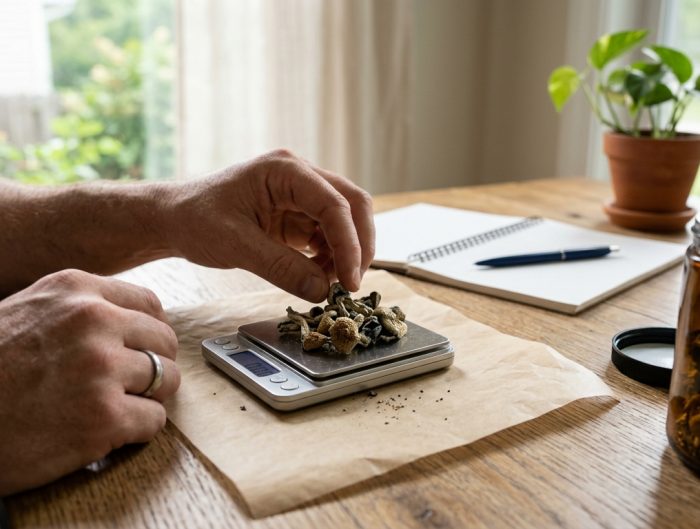
On the day of your session, you’ll arrive at the service center and spend some time settling in. Your facilitator will review the plan, check in on how you’re feeling, and answer any last questions. Then you’ll consume the psilocybin, typically in the form of dried mushrooms or a mushroom-based preparation. Dosing in regulated settings generally ranges from moderate (around 2 to 3 grams of dried Psilocybe cubensis) to higher doses (3.5 to 5 grams), depending on your goals, experience level, and facilitator’s assessment.
The onset usually takes 30 to 60 minutes. During this time, you might feel a subtle physical buzz, some nausea (this is common and usually passes), and a gradual shift in perception. Colors may seem more vivid. Your thoughts may begin to move in unfamiliar patterns. Emotions can intensify.
The peak of the experience typically lasts two to three hours, with the full session running four to six hours. During this time, your facilitator is present but generally not directing the experience. Their role is to hold space: to be a calm, grounding presence if you feel frightened, to offer water or a blanket, to remind you that you’re safe. Some facilitators use music playlists carefully curated to support the emotional arc of the experience. Others work in quieter settings where natural sounds predominate.
What happens during the experience itself is deeply personal. Some people report vivid visual imagery. Others describe encountering difficult emotions they’d been avoiding: grief, shame, anger. Some feel a profound sense of connection to something larger than themselves. And some have experiences that are hard to put into words at all.
One honest note: not every session feels pleasant. Difficult moments during the experience, sometimes called “challenging passages,” are not failures. Many participants and researchers describe these moments as some of the most therapeutically valuable parts of the process. Your facilitator is trained to help you move through difficulty rather than away from it.
Integration and Therapeutic Processing
If the session itself is the experience, integration is where the real work happens. This phase begins immediately after the psilocybin wears off and continues for days, weeks, or even months.
In the hours following your session, your facilitator will typically sit with you as you return to your baseline state. You might talk about what you experienced, or you might prefer silence. Both are fine. Many service centers schedule a follow-up integration session within a few days, where you’ll revisit the experience with fresh eyes and begin to identify themes, insights, or emotional shifts.
Integration is not passive. It requires your active participation. This is where journaling becomes especially powerful. Writing about what you experienced, even if it feels fragmented or doesn’t “make sense,” helps your conscious mind process material that emerged during the session. Over time, patterns often become clearer.
We emphasize integration heavily at Healing Dose because we’ve seen how easily insights from a psilocybin experience can fade without deliberate reflection. You might emerge from a session with a profound sense of self-compassion, but if you don’t actively practice that compassion in your daily life, the feeling dissipates. Think of the session as opening a door. Integration is the ongoing choice to walk through it.
Some people work with a therapist during integration. Others use peer support groups, meditation practices, or creative expression. The method matters less than the consistency. The most meaningful changes we’ve observed tend to emerge over weeks or months, not overnight.
Roles and Responsibilities of Licensed Facilitators
The quality of your psilocybin experience in Colorado depends enormously on the person guiding it. Facilitators aren’t just sitting in the room while you have an experience. They’re trained professionals with specific responsibilities before, during, and after your session.
Training and Certification Requirements
Colorado’s facilitator training requirements are among the most detailed in the country. To become licensed, a facilitator must complete a state-approved training program that includes both classroom education and hands-on practicum hours. These programs cover pharmacology, psychology, ethics, cultural sensitivity, trauma-informed care, and emergency response protocols.
The training also requires facilitators to have their own personal experience with psilocybin. This is a deliberate choice by the state’s regulatory framework: the idea is that someone guiding you through a profound psychological experience should have firsthand understanding of what it feels like. This requirement has been somewhat controversial, but many advocates argue it produces more empathetic, competent facilitators.
Once trained, facilitators must pass a state examination and maintain their license through continuing education. They’re also subject to oversight by DORA, which handles complaints and can revoke licenses for ethical violations or safety failures.
Here’s something to keep in mind as you evaluate potential facilitators:
- Ask about their training program and how many practicum hours they completed
- Inquire about their approach to difficult or intense experiences
- Find out whether they offer integration support or referrals after the session
- Check whether their license is current through DORA’s public database
- Ask about their personal philosophy around psilocybin work
A good facilitator will welcome these questions. If someone seems evasive or dismissive when you ask about their qualifications, that’s a red flag.
Ensuring Safety and Harm Reduction
The facilitator’s primary job is your safety, both physical and psychological. Before your session, they’ll screen for contraindications: conditions like schizophrenia, bipolar I disorder, or certain cardiac issues that make psilocybin inadvisable. They’ll review your medications and discuss any risks honestly.
During the session, facilitators monitor your physical state (heart rate, breathing, general comfort) while maintaining emotional attunement. If you become distressed, they’re trained in specific de-escalation techniques: grounding exercises, breathwork, gentle verbal reassurance. They won’t try to “fix” your experience or redirect it. Instead, they’ll help you feel safe enough to move through whatever is arising.
After the session, harm reduction continues through integration support. A responsible facilitator will check in with you in the days following your experience and help you identify any concerning responses: persistent anxiety, depersonalization, or mood instability. These reactions are uncommon but not unheard of, and having someone trained to recognize them matters.
The facilitator-client relationship is also governed by strict ethical boundaries. Physical contact is limited to what’s necessary for safety (like helping someone who’s dizzy), and any sexual contact is grounds for immediate license revocation. These protections exist because people in altered states are inherently vulnerable, and the power dynamic between facilitator and client requires clear ethical guardrails.
What to Expect at a Colorado Healing Center
The physical environment where your session takes place can significantly shape your experience. Colorado’s service centers vary widely in their aesthetic and approach, but they all must meet state safety and operational standards.
The Clinical Environment vs. Holistic Settings
Some service centers look more like therapy offices: clean, professional, with comfortable furniture and muted colors. Others lean toward a more naturalistic or contemplative atmosphere, with soft lighting, plants, art, and cushions on the floor. Neither approach is inherently better. What matters is that you feel safe and comfortable in the space.
Clinical settings may appeal to you if you’re coming from a traditional mental health background and find medical environments reassuring. These spaces often feel familiar and structured, which can reduce anxiety for first-time participants. The staff may include licensed therapists or counselors in addition to psilocybin facilitators, creating a more integrated care model.
More contemplative settings prioritize sensory comfort and a connection to nature or spirituality. You might find altars, natural materials, or outdoor spaces incorporated into the experience. These centers sometimes draw on indigenous or ceremonial traditions, though responsible ones are transparent about their influences and avoid cultural appropriation.
Regardless of the setting, every licensed service center in Colorado must meet specific requirements: adequate space for the session, private areas for rest, emergency protocols, and proper record-keeping. The state conducts inspections, and centers must maintain compliance to keep their licenses.
When choosing a center, visit in advance if possible. Sit in the space. Notice how you feel. Talk to the staff. Your nervous system will give you useful information about whether an environment feels right for you.
Cost, Accessibility, and Insurance Realities
Let’s be straightforward about money, because this is where many people hit a wall. A single psilocybin session at a Colorado service center, including preparation and integration meetings, typically costs between $1,500 and $3,500. Some centers charge more for extended programs or additional integration sessions.
As of 2026, no major health insurance provider covers psilocybin-assisted experiences. Because psilocybin remains a Schedule I substance federally, insurers have no mechanism to reimburse for it. Some service centers offer sliding scale pricing, payment plans, or scholarship programs for people with financial constraints, but these vary widely.
This cost barrier is one of the most significant equity issues in Colorado’s psilocybin program. Advocates and policymakers are actively working on solutions, including:
- State-funded pilot programs for veterans and people with treatment-resistant conditions
- Community-based access models that reduce overhead costs
- Advocacy for federal rescheduling, which could eventually open insurance pathways
- Group session formats that lower per-person costs while maintaining safety standards
If cost is a concern, don’t be afraid to ask service centers directly about financial assistance. Many facilitators entered this field because they believe in broad access, and they may have options that aren’t prominently advertised.
The personal use track under Prop 122 is, of course, far less expensive. Growing your own mushrooms costs very little beyond initial supplies. But it comes without the safety infrastructure, professional guidance, and integration support that the regulated model provides. For many people, especially those dealing with significant mental health challenges, the investment in a supervised experience is worthwhile.
Therapeutic Benefits and Targeted Outcomes
The growing body of research on psilocybin is one of the main reasons Colorado created this program. While we should be careful not to overstate what psilocybin can do, the evidence for specific applications is genuinely encouraging.
Addressing Treatment-Resistant Depression and Anxiety
Perhaps the most studied application of psilocybin is for depression that hasn’t responded to conventional approaches. A landmark study published in the New England Journal of Medicine found that psilocybin-assisted therapy produced significant improvements in depressive experiences compared to a placebo, with many participants maintaining those improvements at six-month follow-up. More recent data from 2025 trials has reinforced these findings across larger and more diverse participant groups.
What makes psilocybin’s approach to depression different from traditional antidepressants? SSRIs work by maintaining higher levels of serotonin in the brain on an ongoing basis. You take them daily, and they modulate your neurochemistry continuously. Psilocybin, by contrast, appears to work through a fundamentally different mechanism: a single or small number of high-dose experiences can produce lasting shifts in how the brain processes emotion and self-referential thought.
For people who’ve tried multiple medications without relief, this is meaningful. Treatment-resistant depression affects roughly 30% of people diagnosed with major depressive disorder. These are individuals who’ve often spent years cycling through medications, dealing with side effects, and losing hope. Psilocybin therapy in Colorado offers a different kind of possibility for these individuals: not a guarantee, but a genuinely different approach.
Anxiety, particularly end-of-life anxiety in people with terminal diagnoses, has also shown promising responses to psilocybin-assisted therapy. Research from Johns Hopkins and NYU found that a single high-dose session produced rapid and sustained reductions in anxiety and existential distress. Participants described feeling less afraid of death and more present in their remaining time.
It’s important to hold these findings honestly. Psilocybin doesn’t work for everyone. Some people have sessions that don’t produce noticeable changes. Others experience temporary increases in anxiety or emotional difficulty before things improve. The research is promising, but it’s still evolving, and individual variability is enormous.
Neuroplasticity and Long-term Mental Wellness
One of the most fascinating aspects of psilocybin research involves neuroplasticity: the brain’s ability to form new neural connections and reorganize existing ones. Imaging studies have shown that psilocybin temporarily increases connectivity between brain regions that don’t normally communicate much. This heightened connectivity may explain why people often report seeing their problems from entirely new perspectives during a session.
Think of it this way. Depression and anxiety often involve rigid patterns of thought: the same negative narratives playing on repeat, the same emotional responses to familiar triggers. Psilocybin appears to temporarily loosen these patterns, creating a window of flexibility where new ways of thinking and feeling become possible. The key word is “window.” The substance creates the opening, but integration work is what allows new patterns to take root.
Research published in 2025 using advanced brain imaging found that increases in neural connectivity observed after psilocybin sessions correlated with improvements in depression scores weeks later. The participants whose brains showed the most connectivity changes tended to report the most significant shifts in mood and outlook. This suggests that the neuroplasticity effect isn’t just an interesting side note; it may be central to how psilocybin supports mental wellness.
Long-term follow-up studies are still relatively limited, but the data we have is encouraging. A 2024 study tracking participants for 12 months after psilocybin-assisted therapy found that approximately 60% maintained clinically meaningful improvements in depression. That’s a remarkable durability for an approach that involved only one or two sessions.
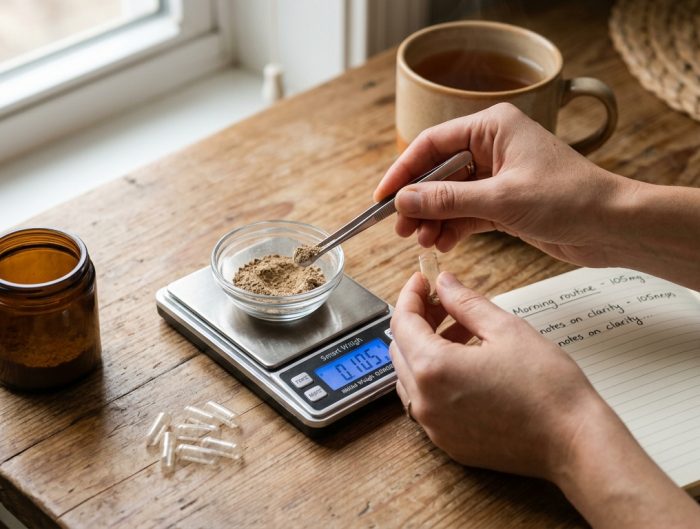
For those interested in supporting ongoing neuroplasticity and mental flexibility, some people explore microdosing as a complementary practice after their full-dose experience. Microdosing involves taking very small, sub-perceptual amounts of psilocybin on a regular schedule. The experiences are subtle: perhaps a gentle hum of energy or slightly enhanced creativity, nothing dramatic. At Healing Dose, we provide research-informed guidance on microdosing protocols for people who want to explore this path thoughtfully and safely.
Future Outlook for Psychedelic Medicine in the Centennial State
Colorado’s psilocybin program is still young, and its trajectory over the next several years will be shaped by multiple forces: regulatory decisions, research outcomes, public perception, and the experiences of the thousands of people who participate.
The state’s Natural Medicine Advisory Board is expected to make recommendations about expanding regulated access to additional substances, including DMT and mescaline (excluding peyote), within the next few years. These decisions will be guided by safety data and the lessons learned from the psilocybin rollout. Colorado is essentially building the playbook that other states will follow, and the pressure to get it right is considerable.
On the research front, several Colorado-based institutions are conducting studies on psilocybin for conditions beyond depression and anxiety, including PTSD, substance use disorders, eating disorders, and chronic pain. If these studies produce strong results, they could accelerate federal rescheduling efforts and eventually open the door to insurance coverage.
Public perception continues to shift. A 2025 Gallup poll found that 61% of Americans support legal access to psilocybin for therapeutic purposes, up from 49% in 2022. This growing acceptance creates political space for other states to follow Colorado’s lead. Oregon launched its own program in 2023, and several states including Connecticut, Massachusetts, and Washington are actively considering similar legislation.
For you, as someone exploring this space, the practical takeaway is that access is likely to improve over time. Costs may come down as more service centers open and competition increases. Training programs are expanding, which means more facilitators and potentially shorter wait times. And as the research base grows, the guidance around who benefits most from psilocybin, and under what conditions, will become more refined.
But don’t wait for perfection to start your own exploration. If psilocybin therapy feels like something worth considering, begin with education and self-reflection. Talk to a facilitator. Read the research. Journal about what you’re hoping to find. The most meaningful personal growth we’ve witnessed doesn’t start with a dramatic experience. It starts with the quiet decision to pay closer attention to your own inner life.
If you’re curious about where to begin, especially if a full-dose experience feels like too big a first step, finding the right microdosing range for your body and goals can be a gentler entry point. Our short quiz helps you identify a thoughtful starting place based on your experience level and sensitivity: take the quiz here.
Whatever path you choose, go slowly. Be honest with yourself. And remember that the most important part of any psilocybin experience isn’t the substance itself: it’s what you do with the insights afterward.

You might also like