If you’ve ever wondered what happens at a mushroom ceremony, you’re not alone. Thousands of people each year are asking this exact question as psilocybin ceremonies move from the margins into broader cultural awareness. Whether you’re curious, cautious, or somewhere in between, the process is far more structured and intentional than most people expect. It’s okay to feel nervous about something so unfamiliar: that’s a sign you’re taking it seriously, and that’s a good thing. Here’s a clear, honest picture of what these experiences actually look like from start to finish, so you can decide whether this path feels right for you.
The Essence and Purpose of a Mushroom Ceremony
A mushroom ceremony is a structured, intentional gathering centered around the ingestion of psilocybin mushrooms in a supported environment. Unlike casual or recreational use, ceremonies emphasize purpose, safety, and reflection. The goal isn’t simply to have an experience: it’s to create conditions where meaningful inner work can happen.
Historical and Indigenous Roots
Psilocybin mushrooms have been used in ceremonial contexts for thousands of years, most notably by the Mazatec people of Oaxaca, Mexico, and other Mesoamerican cultures. These traditions treated the mushroom as a sacrament, not a substance, and ceremonies were led by experienced guides known as curanderos or curanderas. The rituals included prayer, chanting, and darkness, all designed to create a container for spiritual insight. Modern ceremonies draw on these roots, though the degree of cultural fidelity varies widely depending on the facilitator and setting.
Modern Therapeutic vs. Spiritual Contexts
Today, psilocybin ceremonies exist along a spectrum. Some are explicitly therapeutic, facilitated by licensed professionals in clinical or retreat settings. Others lean toward the spiritual, incorporating elements of indigenous practice, breathwork, or meditation. Oregon’s psilocybin program has served approximately 20,000 clients since its launch, reflecting growing public interest in structured psilocybin experiences. The psychedelic retreat market itself continues to expand, with global demand rising steadily as more people seek alternatives to conventional approaches. Regardless of the framing, the common thread is intentionality: you’re there for a reason, and the ceremony is designed to support that reason.
Preparation and Setting the Intention
Preparation is where the real work begins, often days or weeks before you ever sit in a ceremony space. How you show up matters as much as what happens during the experience itself.
Physical and Dietary Guidelines
Most ceremony providers will give you specific dietary recommendations. These typically include avoiding alcohol, caffeine, and processed foods for several days beforehand. Some guidelines also suggest reducing or eliminating certain medications under medical supervision, particularly SSRIs, which can interact with psilocybin. Eating clean, staying hydrated, and getting adequate sleep aren’t just wellness clichés here: they genuinely affect how your body processes the mushroom and how comfortable you feel during the experience.
Mental Priming and Intention Setting
Beyond the physical, you’ll be asked to set an intention. This isn’t a rigid goal or a wish list: it’s more like a question you’re carrying into the experience. “What am I afraid of?” or “What do I need to let go of?” are common starting points. Some people journal extensively in the days leading up to the ceremony. At Healing Dose, we encourage this kind of reflective preparation because it creates a foundation for the integration work that follows. Your intention acts as an anchor, something to return to when the experience gets intense or confusing.
The Role of the Facilitator and Sacred Space
You won’t be doing this alone. The facilitator, sometimes called a guide or sitter, plays a central role in shaping the experience.
Creating a Safe Physical Environment
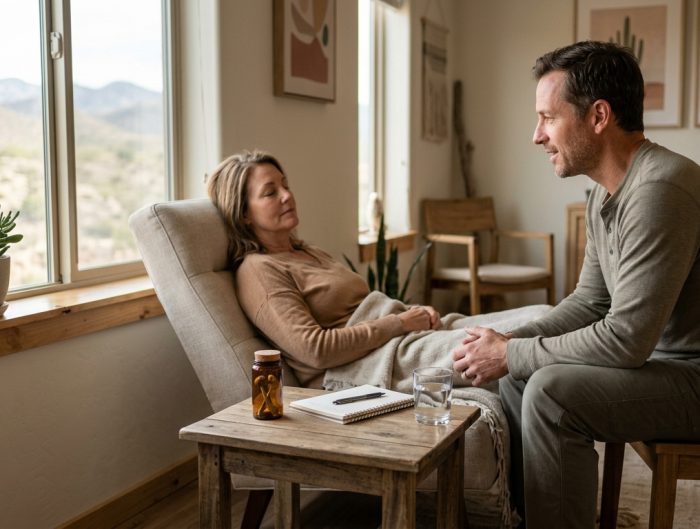
The physical space is carefully prepared. Think low lighting, comfortable seating or mats, blankets, eye masks, and access to water. The room is typically clean, warm, and free from distractions. Some facilitators arrange altars with flowers, candles, or meaningful objects. The point is to create a space that feels contained and safe, because your nervous system needs to feel secure before it can open up. Whether the ceremony is private or held in a small group, the environment is designed to minimize external stressors.
The Importance of Ritual and Music
Ritual elements: an opening prayer, a shared silence, the passing of the mushroom: help mark the transition from ordinary life into ceremonial space. Music is often the backbone of the experience. Facilitators may use live instruments, curated playlists, or traditional songs. The music isn’t background noise: it actively shapes the emotional arc of the journey, guiding you through different phases. Some people find that a particular song becomes deeply meaningful during the experience, almost like a personal message.
The Ceremonial Journey: What to Expect
This is the part most people are curious about. What actually happens once you’ve taken the mushroom?
The Onset and Somatic Sensations
After ingesting the psilocybin, typically as dried mushrooms, tea, or chocolate, there’s usually a 20 to 45 minute waiting period. During this time, you might feel nothing, or you might notice subtle shifts: a slight heaviness in the body, a tingling sensation, or gentle waves of nausea. Nausea is common and usually passes within the first hour. Some people describe a feeling like the body “softening” or becoming more porous. This is normal, and your facilitator will likely remind you to breathe and stay with whatever arises.
Navigating the Peak Experience
The peak typically arrives between 60 and 90 minutes after ingestion and can last two to three hours. This is where the experience becomes most vivid. You might see closed-eye visuals: patterns, colors, or symbolic imagery. Emotional waves can be intense, ranging from deep grief to overwhelming gratitude, sometimes within minutes of each other. Some people describe feeling a profound sense of connection to something larger than themselves. Others confront difficult memories or fears. There’s no single “correct” experience. Research suggests that the quality of the experience correlates strongly with preparation and setting, which is why all that pre-ceremony work matters so much.
The Gentle Return and Grounding
After the peak, the intensity gradually subsides over one to two hours. You might feel tender, open, or quietly reflective. Facilitators often guide this phase with softer music and gentle prompts to return awareness to the body: feeling your feet on the ground, noticing your breath, wiggling your fingers. Some ceremonies include a light meal or warm tea as a way to gently re-enter ordinary awareness. Don’t be surprised if you feel emotionally raw or deeply tired. That’s your system processing a lot of information in a short time.
Common Psychological and Emotional Themes
While every ceremony is unique, certain themes show up frequently. Many people encounter a sense of interconnectedness, feeling that boundaries between self and world are more permeable than usual. Others experience what’s sometimes called “ego dissolution,” a temporary loosening of the rigid sense of “I” that can feel both liberating and disorienting.
Grief, forgiveness, and childhood memories are common emotional territories. Some people laugh uncontrollably. Others cry for reasons they can’t fully articulate. It’s worth knowing that difficult moments during a ceremony, sometimes called “challenging passages,” are not signs that something has gone wrong. They’re often where the most meaningful personal growth happens. Your facilitator is trained to support you through these moments without trying to fix or redirect them. The key is to stay present rather than resist.
Post-Ceremony Integration and Reflection
The ceremony itself is only half the story. What you do with the experience afterward is where lasting change takes root.
Processing Insights and Visions
In the hours and days following a ceremony, you may feel a mix of clarity, confusion, and emotional sensitivity. Journaling is one of the most effective ways to capture insights before they fade. Write down images, feelings, phrases, or questions that stood out: even fragments can become meaningful when you revisit them later. At Healing Dose, we emphasize that integration isn’t a passive process. It requires active reflection, and sometimes the support of a therapist, integration circle, or trusted friend. Psychedelic wellness trends in 2026 increasingly prioritize this integration phase, recognizing that the ceremony is a catalyst, not a conclusion.
Applying Lessons to Daily Life
The real test of a ceremony isn’t what you felt during the experience: it’s what changes in your daily life afterward. Maybe you noticed a pattern of self-criticism that you want to address. Maybe you felt a clarity about a relationship or a career decision. These insights are fragile at first, and they need tending. Small, consistent actions: a daily journaling practice, a conversation you’ve been avoiding, a shift in how you start your mornings: are how ceremonial insights become lasting behavioral change. This process often unfolds over weeks or months, not overnight.
Finding Your Own Pace
A mushroom ceremony is not a quick fix or a single dramatic event. It’s a structured, supported process that begins with preparation, moves through an often profound inner experience, and continues long after the ceremony ends. The most important thing you can bring is honesty: with yourself, with your facilitator, and with whatever arises during the experience.
If you’re feeling drawn to explore this territory but aren’t sure where to start, beginning with microdosing can be a thoughtful first step. It lets you build familiarity with psilocybin at a gentle, sub-perceptual level before considering a full ceremony. To find a starting range that matches your goals and sensitivity, take the dose quiz and begin at your own pace. There’s no rush: the most meaningful shifts tend to happen when you give yourself permission to go slowly.

You might also like