The idea of sitting in ceremony with psilocybin, surrounded by strangers, in a country you may have never visited, can feel equal parts exciting and terrifying. That’s completely normal. Whether you’ve been quietly researching for months or just stumbled across the concept last week, the questions tend to be the same: What actually happens during one of these experiences? Will I be safe? What should I expect from my mind and body? And maybe the most honest question of all: Am I ready for this?
This guide walks you through the full arc of a psilocybin retreat, from the screening process before you even book a flight to the weeks of integration work that follow you home. The goal here isn’t to sell you on anything. It’s to give you a clear, grounded picture so you can decide for yourself whether this kind of structured experience fits where you are right now. Some of what you read might surprise you. Some might reassure you. Either way, you’ll walk away with a much better sense of what these retreats actually look like from the inside.
Understanding the Psilocybin Retreat Model
A psilocybin retreat is not a vacation, and it’s not a party. It’s a structured, multi-day program designed to support people through intentional psilocybin experiences in a supervised environment. Most retreats follow a similar rhythm: a few days of preparation, one or two ceremony sessions, and several days of integration afterward. The entire container, from arrival to departure, is built around creating psychological safety.
The retreat model differs significantly from recreational use. Facilitators, therapists, or guides are present throughout the experience. Meals are intentional. The physical space is curated. And participants are screened beforehand to reduce risk. This isn’t someone handing you mushrooms and saying good luck. It’s closer to a supported psychological process that happens to involve a psychoactive substance.
That said, retreats vary enormously in quality, philosophy, and rigor. Some operate with licensed mental health professionals on staff. Others rely on indigenous ceremonial traditions. Some blend both. Understanding the model means understanding that no two programs are identical, and that your job as a participant is to find the one whose approach matches your needs and comfort level.
The Role of Legal Jurisdictions and Safety
Psilocybin remains illegal in most countries, which is why the majority of retreats operate in jurisdictions where it’s either legal, decriminalized, or culturally tolerated. The Netherlands, Jamaica, Costa Rica, and certain regions of Mexico are among the most common locations as of 2026. Oregon’s regulated psilocybin services program, which began accepting clients in 2023, continues to expand and offers a domestic option for U.S. residents.
Legal status matters because it directly affects safety. In jurisdictions with clear legal frameworks, retreats can operate transparently. They can work with medical professionals, carry insurance, and maintain accountability. In gray-area locations, participants may have fewer protections if something goes wrong. This doesn’t mean every retreat in a legal jurisdiction is excellent or every one in a gray area is dangerous, but the legal context shapes the infrastructure around you.
Before booking, ask the retreat directly about their legal standing. A reputable program will answer this question without hesitation. If they dodge it, that’s a signal worth paying attention to. You want to know: Is this substance legal where we’ll be? What happens if I have a medical emergency? Is there a licensed medical professional available or on call? These aren’t paranoid questions. They’re basic due diligence.
Medical Screening and Intake Procedures
Every responsible retreat conducts some form of medical and psychological screening before accepting participants. This typically involves a detailed questionnaire covering your physical health, mental health history, current medications, and substance use. Many programs also require a phone or video consultation with a staff member.
The screening exists to protect you. Psilocybin interacts dangerously with certain medications, particularly SSRIs, MAOIs, and lithium. People with a personal or family history of psychotic disorders like schizophrenia or bipolar I are generally excluded from participation because psilocybin can trigger psychotic episodes in vulnerable individuals. This isn’t a judgment on anyone’s worthiness. It’s a clinical safety boundary.
If a retreat doesn’t screen you at all, or if the screening feels superficial, consider that a red flag. The intake process should feel thorough, even slightly inconvenient. You might need to get bloodwork done or provide a letter from your prescribing physician. That level of care signals a program that takes your safety seriously.
Some retreats also ask about your intentions and goals during intake. This isn’t just paperwork. It helps facilitators understand what you’re bringing into the space and how to support you during the experience. Be honest during this process, even about the things you’re embarrassed to share. The more your team knows, the better they can hold space for you.
The Three Pillars: Preparation, Ceremony, and Integration
Most experienced facilitators will tell you that the ceremony itself, the hours you spend under the influence of psilocybin, is only one-third of the work. The other two-thirds happen before and after. This framework, often called preparation, ceremony, and integration, is the backbone of every well-designed retreat.
Preparation is about getting your mind and body ready. Ceremony is the experience itself. Integration is where you make sense of what happened and carry it forward into your daily life. Skip any one of these three pillars and the whole structure weakens. A powerful ceremony without integration is like having a profound dream and never thinking about it again. It might fade before it has a chance to mean anything.
At Healing Dose, we emphasize integration as a practice, not a one-time event. Journaling, reflection, and ongoing self-awareness are what turn a single experience into sustained personal growth. The retreat provides the container. You provide the continued attention.
Setting Intentions and Mental Readiness
In the days before your ceremony, facilitators will ask you to set an intention. This is not a wish list or a demand you make of the experience. An intention is more like a compass heading: a direction you’d like to face, knowing the wind might carry you somewhere unexpected.
Good intentions tend to be open-ended. “I want to understand my relationship with anger” works better than “I want to stop being angry forever.” The first leaves room for discovery. The second sets you up for disappointment if the experience doesn’t deliver a neat resolution. Think of your intention as a question you’re genuinely curious about, not an answer you’re trying to force.
Mental readiness also involves managing expectations. You might have read dramatic accounts of ego dissolution, encounters with cosmic entities, or tearful breakthroughs. Those experiences do happen, but they’re not guaranteed, and they’re not the only valuable outcomes. Sometimes the most meaningful sessions are quiet. Sometimes you spend three hours watching patterns on the ceiling and walk away with a subtle but lasting shift in how you relate to stillness. Try to arrive without a script for what’s supposed to happen.
Practical preparation matters too. Most retreats ask you to avoid alcohol, caffeine, and processed foods for several days before the ceremony. Some request a longer dietary protocol. Follow these guidelines. They exist to reduce physical discomfort during the experience and to help you arrive in a calmer, more receptive state.
Post-Experience Processing and Support
The days immediately following a ceremony can feel tender. You might be emotionally raw, unusually reflective, or simply exhausted. This is normal. Your nervous system just went through something significant, and it needs time to recalibrate.
Good retreats build integration support directly into the schedule. This usually includes group sharing circles, one-on-one check-ins with facilitators, and guided journaling sessions. These structured touchpoints give you a chance to begin processing what you experienced while you’re still in a supportive environment surrounded by people who understand.
But the real integration work starts when you get home. That’s when the insights from your ceremony meet the reality of your daily routines, relationships, and habits. Many people describe the first two weeks after a retreat as a window of heightened openness, a period where new patterns feel more accessible and old patterns feel more visible. Use that window. Journal every day, even if it’s just a few sentences. Talk to someone you trust about what you experienced. Notice what’s different in your thinking or behavior, even if the changes feel small.
Some retreats offer follow-up sessions via video call in the weeks after you leave. If this is available, take advantage of it. Integration isn’t something you do once and check off a list. It’s an ongoing practice of paying attention to how you’re changing and making conscious choices about which changes you want to keep.
Navigating the Ceremony Experience
This is the part most people are curious about, and often the part that generates the most anxiety. What actually happens during a psilocybin ceremony? The honest answer is that every person’s experience is different, and even the same person can have wildly different experiences from one ceremony to the next. But there are common elements worth understanding.
A typical ceremony lasts between four and six hours. You’ll usually receive a measured dose of dried psilocybin mushrooms, sometimes in capsule form, sometimes as a tea, sometimes eaten directly. The dose is determined by the facilitators based on your screening information, your experience level, and the retreat’s protocol. Most retreats for first-time participants use moderate doses, roughly 2 to 3.5 grams of dried Psilocybe cubensis, though this varies.
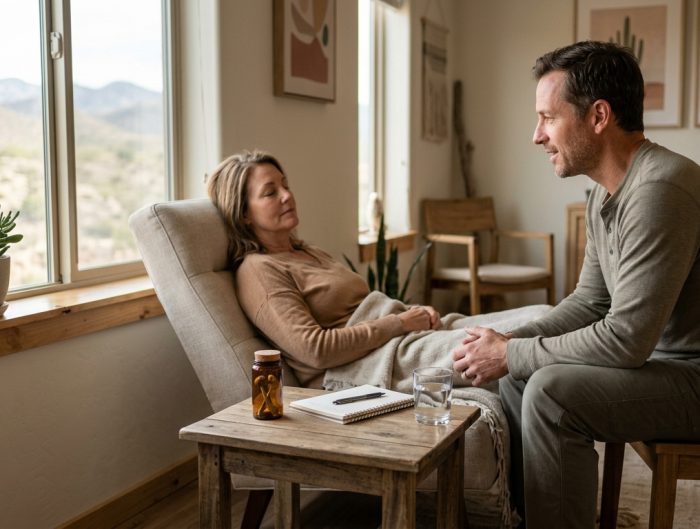
After ingestion, you’ll usually lie down in a comfortable space. Many ceremonies take place in dim lighting with curated music. An eye mask is often provided to encourage inward focus. The onset typically begins 20 to 45 minutes after ingestion, and the peak experience usually occurs between hours one and three.
The Importance of Set and Setting
“Set and setting” is a phrase you’ll hear constantly in psychedelic circles, and for good reason. “Set” refers to your mindset: your emotional state, your expectations, your fears, and your intentions. “Setting” refers to the physical and social environment where the experience takes place.
Both matter enormously. A beautiful, safe, comfortable space staffed by trustworthy people can make the difference between a difficult experience that feels manageable and one that feels overwhelming. This is one of the primary reasons people choose structured retreats over solo experiences. The setting is designed for you. The music, the lighting, the temperature, the proximity of support: all of it is intentional.
Your mindset going in is equally important. If you arrive exhausted from a stressful work week, fighting with your partner, and running on caffeine, your ceremony will reflect that inner state. This is why preparation matters so much. The more settled you can be when you enter the space, the more capacity you’ll have to work with whatever arises.
Common Sensory and Emotional Effects
Psilocybin affects perception, emotion, cognition, and sometimes the sense of self. Sensory shifts are among the first things people notice. Colors may appear more vivid. Surfaces might seem to breathe or ripple. Music can feel deeply immersive, almost physical. With eyes closed, you might see geometric patterns, imagery, or scenes that feel meaningful.
Emotionally, the range is wide. Many people experience waves of gratitude, tenderness, or connection. Others encounter grief, fear, or sadness that they’ve been carrying without fully acknowledging. Both are valid and both can be valuable. The experience doesn’t always feel pleasant, and that’s okay. Difficult emotions that surface during a ceremony are often the ones most in need of attention.
Some physical sensations are common too. Nausea is frequent, especially in the first hour. You might feel a heaviness in your body, or conversely, a sense of lightness. Some people cry. Some laugh. Some do both within minutes of each other. Body temperature can fluctuate, and yawning is surprisingly common during the onset phase.
One thing worth knowing: the experience is not linear. You won’t move neatly from phase one to phase two to phase three. Waves of intensity come and go. There may be moments of profound clarity followed by confusion, followed by calm. Trying to control the experience usually backfires. The most consistent advice from experienced facilitators is simple: breathe, stay open, and let it move through you.
Facilitator Support and Intervention
During ceremony, facilitators are present but generally unobtrusive. Their job is to hold the space, monitor participants for signs of distress, and intervene only when needed. A good facilitator is like a lifeguard at a pool: you might not notice them, but you’d be very glad they were there if you needed them.
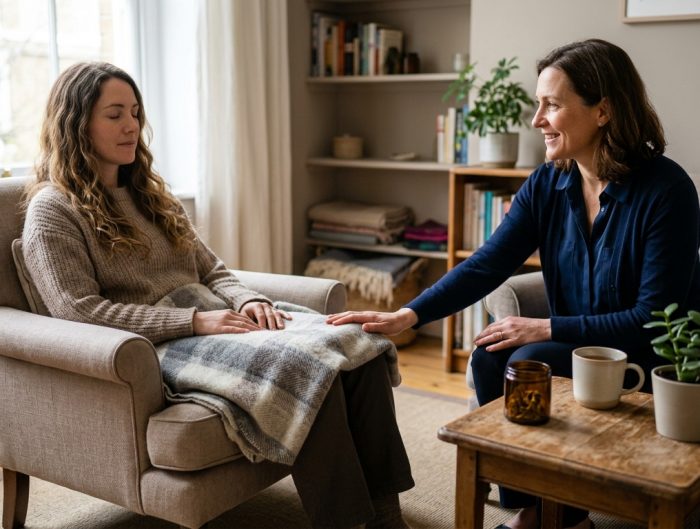
Intervention can take many forms. If you’re experiencing intense fear or confusion, a facilitator might sit beside you, offer a grounding touch on your hand or shoulder (with prior consent), or speak to you in calm, reassuring tones. They might remind you of your intention, encourage you to breathe, or simply let you know that you’re safe and that what you’re feeling will pass.
In rare cases, more active intervention is needed. If a participant becomes physically agitated or dissociative, facilitators are trained to de-escalate the situation. Some retreats have medical professionals on-site who can administer a benzodiazepine if the experience becomes unmanageable, though this is uncommon.
Before the ceremony, you’ll typically discuss boundaries and consent with your facilitators. This includes what kind of physical contact you’re comfortable with, whether you want verbal check-ins during the experience, and any specific fears or triggers they should be aware of. Don’t skip this conversation. It’s your chance to shape the support you’ll receive.
Accommodations and Daily Retreat Life
Psilocybin retreats range from rustic jungle settings to polished wellness centers, and the accommodations reflect that spectrum. Some offer shared dormitory-style rooms. Others provide private suites with en-suite bathrooms. The level of luxury doesn’t necessarily correlate with the quality of the program, but your physical comfort does affect your overall experience.
Most retreats are located in natural settings: near the ocean, in the mountains, or surrounded by forest. This is intentional. Nature has a grounding effect that supports the psychological work of the retreat. You’ll likely spend time outdoors between sessions, and many programs incorporate walks, meditation, or breathwork in natural surroundings.
Daily life at a retreat is usually structured but not rigid. Mornings might include yoga or meditation. Afternoons could involve group discussions, creative activities, or free time. Evenings before a ceremony tend to be quiet and reflective. The schedule is designed to gradually shift you out of your normal pace of life and into a more receptive, present state.
Dietary Protocols and Physical Wellness
Food at a retreat is rarely an afterthought. Most programs serve plant-based or lightly prepared meals designed to support your physical state before and after ceremony. Heavy, processed, or overly spiced foods are typically avoided because they can increase nausea and digestive discomfort during the psilocybin experience.
Some retreats follow specific dietary guidelines rooted in indigenous traditions. The “dieta” tradition from Amazonian plant medicine practices, for example, involves avoiding salt, sugar, oil, spices, alcohol, and sexual activity for a period before and after ceremony. Not all psilocybin retreats follow this protocol, but many borrow elements from it.
If you have food allergies or dietary restrictions, communicate these well in advance. A good retreat will accommodate your needs without making you feel like a burden. And if you’re someone who relies on caffeine to function, be prepared for a few days without it. The headache usually passes by day two, and many people are surprised by how much clearer they feel without it.
Physical wellness extends beyond food. Hydration is important. Sleep is important. Gentle movement helps your body process the experience. Don’t plan to check email or scroll social media between sessions. Most retreats ask you to minimize or eliminate screen time, and this is one of those guidelines that sounds annoying but turns out to be a gift.
Group Dynamics and Community Building
Unless you’ve booked a private retreat (which some programs offer at a premium), you’ll be sharing this experience with a group of strangers. This can feel vulnerable, and it should. Vulnerability in a safe container is part of what makes the retreat model powerful.
Group sizes vary. Some retreats cap at six to eight participants. Others accept fifteen or more. Smaller groups generally allow for more individual attention from facilitators, but larger groups can create a powerful sense of shared experience. There’s no universally right size; it depends on your personality and what you’re looking for.
Sharing circles are a common feature of retreat life. These are structured group conversations where participants take turns speaking about their experiences, fears, or insights. You’re not required to share anything you’re not ready to share, and there’s typically a strong norm of confidentiality: what’s said in circle stays in circle.
Something unexpected often happens in these groups. People who arrived as strangers develop genuine bonds over the course of a few days. There’s something about going through an intense experience together, about witnessing each other’s vulnerability, that accelerates trust in a way that’s hard to replicate in ordinary life. Many retreat participants stay in touch long after the program ends, forming informal support networks that aid ongoing integration.
If you’re an introvert, don’t panic. Most retreats build in plenty of solo time, and facilitators are usually sensitive to participants who need more space. You won’t be forced to share, hug, or participate in anything that feels wrong for you. Your boundaries matter, and a good program will respect them.
Choosing the Right Retreat for Your Goals
Not all psilocybin retreats are created equal, and the right one for you depends on a combination of your goals, your budget, your experience level, and your personal values. Here’s how to think through the decision.
Start with your intention. Are you seeking support for a specific emotional challenge, like grief or anxiety? Are you curious about expanded states of consciousness from a spiritual perspective? Are you primarily interested in the clinical, evidence-based approach? Different retreats cater to different orientations, and misalignment here can lead to frustration.
Ask about the facilitators’ training and experience. What certifications do they hold? How many ceremonies have they facilitated? What is their approach to difficult experiences? A facilitator’s skill level is arguably the single most important factor in your safety and the quality of your experience. Don’t be shy about requesting this information.
Consider the integration support offered. A retreat that sends you home the morning after your ceremony with a pat on the back and a good luck is missing a critical piece. Look for programs that include at least two to three days of post-ceremony integration on-site, plus follow-up support after you leave.
Price is a real factor. Retreats range from around $1,500 to $10,000 or more, depending on location, duration, and amenities. Higher cost doesn’t always mean better quality, but extremely low-cost programs may be cutting corners on staffing, screening, or safety. Ask what’s included in the price and what’s extra.
Read reviews and testimonials, but read them critically. Look for specific details about the experience rather than vague superlatives. Reach out to past participants directly if the retreat can connect you. And trust your gut: if something about a program feels off during your research, honor that feeling.
Here are a few specific questions worth asking any retreat before you book:
- What is the facilitator-to-participant ratio during ceremony?
- What medical support is available on-site or nearby?
- What medications are contraindicated, and how do you screen for them?
- What does your integration program include, both on-site and post-retreat?
- Can I speak with a past participant before committing?
- What is your cancellation and refund policy?
A reputable program will welcome these questions. If they seem annoyed or evasive, keep looking. At Healing Dose, we encourage this kind of careful, thoughtful research. The goal isn’t to find the most impressive-sounding retreat. It’s to find the one that genuinely fits your needs and offers the safety and support you deserve.
Your interest in psilocybin retreats says something meaningful about where you are in your personal journey. Whether you end up attending a retreat this year or decide you need more time to prepare, the research you’re doing right now is itself a form of readiness. Take it at your own pace. Ask hard questions. Listen to your body and your instincts.
The most important thing to carry forward is this: the experience itself is only the beginning. Real growth happens in the days, weeks, and months that follow, through reflection, journaling, and honest self-observation. A retreat can open a door, but you’re the one who walks through it and decides what to do on the other side.
If you’re also curious about microdosing as a gentler entry point or a complement to deeper work, we’ve built a short quiz to help you find a starting range based on your goals, experience, and sensitivity. Take the quiz here and begin at whatever pace feels right for you.

You might also like