Jack Frost mushrooms have earned a reputation that precedes them in mycology circles, and for good reason. With their striking white caps, frosty appearance, and a lineage that traces back to two of the most talked-about psilocybin strains, they’ve become one of the most sought-after cubensis varieties available. But beyond their visual appeal, the question people really want answered is: just how potent are Jack Frost mushrooms compared to other strains? Whether you’re a cautious beginner exploring microdosing for the first time or someone with more experience looking to understand what sets this strain apart, the answer is more nuanced than a simple number. Potency depends on genetics, growing conditions, harvest timing, and even how you store your dried specimens. This guide breaks down everything you need to know about Jack Frost’s strength, from its alkaloid profile to practical dosage considerations, so you can approach this strain with confidence and respect. At Healing Dose, we believe that understanding what you’re working with is the first step toward any intentional practice, and Jack Frost deserves a thorough look.
The Genetic Origin of Jack Frost Mushrooms
Every mushroom strain carries a story in its DNA, and Jack Frost’s story is particularly interesting because it draws from two parent strains that are already famous for their distinct qualities. Understanding where Jack Frost comes from helps explain why its potency profile sits where it does, and why it behaves a little differently than a standard Golden Teacher or B+ cubensis.
Jack Frost is a relatively recent addition to the cubensis catalog, first appearing in online mycology communities around 2019-2020. It was reportedly developed by a cultivator who crossed True Albino Teacher (TAT) with Albino Penis Envy (APE), combining the visual beauty of one with the raw strength of the other. The result was a strain that looked otherworldly and packed a punch that surprised even experienced growers.
What makes this cross so significant is that both parent strains already sit above average in potency. When you combine genetics from two above-average lines, you get offspring with the potential to express those traits in amplified ways. That’s exactly what happened with Jack Frost, and it’s why the strain has generated so much conversation in such a short time.
True Albino Teacher and Albino Pen Envy Heritage
True Albino Teacher is itself a variant of the classic Golden Teacher, one of the most widely cultivated and recognized psilocybin mushroom strains on Earth. Golden Teachers are known for their moderate potency and forgiving growing characteristics, making them a popular choice for beginners. The albino mutation doesn’t dramatically change the chemical profile, but TAT tends to produce slightly more concentrated alkaloid content than its pigmented parent.
Albino Penis Envy, on the other hand, is a heavyweight. Penis Envy strains in general are considered among the most potent cubensis varieties, often testing at 1.5 to 2 times the psilocybin content of a standard cubensis. The albino variant maintains that strength while producing pale, ghostly fruiting bodies that lack the typical brown or golden pigmentation.
When these two lines were crossed, the resulting Jack Frost strain inherited the elevated alkaloid production from its APE parent and the relatively robust growing characteristics from its TAT side. This combination is part of why Jack Frost is sometimes described as “beginner-friendly to grow but not beginner-friendly to dose.” The mushrooms colonize substrate efficiently and fruit reliably, but the dried product can catch people off guard if they treat it like a typical cubensis.
It’s worth keeping in mind that genetics provide a ceiling, not a guarantee. Just because Jack Frost has potent parents doesn’t mean every single fruit will test at peak levels. Individual variation within a batch can be significant, which is something we’ll explore in more detail later.
Physical Characteristics and Blue Gills
One of the first things people notice about Jack Frost mushrooms is how unusual they look. The caps are white to off-white, often with edges that curl upward and outward as the mushroom matures, creating a wavy, almost coral-like appearance. The stems are thick, dense, and pale, sometimes developing a slight bluish tint when handled or bruised.
That blue bruising is actually a meaningful indicator. When psilocybin-containing mushrooms are damaged, the psilocybin and psilocin molecules oxidize, producing a blue-colored compound. This reaction, sometimes called “bluing,” is generally considered a rough visual indicator of alkaloid presence. Jack Frost specimens tend to bruise quite readily and intensely, which aligns with their reputation for above-average potency.
The gills of Jack Frost are another distinguishing feature. Unlike most cubensis strains that produce dark purple-brown spore prints, Jack Frost’s gills often remain pale or take on a bluish hue. This characteristic comes from the albino genetics in both parent lines. Some growers report that mature Jack Frost specimens develop a frosted, almost crystalline look on the cap surface, which is how the strain got its name in the first place.
These physical traits aren’t just cosmetic curiosities. They help cultivators and consumers identify authentic Jack Frost specimens and distinguish them from other white or albino varieties. If you’re evaluating dried Jack Frost mushrooms, look for dense, heavy fruits with noticeable blue bruising. Lightweight, wispy specimens from the same batch may have lower alkaloid concentrations simply because of their growth stage at harvest.
Measuring Potency: Psilocybin and Psilocin Content
Potency in psilocybin mushrooms comes down to measurable chemistry. The two primary active compounds are psilocybin and psilocin, both tryptamine alkaloids that interact with serotonin receptors in the brain. Psilocybin is actually a prodrug: your body converts it into psilocin through a process called dephosphorylation, and psilocin is the compound that produces the psychoactive experiences. A third compound, baeocystin, is also present in smaller amounts, though its contribution to the overall experience is still debated among researchers.
When we talk about how potent Jack Frost mushrooms are, we’re really asking: what percentage of the dried weight is made up of these active compounds? A standard Psilocybe cubensis mushroom typically contains around 0.6% to 0.8% total tryptamine content by dry weight. Some strains fall below that range, and a few exceptional ones climb well above it.
Comparative Strength to Standard Cubensis
Jack Frost consistently tests above the cubensis average. Community-submitted lab analyses and competition data suggest that Jack Frost specimens commonly produce tryptamine concentrations in the range of 0.8% to 1.2% total psilocybin and psilocin by dry weight, with some exceptional samples pushing even higher. To put that in perspective, a standard Golden Teacher might test around 0.6% to 0.8%, meaning Jack Frost can be roughly 1.5 times as strong gram for gram.
The Psilocybin Cup competitions, which have brought analytical testing to the forefront of mushroom culture, have shown that strain genetics play a real but not absolute role in determining potency. Entries from Penis Envy lineages, including Jack Frost, regularly place near the top of potency rankings. But even within those competitions, individual sample variation is enormous. Two different Jack Frost entries might test at 0.9% and 1.4% respectively, depending on growing conditions and harvest timing.
For practical purposes, if you’re accustomed to dosing with a standard cubensis strain, you should reduce your Jack Frost dose by roughly 30% to 50% as a starting point. Someone who finds 2 grams of Golden Teacher to be a comfortable moderate experience might find 1.2 to 1.5 grams of Jack Frost produces a comparable intensity. This isn’t an exact science, and individual body chemistry matters enormously, but it’s a reasonable framework to start from.
The Role of Alkaloid Concentration in Jack Frost
What makes Jack Frost particularly interesting from a chemistry standpoint is the ratio of psilocybin to psilocin in the dried product. Some strains produce higher proportions of psilocin relative to psilocybin, which can affect onset speed and the character of the experience. Psilocin is more fragile than psilocybin and degrades more quickly during drying and storage, so strains with higher psilocin ratios may lose potency faster if not stored properly.
Jack Frost appears to produce a balanced ratio of both compounds, which may contribute to reports of a smooth onset followed by a sustained peak. The presence of baeocystin and other minor alkaloids could also play a role in what some users describe as a “fuller” or more layered experience compared to strains that are high in psilocybin but low in secondary compounds. This is sometimes referred to as the “entourage effect,” borrowing terminology from cannabis science, though the research supporting this concept in psilocybin mushrooms is still preliminary.
The dense, heavy fruiting bodies that Jack Frost produces also matter for potency. Denser mushrooms tend to have higher alkaloid concentrations per gram of dried weight compared to large, airy mushrooms that are mostly water weight. This is one reason why smaller, compact Jack Frost specimens sometimes test higher than their larger counterparts from the same flush.
Factors Influencing Individual Batch Strength
Even with excellent genetics, potency is never guaranteed from one grow to the next. Two people cultivating Jack Frost from the same spore syringe can end up with meaningfully different alkaloid levels depending on their technique, environment, and timing. Understanding these variables helps you make better decisions about dosing, because you can never assume that your batch matches someone else’s experience report.
This variability is one of the reasons we emphasize starting low and adjusting gradually at Healing Dose. A cautious approach isn’t about fear: it’s about respect for the natural variation that exists in every biological product.
Substrate Composition and Growing Conditions
The substrate, the material the mycelium grows on, directly affects the nutrients available for alkaloid production. Jack Frost, like most cubensis strains, thrives on grain-based substrates combined with manure or coco coir, but the specific composition can influence potency in subtle ways.
Substrates rich in tryptophan, the amino acid precursor to psilocybin, may support higher alkaloid production. Some cultivators report that adding supplements like gypsum or specific grain blends produces denser, more potent fruits. However, controlled studies on substrate-potency relationships in cubensis are limited, so most of this knowledge comes from community experimentation rather than peer-reviewed research.
Environmental conditions during fruiting also play a role:
- Temperature: Jack Frost fruits well in the 70-76°F range. Higher temperatures can speed growth but may reduce alkaloid density.
- Humidity: Consistent humidity around 90-95% during fruiting supports healthy development. Fluctuations can stress the mycelium, sometimes increasing potency but also increasing the risk of contamination.
- Light: Indirect light helps trigger pinning but doesn’t appear to significantly affect alkaloid content.
- Fresh air exchange: Adequate airflow prevents CO2 buildup and supports normal cap development. Poor air exchange can produce elongated stems with small caps, which may have different potency profiles than well-formed specimens.
The cleanliness of your growing environment matters too. Contaminated substrates force the mycelium to compete with molds and bacteria, diverting energy away from fruiting and potentially reducing alkaloid production. A clean, well-prepared substrate gives Jack Frost the best chance to express its full genetic potential.
Harvest Timing and Spore Maturity
This is one of the most significant and most overlooked factors affecting potency. The stage at which you harvest your Jack Frost mushrooms can make a measurable difference in alkaloid concentration per gram of dried weight.
Psilocybin content is generally highest just before or right as the veil breaks, the thin membrane connecting the cap edge to the stem. Once the veil tears and the cap opens fully, the mushroom shifts its energy toward spore production rather than alkaloid synthesis. The fruit body also takes on more water weight as it expands, which dilutes the concentration of active compounds even if the total amount of psilocybin in the mushroom doesn’t change dramatically.
For Jack Frost specifically, the ideal harvest window is when the caps have begun to open and the edges show their characteristic upward curl, but before the mushroom has fully flattened out and dropped its spores. Because Jack Frost is an albino strain with reduced spore production, the visual cues can be slightly different than with pigmented strains. You won’t see the dark spore deposit on nearby caps that signals over-maturity in strains like Golden Teacher.
Some growers harvest the first flush early and allow later flushes to mature longer, comparing the experiences from each. First flushes are often reported as slightly more potent than subsequent flushes from the same substrate block, though this isn’t a universal rule. The mycelium network becomes depleted over successive flushes, and each round tends to produce fewer but sometimes larger mushrooms.
If you’re purchasing dried Jack Frost rather than growing your own, you won’t have control over harvest timing. This is another reason to start with a conservative dose and adjust based on your actual experience rather than relying on generalized potency numbers.
The Jack Frost Experience: Effects and Duration
Understanding potency numbers is useful, but what people really want to know is what the experience actually feels like. Jack Frost has earned a reputation not just for being strong, but for producing a particular quality of experience that many people describe as clean, visual, and mentally engaging. Of course, every individual’s experience varies based on their physiology, mindset, setting, and dose, so take all subjective reports as general patterns rather than guarantees.
The character of a mushroom experience is influenced by more than just psilocybin content. The ratio of psilocybin to psilocin, the presence of minor alkaloids, and even the user’s expectations all shape what unfolds. Jack Frost’s balanced alkaloid profile seems to produce an experience that many people find both visually rich and introspectively rewarding.
Visual Intensity and Cognitive Shifts
At moderate doses (roughly 1 to 2 grams of dried Jack Frost, depending on the batch), many people report pronounced visual changes. Colors appear more saturated. Textures seem to breathe or shift. Geometric patterns may appear on surfaces, particularly with closed eyes. These visual phenomena tend to be more prominent with Jack Frost than with milder strains at equivalent doses, which makes sense given the higher alkaloid concentration.
The cognitive dimension is equally notable. People frequently describe a sense of heightened pattern recognition, where connections between ideas feel more accessible and intuitive. Emotional sensitivity often increases, and memories or feelings that are usually in the background may come into sharper focus. This is part of why integration practices like journaling are so valuable: the insights that arise during these experiences can feel profound in the moment but fade quickly without some form of documentation.
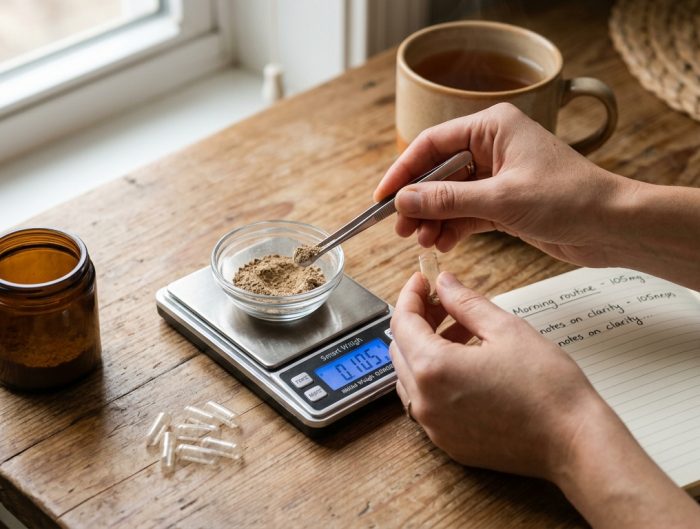
At lower doses, particularly in the microdosing range of 0.05 to 0.15 grams, the visual component is absent. Instead, people report a subtle shift in mood, a gentle increase in creative thinking, or a slightly different quality of attention. Because Jack Frost is more concentrated than average cubensis, microdosers need to be especially precise with their measurements. A kitchen scale accurate to 0.01 grams is essential, not optional.
Some people describe Jack Frost experiences as having a warm, euphoric quality, while others find them more analytical and cerebral. This variability is normal and reflects the complex interaction between the mushroom’s chemistry and your own unique neurobiology. There’s no single “correct” Jack Frost experience.
Typical Onset and Peak Timelines
The timeline of a Jack Frost experience follows the general psilocybin pattern, but the higher potency can compress the onset slightly. Here’s a rough framework for a moderate dose:
- Onset: 20 to 40 minutes after ingestion. Some people notice the first subtle shifts within 15 minutes, especially on an empty stomach. A slight fluttering in the stomach, a change in how light looks, or a mild sense of anticipation are common early signs.
- Come-up: 40 to 90 minutes. This is the transition period where intensity builds. It can feel uncomfortable for some people, with mild nausea, restlessness, or anxiety. Breathing exercises and a comfortable setting help enormously during this phase.
- Peak: 90 minutes to 3 hours. The most intense portion of the experience. Visual and cognitive changes are at their strongest. This is the window where the most meaningful introspective work tends to happen.
- Plateau and descent: 3 to 5 hours. Intensity gradually decreases. Many people find this phase pleasant and reflective, with a gentle sense of openness.
- Afterglow: 5 to 8 hours. Most acute changes have subsided, but a subtle shift in mood or perception may linger. Some people feel unusually clear or peaceful during this period.
Total duration is typically 4 to 6 hours for the primary experience, with residual changes lasting somewhat longer. Jack Frost doesn’t appear to produce significantly longer experiences than other cubensis strains, but the peak can feel more intense per gram, which is consistent with the elevated alkaloid content.
Eating a meal shortly before ingestion can delay onset by 30 minutes or more and may reduce peak intensity. If you’re exploring Jack Frost for the first time, having some ginger tea on hand can help with any stomach discomfort during the come-up phase.
Dosage Guidelines for Potent Strains
Getting your dose right matters with any psilocybin mushroom, but it matters even more with above-average strains like Jack Frost. The difference between a gentle, insightful experience and an overwhelming one can come down to half a gram, and that margin shrinks when you’re working with more concentrated material.
The most important principle is this: you can always take more next time, but you can’t take less once you’ve already consumed a dose. This sounds obvious, but excitement or impatience leads many people to overshoot, especially when they’re accustomed to milder strains and don’t adjust their expectations for a potent variety.
A reasonable starting framework for dried Jack Frost mushrooms looks something like this:
- Microdose: 0.05 to 0.15 grams. Sub-perceptual, meaning you shouldn’t feel noticeably altered. The goal is subtle shifts in mood, focus, or creativity over time. Think of it like the difference between a day where everything flows a little more easily versus a normal day: you might not even notice it without journaling.
- Low dose: 0.3 to 0.7 grams. Mild perceptual changes, enhanced sensory appreciation, gentle mood elevation. A good range for a first intentional experience with Jack Frost.
- Moderate dose: 1 to 1.5 grams. Noticeable visual and cognitive changes. Emotional content may arise. Best approached with a clear intention and a comfortable, safe setting.
- Strong dose: 2 to 3 grams. Significant perceptual shifts, deep introspection, potential for challenging material to surface. Not recommended without prior experience and a trusted companion.
- Very strong dose: 3.5+ grams. Intense experiences that can be disorienting and psychologically demanding. This range requires significant preparation, experience, and ideally a skilled guide or sitter.
These ranges are lower than what you’d see for a standard cubensis strain, reflecting Jack Frost’s elevated potency. If you’ve only ever worked with Golden Teachers or B+ mushrooms, resist the temptation to use your usual dose as a starting point.
Microdosing vs. Heroic Dose Thresholds
The microdosing community has grown enormously, and Jack Frost’s potency makes it both appealing and tricky for this purpose. The appeal is that you need less material per dose, which can be economical. The challenge is that small measurement errors translate into bigger experiential differences when the mushroom is more concentrated.
For microdosing with Jack Frost, precision is everything. A 0.1 gram dose of Jack Frost at 1.0% total tryptamine content delivers roughly the same amount of psilocybin as a 0.15 gram dose of standard cubensis at 0.65%. That’s a meaningful difference. If your scale isn’t accurate or you’re eyeballing amounts, you risk crossing from sub-perceptual into perceptual territory, which can be disruptive if you’re trying to go about your normal day.
At Healing Dose, we encourage people to approach microdosing as a practice rather than a quick fix. The most meaningful changes tend to emerge over weeks or months of consistent, intentional use combined with reflection. A microdosing journal where you note your dose, the time you took it, your mood throughout the day, and any observations before bed is one of the most valuable tools you can use. Without that kind of tracking, it’s easy to miss the quiet, cumulative shifts that microdosing tends to produce.
On the opposite end of the spectrum, “heroic dose” is a term popularized by Terence McKenna to describe doses of 5 grams or more of dried cubensis in silent darkness. With Jack Frost’s elevated potency, a heroic-equivalent experience might begin at 3 to 3.5 grams. This is not a range to approach casually. Experiences at this intensity can be profoundly meaningful, but they can also be deeply challenging, and the line between the two is unpredictable. If you’re considering this territory, extensive preparation, a safe environment, and an experienced sitter are non-negotiable.
Safety and Storage for Maximum Potency Retention
You’ve gone through the effort of understanding Jack Frost’s genetics, potency, and dosing considerations. Now here’s a detail that many people overlook: how you store your dried mushrooms has a direct impact on how much potency they retain over time. Psilocybin and especially psilocin degrade when exposed to heat, light, oxygen, and moisture. Poor storage can reduce the active compound content by 20% to 50% within just a few months.
The ideal storage approach is straightforward:
- Dry thoroughly: Mushrooms should be cracker-dry before long-term storage. Any residual moisture promotes bacterial growth and accelerates degradation. A food dehydrator set to 130-150°F works well. You should be able to snap the stem cleanly without any bending.
- Use airtight containers: Mason jars with tight-fitting lids work perfectly. Vacuum-sealed bags are even better. The goal is to minimize oxygen exposure.
- Add desiccant packets: Small silica gel packets inside your storage container absorb any residual moisture and help maintain dryness over time.
- Store in a cool, dark place: A closet shelf, a drawer, or a cabinet away from heat sources is ideal. Avoid the kitchen counter, windowsills, or anywhere that gets warm or sunny. Refrigeration can work but introduces condensation risks every time you open the container.
- Avoid frequent opening: Each time you open your storage container, you introduce fresh oxygen and potentially moisture. If you’re microdosing regularly, consider portioning out a week or two of doses into a smaller container and keeping the bulk supply sealed.
Properly stored dried Jack Frost mushrooms can retain the vast majority of their potency for 6 to 12 months. After that, gradual degradation is expected, though the mushrooms don’t become unsafe: they just become weaker. If you notice your stored mushrooms have lost their characteristic smell or appear discolored, the potency has likely diminished.
Grinding dried mushrooms into powder and storing the powder in capsules is a popular approach for microdosing, and it also helps with dosing consistency since whole mushrooms can vary in potency from cap to stem. However, powder has more surface area exposed to air, so it may degrade slightly faster than whole dried specimens. If you go the capsule route, make them in small batches and store the remaining whole mushrooms separately.
One safety note that applies to all psilocybin mushrooms, not just Jack Frost: never combine psilocybin with lithium or other medications without consulting a healthcare provider. Interactions with SSRIs, MAOIs, and other psychiatric medications are complex and can range from reduced efficacy to genuinely dangerous reactions. If you’re on any medication, do your research and talk to a knowledgeable professional before proceeding.
Set and setting remain the most important safety variables for any psilocybin experience. “Set” refers to your mindset: your emotional state, intentions, and expectations going in. “Setting” refers to your physical environment and the people around you. A calm, comfortable space with people you trust dramatically reduces the likelihood of a difficult experience, regardless of the strain or dose.
Finding Your Starting Point with Jack Frost
Jack Frost mushrooms occupy a fascinating space in the cubensis world. They’re beautiful to look at, relatively straightforward to cultivate, and meaningfully more potent than the average strain. Their genetic heritage from True Albino Teacher and Albino Penis Envy gives them an alkaloid profile that consistently tests above standard cubensis, typically ranging from 0.8% to 1.2% total tryptamine content by dry weight.
But potency is only one piece of the picture. How you store your mushrooms, when they were harvested, what substrate they grew on, and your own unique body chemistry all influence your actual experience. The numbers provide a starting framework, not a precise prediction. This is why we always encourage starting with less than you think you need and adjusting from there based on your own careful observations.
If you’re new to microdosing or exploring a potent strain like Jack Frost for the first time, having a clear sense of your personal starting range makes all the difference. You can take the dose quiz to find a gentle beginning point based on your goals, experience level, and individual sensitivity. It’s a small step, but it sets the tone for a thoughtful, intentional practice: one where you’re paying attention, staying curious, and giving yourself permission to go slowly.

You might also like