Most people who start microdosing are chasing something during the day: a steadier mood, sharper focus, a gentler relationship with their own thoughts. But the effects don’t clock out when you do. What happens after the lights go off and you close your eyes is just as important, and sometimes just as surprising, as anything you notice during waking hours.
The relationship between microdosing and sleep is one of the most common questions we hear from people beginning their exploration. Some report the best rest of their lives. Others find themselves staring at the ceiling at 2 a.m., wondering what went wrong. The truth is that sub-perceptual doses of psychedelics interact with the same neurochemical systems that regulate your sleep-wake cycle, and understanding that interaction can make the difference between restful nights and frustrating ones. If you’ve been curious about how tiny amounts of psilocybin or LSD might affect what happens when your head hits the pillow, you’re in the right place. This is a careful, honest look at what we know, what we don’t, and how to make thoughtful choices that support both your daytime intentions and your nighttime recovery.
The Relationship Between Sub-Perceptual Dosing and Sleep Architecture
Sleep isn’t a single state. It’s a complex, cyclical architecture of stages, each with its own purpose, from memory consolidation to immune function to emotional processing. When you introduce even a tiny amount of a psychedelic substance into your system, you’re not just altering your waking consciousness: you’re potentially influencing the very machinery that builds and maintains your sleep.
Understanding this starts with two foundational pieces: what microdosing actually means in precise terms, and how these substances interact with the biological systems that govern your internal clock. Neither of these is as straightforward as you might expect, and that’s exactly why they deserve careful attention.
Defining Microdosing and the Biological Clock
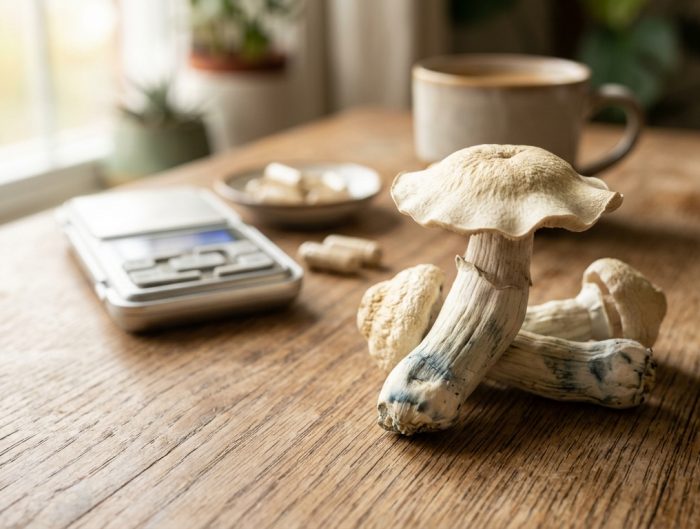
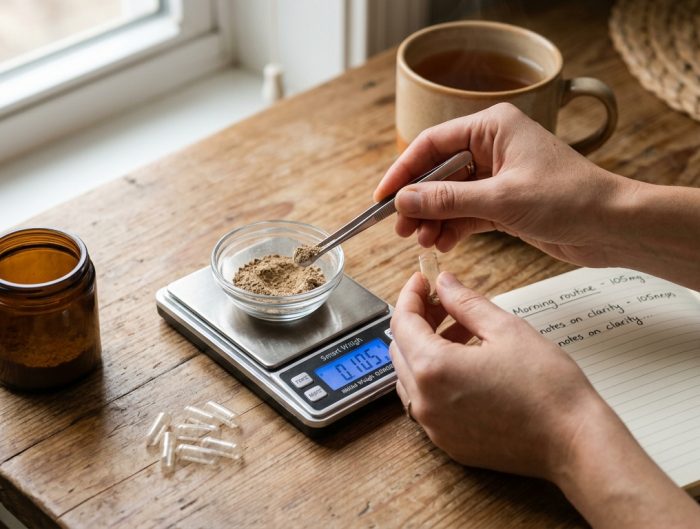
A microdose sits at the sub-perceptual threshold, meaning it’s a dose small enough that you shouldn’t notice any overt perceptual changes: no visual distortions, no altered sense of time, no “feeling high.” For psilocybin, this typically falls between 0.05g and 0.2g of dried mushrooms. For LSD, it’s usually 5 to 20 micrograms. These ranges vary from person to person, much like caffeine sensitivity varies: what barely registers for one person might feel like too much for another.
Your biological clock, or circadian rhythm, is the internal 24-hour cycle that tells your body when to be alert and when to wind down. It’s governed primarily by the suprachiasmatic nucleus in your hypothalamus, which responds to light cues and regulates the release of hormones like cortisol (for wakefulness) and melatonin (for sleepiness). This system is exquisitely sensitive to neurochemical fluctuations.
Psychedelic compounds, even in microdoses, interact with serotonin receptors throughout the brain. Since serotonin is one of the primary neurotransmitters involved in circadian regulation, even a subtle nudge to the serotonergic system can ripple outward into your sleep-wake patterns. Think of it like adjusting the tension on a single guitar string: the change might be small, but it shifts the harmonic relationship of the whole instrument.
A 2026 RAND report found that millions of U.S. adults are now microdosing psychedelics, which means these questions about sleep impact are no longer niche. They’re relevant to a growing population of people who want to understand what’s happening in their bodies during the full 24-hour cycle, not just the hours they’re awake and paying attention.
Serotonin Receptor Activation and Melatonin Production
Here’s where the biology gets genuinely interesting. Both psilocybin (converted to psilocin in the body) and LSD primarily activate the 5-HT2A serotonin receptor. This is the same receptor class involved in mood regulation, cognitive flexibility, and yes, sleep architecture. But the connection to sleep runs deeper than just receptor activation.
Melatonin, the hormone most directly responsible for making you feel sleepy, is synthesized from serotonin. The pathway goes like this: tryptophan (from food) converts to serotonin, which then converts to melatonin in the pineal gland, primarily in response to darkness. When a psychedelic compound occupies serotonin receptors, even at sub-perceptual levels, it can theoretically influence how much serotonin is available for melatonin conversion later in the day.
This doesn’t mean microdosing will automatically disrupt your melatonin production. The effect is subtle and depends on timing, dose, and individual biology. But it does explain why some people notice changes in how quickly they fall asleep or how deeply they sleep on dosing days versus rest days. Your body’s serotonin economy is a shared resource, and introducing even a small external influence on that system can shift the balance.
What many people describe is not a dramatic disruption but a gentle shift: falling asleep 20 minutes later than usual, or waking up feeling slightly more rested despite sleeping the same number of hours. These quiet changes are worth tracking, which is one reason we emphasize journaling as a core part of any microdosing practice at Healing Dose. Without written records, these subtle patterns are easy to miss or misattribute.
Impact on REM and Deep Sleep Cycles
Your nightly sleep unfolds in roughly 90-minute cycles, each containing stages of light sleep, deep sleep (also called slow-wave sleep), and REM (rapid eye movement) sleep. Each stage serves a different function, and the balance between them determines how rested and restored you feel the next morning. Microdosing appears to influence this balance, though the direction and magnitude of that influence depend on several factors.
Alterations in Dream Intensity and REM Duration
One of the most commonly reported experiences among people who microdose is a change in dream quality. Dreams become more vivid, more narrative, more emotionally textured. Some people find this fascinating. Others find it unsettling, especially if the dreams carry emotional weight they weren’t expecting.
REM sleep is when most dreaming occurs, and it’s also the stage most closely tied to emotional processing and memory consolidation. Because psychedelic compounds increase activity at 5-HT2A receptors, and because these receptors play a role in modulating REM sleep, there’s a plausible biological basis for the dream changes people report. Research published on ResearchGate found that LSD increases sleep duration the night after microdosing, suggesting that the effects on sleep architecture may extend beyond the dosing day itself.
Not everyone experiences intensified dreams, and those who do often report that the intensity fluctuates across their protocol. On dosing days, dreams might be more vivid. On the second day after dosing, they might return to baseline. On rest days, some people report unusually peaceful or even blank dream recall. This variability is normal and reflects the dynamic way your brain processes the subtle neurochemical shifts.
If vivid dreams are bothering you, it’s worth noting in your journal whether they correlate with dosing days, specific dose sizes, or particular emotional themes you’ve been processing during the day. Often, the dream content itself offers useful information about what your subconscious is working through, which is part of why integration and reflection matter so much in this practice.
Slow-Wave Sleep and Physical Recovery
Deep sleep, or slow-wave sleep, is where your body does its heaviest physical repair work. Growth hormone is released, tissues are repaired, and the immune system gets a boost. This stage is critical for athletes, for anyone recovering from illness, and frankly for anyone who wants to feel physically good the next day.
The relationship between microdosing and deep sleep is less well-studied than REM effects, but user reports paint an interesting picture. Many people describe feeling more physically restored on mornings after dosing days, even when their total sleep time hasn’t changed. This could reflect a genuine increase in slow-wave sleep duration, or it could reflect improved sleep efficiency: spending less time in light sleep and more time in the restorative stages.
One possible mechanism involves the downstream effects of serotonin receptor activation on GABAergic systems. GABA is the brain’s primary inhibitory neurotransmitter, and it plays a central role in initiating and maintaining deep sleep. If microdosing subtly enhances GABAergic tone in the hours after the acute effects wear off, that could explain the improved sense of physical recovery some people report.
This is an area where individual variability is enormous. Some people notice no change in physical recovery. A small number report feeling slightly more fatigued on the mornings after dosing, which could indicate that their sleep architecture is being disrupted rather than enhanced. If you’re tracking your sleep with a wearable device, pay attention to your deep sleep percentages on dosing versus non-dosing nights. The data won’t be perfectly precise, but patterns over weeks can be genuinely informative.
Timing and Dosage: Avoiding Sleep Fragmentation
If there’s one practical factor that determines whether microdosing supports or disrupts your sleep, it’s timing. The same dose that promotes restful sleep when taken at 7 a.m. can keep you awake until midnight if taken at 3 p.m. This isn’t a flaw in the practice: it’s a feature of how these substances interact with your circadian biology. Getting the timing right is one of the most important adjustments you can make.
The Stimulant Effect of Morning vs. Evening Dosing
Both psilocybin and LSD have mild stimulant properties at sub-perceptual doses. Many people describe a gentle hum of energy, a subtle physical buzz that feels similar to a half cup of coffee. This is partly due to serotonin receptor activation increasing cortical arousal, and partly due to downstream effects on dopamine and norepinephrine systems.
Because of this stimulant quality, the overwhelming consensus among experienced microdosers is to dose in the morning: ideally before 10 a.m. This gives the acute effects roughly 6 to 8 hours to resolve before your body begins its natural wind-down process in the evening. LSD, which has a longer duration of action (8 to 12 hours even at microdose levels), is particularly sensitive to timing. Taking an LSD microdose after noon is one of the most common causes of sleep difficulty reported by beginners.
Psilocybin tends to be slightly more forgiving on timing because its active duration is shorter (4 to 6 hours), but morning dosing is still the safest bet. If you’re someone who is naturally sensitive to stimulants, meaning you can’t drink coffee after noon without it affecting your sleep, treat microdosing with the same caution.
Here’s a practical guideline that works for most people:
- Psilocybin microdose: take before 9 a.m.
- LSD microdose: take before 8 a.m.
- If you notice sleep disruption even with morning dosing, try reducing your dose by 25% before adjusting timing further.
Cumulative Effects and the ‘Afterglow’ Night
Something that catches many people off guard is that the effects of microdosing on sleep don’t always show up on the dosing day itself. Many protocols, like the Fadiman protocol (one day on, two days off), are designed with rest days specifically because the neurochemical effects extend beyond the acute window.
The night after a dosing day is sometimes called the “afterglow” night. This is when many people report their best sleep: deeper, more restful, with a sense of waking up genuinely refreshed. The mechanism likely involves a rebound effect in serotonin availability. After the microdose has cleared the receptors, there may be a temporary upregulation in serotonergic tone that supports melatonin production and sleep initiation.
But cumulative effects matter too. If you’re dosing too frequently, say every day or every other day without rest periods, you may notice a gradual buildup of stimulant-like effects that erode sleep quality over time. This is one reason why rest days aren’t optional: they’re a structural part of the practice that allows your neurochemistry to return to baseline.
If you’re new to this and trying to figure out the right rhythm, start with the Fadiman protocol and pay close attention to your sleep on all three nights of the cycle: dosing night, the day after, and the second rest day. Your journal entries across these nights will reveal your personal pattern more reliably than any general advice can.
Psychological Factors and Sleep Latency
Sleep isn’t purely a biological event. Your psychological state, what’s happening in your mind as you lie in bed, plays an enormous role in how quickly you fall asleep (sleep latency) and how well you stay asleep. Microdosing interacts with this psychological dimension in ways that can be both helpful and challenging.
Reducing Bedtime Anxiety Through Cognitive Flexibility
One of the most consistently reported benefits of microdosing is a reduction in rumination: that exhausting loop of repetitive, anxious thoughts that often intensifies at bedtime. When you’re lying in the dark with nothing to distract you, your mind can become a hostile environment if it’s stuck in worry mode.
Microdosing appears to support cognitive flexibility, which is the ability to shift perspective, let go of fixed thought patterns, and approach problems from new angles. This flexibility can translate directly into easier sleep onset. Instead of lying awake replaying the same anxious scenario for the fifteenth time, you might find yourself able to gently redirect your attention, notice the thought without getting stuck in it, and drift off more naturally.
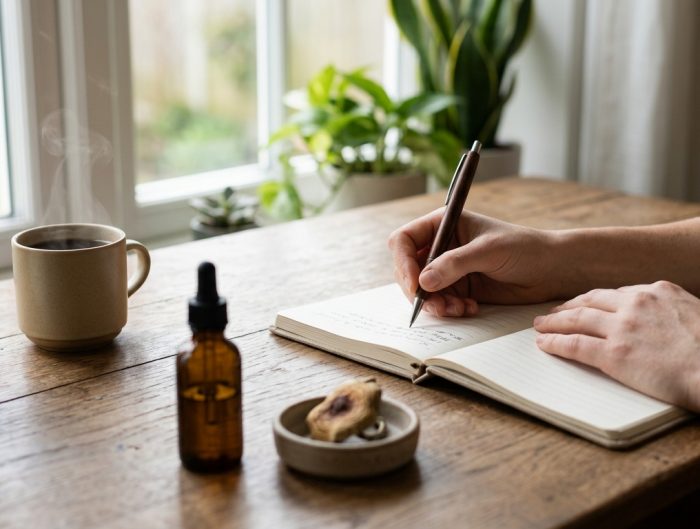
This isn’t magic, and it doesn’t happen automatically. The cognitive flexibility that microdosing may support still needs to be paired with intentional practices: a wind-down routine, breathing exercises, or even a brief journaling session before bed to “empty” the mind onto paper. At Healing Dose, we often recommend a simple three-line evening journal: one thing you noticed today, one thing you’re grateful for, and one thing you’re releasing. This kind of reflective practice works synergistically with the subtle cognitive shifts that microdosing can facilitate.
The research supports the idea that psychedelics, even at sub-perceptual doses, can reduce rigid thought patterns. A RAND Corporation study examining the broader landscape of psychedelic use found that adults who microdose often report improvements in mental well-being, which includes reduced anxiety that could plausibly translate to better sleep onset.
Managing Potential Hyper-Arousal and Insomnia
Not everyone finds that microdosing quiets the mind at bedtime. For some people, particularly those who are highly sensitive to psychoactive substances or who are processing significant emotional material, microdosing can increase mental arousal in ways that interfere with sleep.
This hyper-arousal might look like a mind that feels “too awake,” racing with ideas, connections, and creative energy that simply won’t turn off. It’s not the same as anxiety: it often feels positive or neutral in tone but is still incompatible with falling asleep. Some people describe it as having a brain that’s “lit up” in a way that’s fascinating during the day but unwelcome at 11 p.m.
If this sounds familiar, here are some practical strategies:
- Reduce your dose. Even a small reduction (from 0.15g to 0.1g of psilocybin, for example) can significantly reduce stimulant-like effects without eliminating the benefits you’re seeking.
- Ensure you’re dosing early enough. If you’re already dosing in the morning and still experiencing nighttime arousal, the dose itself may be too high for your sensitivity level.
- Add a physical wind-down practice. Gentle stretching, a warm bath, or progressive muscle relaxation can help shift your nervous system from sympathetic (alert) to parasympathetic (rest) mode.
- Consider whether emotional processing is contributing. Sometimes the “insomnia” isn’t really about the substance at all: it’s about the emotional material that’s surfacing as a result of increased self-awareness. If this is the case, a brief journaling session before bed can help externalize those thoughts.
The honest truth is that not every person’s nervous system responds well to microdosing, and sleep disruption that persists despite adjustments to timing and dose may be a signal that this practice isn’t the right fit for you right now. That’s a valid conclusion, and it’s one we always encourage people to be open to.
Current Research Findings and User-Reported Data
The scientific study of microdosing and sleep is still in its early stages, but the body of evidence is growing steadily. As of 2026, we have a mix of controlled studies, observational data, and large-scale surveys that together paint a nuanced picture.
The most directly relevant finding comes from research showing that LSD microdoses increase sleep duration on the night following administration. This aligns with the “afterglow night” phenomenon described by many users and suggests that the sleep-promoting effects may be most pronounced not on the dosing day itself but on the subsequent night. The mechanism likely involves post-acute changes in serotonin receptor sensitivity and downstream melatonin production.
A significant challenge in this field is separating pharmacological effects from expectancy effects. People who choose to microdose often simultaneously adopt other health-promoting behaviors: better sleep hygiene, reduced alcohol consumption, increased mindfulness practice. These confounding factors make it difficult to isolate the specific contribution of the microdose itself to any observed sleep changes.
RAND Corporation research has been particularly valuable in establishing the scale of microdosing practice in the U.S. Their findings that insufficient sleep affects a significant portion of American adults provide important context: sleep problems are widespread, and any intervention that even modestly improves sleep quality for some people is worth studying carefully.
User-reported data from online communities and structured surveys consistently identifies several patterns:
- Most people who microdose in the morning report no negative impact on sleep, and many report modest improvements.
- Evening dosing is strongly associated with sleep disruption, particularly with LSD.
- Vivid dreams are common, especially in the first few weeks of a new protocol.
- Sleep improvements tend to be cumulative, becoming more noticeable after 4 to 6 weeks of consistent practice.
- A minority of users (roughly 10 to 15% based on community surveys) report persistent sleep difficulties that don’t resolve with timing or dose adjustments.
It’s worth being honest about the limitations here. Most of this data is self-reported, which introduces bias. People who have positive experiences are more likely to continue microdosing and to participate in surveys about it. Controlled, placebo-matched studies with objective sleep measurement (polysomnography or validated actigraphy) are still relatively rare, and we need more of them before making strong claims.
What we can say with reasonable confidence is that microdosing interacts with sleep in meaningful ways, that timing and dose are the most important variables you can control, and that individual responses vary widely. This last point is crucial: your experience may differ significantly from what the “average” microdose user reports, and that’s perfectly normal.
Optimizing Your Protocol for Restorative Rest
Bringing all of this together into practical guidance, here’s how to approach your microdosing practice with sleep quality as a priority. These aren’t rigid rules: they’re starting points that you can adjust based on your own observations and journal data.
Start by establishing a sleep baseline before you begin microdosing. Track your sleep for at least one week without any changes to your routine. Note your typical sleep latency (how long it takes to fall asleep), any nighttime awakenings, dream recall, and how you feel upon waking. This baseline gives you something concrete to compare against once you introduce microdosing.
When you begin your protocol, dose in the morning. Before 9 a.m. for psilocybin, before 8 a.m. for LSD. Take your dose with breakfast or shortly after. This gives the stimulant-like effects maximum time to resolve before your evening wind-down.
Use the Fadiman protocol (dose on day 1, rest on days 2 and 3, repeat) as your starting framework. Pay attention to all three nights in the cycle, not just the dosing night. Many people find their sleep is slightly lighter on dosing night and noticeably deeper on the afterglow night. If this pattern holds for you, you can plan accordingly: schedule your most demanding physical or cognitive tasks for the day after dosing, when you’re likely to wake up feeling most restored.
Keep your evening routine consistent regardless of whether it’s a dosing day or rest day. A stable bedtime, limited screen exposure in the last hour, and a brief reflective practice (journaling, gentle stretching, or a few minutes of focused breathing) all support the transition from wakefulness to sleep. These habits become even more important on dosing days when your neurochemistry may be slightly shifted.
If you notice sleep disruption, adjust one variable at a time. Try reducing your dose first. If that doesn’t help, try dosing earlier. If neither adjustment resolves the issue after two full cycles, consider extending your rest days or pausing the protocol entirely for a week to let your system recalibrate.
Track everything. A simple journal with entries for dose size, timing, sleep quality (rated 1 to 10), dream recall, and morning energy level will reveal patterns within 3 to 4 weeks that no amount of general advice can predict. At Healing Dose, we consider this kind of self-observation the most important part of any microdosing practice: the substance is just one ingredient, and your attention to your own experience is the other.
The relationship between microdosing and sleep is deeply personal. What works beautifully for one person may not suit another, and the only way to find your own pattern is through careful, patient experimentation paired with honest self-reflection. Don’t rush to conclusions based on a single night’s experience. Give yourself at least three full cycles before evaluating whether your protocol is supporting or disrupting your rest.
If you’re just getting started and want help finding the right dose for your body and goals, take the dose quiz to get a personalized starting point. It’s a simple, thoughtful way to begin this exploration at your own pace, with sleep quality as one of the factors you’re actively considering from day one.
Your sleep matters. It’s the foundation that everything else rests on: your mood, your focus, your physical recovery, your emotional resilience. Approaching microdosing with this awareness, treating your nights as carefully as your days, is what turns a casual experiment into a genuinely reflective practice.

You might also like