The question of microdose vs macrodose comes up more often than you might expect, especially among people who are thoughtfully exploring psychedelics for the first time. Maybe you’ve heard a friend describe how tiny amounts of psilocybin helped them feel more present during their workday. Or perhaps you’ve read about someone who sat with a full ceremonial dose and came away with a profoundly different relationship to grief. Both paths exist on the same spectrum, but they ask very different things of you, and they offer very different kinds of experiences in return.
If you’re standing at this crossroads, feeling a little unsure about which direction makes sense for your life, you’re in good company. There’s no single right answer here, and the best choice depends on your goals, your circumstances, and your readiness. What we can do is walk through the differences honestly, without hype, so you can make a decision that feels grounded rather than impulsive. That’s what this guide is for: helping you understand both approaches clearly enough to trust your own judgment.
Defining the Spectrum of Psychedelic Use
Psychedelic substances, particularly psilocybin mushrooms and LSD, produce a wide range of experiences depending on how much you take. Think of it less as an on-off switch and more as a volume dial. At the low end, you might notice a subtle shift in mood or focus that’s barely distinguishable from a good night’s sleep. At the high end, you might experience a complete dissolution of your ordinary sense of self, with vivid visual phenomena and intense emotional states.
The spectrum between these two poles isn’t empty. There are moderate doses that produce noticeable perceptual shifts without full-blown psychedelic experiences. There are “museum doses” that people take to enhance sensory appreciation during art or nature walks. And there are therapeutic doses used in clinical research settings, typically administered under professional supervision with structured preparation and follow-up.
Understanding where microdosing and macrodosing sit on this spectrum helps you appreciate that they’re not just different amounts of the same thing. They’re fundamentally different practices with different intentions, different protocols, and different demands on your time and emotional bandwidth. A microdose is like learning to play scales on a piano. A macrodose is more like performing a concerto: both involve music, but the preparation, skill, and stakes are quite different.
The Science of Sub-Perceptual Microdosing
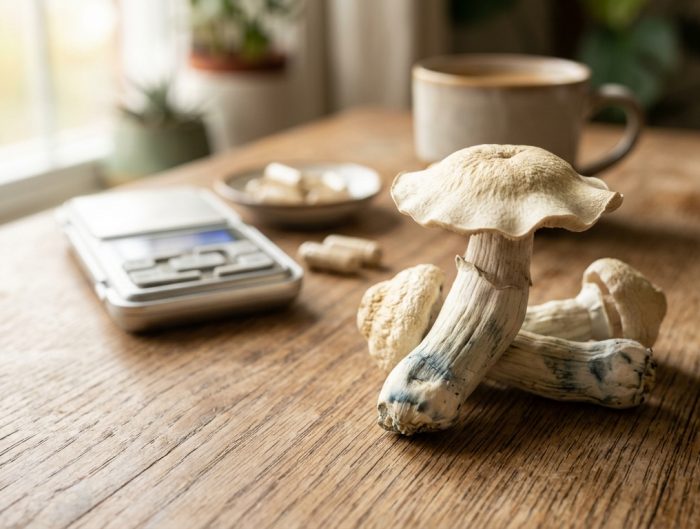
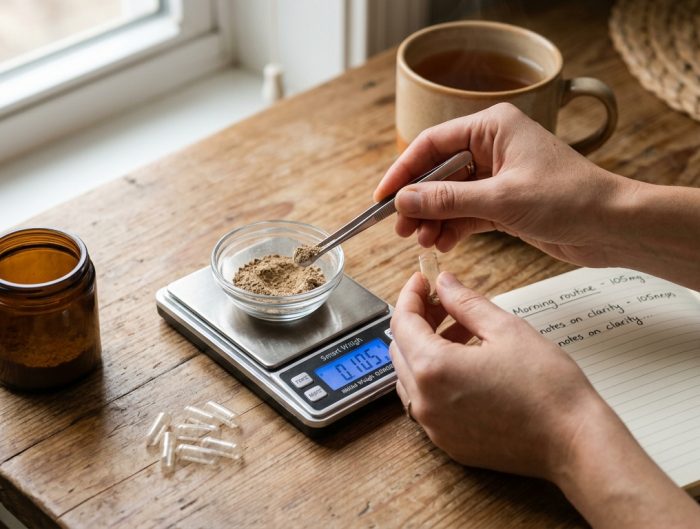
A microdose is typically defined as a sub-perceptual amount of a psychedelic substance, meaning the dose is low enough that you shouldn’t feel “high” or experience any significant alteration of your senses. For psilocybin, this usually falls somewhere between 50 and 200 milligrams of dried mushroom material (roughly 0.05 to 0.2 grams). For LSD, microdoses generally range from 5 to 20 micrograms, compared to a standard full dose of 100 to 200 micrograms.
The term “sub-perceptual threshold” is worth understanding clearly. It means the dose sits below the level where you’d consciously perceive psychedelic effects. You wouldn’t see colors differently. You wouldn’t feel a body high. On a well-calibrated microdose day, someone sitting next to you at work wouldn’t notice anything different about you at all.
So what’s actually happening? The prevailing theory involves serotonin receptor activity, specifically the 5-HT2A receptor. Psychedelics bind to these receptors, and even at very low doses, they may promote subtle increases in neuroplasticity: your brain’s ability to form new connections and patterns. Research from institutions like Imperial College London and Johns Hopkins has shown that psychedelics can increase connectivity between brain regions that don’t typically communicate much. At microdose levels, this effect is gentle, more like a quiet hum of background flexibility than a dramatic rewiring.
I remember my own first microdose day vividly, not because anything dramatic happened, but because almost nothing did. I’d expected some kind of noticeable shift, maybe a burst of creativity or a wave of emotional insight. Instead, I just had a slightly better morning. My coffee tasted a little richer. I was a touch more patient with a frustrating email thread. It wasn’t until I looked back at the end of the week that I noticed a pattern: fewer reactive moments, a bit more ease. That subtlety is the whole point, and it’s also why many people initially wonder if microdosing is “working” at all.
Most microdosing protocols involve taking a dose every few days rather than daily. The Fadiman protocol, developed by psychedelic researcher James Fadiman, suggests dosing on Day 1, resting on Days 2 and 3, then dosing again on Day 4. The Stamets Stack, named after mycologist Paul Stamets, pairs psilocybin with lion’s mane mushroom and niacin on a five-days-on, two-days-off schedule. These rest days matter because they help prevent tolerance buildup and give you time to observe and reflect on any subtle changes.
The Transformative Nature of Macrodosing
Macrodosing occupies the opposite end of the spectrum. A macrodose of psilocybin typically ranges from 2 to 5 grams of dried mushrooms, though clinical trials often use synthetic psilocybin measured in milligrams per kilogram of body weight. For LSD, a macrodose generally starts around 100 micrograms and can go higher depending on the context and intention.
The experience itself is unmistakable. Unlike microdosing, where you might question whether anything is happening, a macrodose makes its presence known within 30 to 60 minutes. Physical sensations often come first: a warmth spreading through your body, a heaviness or lightness in your limbs, sometimes nausea. Then the perceptual shifts begin. Colors may intensify. Patterns might appear on surfaces. Your sense of time can stretch or compress in ways that feel disorienting.
But the most significant aspects of macrodosing tend to be psychological and emotional rather than visual. People frequently describe encountering deeply buried memories, confronting fears they’ve avoided for years, or experiencing a sense of connection to something larger than themselves. Clinical research at Johns Hopkins and NYU has documented how a single high-dose psilocybin session, combined with proper therapeutic support, can produce lasting reductions in depression and anxiety, particularly in patients facing terminal illness. A 2023 study published in Nature Medicine found that psilocybin-assisted therapy produced significant improvements in treatment-resistant depression, with many participants maintaining benefits at 12-month follow-up.
The word “transformative” gets used a lot around macrodosing, and while we try to avoid hype at Healing Dose, there’s genuine research supporting the idea that these experiences can shift deeply held patterns. The mechanism appears to involve a temporary disruption of the default mode network, the brain system responsible for your habitual sense of self. When that network quiets down, rigid thought patterns can loosen, and new perspectives become accessible.
That said, macrodosing is not casual. It requires significant preparation, a safe and comfortable environment, trusted companionship or professional guidance, and dedicated time afterward for processing what came up. A macrodose experience can last 4 to 8 hours, and the emotional reverberations can continue for days or weeks.
Core Benefits and Therapeutic Applications
Both microdosing and macrodosing have attracted serious attention from researchers, therapists, and individuals seeking alternatives to conventional approaches for mental health challenges. But they serve different purposes, and understanding those distinctions will help you figure out which approach aligns with what you’re actually looking for.
Cognitive Enhancement and Daily Productivity
Microdosing has gained particular popularity among people interested in cognitive performance and daily functioning. The appeal is straightforward: you take a tiny amount, go about your day, and potentially experience improved focus, creativity, or emotional regulation without any impairment.
Anecdotal reports and preliminary research suggest several potential cognitive benefits:
- Improved ability to sustain attention on complex tasks
- Enhanced creative problem-solving and lateral thinking
- Greater emotional resilience during stressful situations
- A subtle increase in motivation and engagement with routine work
- Reduced tendency toward rumination and negative thought loops
A 2022 naturalistic study published in Scientific Reports followed over 900 microdosers for 30 days and found small but consistent improvements in mood and reductions in anxiety and depression symptoms compared to non-microdosing controls. The improvements were modest, not dramatic, which actually lends credibility to the findings.
I’ve noticed this pattern in my own practice. On microdose days, I don’t suddenly become a productivity machine. What changes is more like a reduction in friction. Tasks that would normally trigger procrastination feel slightly less aversive. Conversations that might normally drain me feel a little more engaging. It’s not a cognitive superpower: it’s more like removing a thin layer of static from your mental signal.
The practical advantage of microdosing for daily life is obvious. You can maintain your normal responsibilities. You can drive, work, parent, exercise, and socialize. There’s no recovery period. For people with demanding schedules who want to explore psychedelic-assisted personal growth without disrupting their routines, microdosing offers a low-barrier entry point.
Macrodosing, by contrast, is not a productivity tool. You won’t be answering emails or attending meetings during a full-dose experience. But some people report that the insights gained from a macrodose session create downstream improvements in how they approach their work and daily habits: a kind of indirect cognitive benefit that unfolds over weeks or months as they integrate what they learned.
Spiritual Breakthroughs and Emotional Processing
If microdosing is about fine-tuning your daily experience, macrodosing is about going deeper into territory that daily life rarely touches. The therapeutic applications of macrodosing tend to center on emotional processing, existential exploration, and what researchers sometimes call “mystical-type experiences.”
Clinical trials have shown that high-dose psilocybin sessions can help people process grief, confront addiction patterns, and work through deeply entrenched depression. The key mechanism seems to be the temporary loosening of psychological defenses that normally keep difficult material out of conscious awareness. In a safe setting with proper support, this can allow people to face painful emotions or memories that they’ve been carrying for years.
Many participants in clinical studies describe their macrodose session as one of the most meaningful experiences of their lives. A 2024 survey of participants in psilocybin-assisted therapy trials found that over 70% rated the experience among their top five most personally significant events, even when the session itself involved difficult or frightening moments.
This is where the comparison between microdosing and macrodosing becomes less about “which is better” and more about “what do you need right now?” If you’re dealing with a specific, deep-seated emotional pattern that hasn’t responded to other approaches, a macrodose experience with proper support might offer access to material that microdosing simply can’t reach. If you’re looking for gradual, gentle shifts in your baseline mood and functioning, microdosing might be the more appropriate starting point.
There’s also a middle path that some people find valuable. Starting with a microdosing practice to build familiarity with the substance and develop self-awareness, then eventually choosing to explore a larger dose when they feel ready. This isn’t a universal recommendation, just an observation that the two approaches aren’t mutually exclusive.
Comparing the Experience and Lifestyle Integration
One of the most practical considerations when weighing a microdose against a macrodose is how each one fits into the life you’re actually living. Your intentions matter, but so do your logistics.
Time Commitment and Set and Setting
Microdosing requires minimal time commitment per session. You take your dose in the morning, usually with breakfast, and proceed with your day. The total time investment is perhaps five minutes for preparation and consumption. Where the time commitment does add up is in the surrounding practices: journaling, reflection, tracking your mood and energy, and periodically adjusting your protocol. At Healing Dose, we emphasize that microdosing without reflection is like going to the gym without paying attention to your form. You might get some benefit, but you’re missing the real opportunity for growth.
A typical microdosing cycle runs four to eight weeks, with doses taken every few days. During that time, you’re essentially running a personal experiment, observing how you feel on dose days versus rest days and looking for patterns. This requires consistency and a willingness to pay attention to subtle internal shifts: the kind of quiet changes that are easy to miss if you’re not actively looking for them.
Macrodosing demands a completely different kind of time investment. The experience itself lasts anywhere from four to eight hours, depending on the substance and dose. But the real time commitment extends well beyond those hours.
Preparation for a macrodose session should ideally begin days or weeks in advance. This includes:
- Clarifying your intention for the experience
- Arranging a safe, comfortable physical space
- Identifying a trusted sitter or guide who will be present
- Reducing or eliminating alcohol, cannabis, and other substances in the days leading up
- Clearing your schedule for the day of the experience and at least one full day afterward
- Planning for integration work in the days and weeks following
“Set and setting” is a phrase coined by Timothy Leary in the 1960s, and it remains the single most important concept in psychedelic safety. “Set” refers to your mindset: your emotional state, expectations, and intentions. “Setting” refers to your physical and social environment. For microdosing, set and setting matter but aren’t make-or-break because the experience is so mild. For macrodosing, they can mean the difference between a profoundly meaningful experience and a deeply distressing one.
Social and Professional Functionality
Here’s where the practical differences become most stark. On a microdose, you can go to work, have lunch with a friend, pick up your kids from school, and attend a dinner party. Nobody will know unless you tell them. Your cognitive function remains intact, your speech is normal, and your behavior is indistinguishable from your usual self.
On a macrodose, you are functionally unavailable for the duration. You may have difficulty speaking coherently. You might cry, laugh, lie completely still for hours, or need help walking to the bathroom. This isn’t a negative thing: it’s simply the nature of the experience. But it means you need to plan around it rather than fitting it into your regular schedule.
The professional implications differ as well. Microdosing, because it’s sub-perceptual, doesn’t interfere with work performance. Some people even report that their best creative work happens on microdose days, though this is highly individual. A macrodose, on the other hand, requires taking at least one full day off work, and ideally two: one for the experience and one for initial recovery and reflection.
Social functionality during a macrodose is essentially zero. You’ll want to limit your environment to people you trust deeply. Having unexpected visitors, phone calls, or social obligations during a session can be jarring and potentially destabilizing. This is why preparation and planning are so critical.
For people with busy lives, caregiving responsibilities, or demanding careers, microdosing often presents a more realistic starting point. You don’t need to explain a multi-day absence to anyone. You don’t need to arrange childcare. You don’t need to find a guide or sitter. The barrier to entry is simply lower.
Safety, Legalities, and Risk Management
Both microdosing and macrodosing carry real considerations around safety and legality that deserve honest discussion. Neither approach is risk-free, and pretending otherwise would be irresponsible.
Potential Side Effects and Contraindications
Microdosing side effects tend to be mild when they occur. The most commonly reported include:
- Slight increases in anxiety or restlessness, particularly at higher microdose ranges
- Mild headaches, sometimes on the day after dosing
- Difficulty sleeping if the dose is taken too late in the day
- Occasional digestive discomfort from mushroom material
- Emotional sensitivity that can feel uncomfortable if unexpected
I’ve experienced a few of these myself. Early in my microdosing practice, I took a dose that was slightly too high: probably around 250 milligrams of dried psilocybin mushrooms. Instead of the gentle background shift I was used to, I felt jittery and overstimulated, similar to drinking three cups of coffee on an empty stomach. It wasn’t dangerous, but it was unpleasant and made it hard to focus at work. This taught me an important lesson about individual sensitivity. Just as people vary widely in how they respond to caffeine, psychedelic sensitivity differs from person to person. Starting at the lowest possible dose and adjusting gradually is always the wisest approach.
Macrodosing carries more significant risks, primarily psychological. Difficult experiences, sometimes called “challenging sessions” in clinical language, can involve intense fear, paranoia, confusion, or the surfacing of traumatic memories. These experiences aren’t necessarily harmful and can sometimes be therapeutically valuable when properly supported. But without adequate preparation and a safe environment, they can be genuinely distressing and potentially re-traumatizing.
There are also important medical contraindications for both approaches. People with a personal or family history of psychotic disorders (such as schizophrenia or bipolar I disorder) should generally avoid psychedelics entirely. Those taking lithium should never combine it with psychedelics due to the risk of seizures. SSRIs and other serotonergic medications can interact with psychedelics in complex ways: sometimes reducing effects, sometimes creating unpredictable interactions. If you’re taking any psychiatric medication, consulting with a knowledgeable healthcare provider before exploring either microdosing or macrodosing is essential.
The legal landscape around psychedelics continues to shift rapidly. As of 2026, psilocybin has been decriminalized in several U.S. cities and states, with Oregon and Colorado operating regulated therapeutic access programs. Australia approved psilocybin for clinical use in treatment-resistant depression in 2023. Canada has expanded its Special Access Program. But in most jurisdictions worldwide, possession and use of psilocybin and LSD remain illegal. Understanding the specific laws where you live is your responsibility, and the consequences of legal violations can be serious.
The Importance of Integration and Support
Whether you’re microdosing or macrodosing, the experience itself is only half the equation. Integration: the process of making sense of your experiences and translating them into lasting behavioral change: is where the real work happens.
For microdosing, integration looks like consistent self-observation. Keeping a simple journal where you note your dose, the time you took it, and brief observations about your mood, energy, and interactions throughout the day creates a feedback loop that helps you fine-tune your practice. Without this reflection, microdosing can become just another supplement you take without much awareness, and its potential for supporting meaningful change diminishes significantly.
Integration after a macrodose is more intensive and arguably more important. The experience can surface powerful emotions, vivid imagery, and insights that feel absolutely clear in the moment but become slippery and hard to articulate once you return to ordinary consciousness. Writing or recording your reflections as soon as you’re able after a session helps preserve these impressions. Talking with a trusted friend, therapist, or integration circle in the days following can help you process what came up and identify concrete changes you want to make.
Some people find that working with a psychedelic integration therapist is valuable, particularly after a macrodose that involved difficult material. These practitioners are trained to help you make sense of non-ordinary experiences without pathologizing them. Directories like MAPS (Multidisciplinary Association for Psychedelic Studies) and Psychedelic.Support maintain listings of integration-trained professionals.
At Healing Dose, we consider integration non-negotiable. We’ve seen too many people have a powerful experience and then simply return to their old patterns within a few weeks because they didn’t do the follow-up work. A macrodose can open a door, but you still have to walk through it. A microdose can loosen old habits, but you still have to practice new ones.
Community support also matters. Having even one person in your life who understands what you’re exploring and can offer non-judgmental listening makes a meaningful difference. Online communities, local psychedelic societies, and peer support groups have grown significantly in recent years and can provide a sense of connection and accountability.
Determining Your Personal Path to Wellness
The choice between microdosing and macrodosing isn’t really a competition. It’s a question of fit: what fits your current life circumstances, your emotional readiness, your goals, and your comfort level with the unknown.
If you’re new to psychedelics and feeling cautious, microdosing is almost always the gentler starting point. It lets you build a relationship with the substance gradually, learn your own sensitivity, and develop the self-observation skills that will serve you well regardless of which path you ultimately follow. The risks are lower, the time commitment is minimal, and you can stop at any point without disruption.
If you’ve done significant inner work already, have access to a safe setting and trusted support, and feel drawn to a deeper exploration of consciousness or a specific emotional pattern you want to address, a macrodose experience might be appropriate. But “appropriate” here comes with conditions: proper preparation, a suitable environment, and a clear plan for integration afterward.
Some questions worth sitting with as you consider your path:
- What am I hoping to gain from this practice?
- Do I have the time and space for a full-dose experience, or does my current life demand something more flexible?
- Am I looking for gradual, cumulative shifts or a single intensive experience?
- Do I have someone I trust who could support me during a larger experience?
- Am I currently taking any medications that could interact with psychedelics?
- How comfortable am I with uncertainty and the possibility of encountering difficult emotions?
There’s no shame in choosing the gentler path. There’s no medal for choosing the more intense one. What matters is that your choice is informed, intentional, and respectful of where you actually are right now, not where you think you should be.
If you’re leaning toward microdosing and want help figuring out where to begin, we’ve built a short quiz that helps you identify a gentle starting range based on your goals, experience level, and sensitivity. It takes just a few minutes and can give you a clearer sense of direction. Take the quiz here and start at a pace that feels right for you.
Whatever you choose, approach it with patience, respect, and a willingness to listen to what your own experience teaches you. The most important thing isn’t which dose you take: it’s how thoughtfully you engage with the process.

You might also like