Getting the right magic mushroom dosage is one of the most personal decisions you’ll make on this path, and it’s also one of the most consequential. Too little, and you might wonder if anything happened at all. Too much, and you could find yourself in an experience you weren’t prepared for. The sweet spot exists somewhere in between, but it’s different for everyone, and finding yours requires patience, self-awareness, and a willingness to respect the substance.
If you’re feeling uncertain about where to start, that’s actually a good sign. It means you’re approaching this with the kind of care and intentionality that leads to meaningful experiences rather than reckless ones. Whether you’re curious about microdosing for subtle daily shifts or considering a larger dose for deeper self-exploration, the principles for choosing wisely remain the same: understand what you’re working with, know yourself, and start conservatively. This guide walks you through every factor that matters, from mushroom potency and personal sensitivity to practical measurement techniques, so you can make informed choices that feel right for you.
Understanding Psilocybin Potency and Strain Variations
Before you can figure out the right dose, you need to understand that not all mushrooms are created equal. Psilocybin content varies dramatically depending on the species, the growing conditions, and even the specific flush (harvest) from a single batch. Two grams of one variety might feel like three grams of another, which is why blanket dosing advice without context can be misleading or even risky.
Psilocybin is the primary active compound, but it doesn’t work alone. Psilocin, baeocystin, and norbaeocystin are also present in varying ratios depending on the strain. These compounds interact in ways researchers are still studying, and their combined presence may influence the character of the experience. Think of it like coffee: two cups from different beans, roasted differently, can produce very different levels of caffeine and flavor. The same principle applies here.
Growing conditions matter too. Mushrooms cultivated under controlled indoor environments tend to have more consistent potency than wild-harvested specimens. Substrate composition, humidity, temperature, and harvest timing all play a role. This is why even experienced users occasionally encounter surprises with a new batch.
Difference Between Dried and Fresh Mushrooms
One of the most common points of confusion is the difference between fresh and dried mushrooms. Fresh psilocybin mushrooms are roughly 90% water by weight. That means 10 grams of fresh mushrooms contain approximately the same amount of psilocybin as 1 gram of dried mushrooms. If you see a dosing recommendation and aren’t sure whether it refers to fresh or dried material, always assume dried unless stated otherwise, since most published guidelines use dried weight as the standard.
The drying process itself can affect potency slightly. Excessive heat during dehydration may degrade some psilocybin, which is why low-temperature drying (below 70°C or 158°F) is generally recommended. Properly dried mushrooms should snap cleanly rather than bending, and they should be stored in airtight containers away from light and moisture. Poorly dried or improperly stored mushrooms can lose potency over time, making dosing even less predictable.
If you’re working with fresh mushrooms, you’ll need to multiply your target dried dose by roughly 10 to get an equivalent fresh weight. But this conversion isn’t perfectly precise because water content varies between individual specimens. For this reason, most people prefer to work with dried material whenever possible: it’s easier to weigh accurately and produces more consistent experiences.
Species Strength: Cubensis vs. Potent Wild Strains
Psilocybe cubensis is the most widely available and commonly cultivated species. It’s also the one most dosing guidelines are built around. Within cubensis alone, there are dozens of named varieties: Golden Teacher, B+, Penis Envy, Amazonian, and many more. Most cubensis varieties fall within a similar potency range, with psilocybin content typically between 0.5% and 0.9% by dry weight.
The notable exception is the Penis Envy family of cubensis varieties, which can contain significantly higher psilocybin concentrations, sometimes 1.5 to 2 times stronger than typical cubensis strains. If you’re working with Penis Envy or its offshoots (like Albino Penis Envy or Penis Envy Uncut), you’ll want to reduce your dose accordingly. Two grams of Penis Envy could produce an experience closer to what three or even four grams of Golden Teacher might deliver.
Beyond cubensis, wild species like Psilocybe azurescens, Psilocybe cyanescens, and Psilocybe semilanceata (Liberty Caps) can be substantially more potent. Azurescens, for example, has been measured at up to 1.8% psilocybin by dry weight, making it roughly two to three times stronger than average cubensis. If you’re ever working with a species you’re unfamiliar with, treat it with extra caution and reduce your starting dose significantly. Assuming all mushrooms are equal is one of the most common and avoidable mistakes people make.
The Standard Dosage Tiers for Psychedelic Experiences
Dosing psilocybin mushrooms generally falls along a spectrum, and most experienced practitioners describe this spectrum in tiers. These tiers aren’t rigid categories with hard boundaries: they’re more like zones that blend into each other. Your individual response will also shift these zones up or down depending on the personal factors we’ll cover later.
The following ranges assume dried Psilocybe cubensis of average potency. If you’re working with a different species or a notably strong cubensis variety, adjust downward. And remember: you can always take more on a future occasion, but you can never take less once you’ve consumed a dose. That single principle should guide every decision you make.
Microdosing for Sub-Perceptual Benefits
Microdosing refers to taking a dose small enough that you don’t feel any overt psychedelic shifts in perception. The term “sub-perceptual” means the dose sits below your threshold of noticeable alteration. You shouldn’t feel high, see visual distortions, or experience significant changes in your thought patterns. What many people report instead are quiet, subtle shifts: a gentle lift in mood, slightly easier access to creative thinking, or a faint physical buzz that’s easy to overlook if you’re not paying attention.
Typical microdose ranges fall between 0.05 grams and 0.25 grams of dried cubensis. Most people find their personal sweet spot somewhere between 0.1 and 0.15 grams, but this varies. If you notice any perceptual changes (walls breathing, colors appearing more vivid, feeling spacey), your dose is too high for a microdose and should be reduced.
Microdosing protocols usually follow a schedule rather than daily use. The most common patterns include one day on, two days off (the Fadiman protocol) or four days on, three days off. The off days matter: they prevent tolerance buildup and give you space to notice baseline shifts. At Healing Dose, we encourage journaling on both dosing and non-dosing days, because the most interesting changes often reveal themselves in the contrast between the two.
The goal of microdosing isn’t an immediate, dramatic shift. It’s more like adjusting the thermostat by one degree: you might not notice the change in any single moment, but over weeks, the cumulative difference becomes clear.
The Moderate or ‘Museum’ Dose
The so-called “museum dose” sits in the range of roughly 0.5 to 1.5 grams of dried cubensis. The name comes from the idea that you could visit a museum or walk through nature and have an enhanced experience without being overwhelmed or unable to function socially. Colors might look richer, music might feel more emotionally resonant, and you might notice a heightened sense of connection to your surroundings.
This range is popular among people who want more than the subtlety of a microdose but aren’t ready for (or interested in) a full psychedelic experience. At the lower end (0.5 to 0.75 grams), you might feel a light body sensation and mild mood elevation. At the higher end (1.0 to 1.5 grams), you could experience gentle visual enhancement, increased emotional sensitivity, and a noticeable shift in how you process thoughts.
A museum dose can be a wonderful way to get familiar with how psilocybin feels in your body before committing to a larger experience. It gives you data about your personal sensitivity without the intensity that higher doses bring. Many people find this range ideal for social settings, creative projects, or reflective walks in nature.
High Doses and Heroic Journeys
Doses above 2.5 grams of dried cubensis enter territory that most people would describe as a full psychedelic experience. At 2.5 to 3.5 grams, expect significant visual and auditory changes, deep emotional processing, altered sense of time, and potentially profound shifts in perspective. This is the range where many people report experiences that feel spiritually significant or psychologically meaningful.
Above 5 grams, you’re in what Terence McKenna famously called “heroic dose” territory. These experiences can be intensely disorienting, ego-dissolving, and emotionally demanding. They’re not inherently dangerous for physically healthy individuals in safe environments, but they require serious preparation, a trusted sitter, and a commitment to integration afterward.
I want to be honest here: high-dose experiences aren’t always pleasant. They can surface difficult emotions, buried memories, or existential fears. The value often comes not from the experience itself but from how you process and integrate it afterward. If you’re considering a high dose, please don’t do it impulsively. Plan carefully, choose your environment with intention, and have someone you trust nearby.
Personal Factors That Influence Your Sensitivity
Two people can take the exact same dose from the exact same batch and have wildly different experiences. This isn’t a flaw in the dosing system: it’s a reflection of how individually variable our bodies and minds are. Understanding your personal factors helps you calibrate your magic mushroom dosage more accurately than any generic chart ever could.
Body Weight and Individual Metabolism
Body weight plays a role in psilocybin sensitivity, but it’s not as straightforward as “heavier people need more.” Some research suggests a correlation between body mass and required dose, but anecdotal reports show plenty of exceptions. A 200-pound person might be more sensitive than a 130-pound person due to differences in liver enzyme activity, gut microbiome composition, and individual neurochemistry.
Your metabolism affects how quickly psilocybin converts to psilocin (the compound that actually crosses the blood-brain barrier and produces psychoactive shifts). People with faster metabolisms may come up more quickly and peak earlier, while slower metabolizers might have a more gradual onset. Neither is better or worse: they’re just different patterns to be aware of.
If you’re trying psilocybin for the first time, your body weight can serve as a rough starting reference, but don’t treat it as a precise calculator. The only reliable way to understand your sensitivity is to start with a conservative dose and observe what happens. Your body will teach you more than any formula.
The Role of Tolerance and Frequency of Use
Psilocybin tolerance builds rapidly. If you take a full dose today and try the same dose tomorrow, you’ll likely feel significantly less. Most of this tolerance develops within the first few hours and takes roughly 10 to 14 days to fully reset. This is why spacing out experiences matters so much.
For microdosing, the tolerance question is more nuanced. Because microdoses are so small, the tolerance effect is less dramatic, but it’s still present. This is the reasoning behind structured protocols with built-in off days. Taking a microdose every single day tends to diminish the subtle benefits within a week or two, which is why schedules like one day on, two days off exist.
Cross-tolerance with other serotonergic psychedelics (like LSD) also applies. If you’ve taken LSD within the past two weeks, your psilocybin experience may be blunted. The reverse is also true. Keep this in mind when planning your timing.
Interactions with Medications and Supplements
This is a critical area that doesn’t get enough attention. Several common medications can interact with psilocybin in significant ways, and some of these interactions carry real risks.
- SSRIs and SNRIs (antidepressants like sertraline, fluoxetine, venlafaxine): These medications affect the same serotonin receptors that psilocybin acts on. They can significantly blunt the psychedelic experience, and in some cases, the combination may increase the risk of serotonin syndrome, a potentially dangerous condition. Never abruptly stop an SSRI to take psilocybin: this requires careful medical guidance.
- MAOIs (monoamine oxidase inhibitors): These can dramatically intensify and prolong psilocybin’s action. Some traditional practices intentionally combine MAOIs with psilocybin, but this is an advanced practice that carries increased risk and should not be attempted casually.
- Lithium: There are reports of seizures when lithium is combined with psychedelics. This combination should be strictly avoided.
- Cannabis: While not a medication per se, cannabis can significantly alter a psilocybin experience, often intensifying it unpredictably. If you’re still calibrating your dose, adding cannabis to the equation makes it much harder to understand your baseline response.
- Benzodiazepines (like lorazepam or diazepam): These can reduce the intensity of a psilocybin experience and are sometimes kept on hand as a safety measure for high-dose sessions. They won’t end the experience, but they can take the edge off anxiety.
If you take any prescription medication, please research the specific interaction before combining it with psilocybin. This is one area where caution isn’t optional: it’s essential.
The Importance of Set and Setting in Dose Selection
“Set and setting” is a phrase coined by Timothy Leary in the 1960s, and despite its age, it remains the single most useful framework for predicting how a psilocybin experience will unfold. “Set” refers to your mindset: your emotional state, expectations, fears, and intentions going in. “Setting” refers to your physical and social environment.
Here’s something that often surprises people: set and setting don’t just influence how a given dose feels. They can effectively change the dose itself. Two grams taken alone in a dark, quiet room with an eye mask and headphones will feel very different from two grams taken at a noisy outdoor festival. The quiet, introspective setting tends to amplify the internal experience, while a stimulating environment can scatter your attention and dilute the depth.
Your emotional state on the day of dosing matters enormously. If you’re feeling anxious, grieving, or emotionally raw, even a moderate dose can feel overwhelming. If you’re feeling grounded, safe, and curious, the same dose might feel gentle and manageable. This doesn’t mean you should only take psilocybin when you’re in a good mood: some of the most valuable experiences involve processing difficult emotions. But you should be honest with yourself about your capacity on any given day and adjust your dose accordingly.
Practical considerations for setting include: choosing a space where you feel genuinely safe and won’t be interrupted, having a trusted person present (especially for doses above 2 grams), preparing comfort items like blankets, water, and a journal, and creating a playlist if music is part of your intention. The more thoughtfully you prepare your environment, the more confidently you can choose your dose.
One thing we emphasize at Healing Dose is that dose selection isn’t just a number on a scale. It’s a decision that accounts for everything: the substance, your body, your mind, and the world around you. When all of these elements are considered together, you’re far more likely to have an experience that feels meaningful rather than chaotic.
Practical Tips for Measuring and Consuming Safely
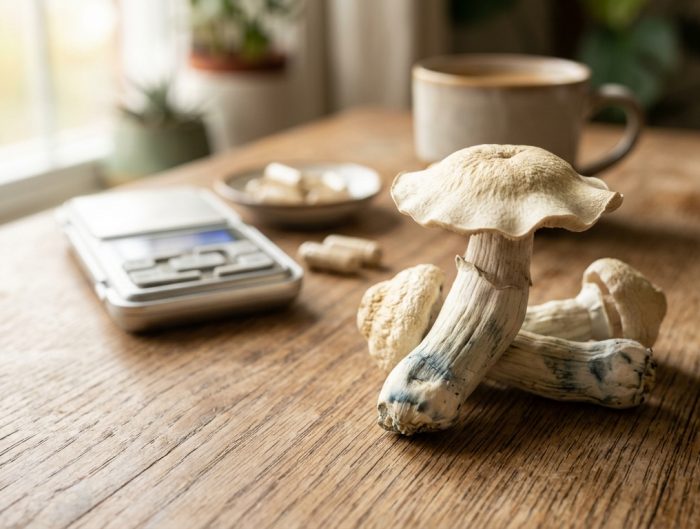
Accurate measurement is the foundation of responsible dosing. Eyeballing mushroom quantities is unreliable because individual mushrooms vary enormously in density and size. A single large cap might weigh 2 grams, while a handful of small stems might weigh the same. Without a scale, you’re essentially guessing, and guessing with psychoactive substances is a recipe for unpleasant surprises.
Using Milligram Scales for Precision
Invest in a digital scale that reads to at least 0.01 grams (10 milligrams). These are widely available online for $15 to $30 and are essential for anyone working with psilocybin, whether microdosing or taking larger amounts. A scale that only reads to 0.1 grams is acceptable for moderate and high doses but isn’t precise enough for microdosing, where the difference between 0.1 grams and 0.2 grams can be the difference between sub-perceptual and noticeably altered.
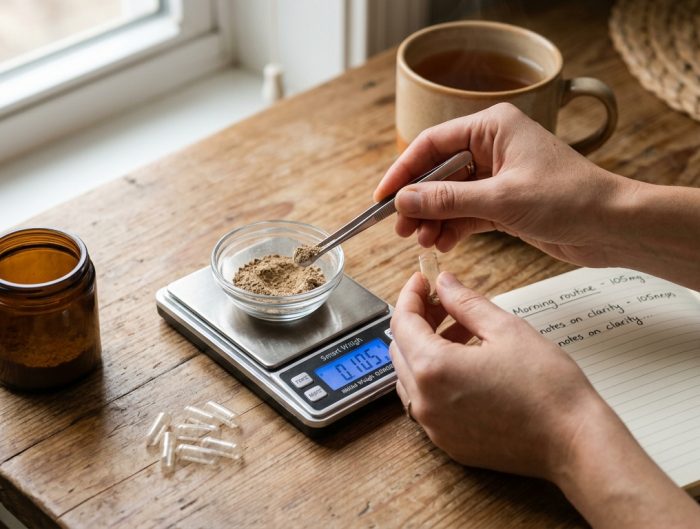
When weighing your material, place the scale on a flat, stable surface and use the tare function to zero out the weight of your container before adding mushrooms. Weigh your dose, record it in a journal, and note the strain and batch if you know it. This data becomes incredibly valuable over time as you build a personal reference for how different amounts affect you.
For microdosing, many people grind their dried mushrooms into a fine powder and fill pre-measured capsules. This approach has two advantages: it ensures more consistent dosing (since whole mushrooms have uneven psilocybin distribution, with caps generally containing more than stems), and it makes the process feel more intentional and structured. A simple capsule machine and size 00 or size 0 capsules are all you need.
The ‘Low and Slow’ Approach for Beginners
If you’re new to psilocybin, the best strategy is almost boringly simple: start with less than you think you need and wait. For a first full experience, 1.0 to 1.5 grams of dried cubensis is a reasonable starting point. For a first microdose, 0.05 to 0.1 grams gives you room to assess your sensitivity without overshooting.
The onset of psilocybin typically takes 30 to 60 minutes, though it can occasionally take up to 90 minutes, especially on a full stomach. One of the most common beginner mistakes is deciding the dose “isn’t working” after 45 minutes and taking more. Then both doses hit simultaneously, and the experience becomes far more intense than intended. Be patient. Set a timer if it helps. Commit to waiting at least 90 minutes before making any judgment about the dose’s strength.
Eating a light meal two to three hours before dosing tends to produce a smoother onset than dosing on a completely empty stomach. An empty stomach can lead to faster, more intense absorption, which isn’t necessarily what you want for your first experience. Some people also find that consuming mushrooms as a tea (steeped in hot but not boiling water for 15 to 20 minutes) produces a faster onset and shorter duration with less nausea than eating dried material directly.
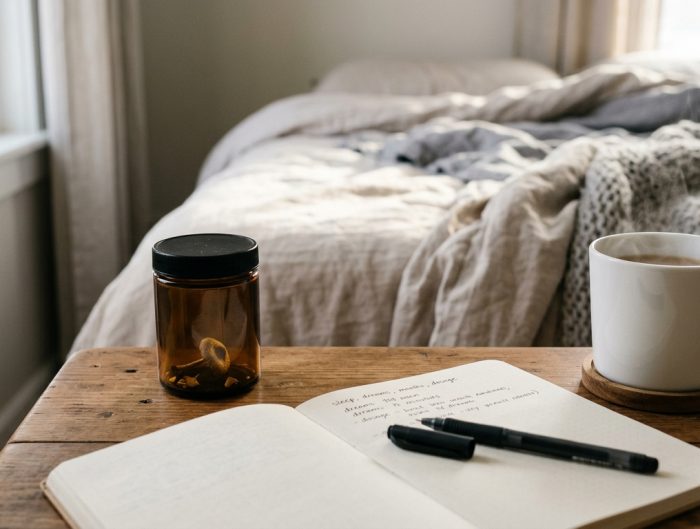
Keep a journal from your very first experience. Record the dose, the strain (if known), the time of ingestion, when you first noticed any shifts, the peak intensity, and how you felt the following day. This log becomes your most reliable dosing guide over time, far more accurate than any generic chart.
Managing and Integrating Your Chosen Dose
Choosing the right dose is only half the equation. What you do with the experience afterward determines whether it becomes a passing event or a catalyst for genuine personal growth. Integration is the process of making sense of what you experienced and translating any insights into your daily life. Without it, even the most profound experience can fade into a vague memory within weeks.
For microdosing, integration looks like consistent self-observation. Keep a simple daily journal where you note your mood, energy, creativity, social interactions, and sleep quality. Don’t just track dosing days: the off days are equally important. Over the course of a month, patterns will emerge that help you fine-tune your approach. Maybe you’ll notice that your ideal microdose is 0.12 grams rather than 0.15, or that dosing in the morning works better for you than early afternoon. These are the quiet changes that only become visible through consistent tracking.
For moderate and high doses, integration often involves more deliberate reflection. In the days following an experience, set aside time to sit with whatever came up. Write about it, talk about it with a trusted friend, or simply sit quietly and let the experience settle. Some people find that insights from a psilocybin experience take days or even weeks to fully crystallize. Rushing back into your normal routine without processing can mean losing the thread of something valuable.
There’s a common misconception that the experience itself does the work. It doesn’t. The experience opens a door, but you have to walk through it. If a session revealed that you’ve been avoiding a difficult conversation, the growth comes from having that conversation, not from the revelation alone. If microdosing helped you notice how reactive you are in stressful moments, the change comes from practicing a different response, not from the noticing itself.
Be honest with yourself about what’s working and what isn’t. Not every dose will produce a meaningful shift, and not every experience will be comfortable. Some microdosing days will feel completely unremarkable. Some larger experiences will be confusing or emotionally difficult. This is all normal and expected. The practice is in showing up consistently, observing honestly, and adjusting thoughtfully.
One thing I’ve learned from my own practice, and from the many conversations we’ve had within the Healing Dose community, is that the people who benefit most from psilocybin are the ones who treat it as one tool among many. Journaling, meditation, therapy, movement, time in nature: these practices amplify and sustain whatever shifts psilocybin initiates. The mushroom doesn’t do the work for you. It can show you something, but you have to do something with what you’ve seen.
If you’re just beginning to explore your ideal dosage and want a structured starting point, our short quiz can help you find a gentle range based on your goals, experience level, and personal sensitivity. It’s designed to help you approach this thoughtfully and at your own pace. Take the dosage quiz here.
Whatever dose you choose, approach it with respect, patience, and curiosity. The relationship between you and this substance is deeply personal, and it unfolds on its own timeline. Trust the process, trust yourself, and remember that starting small is never a mistake: it’s wisdom.

You might also like