The idea of sitting with a full psilocybin experience can feel equal parts exciting and nerve-wracking. That’s completely normal. Whether you’re drawn to this path for personal growth, emotional processing, or simply a deeper understanding of your own mind, the quality of your preparation will shape the quality of your experience. The U.S. psychedelic mushroom market was valued at $2.25 billion in 2024, reflecting a growing cultural interest in these substances, and states like Oregon and Colorado have already built legal frameworks for supervised use. But market growth doesn’t replace individual readiness. Preparing for a full psilocybin experience means taking care of your body, your mind, and your environment well before you ever sit down with the mushroom. Here at Healing Dose, we believe that thoughtful preparation is where the real work begins.
Understanding Dosage and Timing
Getting the dosage and timing right sets the foundation for everything that follows. Too little and you may feel stuck between states; too much and you could feel overwhelmed before you’ve had time to settle in.
Determining the Right Dose for a Full Experience
A full psilocybin experience typically falls in the range of 2.5 to 5 grams of dried Psilocybe cubensis, though individual sensitivity varies enormously. Think of it like caffeine: one person’s comfortable cup of coffee is another person’s jittery mess. If you’ve only ever microdosed or taken a low dose, jumping straight to 5 grams is rarely wise. Starting at the lower end of the full-dose range, around 2.5 to 3 grams, gives you room to understand how your body and mind respond. Oregon’s psilocybin services program, which establishes dosing and administration standards for supervised sessions, reinforces the principle that dosing should always be individualized.
Expected Duration and Phases of the Trip
A full experience generally lasts between four and six hours, with a gradual onset over the first 30 to 60 minutes. The peak tends to arrive around the 90-minute mark and can last one to two hours. After the peak, a slow descent brings you back toward baseline, often accompanied by a period of quiet reflection. Knowing these phases in advance helps you avoid panicking during the come-up, which is often the most physically and emotionally intense window.
Optimizing Your Set and Setting
The concept of “set and setting” has been central to psychedelic preparation since the 1960s, and it remains the single most important variable you can control.
Cultivating the Internal Mindset (Set)
Your mindset going in matters more than almost anything else. Spend the days leading up to your experience reflecting on what you’re hoping to explore. This doesn’t mean you need a rigid agenda: in fact, holding intentions loosely tends to work better than clinging to specific outcomes. A useful framework is to set intentions rather than expectations, framing your purpose as an open question rather than a demand. Something like “I want to understand why I’ve been feeling stuck” is more productive than “I want to fix my anxiety.” Write your intention down. Read it aloud. Let it sit with you.
Designing a Safe and Comfortable Environment (Setting)
Choose a space where you feel genuinely safe: your home, a trusted friend’s living room, or a supervised facility if you’re in a state with legal access. Remove anything that could create stress, like work materials or a cluttered room. Soft lighting, comfortable blankets, and easy access to water and a bathroom all matter more than you might expect. Keep your phone on silent or, better yet, in another room entirely.
Physical and Dietary Preparation
Your body is part of the experience. How you treat it in the 24 to 48 hours beforehand can significantly affect comfort and clarity.
Nutritional Guidelines and Fasting Protocols
Most experienced practitioners recommend eating lightly on the day of your experience and fasting for at least two to four hours beforehand. A heavy meal can slow absorption and increase nausea. In the days leading up, dietary guidelines used in clinical and community settings suggest reducing processed foods, caffeine, and alcohol. Hydration is critical: drink plenty of water the day before and the morning of. Think of your body as the vessel carrying you through this, and treat it accordingly.
Managing Potential Nausea and Body Load
Nausea during the come-up is one of the most common physical experiences, and it doesn’t mean something is wrong. Ginger tea or ginger capsules taken 30 minutes beforehand can help settle your stomach. Some people grind dried mushrooms into a fine powder and steep them in hot water as a tea, which tends to be gentler on the digestive system than eating them whole. Having a bucket or bag nearby, just in case, removes one more source of anxiety. The body load, that heavy or buzzy sensation in your limbs, usually passes within the first hour.
Establishing a Support System
You don’t have to do this alone, and in most cases, you shouldn’t.
The Role of a Trip Sitter or Guide
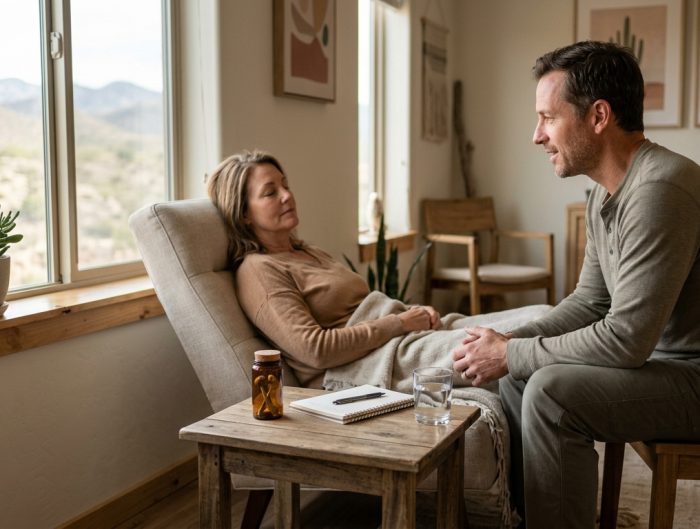
A sitter or guide is someone who remains sober and present throughout your experience. Their job isn’t to direct what happens but to hold space: offering reassurance if you become anxious, helping you find the bathroom, or simply sitting quietly while you process. The best sitters are people you trust deeply, who won’t project their own expectations onto your experience. In Colorado’s Natural Medicine program, trained facilitators fill this role within a legal framework, but even in informal settings, having someone present is a meaningful safety measure.
Safety Protocols and Emergency Contacts
Before you begin, share your plans with at least one person who isn’t present, someone who knows what you’re doing and can be reached if needed. Write down emergency contact numbers and keep them visible. If you take any medications, especially SSRIs or MAOIs, research interactions thoroughly beforehand. Best practices in preparation for psychedelic-assisted sessions emphasize that safety planning isn’t about expecting the worst: it’s about freeing yourself to surrender to the experience because you know the basics are covered.
Tools for Navigating the Experience
Once the experience begins, you won’t want to be problem-solving. Having a few simple tools ready can make a real difference.
Breathwork and Grounding Techniques
If anxiety or intensity spikes, slow, deliberate breathing is your most reliable anchor. A simple 4-7-8 pattern, inhale for four counts, hold for seven, exhale for eight, can calm your nervous system within minutes. Grounding techniques like pressing your feet into the floor, holding a smooth stone, or focusing on a single object in the room can also help you feel connected to your physical body when the mental landscape gets vast.
Curating Music and Sensory Aids
Music shapes the emotional arc of the experience more than most people realize. Prepare a playlist in advance: instrumental music, ambient soundscapes, or classical compositions tend to work well. Avoid music with lyrics that might pull you into specific narratives. Have an eye mask available if you want to turn inward, and keep a soft blanket within reach. Some people find comfort in having art supplies nearby, though you may not feel drawn to use them until the later stages.
Post-Experience Integration and Recovery
What happens after the peak matters just as much as what happens during it. This is where preparation for a psilocybin experience pays its deepest dividends.
The Importance of the ‘Afterglow’ Period
The 24 to 72 hours following a full experience often carry a quality of openness and emotional sensitivity that many people describe as an “afterglow.” This isn’t just a pleasant side note: it’s a window where new patterns of thinking are most accessible. Protect this time. Clear your schedule for at least a full day afterward. Avoid social media, work emails, and anything that might pull you back into autopilot mode before you’ve had time to sit with what came up.
Journaling and Processing Insights
Write down whatever you remember, even if it feels fragmented or nonsensical. The act of putting pen to paper helps translate internal experiences into something you can revisit and reflect on over time. At Healing Dose, we consistently emphasize that integration, the practice of actively working with your insights through journaling, conversation, and behavioral change, is what turns a single experience into lasting personal growth. Without integration, even the most profound session can fade into a distant memory within weeks.
Your Readiness Is the Real Preparation
Preparing well for a full psilocybin experience isn’t about controlling what will happen. It’s about creating conditions where you feel safe enough to let go. The dosage, the setting, the food in your stomach, the person sitting beside you: each of these is a thread in a larger fabric of care you’re weaving around yourself. Take the preparation seriously, but hold it gently. You’re not trying to engineer a perfect outcome. You’re trying to show up as ready as you can be.
If you’re earlier in your journey and curious about finding a starting point that matches your sensitivity and goals, take the dose quiz to get a personalized recommendation. It’s a simple way to begin with intention, at whatever pace feels right for you.

You might also like