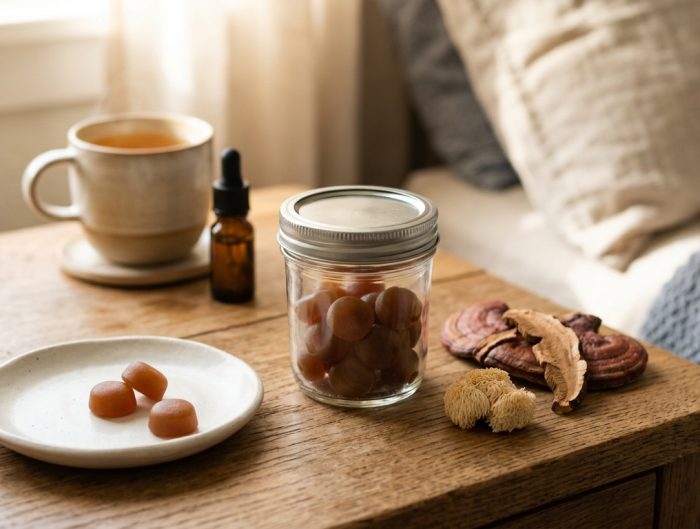
If you’ve ever eaten dried psilocybin mushrooms and spent the first hour wondering whether anything was happening at all, you’re not alone. That slow, uncertain come-up is one of the most common frustrations people describe, and it’s one of the main reasons the lemon tek method has become so popular among intentional psychedelic explorers. The idea is simple: soak ground mushrooms in fresh lemon juice before consuming them. The reality, though, involves some interesting chemistry, a noticeably different experience, and a few important considerations that are worth understanding before you try it yourself.
Whether you’re a cautious beginner or someone who has worked with psilocybin before and wants a more efficient approach, this guide will walk you through everything you need to know. We’ll cover the science, the preparation steps, dosing adjustments, and the practical details that make the difference between a thoughtful experience and an overwhelming one. Take your time reading through each section. There’s no rush, and the more prepared you feel going in, the more you’ll get out of the experience itself.
Understanding the Science Behind Lemon Tek
Before you squeeze a single lemon, it helps to understand what’s actually happening at the molecular level. Psilocybin mushrooms contain a compound called psilocybin, which is technically a prodrug. That means psilocybin itself isn’t directly responsible for the psychoactive experiences people report. Your body has to convert it into another compound, psilocin, before it becomes active. This conversion process is called dephosphorylation, and it normally happens inside your stomach and small intestine thanks to an enzyme called alkaline phosphatase and the acidic environment of your digestive system.
The lemon tek method essentially begins this conversion process outside your body, in the glass, before you ever take a sip. By exposing ground mushroom material to the citric acid in lemon juice, you’re kickstarting the chemical reaction that would otherwise take 30 to 60 minutes in your gut. The result is a faster onset, a more concentrated peak, and a shorter overall duration.
The Role of Citric Acid in Dephosphorylation
Dephosphorylation is just a technical term for removing a phosphate group from a molecule. Psilocybin (chemically known as 4-phosphoryloxy-N,N-dimethyltryptamine) has a phosphate group attached to it. When that phosphate group gets removed, what’s left is psilocin (4-hydroxy-N,N-dimethyltryptamine), the compound that actually interacts with serotonin receptors in your brain, particularly the 5-HT2A receptor.
In your stomach, this conversion relies on acidic conditions (your gastric acid has a pH of roughly 1.5 to 3.5) and enzymatic activity. Citric acid in lemon juice has a pH of about 2.0 to 2.6, which falls squarely within that range. When you soak finely ground mushrooms in lemon juice, the citric acid begins breaking the phosphate bond, converting at least some of the psilocybin into psilocin before ingestion.
Now, here’s an honest caveat: the scientific community hasn’t published extensive peer-reviewed research specifically on the lemon tek method as of 2026. Most of what we understand is extrapolated from well-established chemistry principles and a large body of anecdotal reports from experienced practitioners. The pH conditions are right for dephosphorylation to occur, and the reported experiences are consistent with what you’d expect if pre-conversion were happening. But we should be transparent that this is informed reasoning rather than something confirmed in a controlled lab study of this specific preparation method.
What we can say with confidence is that the acidic environment does break down mushroom cell walls and chitin, making the active compounds more bioavailable regardless of how much direct conversion occurs. So even in a conservative interpretation, the lemon soak is doing meaningful work.
How Acidity Mimics Stomach Digestion
Think of your stomach as a biological blender filled with acid. When you eat dried mushrooms, your stomach has to do several things simultaneously: break down the tough chitin in the mushroom cell walls, dissolve the active compounds, convert psilocybin to psilocin, and absorb everything through the intestinal lining. That’s a lot of steps, and it explains why the come-up from eating raw dried mushrooms can be slow, uneven, and sometimes accompanied by significant nausea.
Lemon juice mimics the first two or three of those steps. The citric acid softens and partially dissolves the chitin matrix, releasing the active compounds into solution. It also creates the right pH conditions for dephosphorylation to begin. By the time you drink the mixture, your stomach receives what is essentially a pre-digested solution rather than a pile of tough, dried fungal material it needs to process from scratch.
This is similar to how marinating meat in citrus juice partially “cooks” the proteins through acid denaturation, the same principle behind ceviche. You’re using chemistry to do work that would otherwise require time and biological processes. The practical outcome is that your body can absorb the active compounds much more quickly, which is why people consistently report feeling the onset within 15 to 20 minutes rather than the typical 45 to 90 minutes with raw mushrooms.
One thing worth understanding: because your stomach has less work to do, there’s also less irritation to the gastrointestinal lining. The chitin in mushrooms is notoriously difficult for the human digestive system to process (we lack the enzyme chitinase in significant quantities), and it’s a major contributor to the stomach discomfort many people experience. Pre-breaking this material in lemon juice can make a real difference in how your body feels during the experience.
Benefits of the Lemon Tek Method
Now that you understand the chemistry, you might be wondering whether the practical differences are significant enough to bother with the extra preparation step. For most people, the answer is a clear yes. The changes to onset, intensity, duration, and physical comfort are noticeable and consistent enough that many experienced practitioners consider this their default preparation method.
Faster Onset and Increased Potency
The most immediately obvious difference is speed. With raw dried mushrooms, most people describe a gradual come-up that begins around 30 to 45 minutes after ingestion and slowly builds over the next hour. With the lemon tek approach, that timeline compresses dramatically. Many people report noticing the first subtle shifts within 10 to 15 minutes, with the full experience arriving within 30 to 45 minutes total.
This faster onset isn’t just about impatience (though the waiting game can genuinely increase anxiety for some people). It also means the active compounds hit your system in a more concentrated wave rather than trickling in gradually as your stomach processes different chunks of mushroom material at different rates. The result is a more intense peak from the same amount of mushroom material.
This perceived increase in potency is important to understand. You’re not creating more psilocin than the mushrooms contained. You’re delivering the same total amount of active compound in a shorter window. Think of it like the difference between sipping a glass of wine over two hours versus drinking it in twenty minutes: same amount of alcohol, very different experience. This compression effect is why dosage adjustment matters so much with this method, something we’ll cover in detail later.
For people who have found that a particular dose of dried mushrooms produces a mild or moderate experience, the same dose prepared with lemon juice will likely feel noticeably stronger. This can be a genuine benefit if you’ve been underwhelmed by previous experiences, but it can also catch you off guard if you’re not expecting it.
Reducing Nausea and Gastrointestinal Distress
Stomach discomfort is probably the single most common physical complaint people have about psilocybin mushrooms. That heavy, queasy feeling during the come-up can range from mild unease to genuine nausea, and for some people, it’s enough to make them dread the first hour of every experience.
The lemon tek method addresses this in two ways. First, the citric acid pre-breaks the chitin and tough cellular material that your stomach would otherwise struggle with. You’re drinking a solution rather than asking your digestive system to process dried plant matter. Second, because absorption happens faster, the window of gastrointestinal distress is shorter even if some nausea does occur.
Many people at Healing Dose who have shared their experiences report that switching to this preparation method reduced or eliminated their nausea entirely. That’s not a guarantee for everyone, bodies are different, but the consistency of these reports is encouraging. If stomach issues have been a barrier for you, this approach is well worth trying.
Some people also strain out the mushroom solids after soaking and drink only the liquid. This further reduces the amount of indigestible material entering your stomach, though it may mean leaving some active compounds behind in the discarded material. We’ll discuss this trade-off in the preparation section.
Shortened Duration of the Experience
A standard psilocybin experience from raw dried mushrooms typically lasts 4 to 6 hours, sometimes longer. With the lemon tek method, most people report a total duration of 3 to 4 hours, with some describing it as closer to 2.5 to 3 hours for lower doses.
This shorter duration is a direct consequence of the compressed absorption curve. Because the active compounds enter your system faster, they also get metabolized and cleared faster. Instead of a long, slow arc, you get a steeper rise, a more defined peak, and a quicker return to baseline.
For some people, this is a significant practical benefit. Not everyone has 6 to 8 hours to dedicate to an experience, and the shorter timeline can make it easier to plan your set and setting. You can begin in the late morning and feel essentially back to normal by mid-afternoon. For others, particularly those who appreciate the long, gradual unfolding of a standard experience, the shortened duration might feel rushed. Neither preference is wrong: it’s about knowing what you want and choosing accordingly.
Step-by-Step Guide to Preparing Lemon Tek
This is the practical heart of the guide, and I want to make it as straightforward as possible. If you’ve never done this before, don’t worry. The preparation is genuinely simple, and you likely already have most of what you need in your kitchen.
Required Materials and Ingredients
Here’s what you’ll need:
- Dried psilocybin mushrooms (your chosen dose, which we’ll discuss in the dosing section)
- Fresh lemons or limes (2 to 3 should be plenty)
- A coffee grinder, herb grinder, or mortar and pestle
- A small glass or shot glass
- A fine mesh strainer or cheesecloth (optional, for straining)
- A spoon for stirring
- A timer or your phone
A few notes on these materials. Fresh lemon juice is strongly preferred over bottled lemon juice. Bottled versions often contain preservatives and may have a slightly different pH and chemical composition. The fresh juice also contains natural enzymes that may contribute to the extraction process. If you can’t get fresh lemons, fresh limes work just as well: their citric acid content is comparable.
For the grinder, a coffee grinder produces the finest and most consistent powder, which maximizes surface area and improves extraction. If you’re using a mortar and pestle, spend extra time grinding until the material is as fine as you can get it. Larger chunks will extract less efficiently and may contribute to nausea if consumed.
The glass should be small. You want the mushroom powder to be fully submerged in lemon juice, not floating on top of a thin layer at the bottom of a large cup. A shot glass or small juice glass works perfectly.
Grinding and Steeping Instructions
Start by weighing your dried mushrooms on a scale. Precision matters here, especially because this method intensifies the experience dose-for-dose. A kitchen scale that measures to 0.1 grams is ideal, and they’re inexpensive and widely available.
Once weighed, grind the dried mushrooms into the finest powder you can manage. This step is genuinely important: the finer the grind, the more surface area is exposed to the citric acid, and the more complete the extraction will be. If you’re using a coffee grinder, a few short pulses usually does the job. Check the consistency and grind again if you see any larger pieces remaining.
Place the powder into your small glass. Now squeeze your lemons. You want enough juice to fully cover the powder with a little extra: usually about 1 to 2 ounces (30 to 60 ml) of juice is sufficient. Pour the juice over the powder and stir thoroughly with a spoon.
Here’s the key step: let it sit. Set a timer and stir the mixture every 5 minutes or so. The stirring ensures even contact between the acid and the mushroom material. You’ll notice the mixture changing color slightly as the extraction progresses, often taking on a darker, slightly bluish tint. This color change is associated with the oxidation of psilocin and is a visual indicator that the chemistry is working.
After the soaking period (we’ll cover optimal timing next), you have two choices. You can drink the entire mixture, powder and all, or you can strain it through a fine mesh strainer or cheesecloth and drink only the liquid. Straining produces a cleaner drink that’s easier on the stomach, but you may lose a small percentage of active compounds that remain bound in the solid material. Many people compromise by straining and then rinsing the remaining solids with a small splash of water, squeezing out as much liquid as possible.
If the taste is too sour for you (and it will be quite sour), you can add a small amount of water, honey, or ginger tea after the soaking period is complete. Don’t add these during the soak: you want undiluted lemon juice doing the work during the extraction phase.
Optimal Soaking Times for Maximum Extraction
This is one of the most debated aspects of the method, and you’ll find recommendations ranging from 10 minutes to 30 minutes or more. Based on the chemistry involved and the consistent reports from experienced practitioners, here’s what we recommend at Healing Dose:
A minimum of 15 minutes produces noticeable results. This is enough time for significant extraction and at least partial dephosphorylation. If you’re in a hurry, 15 minutes with regular stirring will get you most of the benefit.
Twenty minutes is the sweet spot for most people. This provides thorough extraction without being excessively long. Most of the accessible psilocybin will have been pulled into solution by this point, and the acid has had sufficient time to work on the phosphate bonds.
Going beyond 25 to 30 minutes shows diminishing returns. The extraction is largely complete by this point, and extended soaking may actually begin to degrade some of the psilocin through oxidation. The blue coloring you see is literally psilocin oxidizing, which means some of it is breaking down. There’s no need to soak for an hour.
So the practical recommendation is: grind fine, soak for 20 minutes, stir every 5 minutes, and then consume. Simple, repeatable, and effective.
One more timing note: plan your preparation so that you consume the lemon tek on an empty or mostly empty stomach. Eating a large meal beforehand will slow absorption and partially negate the benefits of pre-extraction. A light snack 2 to 3 hours before is fine, but avoid heavy food within an hour of drinking your preparation.
Dosing and Safety Considerations
This section might be the most important one in the entire guide. Because the lemon tek method intensifies the subjective experience compared to eating raw mushrooms, your usual dose may produce a significantly stronger response than you’re expecting. Please read this carefully, especially if you’re newer to psilocybin.
Adjusting Dosage for Intensity
The general rule of thumb that experienced practitioners follow is to reduce your normal dose by 25 to 30 percent when using the lemon tek method. If you typically work with 2.5 grams of dried mushrooms, start with 1.7 to 2.0 grams for your first lemon tek preparation. You can always increase next time: you can never decrease once you’ve consumed it.
Here’s a rough framework for dried Psilocybe cubensis (the most commonly available species), adjusted for this preparation method:
- 0.5 to 1.0 grams: a gentle, mild experience with enhanced sensory awareness and subtle emotional shifts
- 1.0 to 1.5 grams: a moderate experience with more pronounced visual and emotional changes
- 1.5 to 2.5 grams: a strong experience with significant perceptual changes and deep introspection
- 2.5 grams and above: an intense experience that should only be approached by those with significant prior experience and proper support
These ranges are approximate. Individual sensitivity varies enormously based on body weight, metabolism, personal neurochemistry, the specific mushroom strain, and even how the mushrooms were dried and stored. Two people taking the same dose from the same batch can have meaningfully different experiences. This variability is one of the reasons we emphasize starting lower than you think you need to.
If you’ve never worked with psilocybin before, please don’t make the lemon tek your first experience at a moderate or high dose. Start with a low dose using the standard method (eating dried mushrooms) to establish your personal baseline sensitivity. Once you understand how your body and mind respond, you can explore the lemon tek approach with much more confidence and safety.
Set and Setting for an Accelerated Trip
Because this method produces a faster onset and more intense peak, your preparation for the experience itself becomes even more important. “Set and setting” refers to your mindset (set) and your physical environment (setting), and both deserve careful attention.
For your mindset, spend some time before the experience reflecting on your intention. Why are you doing this? What are you hoping to explore or understand? You don’t need a grand philosophical purpose: “I want to connect more deeply with nature” or “I want to process some emotions I’ve been avoiding” are perfectly valid intentions. Writing your intention in a journal before you begin can help anchor you if the experience becomes intense.
Your physical environment should be safe, comfortable, and free from interruptions. Turn off your phone notifications. Make sure you won’t be disturbed by roommates, deliveries, or obligations. Have water, blankets, comfortable seating, and perhaps a curated playlist ready before you drink your preparation. Once the lemon tek kicks in (which will happen fast), you won’t want to be scrambling to set up your space.
Having a trusted person present, often called a sitter, is strongly recommended, especially for your first few experiences with this method. This person should be sober, familiar with the general arc of a psilocybin experience, and someone you feel genuinely safe with. Their role isn’t to entertain you or guide the experience: it’s simply to be a calm, reassuring presence if you need one.
Because the peak arrives quickly and can feel more abrupt than a standard come-up, some people experience a brief period of anxiety or disorientation as the experience intensifies. This is normal and typically passes within 10 to 15 minutes. Knowing in advance that this might happen, and having a comfortable environment to settle into, makes a significant difference in how you move through that initial wave.
After the experience, give yourself time to rest and reflect. The shorter duration of a lemon tek experience means you might feel “back to normal” relatively quickly, but integration, the process of making sense of what you experienced, takes longer. Journaling within a few hours of your return to baseline can capture insights and emotions that might otherwise fade. At Healing Dose, we consider integration just as important as the experience itself. The quiet work of reflection is where subtle but meaningful personal growth actually takes root.
Frequently Asked Questions and Common Variations
Once people try the basic lemon tek method and see how well it works, the natural next question is usually about variations. Can you use different citrus fruits? Can you make it taste better? Here are the most common questions we hear, answered honestly.
Using Other Citrus Fruits vs. Lemons
Lemons get all the attention, but they’re not the only option. Any citrus fruit with sufficient citric acid content can work. Here’s how the common alternatives compare:
Limes are essentially interchangeable with lemons. Their pH and citric acid concentration are nearly identical, and many people actually prefer the taste. If you have limes on hand and no lemons, go ahead and use them with confidence. The results will be virtually the same.
Grapefruit juice can work, but it introduces a complication. Grapefruit contains compounds called furanocoumarins that inhibit the CYP3A4 enzyme in your liver. This enzyme is involved in metabolizing many substances, and inhibiting it can alter how your body processes psilocin. The practical effect might be a slightly prolonged or intensified experience, but the interaction isn’t well-studied in this specific context. If you want predictable results, stick with lemons or limes.
Orange juice has a higher pH (around 3.3 to 4.2) and lower citric acid concentration than lemons or limes. It can still contribute to extraction, but the dephosphorylation process will be less efficient. Some people use orange juice as a follow-up to wash down a lemon-soaked preparation, which gives you the best of both worlds: effective extraction from the lemon soak and a more palatable chaser.
Apple cider vinegar is sometimes mentioned as an alternative acid source. While it does have an appropriate pH (around 2.5 to 3.0), it contains acetic acid rather than citric acid, and the taste combination with mushroom material is, to put it gently, challenging. It can work in a pinch, but most people find it unpleasant enough to not be worth the trade-off.
The bottom line: fresh lemon or lime juice is your best bet. They’re widely available, affordable, effective, and the taste, while sour, is manageable. There’s no compelling reason to experiment with alternatives unless you have a specific need or preference.
Mixing with Tea or Honey for Flavor
The honest truth is that lemon tek doesn’t taste great. You’re drinking a concentrated shot of sour citrus juice mixed with powdered mushroom material. It’s not terrible, but “delicious” would be a stretch. Fortunately, there are several ways to improve the experience without compromising the chemistry.
Honey is the simplest addition. After your 20-minute soak is complete, stir in a teaspoon or two of honey. It takes the edge off the sourness and adds a pleasant sweetness. Honey doesn’t interfere with the extraction process as long as you add it after the soak, not during. Some people also find that honey further soothes the stomach.
Ginger is a popular addition for people who are particularly prone to nausea. You can steep fresh ginger slices in hot water to make a simple ginger tea, let it cool to room temperature, and then use it to dilute your lemon tek mixture after the soak. Ginger has well-documented anti-nausea properties and pairs well with the citrus flavor. This combination, sometimes called “ginger lemon tek,” is a favorite among people who prioritize stomach comfort.
Making a full tea is another option. After the lemon soak is complete, you can add warm (not boiling) water and a tea bag of your choice: chamomile, peppermint, and green tea are all popular. The key word here is warm. Boiling water can degrade psilocin, so let your kettle cool for several minutes before adding water to the mixture. Aim for a temperature you’d be comfortable sipping, roughly 160 to 170 degrees Fahrenheit (70 to 75 degrees Celsius) at most.
Some people get creative with smoothies, mixing the strained lemon tek liquid into a small fruit smoothie. This masks the taste effectively, though it also introduces food into your stomach, which may slightly slow absorption. If taste is your primary barrier, this trade-off might be worthwhile for you.
One approach we’d gently discourage is mixing with carbonated beverages. The carbonation can increase stomach discomfort, and the combination of acid and fizz on an empty stomach tends to produce more problems than it solves. Still water, tea, or smoothies are all better choices.
Whatever flavor additions you choose, remember to add them after the soaking period is complete. The 20-minute soak should be pure lemon (or lime) juice and mushroom powder, undiluted and at full acidity. Once that extraction work is done, you can adjust the flavor however you like.
Your Next Step Forward
The lemon tek method is one of those rare techniques that’s both simple to execute and genuinely effective at improving the psilocybin experience for most people. Faster onset, reduced nausea, a more defined peak, and a shorter overall duration: these aren’t minor tweaks. They represent a meaningfully different way of working with the same material.
The most important takeaway from everything we’ve covered is this: respect the increased intensity. Reduce your dose by 25 to 30 percent the first time you try this method, prepare your environment thoughtfully, and give yourself the time and space for reflection afterward. The preparation you do before and the integration you do after matter just as much as the experience itself.
If you’re still figuring out where to start with dosing, whether for lemon tek or any other approach, we’ve put together a short quiz that helps you find a gentle starting range based on your goals, experience level, and personal sensitivity. Take the quiz here and give yourself the gift of starting thoughtfully rather than guessing.
Whatever path you choose, go slowly, stay curious, and trust the process. The quiet, subtle changes are often the ones that matter most.

You might also like