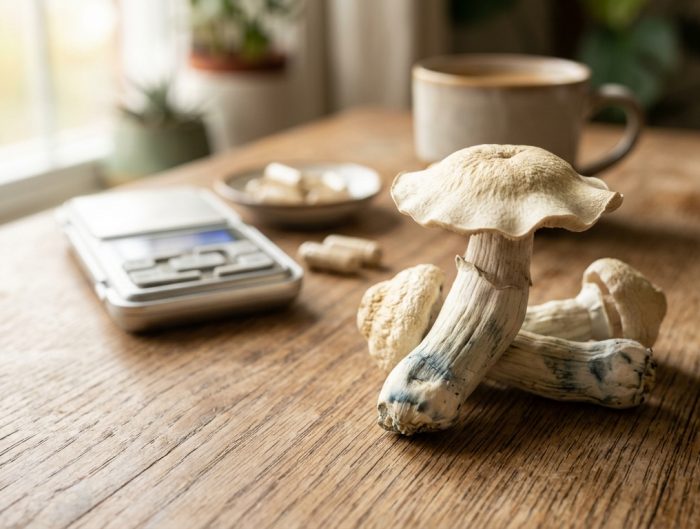
Paul Stamets first proposed his nootropic mushroom protocol during a 2017 podcast appearance, and since then it has quietly gathered one of the most dedicated followings in the microdosing community. The idea is deceptively simple: combine a sub-perceptual dose of psilocybin with lion’s mane mushroom and niacin (vitamin B3), and let the three ingredients work together in ways none of them could alone. What makes this particular combination so compelling isn’t any single ingredient but the proposed interplay between them, a kind of biological teamwork aimed at supporting nerve growth, plasticity, and long-term cognitive well-being. If you’ve been curious about the Stamets stack but felt unsure about the science behind it, or even where to begin, you’re in the right place. We’ll walk through each component, the biology that ties them together, practical dosing guidelines, safety considerations, and what the future of research might hold. Take your time with this one: there’s a lot to absorb, and none of it needs to be rushed.
The Synergy of the Stamets Stack Components
The core premise behind this protocol is that three specific substances, when taken together, may produce effects greater than the sum of their parts. Paul Stamets, a mycologist with decades of fungal research behind him, didn’t arrive at this combination randomly. His hypothesis draws on existing research into neurogenesis (the growth of new neurons), nerve growth factor signaling, and the vasodilatory properties of niacin. Each ingredient plays a distinct role, and understanding those roles individually is the first step toward appreciating why they might complement each other.
Think of it like a construction crew. One worker brings the raw materials, another lays the foundation, and a third ensures the supplies reach the right location. None of them can build the house alone. The Stamets protocol works on a similar logic: lion’s mane provides the neurotropic stimulation, psilocybin opens windows of plasticity in the brain, and niacin pushes these compounds further into the peripheral nervous system. That’s the theory, at least, and while clinical trials specifically on this three-part combination are still underway as of 2026, the individual components each have their own body of supporting research.
Lion’s Mane Mushroom and Nerve Growth Factor
Lion’s mane (Hericium erinaceus) has been used in traditional medicine across East Asia for centuries, but its modern reputation rests on a specific biological mechanism: the stimulation of nerve growth factor, or NGF. NGF is a protein that plays a critical role in the maintenance, survival, and regeneration of neurons. Without adequate NGF, neurons can atrophy, connections weaken, and cognitive function gradually declines.
Two compounds in lion’s mane, hericenones and erinacines, have been shown in laboratory studies to cross the blood-brain barrier and stimulate NGF production. A 2023 study published in the Journal of Neurochemistry confirmed that erinacines promoted neurite outgrowth in cultured neurons, meaning the neurons physically extended new connections. This is significant because neurite outgrowth is one of the building blocks of learning and memory formation.
For you as a potential user, the practical takeaway is this: lion’s mane isn’t a stimulant. You won’t feel a rush of energy or clarity within an hour of taking it. Instead, the changes tend to be cumulative and subtle, something more like a gentle hum of improved recall that you notice after weeks of consistent use. Many people in the microdosing community describe it as “the background player” of the stack, quietly doing its work while the other components handle more noticeable roles.
Psilocybin and Neural Plasticity
Psilocybin, the psychoactive compound found in certain mushroom species, has received enormous research attention over the past decade. At full doses, it produces profound perceptual and emotional shifts. But at sub-perceptual doses, typically between 50 and 200 milligrams of dried psilocybin mushroom, the experience is far more understated. You might notice a slightly sparkly quality to your attention, or find that creative problem-solving feels a bit more fluid. Many people report no immediate sensation at all.
The mechanism that makes psilocybin interesting for brain health is its effect on neural plasticity. Once ingested, psilocybin is converted to psilocin, which binds primarily to 5-HT2A serotonin receptors. This binding triggers a cascade of downstream effects, including increased expression of brain-derived neurotrophic factor (BDNF) and enhanced dendritic spine growth. In plain terms, the brain becomes temporarily more flexible, more willing to form new connections and reorganize existing ones.
A 2024 study from the University of Zurich used functional MRI to demonstrate that even low doses of psilocybin increased connectivity between brain regions that don’t typically communicate much. This cross-talk between neural networks is thought to underlie some of the creative and emotional benefits people report. Within the Stamets stack framework, psilocybin serves as the plasticity catalyst: it opens the door for new neural pathways, while lion’s mane provides the growth factors to help those pathways take root.
Niacin as a Delivery Vehicle
Niacin is the most overlooked component, and also the most misunderstood. Many people wonder why a simple B vitamin belongs in a nootropic stack alongside a powerful mushroom and a psychoactive compound. The answer lies in niacin’s vasodilatory effect: it causes blood vessels to dilate, particularly in the peripheral nervous system.
Stamets hypothesized that this dilation could help carry the neuroactive compounds from lion’s mane and psilocybin beyond the central nervous system and into the extremities, the fingers, toes, and peripheral nerves that are often the first to deteriorate with age or neuropathy. This is a bold claim, and it remains largely theoretical as of 2026. No published clinical trial has directly confirmed that niacin meaningfully enhances the peripheral distribution of psilocybin or NGF-stimulating compounds.
That said, niacin’s role may also be partly practical. The uncomfortable flushing sensation it produces, a warm, prickly redness across the skin, serves as a built-in deterrent against taking recreational doses of psilocybin. If someone were tempted to increase the psilocybin dose to a perceptual level, the intensifying niacin flush would make the experience decidedly unpleasant. In this way, niacin acts as both a proposed delivery mechanism and a safety guardrail.
The Biological Mechanism of Neurogenesis
Understanding why this protocol generates so much interest requires a closer look at neurogenesis itself: the process by which the brain produces new neurons. For most of the 20th century, scientists believed that the adult brain couldn’t grow new neurons at all. That assumption was overturned in the 1990s when researchers discovered active neurogenesis in the hippocampus, a brain region essential for learning and memory.
We now know that neurogenesis continues throughout life, though it slows considerably with age. Factors like chronic stress, poor sleep, and inflammation can further suppress it. The Stamets protocol targets this process from multiple angles: psilocybin promotes plasticity and BDNF expression, lion’s mane stimulates NGF, and niacin theoretically helps distribute these effects more broadly. The question isn’t whether neurogenesis is real, because it is, but whether this specific combination meaningfully enhances it in humans.
Repairing Damaged Neurons
One of the most exciting areas of research involves the potential for neurotropic compounds to support the repair of damaged neurons, not just the creation of new ones. Neurons can be damaged by physical trauma, neurodegenerative disease, chronic inflammation, or even prolonged psychological stress. When a neuron is damaged, its axon (the long fiber that transmits signals) may retract, and its synaptic connections can weaken or disappear.
NGF, stimulated by lion’s mane, plays a direct role in axonal regrowth. In animal models, supplementation with Hericium erinaceus extracts has been shown to accelerate nerve regeneration following crush injuries. A 2022 study in rats demonstrated that lion’s mane extract promoted functional recovery of damaged peripheral nerves over a 12-week period, with treated animals regaining motor function significantly faster than controls.
Psilocybin contributes differently. Rather than directly repairing physical damage, it appears to help the brain reorganize around damaged areas by promoting the formation of alternative neural pathways. Think of it like a city rerouting traffic after a bridge collapse: the bridge isn’t rebuilt, but new routes emerge that restore flow. This kind of compensatory plasticity is particularly relevant for people recovering from traumatic brain injuries or living with early-stage neurodegenerative conditions, though clinical evidence in humans remains preliminary.
Enhancing Signal Transmission and Myelination
Beyond neuron repair, there’s the question of signal quality. Neurons communicate through electrical impulses, and the speed and fidelity of those impulses depend heavily on myelination: the insulating sheath of myelin that wraps around nerve fibers. Damage to myelin is a hallmark of conditions like multiple sclerosis, but even normal aging gradually degrades myelin integrity.
Some early research suggests that NGF and BDNF both play roles in supporting oligodendrocytes, the cells responsible for producing myelin. If lion’s mane and psilocybin can boost levels of these growth factors, there’s a theoretical basis for improved signal transmission over time. You wouldn’t feel this as a sudden sharpening of thought. Instead, it might show up as a gradual improvement in reaction time, verbal fluency, or the ability to hold complex ideas in working memory.
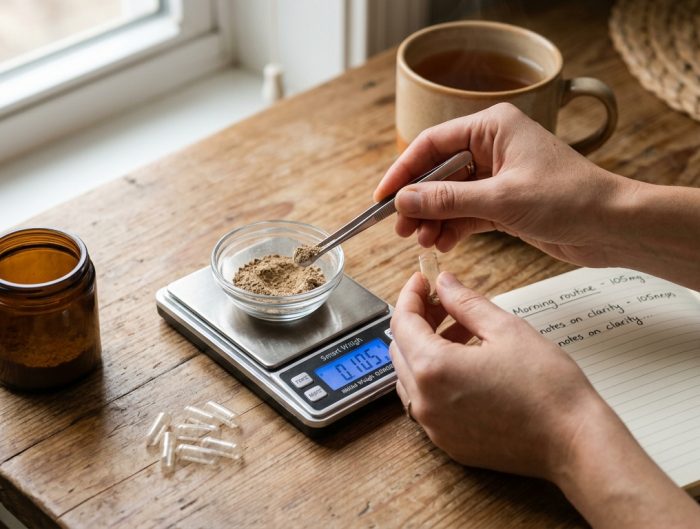
This is where patience becomes essential. We emphasize this at Healing Dose because the expectation of rapid, dramatic changes is one of the most common sources of disappointment in the microdosing community. The biological processes we’re talking about, myelination, axonal growth, synaptic strengthening, operate on timescales of weeks to months. Journaling your experiences daily, even just a few sentences about mood, focus, and sleep quality, is the most reliable way to notice these quiet changes as they accumulate.
Cognitive and Mental Health Benefits
The theoretical biology is compelling, but what do people actually report experiencing? The anecdotal evidence from the microdosing community is extensive, and while anecdotes aren’t clinical proof, they do paint a consistent picture. Most people describe the cognitive and emotional shifts from this protocol as subtle, gradual, and cumulative rather than dramatic or immediate.
Memory Retention and Focus
Many users report improvements in working memory and sustained attention after several weeks on the protocol. These aren’t the kind of changes you’d measure with a stopwatch. They’re more like noticing that you can follow a long conversation without losing the thread, or that you remember where you put your keys three days ago without having to retrace your steps.
A 2025 observational study conducted through the Microdosing Research Institute surveyed over 1,200 self-reported microdosers and found that those following a psilocybin-lion’s mane combination reported statistically significant improvements in self-assessed memory and focus compared to those microdosing psilocybin alone. The study had limitations, including self-selection bias and the absence of a placebo control, but it aligns with the mechanistic hypothesis that NGF stimulation and enhanced plasticity together may support memory consolidation.
If you’re someone who struggles with focus, it’s worth noting that the Stamets protocol is not a replacement for addressing root causes like sleep deprivation, chronic stress, or nutritional deficiencies. Think of the stack as a supportive tool within a broader approach to cognitive well-being, not a standalone fix. Pairing it with good sleep hygiene, regular physical activity, and intentional reflection tends to produce the most noticeable changes.
Mitigating Age-Related Cognitive Decline
This is where the protocol generates perhaps its most hopeful interest. Age-related cognitive decline affects virtually everyone to some degree, and the mechanisms behind it, reduced neurogenesis, declining NGF and BDNF levels, myelin degradation, are precisely the targets this combination addresses.
Paul Stamets himself has spoken publicly about his mother’s experience with cognitive decline and his hope that protocols like this one might slow or partially reverse such trajectories. While no one should interpret this as a promise, the underlying biology is at least plausible. A 2023 double-blind, placebo-controlled trial in Japan showed that older adults taking lion’s mane extract for 16 weeks scored significantly higher on cognitive function tests than the placebo group, with improvements most pronounced in those who had the lowest baseline scores.
Combining that with psilocybin’s plasticity-enhancing properties creates an interesting hypothesis: if the aging brain is losing both the raw materials for neural growth and the flexibility to use them, then supplying both simultaneously might produce a more meaningful effect than either alone. This remains a hypothesis, not a conclusion, but it’s one that several research groups are actively investigating as of 2026.
For older adults or those with a family history of cognitive decline, starting gently and tracking changes over time is especially important. At Healing Dose, we often recommend beginning with the lowest effective dose range and maintaining a detailed journal for at least eight weeks before drawing any conclusions about whether the protocol is supporting you.
Protocol Guidelines and Dosage Ratios
Getting the dosing right matters. Too little, and you may not experience any noticeable shifts. Too much, and you cross the threshold from sub-perceptual to perceptual, which isn’t the goal of this protocol. The good news is that the Stamets protocol comes with relatively clear guidelines, and most people find their sweet spot within the first couple of weeks.
The Microdosing Schedule (4 Days On, 3 Days Off)
The recommended cycling pattern is four consecutive days of dosing followed by three days off. This schedule serves two purposes. First, it allows the neurotropic and plasticity-enhancing effects to build during the “on” days. Second, the “off” days help prevent tolerance buildup, particularly to psilocybin, which can develop quickly with daily use.
Here’s what a typical week looks like:
- Monday through Thursday: take the full stack (psilocybin, lion’s mane, niacin)
- Friday through Sunday: no dosing, but continue observing and journaling
Some people prefer to shift the schedule to align with their work week or personal rhythms. That’s completely fine. The key principle is maintaining a roughly 4:3 ratio of on-days to off-days. Consistency matters more than which specific days you choose.
During the off days, pay attention to how you feel. Many people report that the benefits of the stack become most noticeable on rest days, almost as if the brain is consolidating the changes made during the active period. This mirrors what we know about sleep and learning: the actual integration often happens during downtime, not during the activity itself.
Calculating the Optimal Ratio
The commonly cited dosage ranges for the Stamets stack are:
- Psilocybin mushrooms: 50 to 200 milligrams (dried weight)
- Lion’s mane mushroom: 50 to 200 milligrams of extract, or 500 to 1,000 milligrams of dried fruiting body
- Niacin (as nicotinic acid, not niacinamide): 100 to 200 milligrams
These ranges are wide because individual sensitivity varies enormously. Body weight, metabolism, prior experience with psychoactive substances, and even gut microbiome composition all influence how you respond. If you’re new to this, start at the lower end of each range. You can always increase gradually over subsequent cycles.
A practical tip: take the stack in the morning, ideally with a small meal containing some fat to aid absorption. The niacin flush, if it occurs, typically peaks about 20 to 30 minutes after ingestion and subsides within an hour. Taking it on an empty stomach intensifies the flush, which most people find unpleasant.
One common mistake is substituting niacinamide (nicotinamide) for nicotinic acid. Niacinamide does not cause the flush, which might sound appealing, but the flush is directly tied to the vasodilatory effect that Stamets considers essential to the protocol. If you’re using niacinamide, you’re missing the proposed delivery mechanism entirely.
Safety Considerations and Potential Side Effects
No responsible guide to this protocol would skip the safety discussion. While each component of the stack has a relatively favorable safety profile individually, combining them introduces variables that deserve your attention. The single most important principle here is to start low, go slow, and listen to your body.
Psilocybin, even at microdoses, can interact with serotonergic medications, particularly SSRIs, SNRIs, and MAOIs. If you’re currently taking any psychiatric medication, consult with a healthcare provider before beginning this or any microdosing protocol. The interaction between psilocybin and lithium, in particular, has been associated with seizure risk in anecdotal reports and should be taken seriously.
Lion’s mane is generally well-tolerated, but some individuals report mild digestive discomfort, particularly at higher doses. Rarely, people with mushroom allergies may experience allergic reactions. If you’ve never consumed lion’s mane before, consider trying it on its own for a few days before adding the other components, just to rule out any individual sensitivity.
Niacin’s side effects are the most immediately noticeable, and we’ll address those in detail below. Beyond the flush, high doses of niacin taken over extended periods can affect liver function, so staying within the recommended range (100 to 200 milligrams) and cycling the protocol as described is important.
One thing we encourage at Healing Dose is keeping a simple log of any physical sensations, mood shifts, or unexpected reactions during your first two cycles. This isn’t just useful for your own reference: if you ever need to discuss your experience with a healthcare provider, having a detailed record is invaluable.
Managing the Niacin Flush
The niacin flush is the most common complaint among people trying this protocol for the first time. It typically presents as a warm, tingling, or prickly sensation across the face, neck, chest, and sometimes arms. The skin may turn visibly red. It’s not dangerous, but it can be startling if you’re not expecting it.
The flush is caused by the release of prostaglandins, which dilate blood vessels near the skin’s surface. It usually begins 15 to 30 minutes after ingestion and lasts 30 to 60 minutes. The intensity tends to decrease with repeated use as your body builds a partial tolerance to the prostaglandin response.
Here are some practical strategies for managing it:
- Start with 50 milligrams of niacin for your first few doses, then gradually increase to 100 or 200 milligrams
- Take the stack with food, especially foods containing a small amount of fat
- Avoid hot beverages or hot showers immediately after dosing, as heat intensifies the flush
- An aspirin taken 30 minutes before the niacin can reduce flush intensity by inhibiting prostaglandin synthesis, though this adds another substance to the mix
- Stay hydrated: some people find that dehydration worsens the sensation
If the flush remains intolerable even at low doses, you have a decision to make. Some people choose to continue without niacin, effectively using a two-component protocol of psilocybin and lion’s mane. This removes the proposed peripheral delivery mechanism but preserves the core neurotropic and plasticity-enhancing elements. It’s a reasonable compromise, and many in the community follow this modified version successfully.
Future Implications for Neurological Research
The research landscape around psilocybin and medicinal mushrooms has shifted dramatically since Stamets first proposed his protocol. As of 2026, psilocybin has received breakthrough therapy designation from the FDA for treatment-resistant depression, and several Phase III clinical trials are underway for conditions ranging from PTSD to anorexia nervosa. Lion’s mane is the subject of at least three ongoing clinical trials examining its effects on mild cognitive impairment.
What’s still missing is a rigorous clinical trial testing the specific three-component combination as Stamets described it. The University of British Columbia’s Microdosing Research Group announced in late 2025 that they had secured funding for a randomized, placebo-controlled trial examining the Stamets stack’s effects on cognitive function in adults over 55. If that study delivers positive outcomes, it could mark a turning point in how mainstream medicine views nootropic mushroom protocols.
The broader implications extend beyond this single protocol. The idea that natural compounds can be combined to target multiple neurobiological pathways simultaneously represents a different philosophy from the single-molecule approach that dominates pharmaceutical development. Whether or not the Stamets protocol specifically proves effective in clinical trials, the framework it represents, combining neurotropic, plasticity-enhancing, and delivery-facilitating agents, is likely to inspire future research into multi-compound nootropic strategies.
There’s also growing interest in personalized dosing, using genetic markers, microbiome analysis, and real-time biomarker tracking to tailor protocols to individual biology. This is still early-stage science, but it points toward a future where something like the Stamets protocol isn’t a one-size-fits-all recommendation but a starting template that gets refined based on your unique physiology.
For now, the most honest thing we can say is this: the theoretical foundation is strong, the anecdotal evidence is encouraging, and the clinical evidence is growing but incomplete. If you choose to explore this protocol, do so with curiosity rather than expectation, with patience rather than urgency, and with a commitment to tracking your own experience over time.
If you’re wondering where to start with dosing, a good first step is finding a range that matches your body, your goals, and your comfort level. Our short quiz can help you think through those variables at your own pace: find your starting dose.
The most meaningful changes in how you think and feel rarely announce themselves loudly. They show up as quiet shifts in your baseline: a slightly better morning, a thought that comes a little easier, a conversation you remember a little more clearly. Give yourself the time and space to notice them.

You might also like