If you’re someone who takes an SSRI or SNRI and you’ve been curious about microdosing psilocybin or LSD, you’re not alone. An estimated 10 million US adults microdosed psilocybin, LSD, or MDMA in 2025, and a significant portion of those people were already on some form of antidepressant medication. The overlap between these two worlds raises real questions: questions about safety, about whether the substances cancel each other out, and about how to make informed decisions without putting yourself at risk. This is exactly the kind of territory where rushing leads to mistakes, and where a little patience and knowledge go a long way. You deserve clear, honest information, not hype or fear-mongering. So let’s walk through what we actually know about how microdosing interacts with antidepressant medications, where the genuine risks lie, and what thoughtful, safety-first practices look like for people exploring this path.
The Intersection of Microdosing and Conventional Antidepressants
The growing interest in psychedelic microdosing has created a complicated overlap with one of the most commonly prescribed medication categories in the world. Tens of millions of people take SSRIs (selective serotonin reuptake inhibitors) or SNRIs (serotonin-norepinephrine reuptake inhibitors) daily. When some of those same people begin exploring sub-perceptual doses of psilocybin or LSD, the conversation shifts from “Does microdosing work?” to “Is it safe alongside my current medication, and will I even feel anything?”
These are the right questions to ask. The reality is that psychedelics and antidepressants both act on the serotonin system, and understanding how they interact requires more than a quick internet search. The pharmacology matters, the dosing matters, and your individual brain chemistry matters enormously.
Defining Microdosing in a Clinical Context
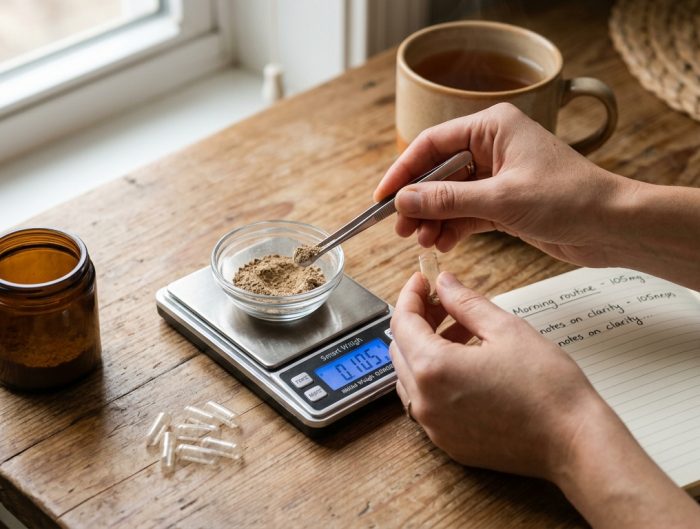
Microdosing refers to taking a very small amount of a psychedelic substance, typically one-tenth to one-twentieth of what would produce a full psychedelic experience. For psilocybin, this usually means somewhere between 0.05g and 0.3g of dried mushrooms. For LSD, it’s roughly 5 to 20 micrograms. The goal is to stay below the “sub-perceptual threshold,” meaning you shouldn’t feel high, see visual distortions, or experience any significant alteration in consciousness.
Think of it like the difference between drinking a full cup of coffee and taking a single sip. You might notice a subtle physical buzz, a gentle hum of energy, or a slightly different quality to your attention, but you should be able to go about your normal day without anyone noticing a thing.
People microdose on various schedules. The most common protocols involve dosing every third day (the Fadiman protocol) or following a pattern of four days on, three days off (the Stamets Stack). The idea is that benefits accumulate over weeks and months rather than appearing overnight. This is an important distinction from recreational use, and it’s one reason why the interaction with daily antidepressant medication becomes such a relevant concern: both approaches involve sustained, repeated engagement with serotonin-related pathways.
From a clinical research perspective, microdosing is still in its early stages. Most of what we know comes from self-reported surveys, observational studies, and a small but growing number of controlled trials. The evidence is promising for mood support and cognitive flexibility, but it’s far from settled science. That honest uncertainty is exactly why caution around drug interactions deserves your full attention.
How SSRIs and SNRIs Modify Brain Chemistry
SSRIs like sertraline (Zoloft), fluoxetine (Prozac), and escitalopram (Lexapro) work by blocking the reabsorption of serotonin in the brain. Normally, after serotonin is released into the synapse (the gap between neurons), it gets pulled back into the sending neuron through a transporter protein. SSRIs block that transporter, which means more serotonin stays in the synapse for longer. Over time, this increased serotonin availability is thought to improve mood regulation.
SNRIs like venlafaxine (Effexor) and duloxetine (Cymbalta) do the same thing with serotonin but also block the reuptake of norepinephrine, a neurotransmitter involved in alertness, energy, and the stress response. This dual action is why SNRIs are sometimes prescribed when SSRIs alone haven’t been enough.
Here’s the critical piece: these medications don’t just raise serotonin levels temporarily. They cause lasting changes in how your serotonin receptors behave. After weeks or months of SSRI use, certain serotonin receptors, particularly the 5-HT2A receptor, become downregulated. This means they become less sensitive and less numerous. This receptor downregulation is a key part of how SSRIs produce their antidepressant effects, but it’s also the exact receptor that classical psychedelics like psilocybin and LSD primarily activate. That overlap is where the interaction story really begins.
Pharmacological Interactions and Serotonin System Competition
Understanding the pharmacology behind these interactions isn’t just academic. It directly affects what you’ll experience, what risks you face, and whether combining these substances makes any practical sense for your situation. The serotonin system is remarkably complex, with at least 14 different receptor subtypes, and both antidepressants and psychedelics touch multiple parts of this system in different ways.
Receptor Blunting: Why Antidepressants May Diminish Psychedelic Effects
The most commonly reported interaction between SSRIs and psychedelic microdosing is a reduction or complete elimination of the psychedelic’s effects. This isn’t surprising when you understand the mechanism. Psilocybin (converted to psilocin in the body) and LSD both produce their primary effects by binding to the 5-HT2A serotonin receptor. When SSRIs have been downregulating those same receptors for weeks or months, there are simply fewer receptors available for the psychedelic to activate, and the ones that remain are less responsive.
Many people on SSRIs who attempt microdosing report feeling nothing at all, even at doses that would be clearly noticeable for someone not on antidepressants. This phenomenon, sometimes called “receptor blunting,” is one of the most consistent findings in both anecdotal reports and emerging research. A common reaction is to increase the microdose to try to “break through” the blunting, which is a genuinely bad idea. Escalating doses moves you out of sub-perceptual territory and into unpredictable interactions.
The degree of blunting varies depending on several factors:
- The specific SSRI or SNRI you’re taking
- Your dosage and how long you’ve been on the medication
- Individual genetic differences in how you metabolize both the antidepressant and the psychedelic
- Which psychedelic substance you’re microdosing
Fluoxetine (Prozac), for example, has a particularly long half-life and tends to produce more pronounced blunting than shorter-acting SSRIs. If you’re on a high dose of fluoxetine and notice zero effects from a standard microdose, this is the likely explanation, not a sign that you need to take more.
The Risk of Serotonin Syndrome
While blunted effects are the more common outcome, the more dangerous possibility is serotonin syndrome. This occurs when there’s too much serotonergic activity in the nervous system, and it can range from mild (agitation, diarrhea, rapid heart rate) to life-threatening (high fever, seizures, loss of consciousness).
The risk of serotonin syndrome from combining a standard microdose with an SSRI is generally considered low, but “low” is not “zero.” The risk increases substantially with:
- Higher microdoses
- MAOIs (monoamine oxidase inhibitors), which are sometimes combined with psychedelics in traditional preparations like ayahuasca
- Lithium, which has been specifically flagged in case reports as dangerous alongside psychedelics
- Taking multiple serotonergic substances simultaneously (for example, an SSRI plus a microdose plus an herbal supplement like St. John’s Wort)
Serotonin syndrome can develop rapidly, sometimes within hours. Early warning signs include muscle twitching or rigidity, excessive sweating, dilated pupils, and a feeling of being “wired” in an uncomfortable way. If you ever experience these together after combining substances, seek medical attention immediately. This isn’t something to wait out or sleep off.
At Healing Dose, we emphasize a safety-first approach because the consequences of getting this wrong are real. No amount of potential benefit from microdosing is worth a medical emergency. If you’re on any serotonergic medication, understanding this risk isn’t optional: it’s the baseline of responsible exploration.
Comparing Microdosing Outcomes Across Different Medication Classes
Not all antidepressants interact with psychedelics in the same way. The specific mechanism of your medication matters enormously, and lumping all antidepressants together leads to oversimplified and sometimes dangerous conclusions. Your experience combining a microdose with Wellbutrin will look very different from combining one with Lexapro, and both will differ from interactions with older tricyclic antidepressants or MAOIs.
Specific Considerations for SSRIs vs. SNRIs
SSRIs and SNRIs share the serotonin reuptake inhibition mechanism, but SNRIs add norepinephrine to the equation, which creates a slightly different interaction profile.
With SSRIs, the primary interaction is the receptor blunting described above. The psychedelic effects are muted because 5-HT2A receptors have been downregulated. Most people on standard SSRI doses report reduced or absent microdosing effects. The serotonin syndrome risk exists but is relatively low at true microdose levels.
SNRIs introduce additional complexity. Because they also affect norepinephrine, there’s a broader range of potential physical responses. Some people on SNRIs report more cardiovascular sensitivity when microdosing: slight increases in heart rate, blood pressure fluctuations, or a jittery quality that feels different from what either substance produces alone. Venlafaxine (Effexor) is particularly noteworthy because it has a short half-life and a well-documented withdrawal syndrome, which means that any plan to taper off before microdosing requires extra care and medical guidance.
The practical differences between SSRIs and SNRIs for microdosing purposes can be summarized this way: both blunt psychedelic effects through serotonin receptor changes, but SNRIs may produce more unpredictable physical responses due to their dual-action mechanism. Neither class is “safer” for combination with microdosing. They’re different, and both require careful consideration.
One pattern we’ve noticed in the Healing Dose community is that people on lower SSRI doses (for example, 5mg or 10mg of escitalopram) sometimes report subtle microdosing effects, while those on higher doses (20mg+) report almost nothing. This is consistent with the dose-dependent nature of receptor downregulation, but it’s not a reason to reduce your antidepressant dose on your own. That decision belongs in a conversation with your prescribing provider.
Interactions with Wellbutrin and Atypical Antidepressants
Wellbutrin (bupropion) operates through an entirely different mechanism than SSRIs or SNRIs. It primarily affects dopamine and norepinephrine reuptake, with minimal direct serotonin activity. This makes it a genuinely different case when considering psychedelic interactions.
Because Wellbutrin doesn’t significantly downregulate 5-HT2A receptors, people taking it often report that microdosing effects feel closer to what unmedicated individuals describe. The psychedelic isn’t competing against the same receptor blunting. That said, Wellbutrin does lower the seizure threshold, and while psychedelics aren’t strongly associated with seizure risk at microdose levels, this is a factor worth knowing about and discussing with a healthcare provider.
Other atypical antidepressants have their own profiles:
- Mirtazapine (Remeron) blocks certain serotonin receptors directly, including 5-HT2A and 5-HT2C, which may reduce psychedelic effects through a different mechanism than SSRIs
- Trazodone acts on multiple serotonin receptor subtypes and has some 5-HT2A antagonist activity, potentially blunting psychedelic effects at higher doses
- Buspirone (technically an anxiolytic, not an antidepressant) is a partial agonist at the 5-HT1A receptor and has a less clear interaction profile with psychedelics
The honest answer is that we have far less data on these atypical combinations than we do on SSRI-psychedelic interactions. If you’re taking any of these medications, you’re working with even more uncertainty, which means extra caution and ideally professional guidance are especially important.
Safety Protocols and Best Practices for Combined Use
If you’re currently taking an antidepressant and considering microdosing, the single most important thing you can do is slow down. The desire to feel better is completely understandable, and if you’ve been struggling with depression or anxiety, the appeal of exploring something new is powerful. But rushing this process, especially when medications are involved, introduces unnecessary risk.
The Importance of Medical Supervision and Disclosure
This is the part where many people hesitate, and we understand why. Telling your psychiatrist or primary care doctor that you’re interested in microdosing psilocybin can feel vulnerable, especially if you’re worried about judgment. But medical supervision isn’t about getting permission: it’s about having someone who understands your full medication picture and can help you make safer decisions.
Here’s what a good conversation with your provider might include:
- Your current medication, dose, and how long you’ve been taking it
- Your reasons for wanting to explore microdosing
- Any history of mania, psychosis, or bipolar disorder (these are important contraindications)
- A discussion about whether your current antidepressant is working well or whether you’ve been considering changes anyway
- Your provider’s comfort level with monitoring you during any transition
Not every doctor will be receptive, and that’s a real barrier. If your current provider dismisses the conversation entirely, you might seek out a psychiatrist or integrative medicine practitioner who has familiarity with psychedelic research. The field is growing, and more clinicians are engaging with psychedelic-assisted approaches than even a few years ago.
What you should never do is stop your antidepressant abruptly to start microdosing. Antidepressant discontinuation syndrome is a real medical condition with its own set of distressing experiences: brain zaps, intense mood swings, insomnia, nausea, and rebound depression. Layering a psychedelic substance on top of active withdrawal is a recipe for a genuinely awful time and potentially dangerous outcomes.
Monitoring Emotional Blunting and Side Effects
If you do begin microdosing while on an antidepressant, whether with medical guidance or on your own, careful self-monitoring becomes essential. This is where the integration practices we emphasize at Healing Dose really prove their value. Journaling, reflection, and honest self-assessment aren’t optional extras: they’re the tools that help you distinguish between meaningful changes and noise.
Keep a simple daily log that tracks:
- Your microdose amount and timing (morning dosing is typically recommended)
- Your antidepressant dose
- Mood on a 1-10 scale at morning, midday, and evening
- Sleep quality
- Any physical sensations: headaches, nausea, heart rate changes, muscle tension
- Emotional tone: do you feel flat, open, anxious, calm, irritable?
Emotional blunting is a particularly important thing to watch for. SSRIs themselves can cause emotional flattening, where both positive and negative emotions feel muted. Some people hope microdosing will counteract this, and occasionally it does seem to introduce a subtle emotional range that wasn’t there before. But the opposite can also happen: combining two serotonin-active substances might intensify the flatness or create an uncomfortable emotional disconnect.
Give yourself at least four to six weeks of consistent tracking before drawing any conclusions. Quiet changes in baseline mood, sleep patterns, and emotional flexibility tend to emerge gradually, not overnight. If after six weeks you’re noticing no benefit or feeling worse, that’s valuable information: it might mean the combination isn’t right for you, or that the antidepressant is blunting the microdose too much to produce any noticeable shift.
Navigating the Transition: Tapering and Integration
For some people, the goal isn’t to combine microdosing with their antidepressant indefinitely but to eventually transition from one to the other. This is understandable, especially for those who’ve experienced significant side effects from SSRIs or SNRIs: weight gain, sexual dysfunction, emotional numbness, or a general feeling of being “dulled.” But this transition is one of the most sensitive parts of the entire process, and it deserves serious respect.
Risks of Discontinuing Antidepressants to Microdose
Stopping an antidepressant is not a simple on-off switch. Your brain has adapted to the presence of the medication, and removing it triggers a recalibration process that can take weeks or months. Discontinuation experiences vary widely: some people taper off with minimal discomfort, while others face weeks of debilitating withdrawal-like responses even with gradual dose reductions.
The risks of tapering specifically to begin microdosing include:
- Rebound depression or anxiety that’s more intense than what you experienced before starting the medication
- Discontinuation syndrome (brain zaps, dizziness, irritability, flu-like sensations)
- The temptation to rush the taper because you’re eager to start microdosing
- Starting microdosing during active withdrawal, which makes it nearly impossible to tell what’s causing what
- Loss of stability during a vulnerable period
A responsible taper typically involves reducing your dose by small increments over weeks or months, guided by your prescribing provider. Some people use liquid formulations of their SSRI to make very gradual reductions (sometimes as small as 5-10% per step). The slower you go, the more manageable the process tends to be.
If you do plan to begin microdosing after tapering, wait until you’ve been completely off the antidepressant for at least two to four weeks, longer for medications with long half-lives like fluoxetine. This waiting period allows your serotonin receptors to begin upregulating and gives you a clearer baseline from which to assess the microdosing experience. It’s also a window where you’re particularly vulnerable to mood dips, so having support systems in place: a therapist, trusted friends, journaling practice: is genuinely important.
We won’t sugarcoat this: the transition period can be rough. Some days will feel fine, and others might feel like you’ve lost all your footing. That doesn’t mean you’ve made a wrong decision. It means your brain is adjusting, and adjustment takes time. Be gentle with yourself during this phase.
Long-term Mental Health Management and Harm Reduction
Whether you’re combining microdosing with an antidepressant, tapering off medication, or microdosing on its own, the long-term picture matters more than any single dose or any single week. Mental health management is an ongoing practice, not a problem you solve once and move on from.
Harm reduction principles apply directly here. The core idea is simple: if you’re going to do something that carries risk, take every reasonable step to minimize that risk. For microdosing alongside or after antidepressants, harm reduction looks like this:
- Start with the lowest possible microdose and increase only gradually
- Never combine more than two serotonergic substances at once
- Keep your prescribing provider informed, even if the conversation is uncomfortable
- Have a plan for what you’ll do if your mood deteriorates significantly
- Don’t treat microdosing as a replacement for therapy, social connection, exercise, and sleep hygiene
- Take regular breaks from microdosing (follow a protocol with built-in off days)
- Recognize that microdosing may not be the right approach for you, and that’s okay
One thing we’ve seen repeatedly is that the people who get the most from microdosing are the ones who pair it with active reflection and integration work. A microdose on its own is just a tiny amount of a substance. What turns it into something meaningful is the attention you bring to your inner experience: noticing patterns, questioning assumptions, and being willing to sit with discomfort rather than immediately reaching for the next fix.
Long-term, the goal isn’t to be on any substance forever, whether that’s an SSRI or a microdose. The goal is to build internal resources, coping strategies, and self-awareness that support your mental health independently. Microdosing, at its best, can be a tool that helps you develop those resources. But it’s a tool, not a destination.
Moving Forward with Care and Honesty
The relationship between microdosing and antidepressants is genuinely complex. There are no simple answers, and anyone who tells you otherwise is selling something. What we do know is that SSRIs and SNRIs significantly affect the same receptor systems that psychedelics target, that receptor blunting is real and common, that serotonin syndrome is rare but serious, and that tapering off medication requires medical guidance and patience.
You don’t have to figure all of this out at once. If you’re currently on an antidepressant and curious about microdosing, the best first step is simply to learn, reflect, and talk to someone who understands both sides of the equation. If you’re already microdosing and taking medication, honest self-monitoring and journaling will serve you better than any Reddit thread.
If you’re just beginning to think about where to start, our microdose quiz can help you find a gentle starting range based on your goals, experience, and sensitivity. It’s designed to meet you where you are, without pressure or hype.
Whatever path you choose, go slowly, stay honest with yourself, and remember that the most important thing you’re building isn’t a dosing protocol: it’s a relationship with your own mind.

You might also like