If you’ve been living with ADHD, you already know the frustration of advice that doesn’t quite fit: “Just make a list,” “Try harder to focus,” “Have you tried meditation?” These suggestions miss something fundamental about how your brain works. So when a growing number of people start reporting that psilocybin, the psychoactive compound found in certain mushrooms, helped them feel calmer, more organized, and less emotionally reactive, it’s natural to be both curious and cautious. The interest in psilocybin for ADHD has grown significantly over the past few years, driven by anecdotal reports, preliminary research, and a broader cultural shift toward exploring psychedelic-assisted approaches for mental health. But what does the evidence actually say? And more importantly, what should you know before considering this path yourself? This article walks through the neuroscience, the potential benefits, the risks, and the current state of research, all with the honesty and nuance this topic deserves. You won’t find hype here, just a clear-eyed look at what we know, what we don’t, and how to think about it all.
Understanding the Link Between Psilocybin and Neurodivergence
ADHD is not simply a deficit of attention. It’s a complex neurological pattern involving differences in how the brain regulates focus, motivation, emotional responses, and impulse control. For decades, the primary pharmacological approaches have centered on stimulant medications like methylphenidate and amphetamine salts, which increase dopamine and norepinephrine availability. These work well for many people, but not everyone. Some experience intolerable side effects, others find the benefits fade over time, and a significant number of adults with ADHD remain undiagnosed or undertreated well into adulthood.
This is part of why interest in psychedelic compounds has grown. Psilocybin, specifically, has attracted attention because it interacts with brain systems that overlap with those implicated in ADHD. The connection isn’t straightforward, and no one is suggesting psilocybin as a replacement for established approaches. But understanding how it works in the brain helps clarify why some people with ADHD report meaningful changes in their daily functioning after carefully structured psilocybin experiences.
How Psilocybin Interacts with the Brain’s Default Mode Network
Once ingested, psilocybin is converted into psilocin, which binds primarily to serotonin 5-HT2A receptors throughout the brain. One of its most well-documented effects is a temporary reduction in activity within the default mode network, or DMN. The DMN is a collection of brain regions that becomes active during self-referential thinking: rumination, daydreaming, replaying past events, worrying about the future. It’s essentially your brain’s autopilot mode.
In people with ADHD, the DMN often behaves differently than in neurotypical individuals. Research has shown that the DMN in ADHD brains tends to intrude during tasks that require focused attention, which may partly explain why concentration feels so effortful. Your brain’s “wandering” network keeps switching on when it shouldn’t. Psilocybin’s ability to temporarily quiet the DMN is one reason researchers are interested in its potential relevance for ADHD. By disrupting entrenched neural patterns, it may create a window where new, more flexible ways of thinking and attending can emerge.
This isn’t a permanent reset. Think of it more like loosening soil before planting seeds: the compound creates conditions for change, but the actual growth depends on what you do afterward. That’s why integration, the process of reflecting on and applying insights from a psilocybin experience, is considered just as important as the experience itself.
The Role of Dopamine and Serotonin in ADHD Management
ADHD is often described as a “dopamine disorder,” and while that’s an oversimplification, dopamine does play a central role. The ADHD brain tends to have lower baseline dopamine signaling in certain circuits, particularly those involved in motivation, reward anticipation, and sustained attention. This is why stimulant medications, which boost dopamine availability, are effective for many people.
Psilocybin works through a different pathway. Its primary action is on serotonin receptors, not dopamine receptors. However, the serotonin and dopamine systems don’t operate in isolation. They’re deeply interconnected, and changes in serotonergic activity can influence dopaminergic function indirectly. Some researchers hypothesize that psilocybin’s serotonin-driven effects may help modulate the emotional and cognitive patterns that make ADHD so challenging, even without directly increasing dopamine.
There’s also growing interest in how psilocybin promotes neuroplasticity: the brain’s ability to form new neural connections. Preliminary animal studies and early human imaging data suggest that psilocybin may increase dendritic spine density and promote synaptogenesis. For someone with ADHD, this could theoretically support the development of stronger executive function pathways over time, though this remains speculative and much more research is needed. The key takeaway is that psilocybin’s mechanism of action is fundamentally different from traditional ADHD medications, which means it may address different aspects of the ADHD experience rather than serving as a direct substitute.
Potential Benefits of Psilocybin for ADHD Symptoms
The reports coming from people who have explored psilocybin while living with ADHD are varied, but several themes emerge consistently. These aren’t clinical claims: they’re patterns observed in surveys, online communities, and early research. What makes them interesting is how closely they align with the specific challenges ADHD creates in daily life.
Improving Executive Function and Cognitive Flexibility
Executive function is the umbrella term for a set of mental skills that includes working memory, flexible thinking, and self-regulation. If you have ADHD, you’re intimately familiar with executive function struggles: forgetting why you walked into a room, difficulty switching between tasks, or getting stuck in a rigid thought loop even when you know a different approach would work better.
Several survey-based studies, including a notable 2023 survey published in Frontiers in Psychiatry, found that respondents with ADHD who had used psilocybin reported improvements in task initiation, mental flexibility, and the ability to prioritize. These weren’t dramatic, overnight shifts. Most described them as subtle: a quiet reduction in the mental friction that usually accompanies getting started on something, or a slightly easier time letting go of one task to begin another.
This aligns with what we know about psilocybin’s effects on neural connectivity. Functional MRI studies have shown that psilocybin temporarily increases communication between brain regions that don’t normally talk to each other much, while decreasing activity in rigid, habitual networks. For an ADHD brain that tends to get stuck in certain patterns, this temporary increase in cognitive flexibility might create lasting impressions, especially when paired with intentional reflection and journaling afterward.
At Healing Dose, we emphasize that these kinds of subtle internal shifts are exactly the ones worth paying attention to. They’re easy to dismiss because they don’t feel dramatic. But over weeks and months, a slightly easier time starting tasks or a bit more mental flexibility can compound into genuinely meaningful changes in how you move through your day.
Addressing Emotional Dysregulation and Rejection Sensitivity
Here’s something that doesn’t get enough attention in mainstream ADHD conversations: the emotional dimension. ADHD isn’t just about focus and hyperactivity. Many people with ADHD experience intense emotional reactions, rapid mood shifts, and a phenomenon often called rejection sensitive dysphoria, or RSD. RSD involves an overwhelming emotional response to perceived criticism or rejection, and it can be profoundly disruptive to relationships and self-esteem.
Psilocybin’s effects on emotional processing are among the most consistently reported in both clinical research and personal accounts. People describe feeling a greater sense of emotional distance from triggers, not in a numbing way, but in a way that creates space between a stimulus and their reaction. Instead of immediately spiraling after a perceived slight, they notice the feeling arise and can choose how to respond.
This capacity, sometimes described as “meta-awareness” or “observer perspective,” is closely related to what mindfulness practices aim to cultivate. The difference is that many people with ADHD find traditional mindfulness extremely difficult to practice consistently, precisely because of their attentional differences. Psilocybin may offer an experiential shortcut to that observer perspective, giving people a felt sense of what emotional regulation can feel like, which then becomes easier to practice and maintain.
Some people describe it like this: “I used to feel like my emotions were driving the car and I was locked in the trunk. After my psilocybin experience, I felt like I was at least in the passenger seat.” That’s not a clinical outcome measure, but it captures something real about how emotional regulation shifts can feel from the inside.
Enhancing Focus and Reducing Hyperactivity
The relationship between psilocybin and focus is nuanced, and it’s important to be honest about this. Psilocybin is not a focus-enhancing substance in the way that stimulant medications are. During an active psilocybin experience, focus in the conventional sense is often reduced, not enhanced. Thoughts become more fluid, attention becomes more diffuse, and linear thinking gives way to associative, pattern-based cognition.
The reported focus benefits tend to emerge afterward, particularly in the days and weeks following a psilocybin experience. People with ADHD frequently describe a “afterglow” period where mental chatter is reduced, priorities feel clearer, and the restless physical energy that characterizes hyperactivity seems to settle. Some microdosing advocates report similar effects on an ongoing basis, though the evidence here is largely anecdotal and self-reported.
One hypothesis for this post-experience focus improvement relates to psilocybin’s effects on the brain’s salience network, which helps determine what’s important enough to pay attention to. In ADHD, the salience network may not effectively filter stimuli, leading to the classic experience of being equally distracted by everything. If psilocybin helps recalibrate this network even temporarily, the result could be a period of improved signal-to-noise ratio in attention.
It’s worth being realistic here. Not everyone reports these benefits, and some people with ADHD find that psilocybin increases their tendency toward distraction or anxiety, at least in the short term. Individual variability is enormous, and your response will depend on factors like your specific ADHD presentation, your emotional state going in, your environment, and whether you’re using other medications.
Microdosing vs. Macrodosing for ADHD
One of the most common questions people ask is whether they should try microdosing or a larger, more immersive experience. The honest answer is that we don’t have enough clinical data to make definitive recommendations for either approach specifically for ADHD. But we can look at what people are actually doing and what they’re reporting.
Common Microdosing Protocols and Reported Outcomes
Microdosing involves taking a sub-perceptual dose of psilocybin, meaning an amount small enough that you don’t feel any overt psychoactive effects. The goal isn’t to have a noticeable experience but rather to create subtle shifts in mood, cognition, and energy over time. Think of it as the difference between taking a full dose of caffeine and drinking a quarter cup of green tea: you might not feel a jolt, but something is shifting beneath the surface.
Common microdosing protocols include:
- The Fadiman Protocol: one microdose day, followed by two days off, repeated in a cycle
- The Stamets Protocol: four days on, three days off, often combined with lion’s mane mushroom and niacin
- Intuitive dosing: taking a microdose when you feel it would be beneficial, without a fixed schedule
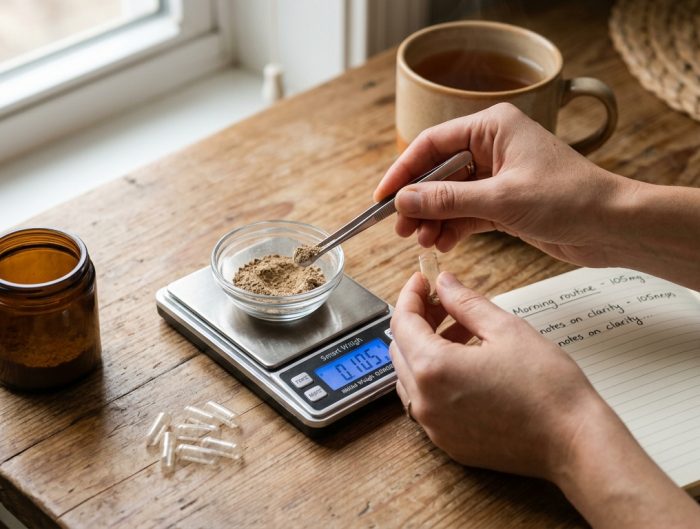
Typical microdoses range from 0.05 to 0.15 grams of dried psilocybin mushrooms, though individual sensitivity varies widely. If you’re someone who feels the effects of half a cup of coffee, you may need to start at the very low end of that range.
People with ADHD who microdose commonly report a gentle reduction in mental noise, slightly improved motivation for mundane tasks, and a calmer emotional baseline. Some describe it as feeling like the volume on their internal monologue has been turned down by a notch or two. These are quiet changes, not dramatic ones, and they tend to accumulate over weeks rather than appearing immediately.
Morning dosing is generally preferred, as some people find that microdosing later in the day can interfere with sleep. At Healing Dose, we encourage people to keep a simple journal during any microdosing protocol: just a few notes about mood, energy, focus, and sleep each day. This kind of tracking is essential because the changes are often so subtle that you won’t notice them without a written record to look back on.
There are also days where nothing seems to happen, and that’s completely normal. The anti-climactic nature of microdosing is actually a feature, not a bug. If you’re feeling distinctly altered, the dose is probably too high for a microdosing approach.
The Therapeutic Impact of High-Dose Guided Sessions
On the other end of the spectrum, some people with ADHD pursue higher-dose psilocybin sessions, typically in the range of 2 to 5 grams of dried mushrooms, in a structured, supported setting. These experiences are qualitatively very different from microdosing. They involve a full psychoactive experience lasting several hours, often accompanied by vivid imagery, intense emotions, and significant shifts in perspective.
The therapeutic value of higher-dose sessions, based on clinical research primarily focused on depression and anxiety, appears to come from their ability to disrupt deeply ingrained mental patterns. For someone with ADHD, this might mean gaining sudden clarity about self-defeating behaviors, experiencing a profound sense of self-acceptance that counteracts years of shame and criticism, or simply feeling what a calm, focused mind is like for the first time.
These sessions carry more risk than microdosing and ideally should be conducted with a trained facilitator or therapist in a safe, comfortable environment. Set and setting, meaning your mindset going in and the physical and social environment you’re in, matter enormously. A challenging experience in an unsupported setting can be destabilizing, while the same experience with proper preparation and integration support can be profoundly meaningful.
The integration period after a high-dose session is arguably more important than the session itself. This is where you take the insights, emotions, and perspectives that emerged and work to incorporate them into your daily life. Without integration, even the most profound experience tends to fade back into old patterns within weeks. Journaling, therapy, and community support all play important roles here.
Current Research and Clinical Evidence
Let’s be straightforward about where the science stands: we’re still in the early stages. The research on psilocybin for ADHD specifically is limited compared to the more established body of work on psilocybin for depression, end-of-life anxiety, and addiction. But the existing evidence, while preliminary, is worth understanding.
Reviewing Observational Studies and Patient Surveys
The most substantial evidence we have comes from observational studies and self-report surveys. A 2022 study published in Frontiers in Psychiatry surveyed 233 adults who microdosed psilocybin and found that those with ADHD reported improvements in focus, mood, and emotional regulation at higher rates than neurotypical respondents. A separate 2023 survey of over 4,000 microdosers found that ADHD was among the top conditions people were seeking to address, and a majority reported at least some perceived benefit.
These findings are encouraging, but they come with significant caveats. Self-report data is susceptible to placebo effects, expectancy bias, and selection bias: people who had positive experiences are more likely to respond to surveys about their experiences. There’s also no way to control for dosage, purity, frequency, or the many other variables that influence outcomes.
Qualitative research has added depth to these survey findings. Interview-based studies have captured detailed accounts of how people with ADHD experience psilocybin differently from neurotypical users. Some report that the experience feels “less chaotic” than expected, possibly because their brains are already accustomed to non-linear thinking. Others describe a paradoxical calming effect, similar to how stimulant medications can have a calming rather than energizing effect on ADHD brains.
Ongoing Clinical Trials and Future Directions
As of 2026, several clinical trials are underway or in planning stages that specifically examine psilocybin’s effects on ADHD. The Beckley Foundation has been involved in preliminary work exploring psychedelic microdosing for attention-related conditions. King’s College London and other institutions have begun designing controlled studies that will provide much more reliable data than surveys alone.
One particularly promising area is the study of psilocybin combined with cognitive behavioral therapy or ADHD-specific coaching. The hypothesis is that psilocybin may enhance the effectiveness of behavioral interventions by increasing neuroplasticity during the period when new habits and strategies are being learned. If this pans out, we might see psilocybin used not as a standalone approach but as a catalyst that makes other evidence-based interventions work better.
We’re also seeing growing interest in how different ADHD subtypes (predominantly inattentive, predominantly hyperactive-impulsive, and combined presentation) might respond differently to psilocybin. This kind of nuanced research is essential because ADHD is not a monolithic condition, and what helps one person may not help another.
The timeline for definitive clinical guidance is likely still several years away. Phase II and Phase III trials take time, and regulatory approval processes add additional years. In the meantime, the most responsible approach is to stay informed, remain skeptical of bold claims, and prioritize safety above all else.
Risks, Safety Considerations, and Legal Status
Any honest conversation about psilocybin for ADHD has to include a thorough discussion of risks. Enthusiasm is understandable, but it needs to be balanced with caution, especially when you’re dealing with a condition that already affects decision-making and impulse control.
Potential Side Effects and Contraindications with ADHD Meds
Psilocybin is generally considered to have a favorable safety profile compared to many other psychoactive substances. It’s not physically addictive, and lethal overdose is essentially unheard of. But “relatively safe” doesn’t mean “risk-free,” and there are specific considerations for people with ADHD.
Common side effects during a psilocybin experience include nausea, anxiety, confusion, and emotional intensity that can feel overwhelming. For people with ADHD who already struggle with emotional regulation, the emotional amplification that psilocybin can produce deserves serious consideration. A wave of intense sadness or anxiety during an experience can be therapeutic in the right context, but it can also be destabilizing without proper support.
Drug interactions are a critical concern. Many people with ADHD take medications that interact with serotonergic compounds:
- SSRIs and SNRIs: These are commonly prescribed for co-occurring anxiety or depression in ADHD. They can significantly reduce psilocybin’s effects and, in rare cases, combining serotonergic substances raises concerns about serotonin syndrome.
- Lithium: This combination is considered particularly risky and should be strictly avoided. Case reports have described seizures in people who combined lithium with psilocybin.
- Stimulant medications: The interaction between stimulants (like Adderall or Ritalin) and psilocybin is less well-studied, but the combined cardiovascular effects (increased heart rate and blood pressure) warrant caution.
- MAOIs: These are sometimes used for ADHD and can dramatically intensify psilocybin’s effects, creating a potentially dangerous situation.
If you’re taking any medication, consulting with a healthcare provider who is knowledgeable about both ADHD pharmacology and psychedelic compounds is essential before considering psilocybin. This is not an area where self-experimentation without medical guidance is wise.
People with a personal or family history of psychotic disorders (such as schizophrenia or bipolar I disorder) should generally avoid psilocybin entirely, as it may trigger or exacerbate psychotic episodes. Since ADHD frequently co-occurs with other conditions, a thorough mental health assessment is an important precaution.
Navigating the Evolving Legal Landscape of Psilocybin
The legal status of psilocybin varies dramatically depending on where you live, and it’s changing rapidly. In the United States, psilocybin remains a Schedule I substance at the federal level, meaning it’s illegal to possess, produce, or distribute. However, several jurisdictions have moved toward decriminalization or regulated access.
Oregon became the first state to establish a regulated psilocybin therapy program, with licensed service centers operating since 2023. Colorado followed with its own framework for regulated access. Several cities, including Denver, Oakland, Seattle, and Washington D.C., have deprioritized enforcement of psilocybin-related offenses.
Internationally, the picture is equally varied. The Netherlands permits the sale of psilocybin-containing truffles. Jamaica and some other Caribbean nations have no specific prohibition. Canada has granted exemptions for therapeutic use in certain cases. Meanwhile, many countries maintain strict prohibition.
If you’re considering exploring psilocybin, understanding the specific laws in your jurisdiction is a non-negotiable first step. The legal landscape is evolving quickly, so information from even a year or two ago may be outdated. Beyond legality, accessing psilocybin through unregulated channels introduces risks related to purity, dosage accuracy, and the absence of professional support.
The trend toward regulated access is encouraging because it creates frameworks for safety: standardized dosing, trained facilitators, screening for contraindications, and integration support. As these programs expand, they’ll likely provide much better data on how psilocybin affects people with specific conditions like ADHD.
The Future of Psychedelic-Assisted Therapy for ADHD
We’re at an interesting moment. The stigma around both ADHD and psychedelics has diminished significantly, and the scientific community is taking both more seriously than at any point in recent memory. The convergence of these two areas holds genuine promise, but it requires patience and intellectual honesty.
The most likely near-term development isn’t psilocybin replacing Adderall on pharmacy shelves. It’s the integration of psilocybin-assisted sessions into comprehensive ADHD management plans that also include behavioral strategies, coaching, and possibly conventional medication. Think of it as adding a new tool to the toolkit, not replacing the existing ones.
For those of you who are curious but cautious, that’s exactly the right posture. Curiosity keeps you open to possibilities; caution keeps you safe. If you’re interested in exploring whether microdosing might support your ADHD management, start by educating yourself thoroughly, consult with knowledgeable healthcare providers, and if you do proceed, start with the lowest possible dose and track your experiences carefully.
We at Healing Dose believe that the most meaningful changes tend to be the quietest ones: a slightly easier morning, a bit less reactivity in a difficult conversation, a task started without the usual 45 minutes of procrastination. These small shifts, noticed and nurtured through reflection, are what actually change the texture of daily life over time.
If you’re wondering where to begin, finding the right starting dose for your body and goals matters more than most people realize. Take our microdose quiz to get a personalized starting point based on your sensitivity, experience level, and what you’re hoping to explore. It’s a small step, but sometimes the smallest steps are the ones that actually get you moving.

You might also like