For thousands of veterans living with post-traumatic stress, the search for relief has been long and often discouraging. Standard approaches like SSRIs and prolonged exposure therapy help some, but a significant number of service members find themselves stuck, cycling through options that never quite address the depth of what they carry. That’s why psilocybin research involving veterans has become one of the most closely watched areas in mental health science right now. The early data is genuinely promising, and the institutional momentum behind it is real. If you or someone you care about has served, this is worth understanding, not because it’s a silver bullet, but because it represents a meaningful shift in how we think about service-related trauma. At Healing Dose, we follow this research closely because it speaks to the core of what thoughtful, safety-first psychedelic education looks like: careful science, honest expectations, and respect for individual experience.
The Evolving Landscape of Psychedelic Medicine for Veterans
Historical Context and the Shift in Public Perception
Psychedelic substances were actively studied in clinical settings throughout the 1950s and 1960s before the Controlled Substances Act of 1970 effectively shut down that research for decades. For veterans in particular, the stigma was doubled: not only were psychedelics taboo, but admitting to mental health struggles carried its own weight in military culture. That started to change in the 2010s, when a combination of persistent veteran advocacy, growing frustration with conventional care, and renewed academic interest pushed psychedelics back into the conversation.
A 2026 RAND Corporation survey found that nearly 5 million U.S. veterans have already used psilocybin mushrooms, often outside any clinical framework. That number alone signals how far ahead of policy many veterans already are. Public perception has shifted dramatically, with bipartisan political support and major media coverage replacing the old “just say no” framing.
Current Limitations of Conventional PTSD Treatments
The two FDA-approved medications for PTSD, sertraline and paroxetine, were both originally developed as antidepressants. They help some people, but response rates hover around 50-60%, and full remission is far less common. Many veterans describe years of medication adjustments, side effects like emotional blunting and weight gain, and a persistent feeling that the core of their trauma remains untouched.
Talk therapies like Cognitive Processing Therapy and prolonged exposure are evidence-based, but dropout rates are high, sometimes exceeding 30%. For veterans with severe or treatment-resistant PTSD, the current toolkit often feels inadequate. That gap is exactly what’s driving the urgency behind psilocybin research.
Clinical Evidence: Psilocybin’s Impact on Service-Related Trauma
Key Findings from Recent Phase 2 Clinical Trials
The numbers from recent trials are hard to ignore. A pilot study found that 75% of veterans with severe PTSD were in remission one month after receiving just two doses of psilocybin in a controlled, therapy-supported setting. That’s 9 out of 12 participants, all of whom had previously tried other approaches without adequate relief.
These weren’t casual experiences. Each session involved careful preparation, clinical supervision, and structured follow-up. The results, while preliminary and based on a small sample, are striking enough that larger trials are now underway to determine whether these outcomes hold across bigger, more diverse groups of veterans.
Mechanisms of Action: Neuroplasticity and Fear Extinction
So what’s actually happening in the brain? Psilocybin works primarily on serotonin 2A receptors, which triggers a cascade of downstream changes. One of the most significant is a temporary increase in neuroplasticity: the brain’s ability to form new connections and reorganize existing patterns. For someone with PTSD, where fear responses have become deeply entrenched, this window of flexibility may allow old traumatic associations to be processed differently.
Research also suggests that psilocybin reduces activity in the default mode network, a brain system associated with rigid self-referential thinking and rumination. Veterans often describe a sense of being “unstuck” after a session, as if patterns they’d been trapped in for years suddenly became visible and workable. These aren’t instant or permanent shifts, but they can create an opening for the real work of integration and reflection.
Addressing Comorbidities: Depression and Substance Use Disorder
PTSD rarely travels alone. Depression, alcohol use disorder, and chronic pain frequently co-occur in veteran populations, and conventional care often treats each condition in isolation. Psilocybin research is beginning to explore how a single intervention might address multiple overlapping conditions, particularly when paired with psychotherapy.
Early data from depression-focused psilocybin trials in non-veteran populations has been encouraging, and researchers are now looking at whether similar benefits extend to veterans dealing with substance use alongside trauma. This is still early-stage work, but the possibility of addressing interconnected struggles through one therapeutic framework is a big part of why this research matters.
The Role of the Department of Veterans Affairs (VA)
The 2024 Funding Breakthrough for Psychedelic Research
For years, the VA’s official position on psychedelics was cautious to the point of silence. That changed in a meaningful way when the VA funded its first study on psychedelic-assisted therapy for veterans. This wasn’t a symbolic gesture: it represented institutional acknowledgment that the evidence had reached a threshold worth investing in.
The funding decision opened doors for researchers who had been working with limited budgets and signaled to the broader medical community that the VA was taking this seriously. For veterans who had been self-medicating or traveling abroad for psychedelic experiences, it was also a signal that the system might eventually meet them where they are.
Active VA Study Sites and Collaboration with Academic Institutions
The VA has launched clinical trials examining psilocybin for depression and PTSD at multiple sites, often in partnership with universities that have established psychedelic research programs. These collaborations bring together the VA’s access to veteran populations with the scientific expertise of academic labs that have been studying psilocybin for over a decade.
Sites are actively recruiting participants, though the timeline for meaningful results will take time. If you’re a veteran curious about participation, checking with your local VA medical center is a reasonable first step. These studies are designed with extensive safety protocols, and participants receive comprehensive psychological support before, during, and after sessions.
Legislative Progress and Policy Hurdles
State vs. Federal Decriminalization Efforts
The legal picture is complicated. Oregon became the first state to create a regulated framework for psilocybin services in 2023, and Colorado followed with its own model. Several other states have decriminalized possession or are actively considering regulated access programs. But psilocybin remains a Schedule I substance under federal law, which creates real friction for VA clinicians, federal researchers, and veterans seeking care through government channels.
This state-federal tension means that a veteran in Oregon might have legal access to psilocybin services while a veteran in Texas does not, despite both having served the same country. It’s a patchwork that advocates are working to resolve, but progress is uneven.
Bipartisan Support in the Douglas ‘Mike’ Day Psychedelic Therapy Act
One of the most encouraging political developments has been the bipartisan push to accelerate psychedelic research for veterans. The Douglas ‘Mike’ Day Psychedelic Therapy Act, named after a decorated Navy SEAL, has drawn support from both sides of the aisle. The bill aims to expand VA research funding and create clearer pathways for clinical use if the evidence continues to support it.
Veteran advocacy groups, including the American Legion, have been instrumental in building this political will. A RAND survey found that veterans themselves hold mixed but increasingly open views on psychedelic-assisted therapy, with many expressing willingness to try it if offered through the VA system.
Safety, Ethics, and the Importance of Integration
The Necessity of Psychotherapy-Assisted Frameworks
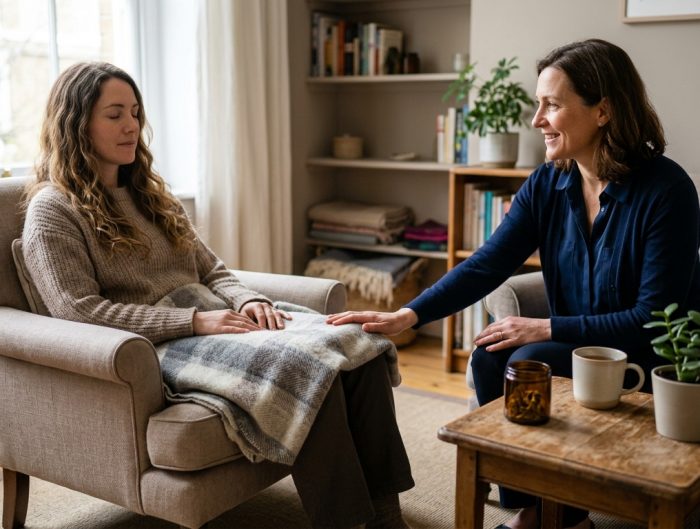
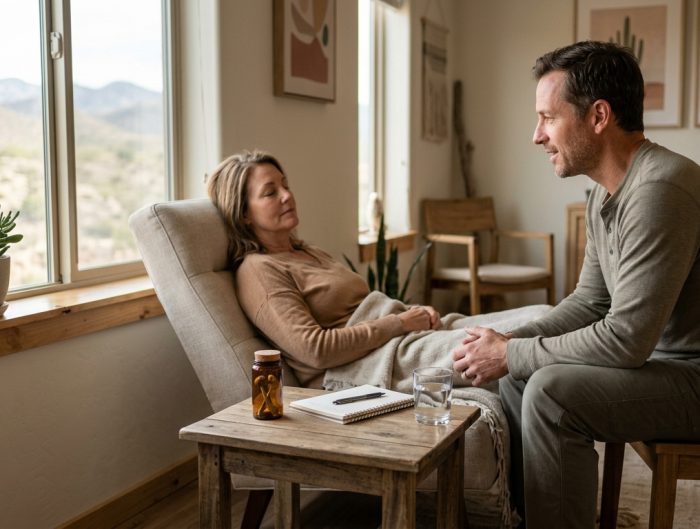
Psilocybin is not a pill you take and forget about. Every credible clinical trial pairs the substance with extensive psychotherapy: preparation sessions before, supported experiences during, and integration work after. This framework is essential. The psilocybin creates a window of openness and flexibility, but the therapeutic relationship and follow-up reflection are what help translate that window into lasting change.
At Healing Dose, we emphasize this same principle across all our educational content. Whether someone is exploring microdosing or following clinical research, the integration piece – journaling, reflection, honest self-assessment – is where the real work happens. A substance alone, no matter how promising, is only part of the equation.
Mitigating Risks and Managing Adverse Reactions
Psilocybin is generally well-tolerated in clinical settings, but it’s not without risks. Anxiety, temporary confusion, and emotionally difficult experiences can occur, particularly at the doses used in PTSD research. For veterans with trauma histories, these sessions can surface intense emotions that require skilled clinical support to process safely.
Screening for conditions like psychotic disorders, certain cardiac issues, and contraindicated medications is standard in all reputable trials. This isn’t something to approach casually. If you’re considering any form of psilocybin use, understanding your own health context and having professional support matters enormously.
Future Outlook: Path Toward FDA Approval and Standard Care
The path from promising pilot data to FDA-approved standard care is long, and we’re still in the middle of it. Phase 2 trials are generating the kind of evidence needed to justify larger Phase 3 studies, which could take several more years to complete. If those results hold, FDA approval for psilocybin-assisted therapy for PTSD could become a reality, though likely not before the late 2020s at the earliest.
For veterans watching this space, the honest picture is one of cautious optimism. The science is moving in a positive direction, institutional barriers are coming down, and political support is real. But there’s still significant work to do, and the timeline will test everyone’s patience. Where psilocybin research and veterans stand right now is somewhere between proof of concept and widespread availability: far enough along to be taken seriously, but not yet at the finish line.
If you’re curious about exploring microdosing as part of your own personal growth journey, finding the right starting point matters. You can take the dose quiz to identify a gentle starting range based on your goals, experience, and sensitivity, so you can approach things thoughtfully and at your own pace.

You might also like