Few varieties of Psilocybe cubensis carry as much mystique, debate, and genuine fascination as the strain commonly known as Penis Envy. Named for its unmistakable phallic shape, this mushroom has earned a reputation among mycologists and psychedelic enthusiasts alike for its unusually high potency and its murky, almost legendary origin story. Whether you’re a curious beginner trying to understand what makes this particular variety different, or someone with experience who wants a deeper grasp of the science and history involved, you’re in the right place. We’ll walk through the origins, chemical makeup, reported experiences, common variants, cultivation quirks, and legal realities surrounding this distinctive strain, so you can approach the topic with clarity rather than confusion.
Origins and Genetic Lineage of the Penis Envy Strain
The story of how penis envy mushrooms came to exist is one of the most colorful tales in modern mycology. It involves two of the most influential figures in the psychedelic movement, a remote Amazonian jungle, and decades of selective cultivation that eventually produced the strain we recognize today. Understanding this lineage matters because it helps explain why the strain behaves differently from other P. cubensis varieties, both in how it grows and in what it produces chemically.
The genetic history is not perfectly documented. Much of what we know comes from oral tradition within the mycology community, personal correspondence, and a handful of published accounts. Still, the broad strokes are well-established and widely accepted.
The Role of Terence McKenna and the Amazonian Discovery
The origin story begins in the early 1970s with Terence McKenna and his brother Dennis, two ethnobotanists who traveled to the Colombian Amazon in search of psychoactive plants. During their now-famous expedition to the region near La Chorrera, the McKenna brothers collected spore prints from large, robust Psilocybe cubensis specimens growing on cattle dung in the tropical lowlands.
Terence brought these spore prints back to the United States, where they circulated among a small network of amateur mycologists and psychedelic researchers. At this point, the specimens were not yet the Penis Envy strain as we know it. They were simply a particularly vigorous and potent collection of wild Amazonian cubensis genetics. The transformation into something truly distinct would require another figure’s obsessive dedication to selective breeding.
It’s worth emphasizing that McKenna himself did not create the strain. His contribution was foundational: he collected the wild genetic material that would later be refined into something extraordinary. Without his Amazonian fieldwork, the lineage would never have existed.
Steven Pollock and the Domestication of the Strain
The next chapter belongs to Steven Pollock, a physician and mycologist based in Texas who received spore prints from McKenna’s Amazonian collection. Pollock was deeply interested in the medicinal and psychological potential of psilocybin mushrooms, and he dedicated years to isolating and selectively breeding specimens with unusual characteristics.
Through repeated cycles of cloning and selection, Pollock identified and stabilized a mutation that produced thick, dense, bulbous fruiting bodies with underdeveloped caps. These mushrooms looked dramatically different from typical cubensis varieties, and they appeared to contain higher concentrations of active compounds. The name “Penis Envy” emerged naturally from the strain’s unmistakable physical resemblance.
Pollock’s story has a tragic dimension. He was murdered in 1981 under circumstances that remain somewhat mysterious, and much of his personal mycological archive was lost or scattered. Some of his work survived through Rich Gee, a mycologist who reportedly received cultures from Pollock and continued developing the strain. From there, the genetics spread through the underground mycology community, eventually becoming one of the most sought-after cubensis varieties in the world.
The strain’s journey from Amazonian cow pasture to internationally recognized genetic line took roughly a decade and involved at least three key individuals. That lineage gives Penis Envy a historical depth that most cubensis varieties simply don’t have.
Physical Characteristics and Distinctive Morphology
If you’ve ever seen a typical Psilocybe cubensis mushroom, you know the general look: a slender stem, a wide cap that opens like an umbrella, and a veil that breaks as the cap expands. Penis Envy mushrooms look almost nothing like that.
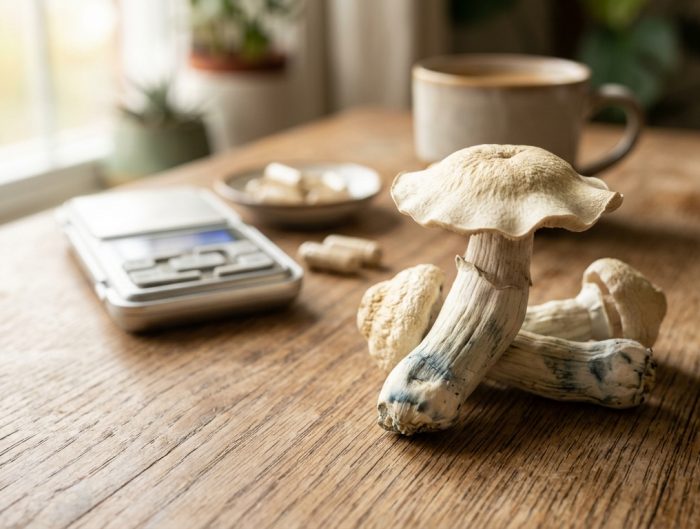
The stem is unusually thick and dense, often two to three times the diameter of a standard cubensis stem. The cap remains small relative to the stem and frequently stays partially closed, giving the entire mushroom its characteristic shape. The flesh is notably compact, which contributes to the strain’s higher weight-to-potency ratio.
Color varies depending on the specific sub-variant and growing conditions, but most Penis Envy specimens display a pale to medium tan cap with a whitish to off-white stem. Bruising, which indicates the presence of psilocin and its oxidation, tends to be pronounced: a deep blue-green that appears quickly when the flesh is damaged. This heavy bruising is one visual indicator of the strain’s elevated alkaloid content.
The overall growth pattern is also distinctive. Where most cubensis varieties produce tall, slender fruits in dense clusters, Penis Envy tends to produce fewer but larger individual mushrooms. Each fruit is heavier and more solid than you’d expect from its size, almost like comparing a dense sourdough loaf to a fluffy white bread roll.
Potency and Chemical Composition
One of the main reasons this strain attracts so much attention is its reputation for being significantly stronger than average cubensis mushrooms. That reputation is not just anecdotal: analytical testing has confirmed meaningful differences in alkaloid concentrations.
Psilocybin and Psilocin Concentrations
The two primary psychoactive compounds in Psilocybe cubensis are psilocybin and psilocin. Psilocybin is a prodrug, meaning your body converts it into psilocin (the compound that actually interacts with serotonin receptors in your brain) after ingestion. Both compounds matter, but psilocin content is particularly relevant because it’s active without metabolic conversion.
Standard cubensis varieties typically contain between 0.5% and 0.9% total psilocybin and psilocin by dry weight. Penis Envy mushrooms have been tested at concentrations ranging from 1.0% to over 1.7% in some samples, with competition-grade specimens occasionally exceeding 2.0%. Data from the Psilocybin Cup competitions held in recent years has consistently shown Penis Envy and its variants placing among the highest-potency entries.
What this means practically is that a dose of dried Penis Envy material may produce experiences roughly 1.5 to 2 times more intense than the same weight of a typical cubensis like Golden Teacher or B+. If you’re accustomed to taking 2 grams of a standard variety, taking 2 grams of this strain could feel closer to 3 or 4 grams of what you’re used to. That difference is significant and worth respecting.
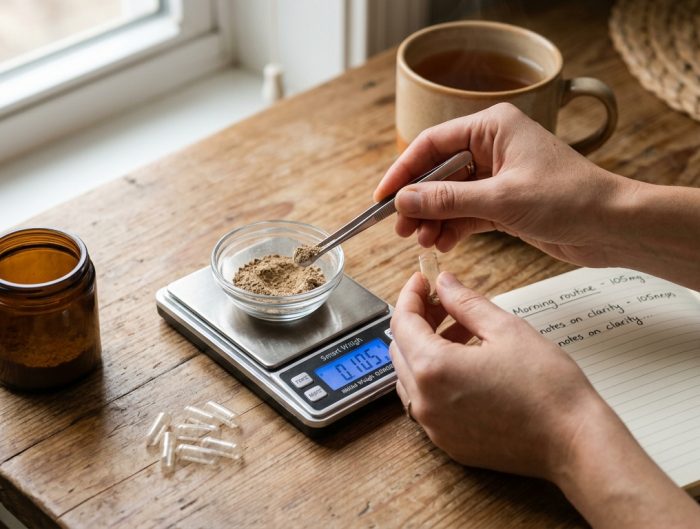
For anyone interested in microdosing, this potency difference is especially important. A standard microdose range of 0.1 to 0.3 grams for regular cubensis may need to be adjusted downward. At Healing Dose, we consistently encourage people to start low and adjust gradually, and that advice applies doubly here. Individual sensitivity varies enormously, much like how some people feel jittery after half a cup of coffee while others can drink three cups without noticing.
Comparative Analysis with Other P. Cubensis Varieties
To put the potency in perspective, here’s how Penis Envy generally compares with other well-known cubensis strains:
- Golden Teacher: One of the most popular beginner-friendly varieties, typically testing at 0.5% to 0.8% total alkaloids. Mild to moderate intensity at standard doses.
- B+: Another widely cultivated strain with average potency, usually in the 0.5% to 0.7% range.
- Tidal Wave: A hybrid strain (B+ crossed with Penis Envy) that has produced some of the highest-testing samples ever recorded, sometimes exceeding 2.5% total alkaloids.
- Albino Penis Envy: A variant of the original strain that often tests even higher than standard PE, frequently above 1.5%.
- Amazonian: Closer to the original wild genetics McKenna collected, typically testing in the 0.6% to 1.0% range.
The key takeaway is that not all cubensis mushrooms are created equal. Strain selection matters, and assuming uniform potency across varieties can lead to unexpectedly intense experiences. If you’re new to any of this, starting with a milder strain and working your way up is genuinely the wisest approach.
It’s also worth noting that potency can vary between individual mushrooms of the same strain, between different flushes from the same substrate, and between different growing conditions. Testing numbers represent averages and ranges, not guarantees. Treat any published potency figure as a general guide, not a precise measurement of what’s in your hand.
Psychological and Physiological Effects
The experiences reported from this strain tend to be described as deeper, more visual, and more emotionally intense than those from average-potency cubensis varieties. That said, every person’s experience is shaped by their individual neurochemistry, mindset, environment, and dose. What follows are common patterns, not universal rules.
Subjective Visual and Auditory Alterations
At moderate to higher doses, users frequently report vivid visual phenomena. These can include geometric patterns overlaying surfaces, color intensification, breathing or morphing of textures, and closed-eye imagery that can range from abstract fractal patterns to detailed, almost cinematic scenes.
Auditory changes are also common, though they tend to be subtler than visual ones. Music may sound richer, more layered, or emotionally resonant. Some people describe a heightened ability to perceive individual instruments or vocal textures within songs they’ve heard hundreds of times before. Environmental sounds, like birdsong or running water, may feel more vivid or meaningful.
At very low doses, in the microdose range, these perceptual shifts are typically absent or barely noticeable. You might experience a subtle physical buzz or a gentle sense that colors seem slightly more saturated, but nothing that would interfere with daily functioning. That sub-perceptual threshold, meaning below the level where you’d notice obvious psychoactive changes, is the target zone for microdosing, and it’s where many people at Healing Dose begin their exploration.
Cognitive Shifts and Ego Dissolution
Beyond the sensory dimension, the cognitive and emotional changes are often what people find most meaningful. At moderate doses, many people report increased introspection, a sense of emotional openness, and a tendency to see personal patterns or habits from a new angle. Thoughts may feel more fluid, less rigid, and more interconnected.
At higher doses, the strain’s potency can facilitate what’s commonly called ego dissolution: a temporary softening or loss of the usual sense of self. This experience can feel profoundly liberating for some people and deeply unsettling for others. It’s not something to pursue casually or without preparation.
The emotional range during these experiences can be wide. Moments of deep gratitude, grief, wonder, and vulnerability can all arise within a single session. This is one reason why integration, the process of reflecting on and making sense of the experience afterward, is so important. Without integration, even a powerful experience can fade into a vague memory rather than becoming a catalyst for genuine personal growth.
Journaling is one of the most practical integration tools available. Writing down what you noticed, felt, and thought, even in rough notes, creates a record you can return to days or weeks later. Over time, patterns emerge. You might notice recurring themes, unresolved questions, or quiet changes in how you relate to stress, relationships, or creativity.
Duration and Intensity of the Experience
A full-dose experience with this strain typically lasts between 4 and 7 hours, with the most intense period occurring roughly 1.5 to 3 hours after ingestion. The onset is usually felt within 20 to 45 minutes, depending on whether the material is consumed on an empty stomach, taken as a tea, or eaten with food.
Because of the higher potency, the intensity curve can feel steeper than with milder strains. The come-up phase, where the experience is building in strength, may feel more rapid and occasionally overwhelming if you’re not expecting it. This is completely normal and tends to settle into a more stable plateau after the initial surge.
The come-down is generally gradual. Most people feel noticeably returned to baseline within 6 hours, though a residual sense of openness, mild fatigue, or emotional sensitivity can persist for the rest of the day. Sleep that night is usually fine, though some people report unusually vivid dreams.
For microdosing, the timeline is much shorter and less dramatic. A microdose might produce a subtle shift in mood or energy that lasts 3 to 5 hours, often described as a gentle hum of energy or a slightly sparkly quality to the day. Many people prefer morning dosing so that any subtle activation doesn’t interfere with sleep.
Common Variants and Genetic Mutations
Over the decades since Pollock’s original work, cultivators have continued selecting and crossing the strain to produce several recognized sub-variants. Each has its own characteristics, but they all share the core genetic lineage.
Albino Penis Envy (APE)
Albino Penis Envy, often abbreviated as APE, is one of the most popular and potent variants. As the name suggests, these mushrooms lack the typical pigmentation, producing ghostly white to pale blue fruiting bodies. The albinism is a genetic mutation that affects melanin production but doesn’t reduce psychoactive compound levels. In fact, APE specimens frequently test at the upper end of the potency range for the entire cubensis species.
APE mushrooms tend to be smaller than standard PE but even denser. They’re also notoriously difficult to cultivate, with slower colonization times and higher contamination rates. For mycologists, growing APE successfully is considered something of a badge of honor.
The experience profile is often described as similar to standard PE but with an even more introspective, meditative quality. Some users report that APE produces a “cleaner” or more focused experience, though this is subjective and hard to verify scientifically. Individual variability plays a huge role in how any given person responds.
Penis Envy Uncut and Texas PE6
Penis Envy Uncut (PEU) is a variant where the cap remains attached to the stem, never opening or separating at all. This gives the mushroom an even more pronounced phallic appearance and is believed to indicate that the veil never breaks, potentially preserving more active compounds within the fruit body. PEU is considered by many cultivators to be among the most potent of all PE variants, though rigorous comparative testing data is still limited.
Texas PE6 is a cross between the original Penis Envy genetics and a Texas cubensis strain. It was reportedly developed to combine PE’s potency with the easier growing characteristics of the Texas variety. The result is a strain that’s more forgiving for beginner cultivators while still producing above-average alkaloid concentrations, typically in the 0.8% to 1.2% range.
Other variants you might encounter include Penis Envy #6 (PE6), Melmak (believed to be closer to Pollock’s original isolate), and various APE crosses like APE Revert (APER), which is an albino variant that has been reverted to produce spores more readily. The family tree is extensive and continues to grow as hobbyist mycologists experiment with new crosses and selections.
If you’re just getting familiar with this world, don’t feel pressured to memorize every variant. The important thing is understanding that “Penis Envy” is not a single uniform product but a family of related genetics with meaningful variation between members.
Cultivation Challenges and Mycology
Growing this strain is noticeably more demanding than cultivating standard cubensis varieties. If you’ve successfully grown Golden Teacher or B+ and are thinking about trying PE genetics, you should expect a different experience.
Spore Production and Collection Issues
One of the most significant practical challenges is that Penis Envy mushrooms produce far fewer spores than typical cubensis strains. Because the cap often remains partially closed and the veil may not break cleanly, spore dispersal is limited. Collecting a usable spore print from a PE mushroom can be frustrating, and the prints that are obtained tend to be lighter and less dense than those from other varieties.
This scarcity of spores has several downstream consequences:
- Spore syringes and prints are more expensive and harder to source from reputable vendors.
- Germination rates can be lower, meaning more failed inoculation attempts.
- Many experienced growers prefer to work with agar cultures or liquid cultures rather than spore syringes, since cloning from a known specimen provides more reliable and consistent genetics.
For the APE variant specifically, spore production is even more limited. Some APE specimens produce virtually no visible spores at all, making agar cloning essentially the only viable propagation method.
If you’re interested in mycology as a hobby, and many people find it deeply rewarding, starting with a more forgiving strain and building your skills before attempting PE genetics is a sensible path. There’s no shame in working with easier varieties first. The fundamentals of sterile technique, substrate preparation, and environmental control are the same regardless of strain.
Growth Rates and Substrate Sensitivity
Penis Envy mushrooms grow slowly. Where a Golden Teacher culture might fully colonize a grain jar in 10 to 14 days, PE genetics often take 3 to 4 weeks or even longer. This extended colonization period increases the window for contamination, which means your sterile technique needs to be especially solid.
The fruiting phase is also slower. Pins (the tiny initial mushroom formations) may take longer to appear, and the fruits develop at a leisurely pace compared to faster-growing varieties. Patience is genuinely a requirement. If you’re the type of person who checks on your grow every few hours, PE cultivation will test your discipline.
Substrate preferences are broadly similar to other cubensis strains: a nutrient-rich grain spawn (rye, oat, or millet) colonized and then transferred to a bulk substrate like a coco coir and vermiculite mix. Some growers report better results with slightly more nutritious substrates, such as those supplemented with gypsum or a small amount of manure, but the differences are marginal and good technique matters far more than substrate tweaks.
Environmental conditions during fruiting are important. PE tends to prefer slightly higher humidity (90% to 95% relative humidity) and moderate temperatures (72 to 76 degrees Fahrenheit). Fresh air exchange is critical to prevent CO2 buildup, which can cause abnormal growth patterns like elongated stems with tiny caps.
The yields per flush are typically lower than with standard cubensis strains, but the individual fruits are heavier and more potent. Many growers find that the total alkaloid yield per grow is comparable to or even higher than faster-producing varieties, even if the raw weight of mushrooms harvested is less.
Legal Status and Safety Considerations
The legal landscape surrounding psilocybin mushrooms varies dramatically depending on where you live, and it’s been shifting rapidly in recent years. As of 2026, psilocybin remains a Schedule I controlled substance under United States federal law, meaning it is illegal to manufacture, possess, or distribute. This classification applies regardless of the strain.
However, several jurisdictions have moved toward decriminalization or regulated access:
- Oregon established a regulated psilocybin services program under Measure 109, allowing supervised administration in licensed facilities.
- Colorado’s Proposition 122 created a framework for regulated access to psilocybin and other natural psychedelics through licensed facilitators.
- Several cities, including Denver, Oakland, Santa Cruz, Seattle, and Ann Arbor, have deprioritized enforcement of psilocybin possession laws.
- Outside the U.S., countries like Jamaica, the Netherlands (where psilocybin truffles are legal), and Brazil have varying degrees of legal access.
A subtle but important legal distinction: in many U.S. states, psilocybin mushroom spores are legal to possess for microscopy and research purposes because the spores themselves do not contain psilocybin or psilocin. However, germinating those spores and growing mushrooms crosses into illegal territory under federal and most state laws. This is why you’ll see spore vendors carefully label their products “for microscopy use only.”
Safety is a separate but equally important conversation. Psilocybin mushrooms have a remarkably low toxicity profile. There are no confirmed cases of fatal overdose from psilocybin alone in the published medical literature. The primary risks are psychological rather than physical: anxiety, panic, confusion, and in rare cases, triggering or worsening pre-existing psychiatric conditions.
Because of its elevated potency, the Penis Envy strain carries a higher risk of unexpectedly intense experiences if dosing is not approached carefully. A few practical safety principles are worth keeping in mind:
- Always know what you have. If possible, use a reagent test kit to confirm the presence of psilocybin.
- Start with a lower dose than you think you need, especially if you’re unfamiliar with this particular strain.
- Set and setting matter enormously. A comfortable, safe environment and a calm, open mindset contribute significantly to the quality of the experience.
- Having a trusted, sober person present (often called a sitter) is strongly recommended for higher doses.
- Avoid combining psilocybin with other substances, particularly alcohol, cannabis, or psychiatric medications like SSRIs or lithium, without thorough research and ideally professional guidance.
If you’re exploring microdosing rather than full doses, the safety considerations are different but still real. Even at sub-perceptual levels, psilocybin interacts with serotonin receptors, and individual responses vary widely. Some people notice nothing at a given dose while others feel overstimulated or slightly anxious. This is normal and simply means the dose needs adjustment.
At Healing Dose, we emphasize that there’s no single correct dose for everyone. Your body weight, metabolism, sensitivity, and even what you ate that day all influence how you respond. The process of finding your personal range is gradual and requires honest self-observation.
Finding Your Own Path Forward
The Penis Envy strain occupies a unique place in the world of psilocybin mushrooms. Its unusual history, distinctive appearance, and elevated potency set it apart from the dozens of other cubensis varieties available. Whether your interest is academic, mycological, or personal, understanding what makes this strain different helps you approach it with the respect and caution it deserves.
The most important thing to remember is that potency is not a measure of quality or desirability. A milder strain taken thoughtfully, with proper preparation and integration, can be far more valuable than a powerful one taken carelessly. The experience itself is only the starting point: what you do with it afterward, through reflection, journaling, and honest self-assessment, is what creates lasting change over weeks and months.
If you’re curious about where to begin with microdosing and want a personalized starting point based on your own goals and sensitivity, our short quiz can help you find a gentle range that fits. Take the quiz here and start at a pace that feels right for you. There’s no rush, and every small step counts.

You might also like