Few experiences in the world of psilocybin are discussed with as much reverence, curiosity, and caution as the heroic dose of mushrooms. The phrase itself carries weight: it suggests something beyond ordinary, something that demands courage and preparation. Whether you’ve been microdosing for months and feel drawn to deeper exploration, or you’re simply trying to understand what this experience actually involves, you deserve clear, honest information free from hype. This isn’t about chasing intensity for its own sake. A high-dose psilocybin experience can be profoundly meaningful, but it can also be deeply uncomfortable, and the difference between those outcomes often comes down to how well you prepare and how honestly you respect the substance. We at Healing Dose believe that understanding always comes before action, so let’s walk through what a heroic dose really means, what it feels like, how to prepare, and what to watch out for.
Defining the Heroic Dose and Its Origins
The concept of a heroic dose didn’t emerge from clinical research or pharmaceutical marketing. It came from the counterculture, from a specific person with a specific philosophy about consciousness and the role of psychedelics in human experience. Understanding where this idea originated helps you evaluate it with the right context, because the phrase carries cultural baggage that can sometimes obscure practical reality.
A heroic dose refers to a large quantity of psilocybin mushrooms, typically consumed in a specific ritualistic manner: alone, in silent darkness, with the intention of fully surrendering to whatever the experience brings. The term was meant to describe an approach, not just a number. But over time, the number has become the most-discussed element, sometimes at the expense of the philosophy behind it.
The Five-Gram Standard and Terence McKenna
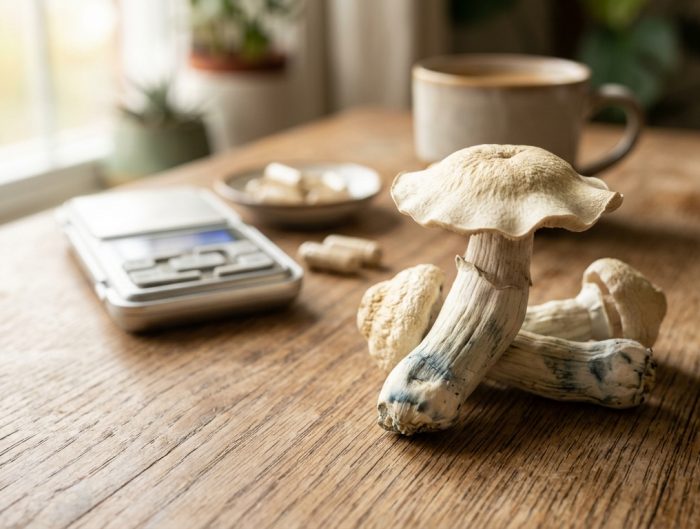
Terence McKenna, the ethnobotanist and psychedelic advocate who popularized the term in the 1980s and 1990s, described a heroic dose as five dried grams of Psilocybe cubensis consumed in silent darkness. His recommendation wasn’t casual. McKenna believed that lower doses often produced an ambiguous middle ground where the mind could still resist the experience, creating anxiety without resolution. His argument was that a full five grams would push past that resistance entirely, allowing what he called “the mushroom” to take over and deliver its full message.
McKenna’s influence on psychedelic culture has been enormous, and his articulation of the five-gram standard remains the most commonly cited benchmark. But it’s worth understanding that McKenna was a philosopher and speaker, not a clinician. His recommendations came from personal experience and a particular worldview about the nature of consciousness. He genuinely believed that psilocybin mushrooms were a form of intelligence communicating with humanity, and the heroic dose was his prescription for making that communication as clear as possible.
That philosophical framework matters because it shaped how the heroic dose is understood. McKenna wasn’t suggesting five grams as a recreational experience or even purely as a therapeutic one. He framed it as an encounter with something beyond the self, something that required courage, hence “heroic.” If you strip away the philosophy and just focus on the number, you lose important context about what the experience is designed to do and why preparation matters so much.
Dosage Variations by Mushroom Strain and Potency
Here’s where things get practical, and where many people make mistakes. Five grams of one mushroom strain is not the same as five grams of another. Psilocybe cubensis, the most commonly cultivated species, has a typical psilocybin content of roughly 0.6 to 0.8 percent by dry weight. But Psilocybe azurescens, a wild species found in the Pacific Northwest, can contain up to 1.8 percent psilocybin. Five grams of azurescens would be roughly two to three times more potent than five grams of cubensis.
Even within cubensis, potency varies significantly between strains and individual grows. The popular Penis Envy strain, for example, is widely reported to be 1.5 to 2 times stronger than standard cubensis varieties like Golden Teacher or B+. Growing conditions, harvest timing, and drying methods all affect final potency. Two bags of dried mushrooms that look identical can deliver very different experiences.
This variability means that “five grams” is not a universal standard. If you’re working with a particularly potent strain, five grams could be overwhelming in a way that goes well beyond what McKenna described. If you’re working with a weaker batch, five grams might feel closer to a moderate experience.
Some practical guidelines for thinking about dosage:
- Standard Psilocybe cubensis strains: 5 grams dried is generally considered a heroic-level dose
- High-potency cubensis strains like Penis Envy: 3 to 3.5 grams may produce equivalent intensity
- Psilocybe azurescens or cyanescens: 2 to 2.5 grams could match or exceed the five-gram cubensis experience
- Individual sensitivity varies enormously: body weight, metabolism, recent food intake, and personal neurochemistry all play roles
The honest truth is that there’s no way to know the exact psilocybin content of a given batch without laboratory testing, which is becoming more accessible in 2026 but still isn’t standard. If you’re considering a high-dose experience, starting conservatively relative to the strain you have is always the wiser approach.
The Psychological and Sensory Experience
Describing a high-dose psilocybin experience in words is a bit like describing the taste of salt to someone who has never eaten it. Language falls short. But understanding the general territory can help you prepare mentally and set realistic expectations. The psychological and sensory experiences at heroic doses tend to follow certain patterns, even though the specific content varies enormously from person to person.
At these doses, psilocybin doesn’t just alter your perception: it can fundamentally reorganize how your mind processes reality. The boundaries between self and world, between thought and sensation, between past and present can dissolve in ways that feel both terrifying and beautiful, sometimes simultaneously.
Ego Dissolution and Loss of Self
This is the hallmark of a high-dose psilocybin experience, and it’s the aspect that most people find either the most meaningful or the most frightening. Ego dissolution refers to the temporary loss of your ordinary sense of identity: the feeling that “you” exist as a separate, bounded individual with a specific history, personality, and body.
At moderate doses, you might notice your sense of self becoming flexible or porous. You might feel unusually empathetic or connected to your surroundings. At heroic doses, that flexibility can progress to a complete dissolution where the concept of “I” temporarily ceases to have meaning. People describe this as feeling merged with everything, as experiencing consciousness without a center, or as “being” the universe rather than observing it.
This can be ecstatic. Many people describe ego dissolution as the single most meaningful experience of their lives, comparable to or exceeding the significance of the birth of a child or the death of a parent. Research from Johns Hopkins and Imperial College London has consistently found that the degree of ego dissolution correlates with long-term positive changes in well-being, openness, and sense of meaning.
But ego dissolution can also be terrifying, especially if you’re not expecting it or if you try to resist it. The feeling of losing yourself can trigger intense panic. Your mind may interpret the dissolution as actual death, and the fear response can be overwhelming. This is one of the primary reasons why preparation, setting, and support matter so much at these doses. The experience itself may be similar whether you surrender to it or fight it, but your emotional response to that experience can be radically different.
Visual and Auditory Hallucinations
At lower doses, psilocybin produces visual distortions: surfaces might breathe, colors might intensify, and you might see geometric patterns when you close your eyes. At heroic doses, these distortions can become full-blown hallucinations that bear little resemblance to ordinary visual experience.
With eyes closed, people commonly report seeing vast, intricate geometric structures, encounters with entities or beings, journeys through spaces that feel like other dimensions, and vivid symbolic imagery that seems to carry personal meaning. With eyes open, the visual field can become so distorted that ordinary objects become unrecognizable, or the room might seem to transform entirely.
Auditory experiences also intensify. Music, if present, can feel overwhelmingly emotional and seem to physically move through your body. Some people hear voices, tones, or sounds that have no external source. Silence itself can feel dense and alive.
These sensory experiences aren’t just entertainment: they often carry emotional weight. A geometric pattern might feel like it contains the answer to a question you’ve been asking your whole life. An encounter with an entity might feel more real and significant than any conversation you’ve had with a living person. The challenge afterward is figuring out what to make of these experiences, which is where integration becomes essential.
Altered Perceptions of Time and Space
Time distortion is one of the most reliable and disorienting aspects of high-dose psilocybin. Minutes can feel like hours. Hours can feel like minutes. Some people report experiencing what feels like an entire lifetime within a single session, or feeling that time has stopped entirely.
Spatial perception shifts as well. Rooms can feel enormous or tiny. Distances become unreliable. Your own body might feel very far away, or you might lose awareness of having a body at all. These spatial distortions connect to the ego dissolution described above: as your sense of self weakens, your sense of occupying a specific point in space weakens with it.
These perceptual changes are part of why a safe, controlled environment matters so much. If you can’t reliably judge time, distance, or the size of objects, you need to be in a place where that disorientation can’t lead to physical harm. A quiet room with soft surfaces, no sharp objects, and no access to stairs or balconies is the practical minimum.
Preparation and Harm Reduction Strategies
If the previous section made you nervous, good. A healthy respect for the intensity of high-dose psilocybin is exactly the right starting point. The good news is that with thoughtful preparation, the risks can be significantly reduced. Not eliminated: reduced. Honest harm reduction means acknowledging that some risk always remains, while doing everything practical to minimize it.
The Importance of Set and Setting
“Set and setting” is a phrase coined by Timothy Leary in the 1960s, and despite its age, it remains the single most important framework for preparing for any psilocybin experience, especially a high-dose one. “Set” refers to your mindset: your emotional state, expectations, intentions, and psychological readiness. “Setting” refers to your physical environment: where you are, who you’re with, and what sensory inputs surround you.
Your mindset going in shapes the experience profoundly. If you’re anxious, grieving, or in a period of psychological instability, a heroic dose of mushrooms is far more likely to amplify those states than to resolve them. This doesn’t mean you need to be in a perfect mental state, but you should be in a stable one. Ask yourself honestly: am I doing this because I feel drawn to explore, or because I’m running from something? The answer matters.
Practical set preparation includes:
- Setting a clear intention, even if it’s simple (“I want to understand myself better” or “I want to face my fear of death”)
- Spending several days before the experience eating well, sleeping enough, and reducing stress
- Avoiding alcohol and other substances for at least a week beforehand
- Journaling about your hopes and fears for the experience
- Accepting, genuinely, that the experience may not go the way you want it to
Setting preparation is more concrete. You want a private, comfortable space where you won’t be interrupted. Dim lighting or darkness (McKenna’s original recommendation was total darkness). Comfortable places to sit and lie down. A bathroom nearby. Water and light snacks available but not prominent. A curated playlist of music if you choose to use one, or silence if that feels right. Temperature control. And most importantly, a person you trust present with you.
The Role of a Professional Trip Sitter
A sitter is someone who remains sober during your experience and provides quiet, grounded support. At heroic doses, a sitter isn’t optional: it’s essential. You may lose the ability to care for yourself, to remember where you are, or to distinguish between internal experience and external reality. Having someone present who can gently remind you that you’re safe, that you took mushrooms, and that the experience will end is genuinely important.
The best sitters are calm, patient, and experienced. They don’t try to guide or interpret your experience. They don’t panic if you cry, scream, or say strange things. They simply hold space: staying present, offering water, providing a reassuring touch if you reach for one, and intervening only if there’s a safety concern.
In 2026, professional psychedelic-assisted therapy is available in several jurisdictions, and trained facilitators offer exactly this kind of support in legal, clinical settings. If you have access to professional facilitation, it’s the safest option. If you’re working outside clinical settings, choose your sitter carefully. This person will see you at your most vulnerable. Trust matters more than experience, though both are ideal.
One thing a good sitter does that you can’t do for yourself: they track time. When you’re deep in an experience that feels eternal, having someone who can truthfully say “you’re two hours in, you have about four more hours, and you’re doing great” can be enormously grounding.
Potential Therapeutic Benefits and Insights
Research into psilocybin’s therapeutic potential has accelerated dramatically over the past decade. By 2026, multiple Phase III clinical trials have been completed or are underway, and psilocybin-assisted therapy has received regulatory approval or expanded access status in several countries. While most clinical research uses moderate doses (typically 25 to 30 milligrams of synthetic psilocybin, roughly equivalent to 3 to 4 grams of dried cubensis), some of the most profound reported benefits come from experiences at the higher end of the dosing spectrum.
Confronting Deep-Seated Trauma
One of the most consistent findings in psilocybin research is its ability to help people access and process emotional material that ordinary consciousness keeps locked away. At high doses, this can manifest as vivid re-experiencing of past events, encounters with symbolic representations of trauma, or a felt sense of releasing something that has been held in the body for years.
This isn’t gentle work. Confronting trauma under psilocybin can be intensely painful in the moment. People sob, shake, curl into fetal positions, and relive experiences they’ve spent decades avoiding. But many report that this confrontation, when properly supported and integrated afterward, produces a shift in their relationship to the traumatic material. The memory doesn’t disappear, but its emotional charge decreases. The story changes from “this terrible thing defines me” to “this terrible thing happened to me, and I survived it.”
We want to be careful here about overpromising. Not everyone who takes a high dose of psilocybin will have a therapeutic experience with trauma. Some people don’t access traumatic material at all. Others access it but feel re-traumatized rather than relieved. The presence of a trained therapist or facilitator, and a robust integration practice afterward, significantly improves the likelihood of a positive outcome. This is not something to attempt alone as a form of self-therapy, especially if you have a history of PTSD or complex trauma.
Spiritual Awakening and Interconnectedness
Beyond the specifically therapeutic, many people report that high-dose psilocybin experiences produce a profound sense of spiritual significance. This isn’t limited to people who already hold spiritual beliefs. Atheists and materialists regularly report experiences that they describe as mystical, sacred, or transcendent, even when those descriptions conflict with their existing worldview.
The most commonly reported spiritual experience is a felt sense of interconnectedness: the direct perception that all things are connected, that separation is an illusion, and that love or compassion is the fundamental nature of reality. This might sound abstract, but people who experience it describe it as the most real thing they’ve ever felt, more real than ordinary waking life.
Research from Johns Hopkins has found that the mystical-type experiences occasioned by psilocybin are among the strongest predictors of lasting positive change. Participants who report complete mystical experiences show greater reductions in depression and anxiety, greater increases in well-being and life satisfaction, and more sustained personality changes (particularly increased openness) than those who have intense but non-mystical experiences.
These spiritual experiences don’t require any particular belief system. They seem to arise from the neurological changes psilocybin produces, particularly the disruption of the default mode network, which is the brain system most associated with self-referential thinking and the maintenance of ego boundaries. When that network quiets, the brain enters a state of increased connectivity between regions that don’t normally communicate, and the subjective experience of that increased connectivity is often described in spiritual terms.
Risks and Adverse Reactions to High Dosages
Honest education means talking about what can go wrong, not just what can go right. High-dose psilocybin carries real risks, and minimizing those risks does a disservice to anyone considering this experience. The vast majority of adverse outcomes are psychological rather than physical, but both categories deserve serious attention.
Psychological Distress and the ‘Bad Trip’
The so-called “bad” experience is the most common adverse outcome of high-dose psilocybin use. It can involve intense fear, paranoia, confusion, feelings of going insane, belief that you’re dying, and a sense of being trapped in a nightmare that will never end. At heroic doses, the intensity of these experiences can be extreme.
Several factors increase the risk of psychological distress:
- Pre-existing anxiety or depression that is currently acute (not well-managed)
- A personal or family history of psychotic disorders such as schizophrenia or bipolar disorder with psychotic features
- An environment that feels unsafe or unpredictable
- Attempting to resist or control the experience rather than surrendering to it
- Using psilocybin in combination with other substances, particularly cannabis, which can amplify paranoia
- Insufficient preparation or unrealistic expectations
The most important thing to understand about psychological distress during a psilocybin experience is that it is temporary. Psilocybin’s effects typically last four to six hours, and even the most terrifying experience will end. A good sitter can help you remember this. Breathing exercises, changing your physical position, or changing the music can also help shift the experience.
However, in rare cases, psychological distress can extend beyond the acute experience. Some people report persistent anxiety, depersonalization, or intrusive thoughts in the days or weeks following a difficult high-dose experience. These symptoms almost always resolve with time and support, but they can be genuinely distressing. If you have a history of anxiety disorders or dissociative experiences, this risk is higher, and you should weigh it seriously.
People with a personal or family history of schizophrenia, schizoaffective disorder, or bipolar I disorder should avoid high-dose psilocybin entirely. While psilocybin does not “cause” these conditions, it may trigger their onset in people who are genetically predisposed, particularly during the vulnerable years of late adolescence and early adulthood.
Physical Side Effects and Safety Concerns
Psilocybin is one of the least physically toxic recreational substances known. The lethal dose in humans is estimated to be roughly 1,000 times a typical active dose, making fatal overdose from psilocybin alone essentially impossible. That said, physical side effects at high doses are common and can be unpleasant.
The most frequent physical experiences include:
- Nausea and sometimes vomiting, particularly during the onset (first 30 to 60 minutes)
- Increased heart rate and blood pressure
- Muscle tension, particularly in the jaw and neck
- Temperature fluctuations: feeling very hot or very cold
- Dilated pupils and sensitivity to light
- Loss of coordination and balance
Nausea is the most commonly reported physical complaint and can be reduced by fasting for four to six hours before ingestion, consuming the mushrooms as a tea rather than eating them whole, or adding ginger to the preparation. Lemon tek, a method of soaking ground mushrooms in lemon juice before consumption, may also reduce nausea while potentially intensifying and shortening the experience.
The more serious physical safety concerns are indirect. Because high-dose psilocybin impairs judgment, coordination, and reality testing, the primary physical risks come from the environment rather than the substance itself. Falls, wandering into dangerous areas, or attempting to drive are all real risks if you’re not in a controlled setting with a sober sitter. This is another reason why setting and supervision are non-negotiable at these doses.
People with cardiovascular conditions should consult a physician before using psilocybin, as the temporary increases in heart rate and blood pressure could be problematic. Similarly, psilocybin can interact with certain medications, particularly SSRIs and MAOIs. SSRIs may blunt the experience significantly, while MAOIs can dangerously potentiate it. If you’re taking any psychiatric medication, research the interaction thoroughly before considering psilocybin use.
Integration and Post-Experience Processing
The experience itself is only the beginning. What you do with it afterward determines whether it becomes a meaningful turning point or just an intense memory that fades. Integration is the process of making sense of your experience, extracting its lessons, and applying those lessons to your daily life. Without integration, even the most profound psilocybin experience can lose its impact within weeks.
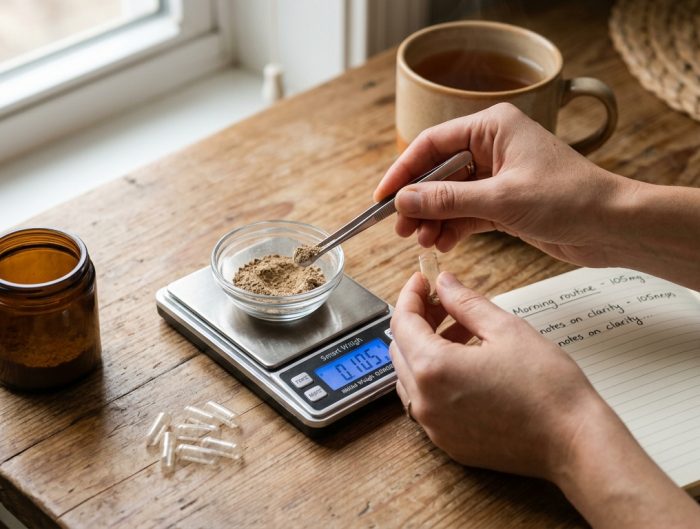
Start writing or recording your reflections as soon as you’re able after the experience, ideally within the first 24 hours. Your memory of the experience will be vivid but unstable: details that feel unforgettable in the moment can slip away surprisingly quickly. Don’t worry about making it coherent. Stream-of-consciousness notes, voice recordings, drawings, or even single words that capture key moments are all valuable.
In the days following a high-dose experience, you may feel unusually open, emotional, and sensitive. This is normal. Many people describe a period of two to four weeks where they feel more connected to their emotions, more aware of their patterns, and more motivated to make changes in their lives. This window is valuable: it’s when the insights from the experience are most accessible and when new habits are easiest to establish.
At Healing Dose, we emphasize that integration isn’t passive. It requires active engagement: journaling, reflection, conversation with trusted people, and deliberate action. If your experience showed you that you’ve been neglecting an important relationship, integration means reaching out to that person. If it revealed a pattern of self-criticism, integration means beginning a daily practice of self-compassion. The mushroom experience opens a door, but you have to walk through it yourself.
Professional integration support is increasingly available in 2026. Psychedelic integration therapists, support groups, and online communities can all help you process your experience. If your experience was particularly difficult or brought up traumatic material, professional support isn’t just helpful: it’s important.
Some people find that their high-dose experience naturally leads them toward a more regular, lower-dose practice. The insights gained from a single intense experience can be deepened and sustained through ongoing microdosing, where sub-perceptual amounts of psilocybin support continued reflection and gradual personal growth over weeks and months. This is a gentler, more sustainable approach that many people find complements their deeper experiences beautifully.
The weeks and months after a significant psilocybin experience are when the real work happens. Pay attention to what’s shifting in your daily life. Are you more patient? More present? More honest with yourself? These quiet changes, not the fireworks of the experience itself, are the true measure of whether the experience served you.
If you’re curious about exploring psilocybin at gentler doses, finding your personal starting point matters more than following someone else’s protocol. Our microdose quiz can help you identify a thoughtful starting range based on your goals, experience level, and individual sensitivity, so you can begin at your own pace.
A heroic dose of mushrooms is not for everyone, and it doesn’t need to be. The most important thing you can take from this guide is that respect for the substance, honest self-assessment, and thorough preparation matter far more than the number on the scale. Whether you ever choose to explore high-dose psilocybin or prefer to stay with gentler practices, the same principles apply: go slowly, pay attention, and trust the process of your own unfolding.

You might also like